










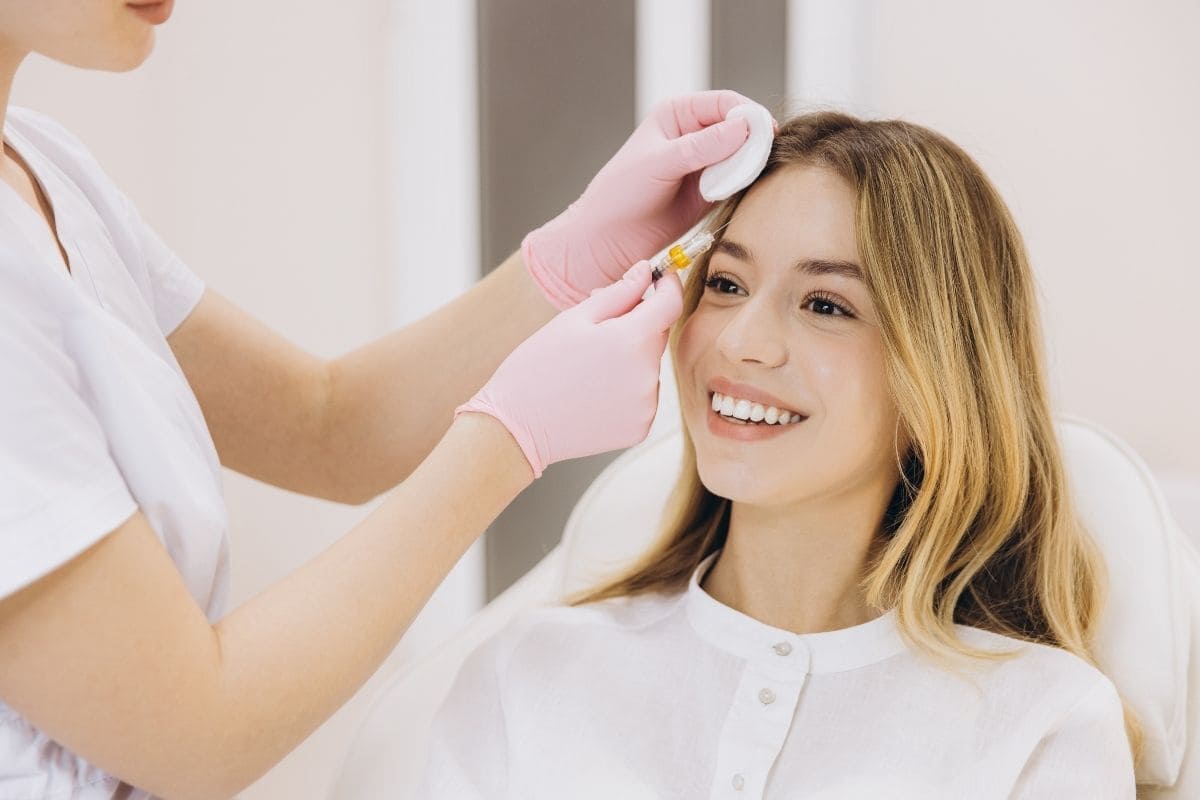
You probably walked past one today without even noticing. Sandwiched between a bakery and a phone-repair kiosk, or tucked inside your dentist’s office right next to the poster about wisdom teeth: a clinic offering cosmetic injectables as casually as a teeth cleaning. The language on the window says things like refresh and real confidence, borrowing the vocabulary of a spa day rather than a medical procedure. And for a rapidly growing number of women, that framing is working. What used to live in the realm of celebrity and serious wealth has quietly migrated to the shopping mall – and to the monthly budget.
When wrinkles became optional
The numbers tell a striking story. A report by Grand View Research estimates the cosmetic-injectables market in Australia alone at US$2.7bn, projected to climb at a compound annual growth rate of 19.3% from 2024 to 2030. Globally, the International Society of Aesthetic Plastic Surgery found that 20.5 million non-surgical cosmetic procedures were performed in 2024, a 44% jump from 2020 – the year endless hours on Zoom turned our own faces into objects of relentless scrutiny.
In June last year, the Australian Health Practitioner Regulation Agency tightened advertising regulations, yet because the industry is so decentralised, conclusive data remains hard to pin down. What is visible, though, is the sheer proliferation of clinics in ordinary neighbourhoods. In one once working-class stretch of Sydney that has become newly aspirational, a dentist lists cosmetic injectables in sans-serif font right alongside routine dental work. A neighbouring clinic, curtains drawn next to a pastry shop, promises real change, real confidence.
So who is actually sitting in those chairs? Not just the wealthy or the famous. Felicity West, who began her career in a high-end cosmetic clinic and now practises in the Melbourne suburb of Brunswick, has observed the clientele widening dramatically. Women in their 30s and 40s openly discuss treatments and compare practitioners with friends. Men represent an increasing share of her appointments. She sees lawyers, social workers, café workers – and the trend leans toward smaller, undetectable results rather than the frozen-face look of a decade ago.
From lash extensions to vampire facials – how the gateway works
Mary Munson, 41, a teacher and mother of two, did not plan her first injectable. She was at a clinic for a lash extension when a staff member introduced her to something called a baby Botox – which was, in fact, standard Botox. She was 37 at the time, and the experience felt less like a medical decision than like satisfying a curiosity. She credits her Filipino and Scottish heritage with giving her naturally good skin, but has since added platelet-rich plasma therapy, sometimes called a vampire facial because platelets are drawn from the patient’s own blood, as well as platelet-rich fibrin, a related treatment that stimulates collagen production.
Munson describes herself as very generic and run-of-the-mill. Among her circle of 11 friends, all in their early 40s, three regularly get similar procedures. She has not tried anything that would change the shape of her face. She simply prefers, as she puts it, not to be too wrinkly – and with a first wedding on the horizon, she wants her skin at its best. As a relief teacher, a single day’s wage covers one Botox session. She compares the trajectory to the beauty rituals she has always known: eyebrow waxing as a teenager, more intensive facials in her twenties, and now this.
Bianca Lorena Saldes, 38, who operates a clinic called BLC Aesthetics, frames injectables as similar to going to the gym or getting a massage. She started using them when she began her career as an aesthetic nurse and remains wary of any narrative that tells women they need these treatments to look amazing.
The deeper pressure beneath the polish
Dr Renae Fomiatti, a senior research fellow at the Australian Research Centre in Sex, Health and Society at La Trobe University, has spent nearly two years studying why aesthetic interventions are surging. She notes that treatments are easily available, require minimal downtime, and can be squeezed into a lunch break – but warns that this convenience obscures how invasive the cultural messaging around ageing really is. Many women she interviewed described acute sensitivity about ageing in relation to the workforce and shrinking professional opportunities. People use these treatments to manage the suffering that accompanies getting older, and in doing so they align themselves with dominant norms of white, youthful beauty – which, in turn, makes them feel better.
Dr Jasmine Fardouly, a senior lecturer in psychology at the University of Sydney, adds another layer. Because these procedures now feel attainable rather than exclusive, that very accessibility can intensify pressure. When injectables sit alongside haircuts and manicures on the high street, they become positioned as an ordinary consumer choice – and only women who can afford them are able to meet the resulting ideals. The class divide, she suggests, deepens.
Women have always grappled with beauty work in a world where older female bodies are considered less valuable and less visible. For every silver-haired influencer, or Pamela Anderson appearing makeup-free, there is the pushback experienced by actor Rachel Ward, 68, who posted an unaltered image of her face to social media in January and received public criticism for simply showing the passage of time.
Beyond vanity – what this shift really means
Zanetich, who has been getting Botox and fillers since her mid-30s, initially sought treatment for headaches and developing frown lines. It was framed to her as preventative of ageing while also offering clinical benefits. She jokes that Botox ought to be a tax deduction because in her corporate workplace, the inability to frown reads as poise – and poise, for a mother of two small children, can translate into perceived competence.
Women around her, Zanetich says, would cut back on groceries before giving up their Botox, because of the confidence it gives them to face each day. She refuses to judge anyone’s choice. Society, she believes, already judges women more than enough for them to add to it. Whether you find that liberating or unsettling, one thing is clear: non-surgical cosmetic treatments are no longer a luxury whispered about in private. They are a line item in the weekly budget – and for millions of women, that is simply what you do now.


