








Most parents try not to think about it. The idea that one day you simply won’t be there – not for the graduations, not for the hard conversations, not for the ordinary Tuesday mornings. It is the kind of thought you push away because dwelling on it feels counterproductive, even morbid. But what if confronting that fear head-on actually changed the way you parent for the better? What if preparing your children for your absence was, in its own way, one of the most loving things you could do?
A mother shaped by loss
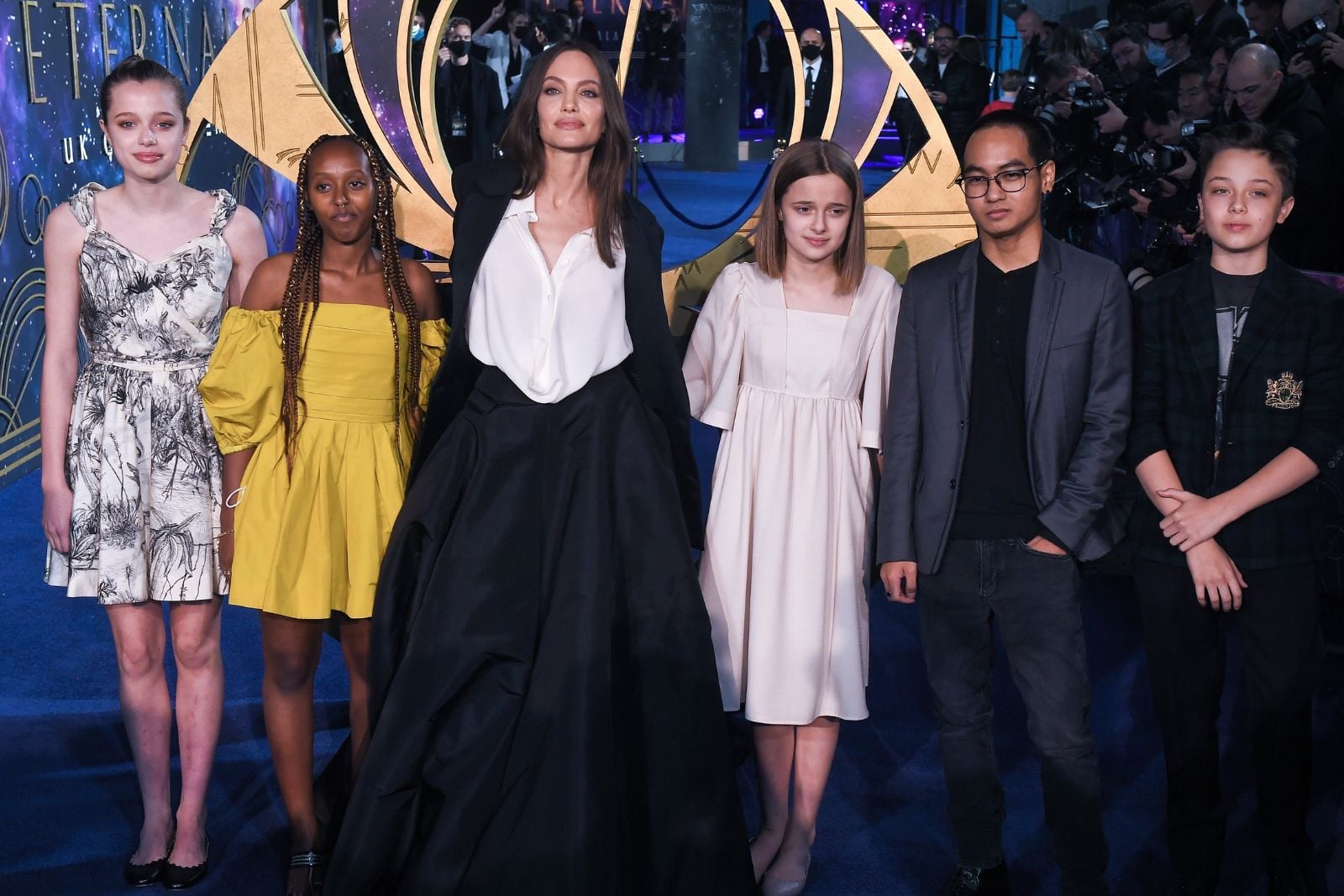
Angelina Jolie, actor and mother of six, has long been open about the fact that she raises her children with a very specific awareness: she may not always be around. That outlook did not come from nowhere. It was shaped by the loss of her own mother, Marcheline Bertrand, who died of ovarian and breast cancer at just 56 years old.
For Jolie, that grief was not something she filed away and moved past. She has spoken for years about how profoundly her mother’s death affected her worldview, her choices, and ultimately her approach to raising her own family. Losing a parent to cancer at a relatively young age rewires something in you. It makes the future feel less guaranteed and the present far more urgent.
And then there is the genetic reality. Jolie carries a mutated BRCA1 gene, a genetic mutation that significantly increases the risk of developing both breast and ovarian cancer – the very diseases that took her mother. So the conversation she has with her children is not hypothetical. It is rooted in biology, in family history, and in a grief she knows firsthand.
Parenting with honesty, not fear
It would be easy to assume that this kind of openness would frighten children. Telling your kids that you might not always be there sounds, on the surface, like something that could burden them with anxiety. But Jolie’s intention appears to be the opposite. For her, the message is not about instilling fear. It is about making the most of the time they do have together.
There is a difference between scaring your children and being honest with them. Jolie seems to draw that line carefully. Rather than hovering over her family with a sense of doom, she has framed her outlook as motivation – a reason to be more present, more engaged, and more deliberate about how they spend their days as a family.
Her children, she has said, actually encourage her to get out and do things. They know her better than almost anyone, and they still like her. In her own words, that says a lot. It is a small, almost offhand detail, but it reveals something important: the dynamic between Jolie and her six children is not one defined by sadness or worry. It is defined by closeness, humor, and mutual understanding.
A fear most parents recognize
Not everyone will agree with Jolie’s approach. Parenting philosophies are deeply personal, and the idea of openly preparing your children for a world without you is bound to spark debate. Some might argue that children deserve to be shielded from that kind of weight. Others might say that honesty, delivered with love, builds resilience.
But strip away the celebrity, the headlines, and the public scrutiny, and what you find underneath is a fear that nearly every parent carries quietly. You want your children to be okay. Not just while you are here guiding them, but in a future you may not be there to see. That is not a dramatic statement. It is the baseline anxiety of loving someone more than yourself and knowing that life offers no guarantees.
What makes Jolie’s perspective notable is not that she feels this fear – most parents do – but that she has chosen to act on it openly rather than push it aside. She has let it inform her parenting rather than paralyze it. And her children, by all accounts, have responded not with anxiety but with a deeper appreciation for who their mother is and the time they share.
What honesty can build
There is no universal manual for how to talk to your children about mortality, illness, or the possibility of loss. Every family navigates those conversations differently, shaped by their own histories and circumstances. But Jolie’s story offers a quiet reminder that vulnerability and strength are not opposites. Sometimes the bravest thing a parent can do is acknowledge what is uncertain and use that honesty to build something more intentional with the people they love most.
You do not have to carry a genetic mutation or have lost a parent young to take something from this. The takeaway is simpler than that. Be present. Be honest when it matters. And never underestimate how much your children can handle when the truth is delivered with love rather than fear.


