










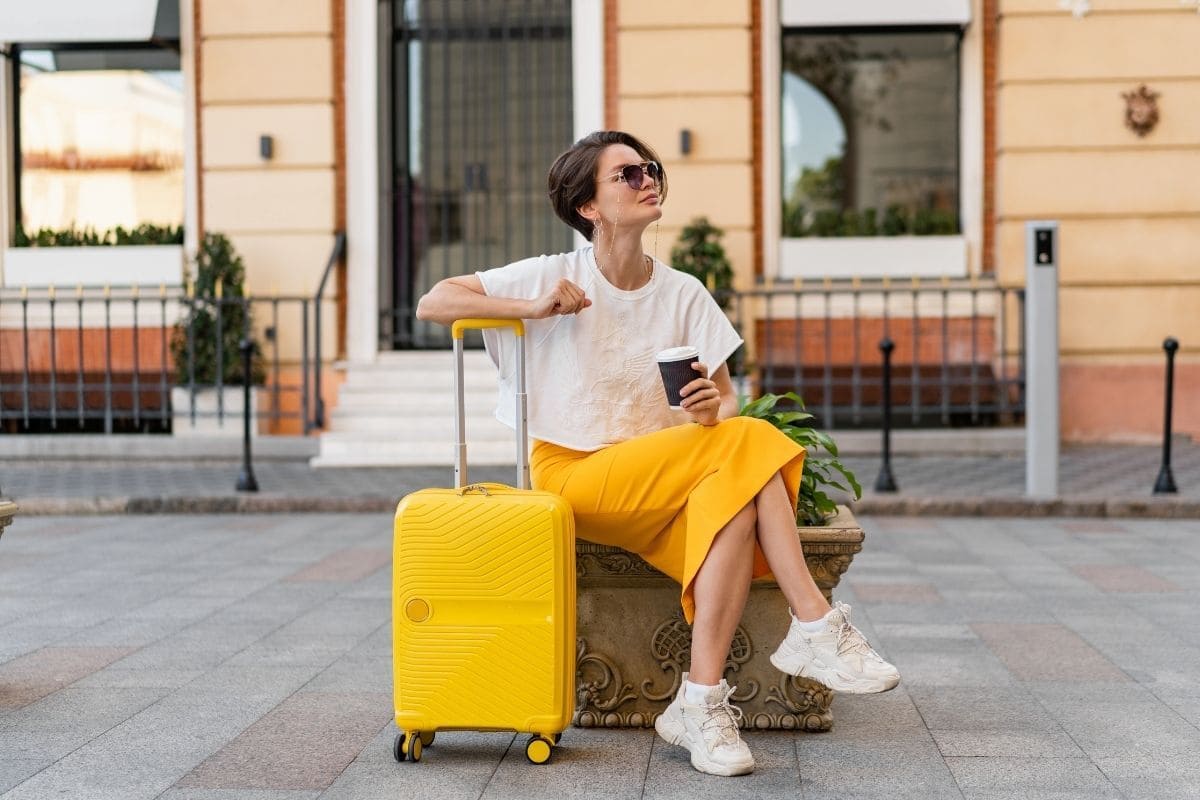
You are standing in front of your suitcase the night before a trip, staring at a pile of clothes that could outfit you for a month, even though you are leaving for two weeks. You know you should edit. You know half of it will stay folded in the bag, untouched, taking up space you will later resent. And yet the fear of being underdressed, underprepared, or caught in weather you did not anticipate keeps you reaching for one more sweater, one more pair of shoes. The real question is not what to pack – it is what actually deserves to be there when you unpack on the other side.
One 71-year-old traveler recently put that question to the test during a two-week road trip through Paris, Burgundy, and Provence in late April and May, with one medium-sized checked bag and a commitment to wearing every single thing she brought. The results were surprisingly instructive, not because of what made the cut, but because of what did not.
Why a single checked bag made more sense than a carry-on
The trip covered three French regions with wildly different weather profiles. Paris in late April means highs in the low 60s, overcast skies, and the kind of rain that arrives without warning and vanishes just as fast. Burgundy mornings can be genuinely cold – sweater-and-jacket cold – even when the afternoons warm up nicely. And Provence brings sunshine, market mornings, and terrace lunches, but the Mistral wind is unpredictable enough to knock a wine glass off the table and send you scrambling for an extra layer.
For a road trip that involved moving bags in and out of rental cars and hotels across all three regions, a carry-on would have been impractical. The medium-sized checked bag provided enough room for layering options without the misery of cramming everything into an overhead-bin-sized case. Had the weather been more predictable – say, a few weeks later when sweaters and jackets might not have been necessary – a carry-on could have worked. But spring in France is not predictable, and the extra luggage space proved its worth.
The pieces that worked hardest from Paris to Provence
White denim jeans turned out to be the single most-worn item in the bag. They paired with sweaters, a blazer, and various tops, transitioning from morning museum visits to evening dinners without missing a beat. Spots were easy to touch up, and they looked a touch more polished than blue denim in a Parisian context. Dark jeans, meanwhile, served as the all-purpose workhorse for cooler days in Burgundy, rainy Paris afternoons, and evenings that called for looking pulled-together without effort.
A Zara blazer emerged as the undisputed standout of the entire trip. It worked over jeans, a Lily skirt, Ruti travel pants, and utility pants as a set. It made casual outfits look intentional and dressier outfits feel relaxed. The French wear blazers constantly, and for good reason – it is arguably the single most important item you can pack for any season in France.
Ruti travel pants were the sleeper hit. Lightweight, wrinkle-resistant, and stylish enough to avoid looking like typical travel pants, they were ideal for long driving days through Burgundy and for navigating uneven village streets during leisurely lunches. Three cotton pullover sweaters – one neutral, two in slightly more interesting colors – did heavy lifting across all three regions, layering over a leopard dress on a cool Paris evening, over a blouse on a chilly morning, and standing alone during warmer Provence afternoons. A trench coat handled plane travel and rainy days, light enough not to be a burden but polished enough to feel appropriate everywhere.
The footwear lesson everyone over 70 should hear
Sneakers were worn constantly and without apology. Cobblestones are relentless, Paris is a walking city, and Burgundy involves uneven terrain around wine caves and village streets. Low-heeled boots earned their spot as the rainy day shoe – waterproof enough, comfortable enough to walk in, and polished enough to wear to dinner.
The loafers, however, barely came out of the bag. Between the sneakers, flip flops, and boots, they simply were not needed. Flip flops were a medical necessity due to skin-grafted skin on one heel that blisters easily, but by the time the warmer days arrived in the Luberon, they felt too casual. In retrospect, three pairs would have been enough: sneakers, boots, and one good backless sandal with a bit more style that still works for walking. The loafers and flip flops could both have been replaced by that single versatile sandal.
Accessories stayed minimal but effective. Scarves transformed every outfit and took up almost no space. Jewelry was limited to machete tortoise earrings and bracelet plus a pair of silver hoops. One travel-friendly handbag from Lo & Sons – chosen for its interior zippered compartments for a passport and phone, with no outside pockets vulnerable to pickpockets – and a tote for the plane completed the picture. The key principle was that everything in the bag had to work with everything else. No orphan pieces.
What a two-week capsule wardrobe actually teaches you
The wins were clear: white denim jeans, dark jeans, Ruti travel pants, the Zara blazer, two cotton sweaters, the trench, low-heeled boots, and sneakers all earned their place without question. The misses were equally clear – the loafers that barely saw daylight and the flip flops that felt too casual even though they got worn. The only real regret was not packing one more shirt or blouse, because by the end of two weeks the same tops were in heavy rotation.
Two weeks across three French regions in one checked bag is absolutely doable. The strategy is building a wardrobe that moves in every direction: from cool Paris mornings to warm Provence afternoons, from wine cave visits in Burgundy to evening dinners wherever the road leads. You do not need to dress for Instagram. You do not need glamour shots in cobblestone-friendly heels. You need pieces that layer, that mix, and that let you actually enjoy one of the great travel experiences in the world without suffering for the sake of a photograph.


