










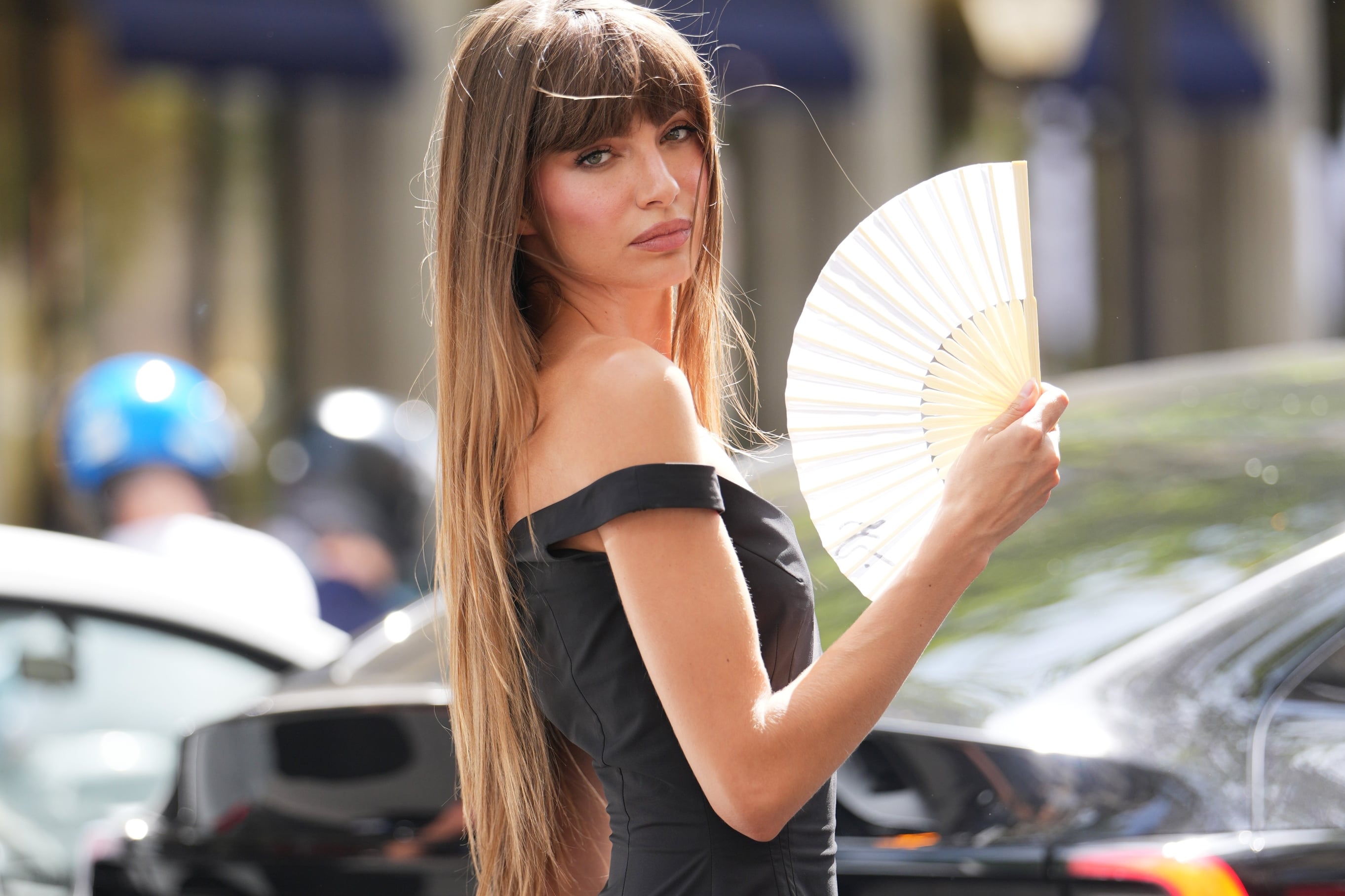
Summer has made elegance negotiate with temperature again, and the hand fan has returned at exactly the right moment. Even Dior treated it as an object of desire, sending black bamboo fans with the invitations to its Fall/Winter 2026-2027 Haute Couture show in Paris. It offers shade in miniature, movement in the palm and a kind of theatrical composure that no portable gadget can quite imitate. A fan does not only cool the face. It changes the posture of the person holding it, giving even a simple linen dress the air of someone who came prepared for the heat and still refused to surrender the outfit.
The gesture carries a long memory. Hand fans have appeared across cultures for thousands of years, while the folding fan, often traced to Japan around the eighth century, later entered Europe and became part of the language of courtly dressing. By the time it reached aristocratic wardrobes, the fan had already learned how to behave like an accessory with social intelligence. It could conceal a glance, punctuate a pause and turn heat management into choreography.
The Fan Has Always Belonged to Fashion
The modern comeback makes sense because fashion keeps looking for objects that do something while still carrying image value. At recent fashion weeks, fans have appeared again in the hands of editors and guests, sometimes as artisanal paper pieces, sometimes as high-tech cooling devices. Naomi Campbell famously brought a portable fan to a Louis Vuitton show in Paris, proving that even the front row needs a breeze, while Chaka Khan once turned an oversized fan into the most memorable accessory at a Tom Ford event. That is the charm of the fan today. It sits between utility and performance with unusual grace. In a summer wardrobe built from slip dresses, cotton shirts and barely-there sandals, a fan adds intention without demanding another layer. It makes practicality look ornamental.
The Brands Turning Fans Into Summer Objects
The new fan brands understand this perfectly. A Fan Of, designed in Barcelona and handcrafted in Spain, gives the accessory a graphic, contemporary attitude while keeping the craft close to natural wood and cotton. Its appeal lies in the way it treats the fan as design, rather than souvenir. Vera Pilo works from a French imagination and brings color, humor and resort polish to the object. The brand helped reintroduce the fan as an elegant response to rising heat, making it feel less like a nostalgic prop and more like a summer essential with personality. Then there is Pubumésu, the Indonesian brand whose fans transform traditional craft into small pieces of portable theater. Its banana and fish-shaped designs, handmade by Javanese shadow puppet artisans, turn the fan into something closer to a collectible object. Together, these names prove that the most stylish way to survive the heat may also be the oldest one: open the fan, lift the wrist and let summer lose the argument.