










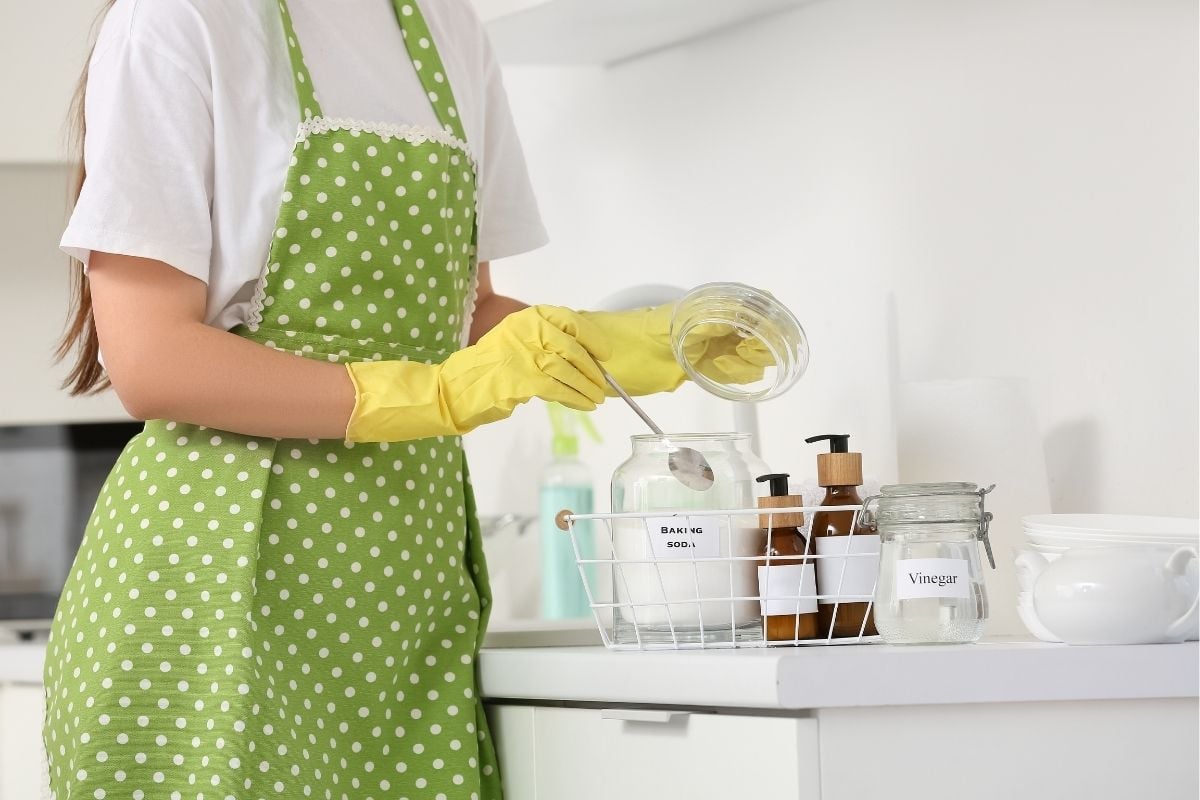
The fizz looks impressive, but chemistry explains why it leaves your washer almost exactly as dirty as before. It is one of the most shared cleaning hacks online: pour baking soda into the drum, add vinegar to the dispenser, run a hot cycle and watch the bubbles do their work. The result feels satisfying. According to chemists and appliance experts, it is also mostly for show.
Here is why the famous duo disappoints, what really builds up inside your machine and what experts use instead.
Why Baking Soda and Vinegar Cancel Each Other Out
Vinegar is an acid, and baking soda is a base. When they meet, they react to form water, carbon dioxide, which creates the fizz, and sodium acetate, a mild salt. “They basically cancel each other out when they’re mixed,” Amanda Morris, associate chair of the chemistry department at Virginia Tech, told Apartment Therapy. Once the bubbling stops, she says, what remains is “glorified water.”
An analysis published in The Conversation goes further, describing the fizz as “essentially a visual ‘placebo'” for cleaning. The bubbles can have a mechanical effect in a blocked drain, but in a washer full of water, they do little.
The same logic applies to vinegar and detergent. “Detergent is a base. Vinegar is an acid. Mix them and they cancel each other out,” washing machine repair expert Dennis Godynuk told Tom’s Guide.
The Hidden Risk of Too Much Vinegar
Vinegar on its own is not harmless for your machine either. “Frequently subjecting your washer to vinegar can result in progressive degeneration of the rubber seals and hoses,” Scott Schrader, a cleaning expert at CottageCare, told Tom’s Guide. He notes that high-efficiency washers may be affected faster, because their gaskets and seals need to be more precise. Alicia Sokolowski, CEO of AspenClean, added that many manufacturers advise against it.
What Actually Builds Up in a Washer
Over time, a washing machine collects detergent and fabric softener residue, body oils, lint and, in hard-water areas, mineral deposits. In the damp folds of the door gasket and in the detergent drawer, that mix creates the perfect environment for mold and mildew, and the familiar musty smell.
What Experts Use Instead
The simplest option is a dedicated washer cleaner. Matt O’Connor, co-founder of NoScrubs, recommends products such as Affresh or Tide Washing Machine Cleaner. Ian Palmer-Smith, an appliance repair expert at Domestic & General, suggests a very hot cotton cycle with a washer cleaning solution.
For mildew, Godynuk suggests a hot cycle with one cup of liquid bleach, followed by a normal cycle to clear any residue. Never combine bleach with vinegar, which can produce toxic chlorine gas.
Most experts recommend a maintenance clean about once a month, and Tom’s Guide advises using bleach-based methods no more than monthly. Always check your manufacturer’s manual first.
The Two-Minute Gasket Wipe
The most effective habit takes almost no time. After your last load of the day, wipe the rubber gasket with a dry microfiber cloth, paying attention to the folds where water and lint collect. Wipe the detergent drawer occasionally, and leave the door and drawer slightly open so the drum can dry out. For a deeper clean, Sokolowski recommends a paste of baking soda and water on the seal, left for about 10 minutes, then scrubbed off.
Goodbye baking soda and vinegar, at least together. For a fresh-smelling washer, a monthly cleaning cycle and a quick wipe of the gasket do far more than any fizz.