










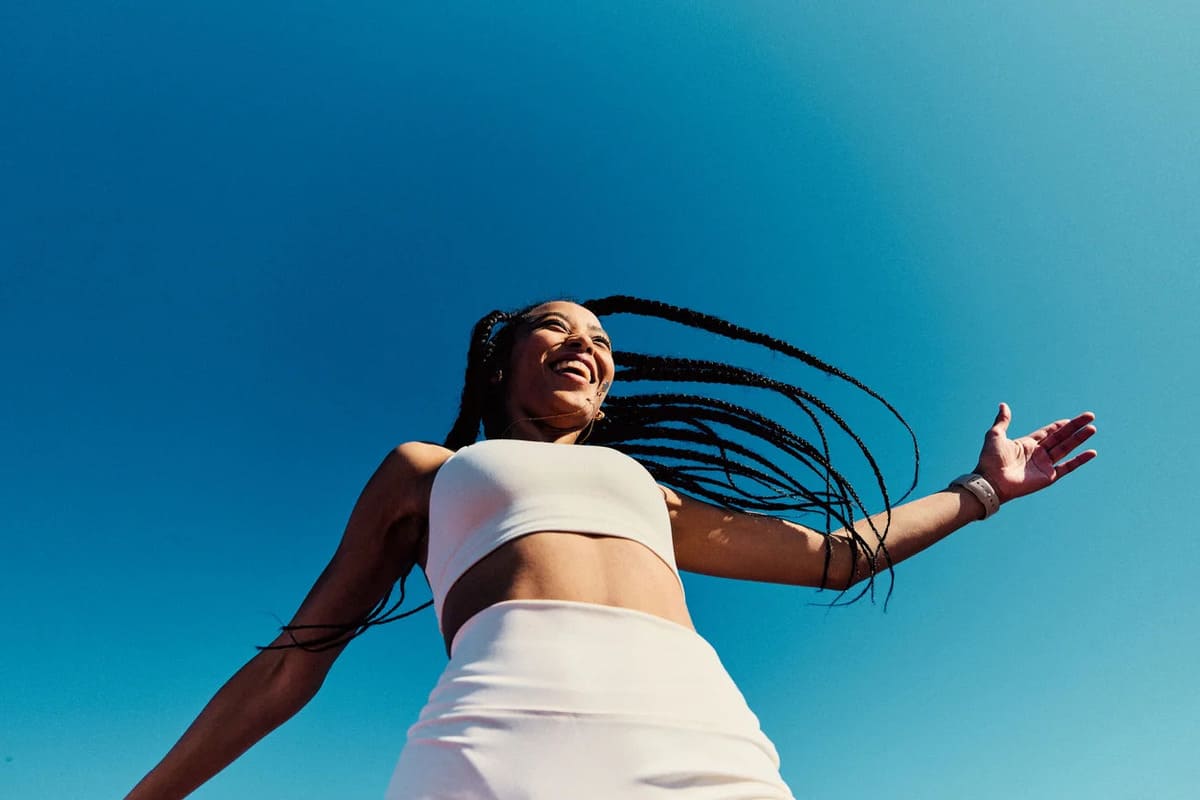
You know that feeling when you open your closet before a workout and instinctively reach for a matching set – the leggings and sports bra in the exact same shade, perfectly coordinated, ready for an Instagram story? For years, that impulse felt like the only acceptable option. The activewear aisle trained us to believe that looking polished at the gym was non-negotiable. But what if the most stylish people in your Pilates class have already moved on – and what they’re wearing instead looks nothing like what you’d expect?
How matching workout sets became a status symbol we didn’t question
Since the pandemic, perfectly fitted, color-coordinated workout sets quietly evolved into a kind of status symbol. Brands like ALO, Set Active, Adanola, and Outdoor Voices grew into major players by appealing to consumers who wanted their activewear to look just as polished as their designer wardrobes. The formula was simple and wildly profitable: sell coordination as aspiration.
But here’s the thing – at some point, all those brightly colored matching sets started to feel less like personal style and more like a uniform. And Gen Z noticed. While the rest of us were still debating which shade of sage green to add to our collection, a younger generation was already building a completely different approach to fitness fashion, one rooted in individuality rather than coordination. The shift has been taking shape in secondhand shops, on running paths, and inside boutique fitness studios.
The return of lived-in, personality-first gym looks
At the center of this movement is a deliberately mismatched, expressive style that draws heavily from 2000s activewear. Think old track shorts, vintage Nike tanks, neon sports bras under oversized graphic tees – pieces that feel personal and worn-in rather than optimized for a flat lay.
Isabella Oday, founder of vintage and archival activewear brand Rummage Stretch, has become something of a figurehead for this aesthetic. Her brand was born from a personal disconnect she felt during a post-breakup retreat, when she realized that none of the available yoga clothing reflected who she actually was. What followed was a return to something more intuitive. Rummage Stretch has since carved out a niche by curating what has been described as a cornucopia of maximalist workout clothing from the late ’90s and ’00s – an era when getting dressed for a fitness class was less about optimization and more about just showing up.
According to Oday, personal style has been largely missing from the activewear space, and her customers aren’t just dressing for performance. They’re dressing for themselves. Nostalgia plays a huge role, she explains, but it’s the expressiveness and fun of these pieces that brings entirely new energy to what had become a pretty exhausted category.
Why this shift is psychological, not just aesthetic
Running influencer Jenna Litner has built a following around this exact energy – deliberately eclectic, personality-first workout looks that include colorful workout shorts, vintage jerseys layered over turtlenecks, neon shorts, and Y2K-style sunglasses. For Litner, the move away from matching sets isn’t about rejecting style. It’s about reclaiming it. She began showcasing her outfits more intentionally after growing fatigued by how homogenous fashion was becoming because of social media, noting that it never made sense to put effort into how she dressed in one area of her life but not in another.
What makes her perspective particularly interesting is how directly she links self-expression to physical performance. Litner has said openly that expression is her number one priority because she performs best when she feels confident. Some days that confidence looks retro or vintage, other days futuristic, and sometimes she simply wants to channel what she jokingly calls a fitness Barbie. The underlying message is straightforward: wear whatever helps you get out the door and move your body.
Pilates instructor Taylor Isabelle sees the same phenomenon unfolding in her New York classes. The once-dominant matching set is no longer the default. Her clients now gravitate toward different cuts – halter tops, capris, wide leg leggings – and many have told her that wearing a fun outfit has actually improved their performance. As she puts it, when New Yorkers start wearing color, you know fashion is shifting.
There’s also a practical dimension we can’t ignore. Changing spending habits are playing a role in this evolution. As Isabelle observes, people would rather spend their money on supplements, treatments, and experiences, which naturally pushes them to use what they already own and start to mix and match. The chaotic gym outfit, it turns out, isn’t just expressive – it’s resourceful.
The bottom line
Gen Z’s activewear in 2026 is something messier, more personal, and ultimately more human than the perfectly curated sets that dominated the past few years. This generation isn’t just abandoning coordination for the sake of being different – they’re rejecting the idea that there’s only one way to look put-together while working out. The gym is becoming a space not just for movement but for genuine self-expression. And if that means a vintage tennis dress with worn-in sneakers or wired headphones paired with a neon polka-dot sports bra, well, that somehow makes more sense than matching ever did. And the barrier to entry is refreshingly low: thrift stores, Depop, eBay, and your own back-of-the-drawer castoffs are the whole starting kit, no new activewear haul required.


