










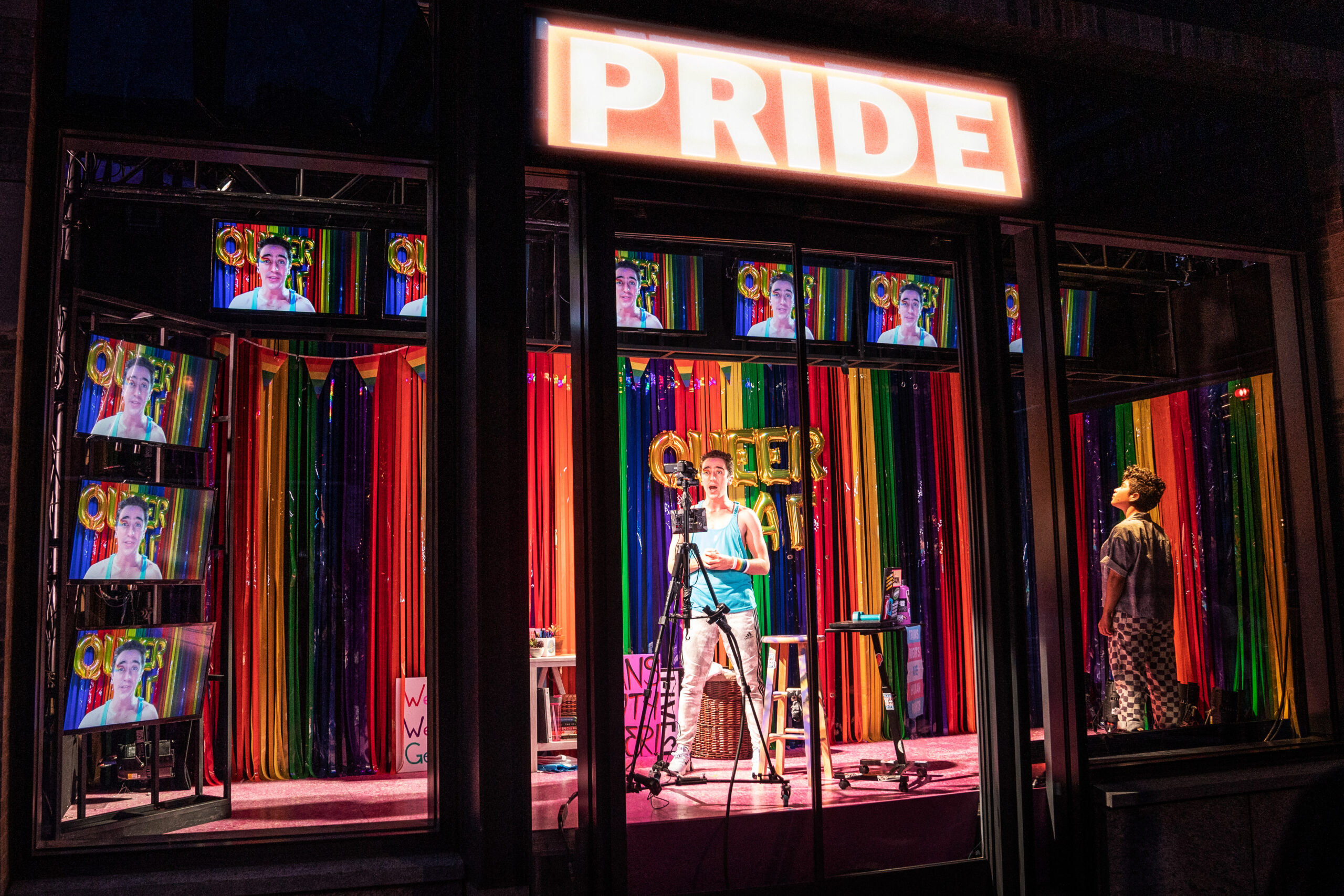
One man opened Broadway back up recently when Bruce Springsteen sprang forth from the pandemic to revive his “concert residency” which took place in 2017 and 2018 at the Walter Kerr Theatre and resettle it on the stage of the St. James. But it has taken seven sins we think of as deadly to enliven off-Broadway with, yes, irony but also the choice of a kind of woeful wit and the challenge of wonder inherent in such sins as well as just such theatre we have come to expect from the inestimable Tectonic Theatre Project. Director Moisés Kaufman, Tectonic’s artistic director, has curated seven one-act plays that focus on pride, greed, wrath, gluttony, lust, sloth, and envy written by Ngozi Anyanwu, Thomas Bradshaw, MJ Kaufman, Jeffrey LaHoste, Ming Peiffer, Bess Wohl, and director Kaufman himself.
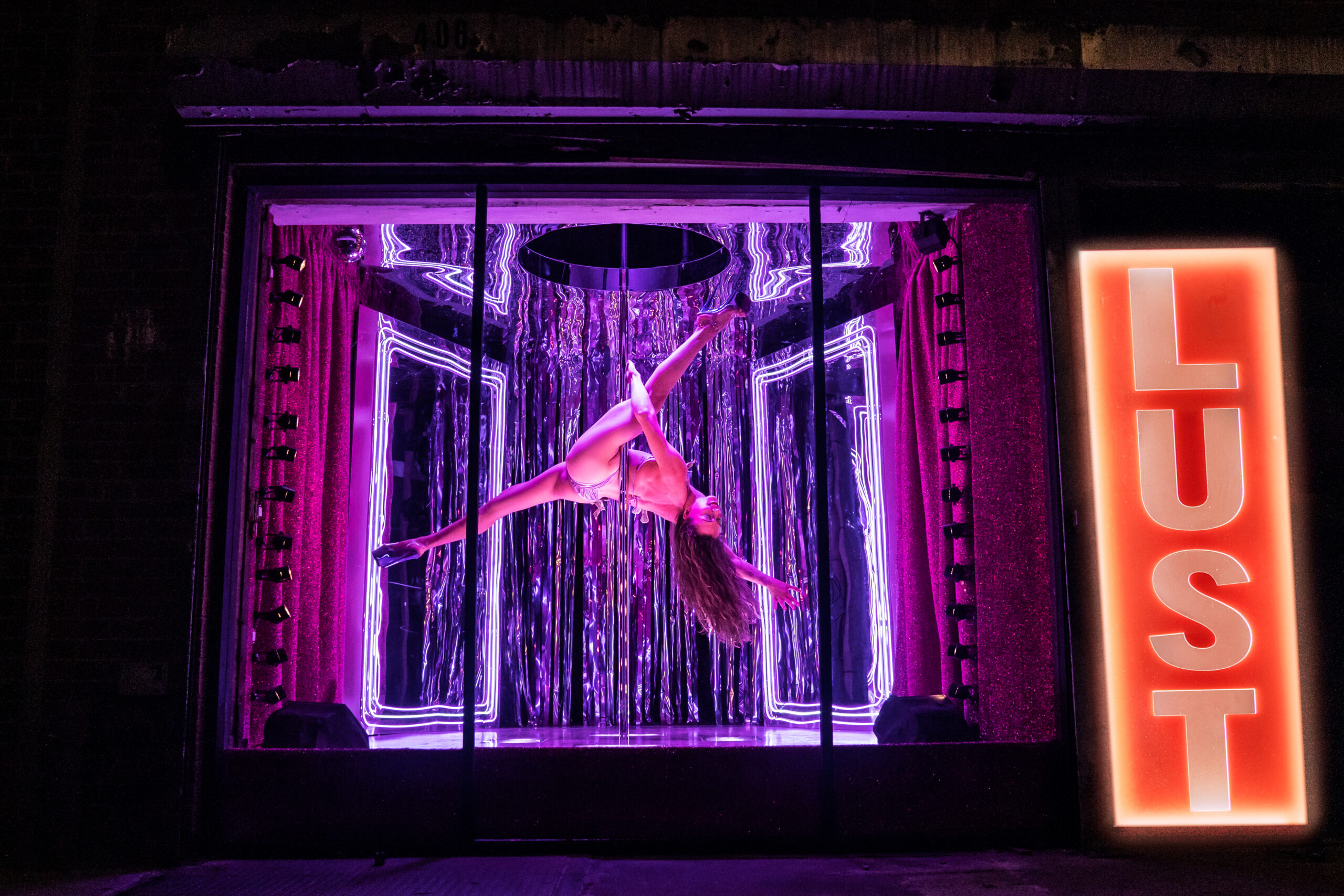
The evening has three “curtain” times – 8 p.m., 9 p.m., and 10 p.m. – when three sets of audiences arrive in the Meatpacking District and are given headphones in which to hear the plays that are performed mainly behind glass in storefronts in front of which the audiences are rotated. There is one play that takes place on a stage in a converted storage container set on one of the district’s cobblestone streets filled with ghosts rattling their chains from S&M clubs past. David Rockwell did the astoundingly astute sets. Costumes are by Dede Ayite. The lighting has been conjured by Yuki Nakase Link. The sound design is by Tyler Kieffer. The cast, to a sin, is exemplary. Kaufman directs with a deftness that daringly doesn’t shy away from the most troubling aspects of the production which its website tells us “contains mature content including nudity, adult language, simulated sex, simulated sexual violence, simulated sex work, and death.”
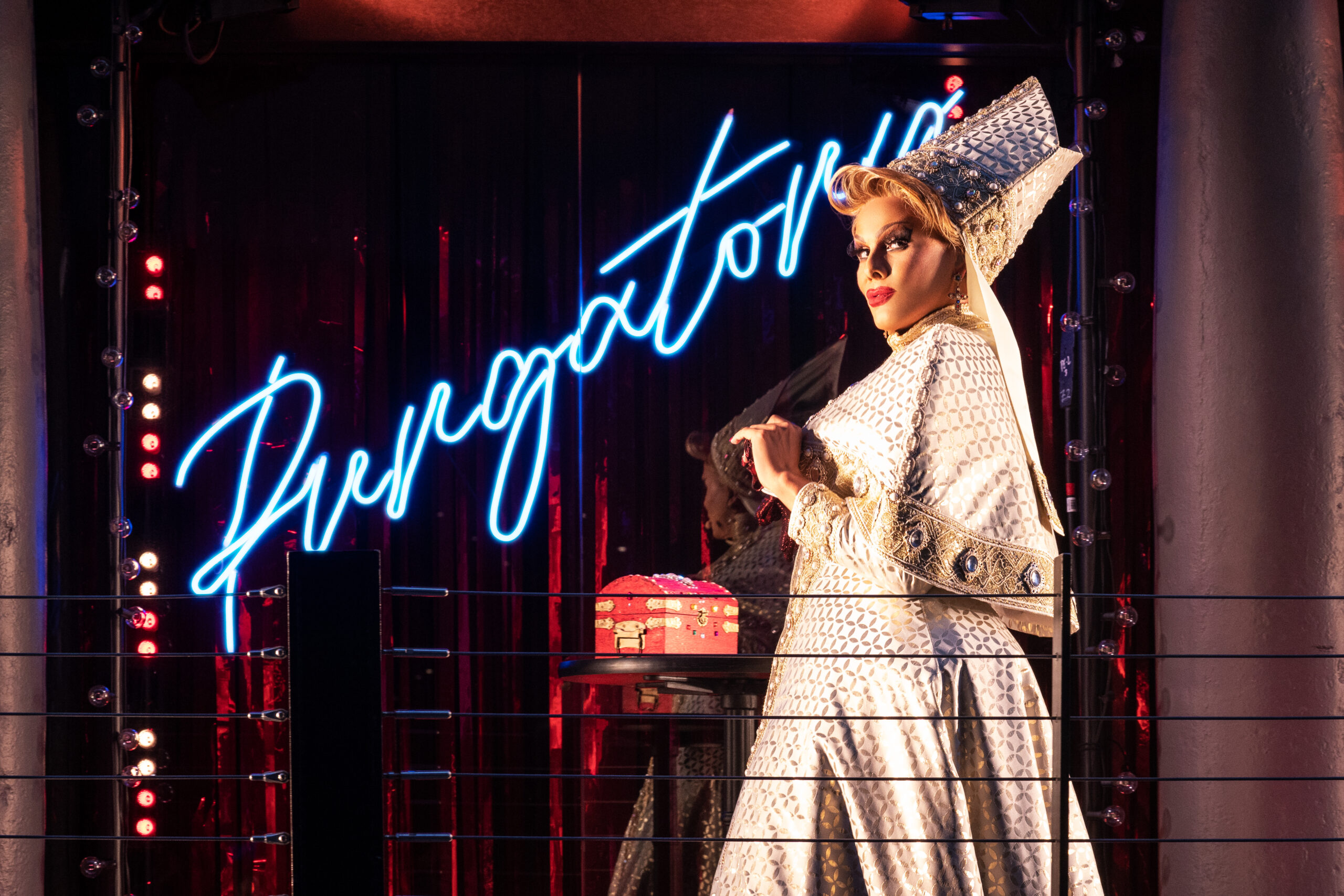
The evening also has a prologue presided over by Shuga Cain, the stage name of Jesus Martinez who became an audience favorite during season eleven of RuPaul’s Drag Race, which takes place in purgatory. The production itself seems an apt cultural entryway back from the purgatory of this pandemic, an incongruous theatrical experience that combines the most elemental of carnal impulses with the communicative technology that has become almost bodily in its application as we navigated our cocooned lives this last year just as it helps us now navigate this evening of theatre with its sense of immersion and separateness experienced disconcertedly at the same time – sort of like experiencing the sensation of guilt and the thrill of sin simultaneously, which alas just might be the heady, dizzying, deadly human condition. In her rave review of the production in Variety, Ayanna Prescod opened with the question, “Who knew iniquity could feel so pulsating and immensely purifying?” Those of us lucky enough to experience this production – which is scheduled to run through July 18th – certainly know it now.
Moisés Kaufman agreed to be the first interlocutor for this new Five Questions For … column.
You have said that this production is an act of defiance. What are you defying – other than the pandemic – and is all theatrical art in some way such an act?
Yes. I think all theater is an act of defiance, especially in America today. But this show specifically was conceived to stand against the previous 15 months of silence – that torturous theatrical silence we all lived through. And it’s been so inspiring to see audiences coming back to us with such glee and joy!
Why did you choose Greed as your subject for the play you wrote – which seems in its dark humor as much about familial dysfunction as it does about Greed itself.
Because, unfortunately, it’s the most common of sins. And the most pernicious.
This production is a re-entry point – a deeply imaginative and collaborative hybrid – for you and Tectonic Theatre Project to emerge, yes, defiantly from the pandemic. Now that we are coming out of it all, how has the experience of being not only threatened but quieted by a human pathogen affected such a deeply human art form as theatre?
For Tectonic, this is a very important show. We founded the company to be an experimental laboratory for new work and this show is the result of all the many years of theatrical experimentation. I love the idea of taking over the streets to do theater – especially after the epidemic. As for the effect the pandemic will have on our art form, I think the audiences now are more appreciative of the work. We missed doing the work. They missed experiencing it.
You have been immersed in Catholic notions of sin as a theatrical endeavor and as director who is Jewish. Does theatre have an innate moral component or is it amoral in its explorations and should leave morality to those who come to pay witness to it?
This is a great question. When Oscar Wilde was asked in a court of law whether his book The Picture Of Dorian Gray was “immoral,” he replied that books cannot be moral or immoral, they can only be well written or badly written. On that point, I side with Wilde. Theater is moral or immoral only inasmuch as the society in which it is created is moral or immoral. But the work, per se, in order to achieve its true destination, must not be concerned with issues of morality.
Someone once said that deliberate cruelty was the one unforgivable thing but stopped short of calling it a sin. Maybe such a thing could be incorporated into Wrath. It certainly was in the plays you curated and directed for Seven Deadly Sins. If there were an Eighth Deadly Sin, what would it be?
Tennessee Williams said that [about deliberate cruelty]. Yes. I agree that it’s unforgivable. As for it being incorporated into Wrath, I’m not sure. The way Dante describes Wrath in The Divine Comedy is that it’s a seeking of “perverted” justice – meaning that the person who’s wrathful always believes that they’re righting a wrong. That’s what we explored in Ming’s play [about Wrath.]
As for an Eighth Sin, I would say it’s stupidity.