










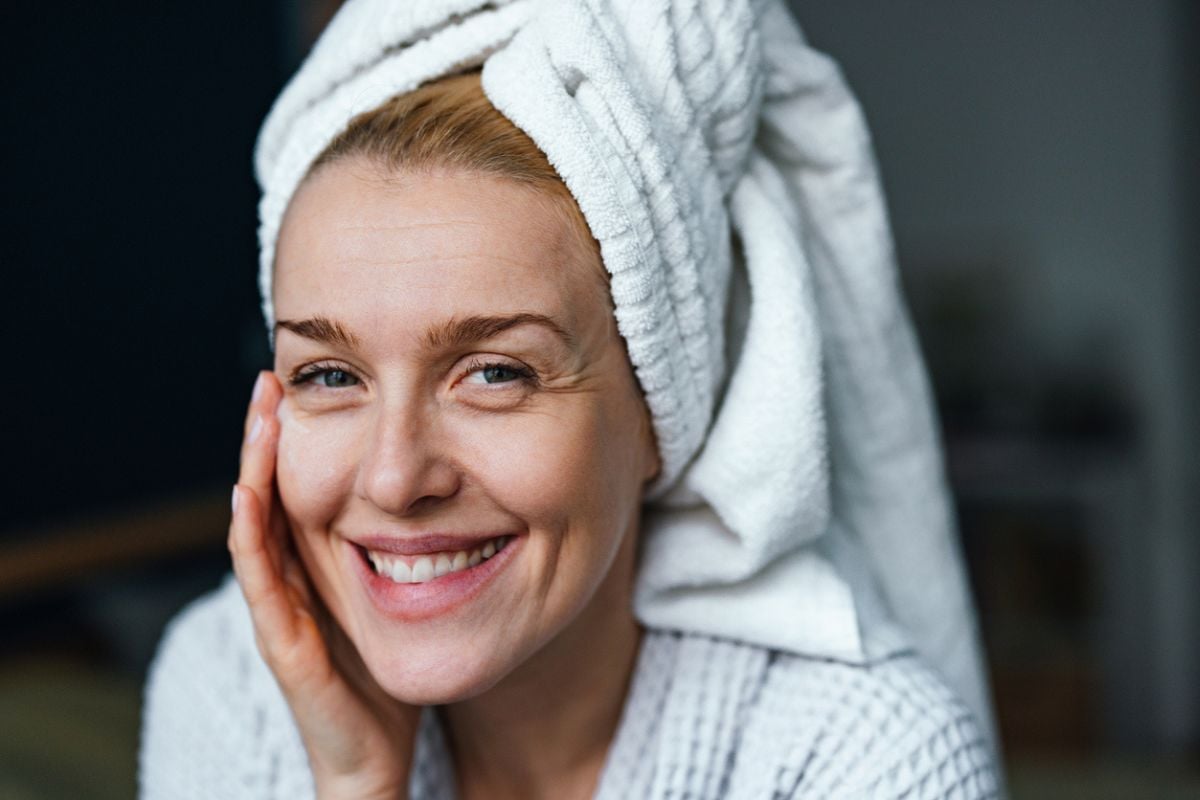
You have probably noticed it happening gradually. The moisturizer that used to leave your face dewy by morning now barely makes a dent. Your complexion looks a little flatter than it did a few years ago, and foundation seems to cling to patches you never had before. Most of us chalk it up to aging and move on – but what if the real issue is not what you are putting on your skin, but what you are failing to take off? The answer, according to a leading dermatologist, might be simpler than you think, and it starts with one often-overlooked step in your routine.
Why your skin stops glowing after 60
Board-certified dermatologist Marisa Garshick, MD, FAAD, at MDCS Dermatology in New York City and assistant clinical professor of dermatology at Cornell – New York Presbyterian Medical Center, points to a straightforward biological shift. As we age, our natural skin cell turnover slows down considerably. The result is a buildup of dead cells sitting on the surface, which can leave skin looking dull, dry, and uneven.
That sluggish turnover also contributes to clogged pores, occasional breakouts, and a rough, textured appearance that no amount of foundation can truly mask. Add to that the progressive loss of collagen and elastin – the proteins responsible for firmness and bounce – and you get the appearance of fine lines, wrinkles, and overall skin laxity. So the question becomes: how do you clear the way for fresher skin without causing more damage in the process?
The case for gentle exfoliation – and the ingredients that matter
Exfoliation is simply the process of sloughing away those accumulated dead skin cells to reveal smoother, brighter skin underneath. It plays an important role in any anti-aging skincare routine, according to Dr. Garshick, but there is a critical caveat. You still need to be gentle and avoid harsh exfoliation or abrasive scrubs that may be too irritating for mature skin.
Instead, Dr. Garshick recommends looking for gentle exfoliants such as lactic acid and mandelic acid. Formulas that also contain nourishing and calming ingredients like hyaluronic acid, niacinamide, and squalane are especially beneficial because they do not just resurface – they hydrate, soothe, and support the skin barrier at the same time. That dual action is what separates a good exfoliator for mature skin from one that leaves you red and irritated.
The market offers several formats worth considering. Pre-soaked toner pads, for instance, deliver exfoliating chemicals and brightening ingredients in a single swipe. The K-beauty brand Medicube makes a popular dual-sided version that combines citric acid, white willow bark (a natural BHA), and botanical extracts on a textured side for buffing, with a softer side designed to hydrate and soothe. Another option, peel pads from m-61, pairs glycolic and salicylic acids with vitamin K, bilberry, and chamomile – gentle enough for even ultra-sensitive skin types.
From serums to scrubs: picking the right format for your routine
Exfoliating serums are a strong choice when you want a glow boost without compromising the skin barrier. One drugstore-available option blends kojic acid, tranexamic acid, glycolic acid, vitamin B5, and thermal spring water, making it particularly useful for dark spots and hyperpigmentation. CLEARSTEM takes a different approach by targeting both acne and aging concerns with mandelic acid, lactic acid, vitamin C, and turmeric, helping unclog pores while fading post-breakout marks.
For the body, a lightweight, non-greasy lotion built on salicylic acid, lactic acid, hyaluronic acid, and three essential ceramides can improve rough, bumpy skin by gently exfoliating, hydrating, and locking in moisture all at once. Toners offer yet another avenue. One alcohol-free formula relies on anti-inflammatory aloe vera to comfort sensitive skin without leaving it tight or dry, while another harnesses five percent glycolic acid to brighten and smooth an uneven complexion with minimal effort.
Physical exfoliants still deserve a place too, as long as the texture is refined enough to avoid scratching. A scrub made with sugar crystals that dissolve during massage, plus papaya and pineapple enzymes, buffs away dead cells and excess oil without stripping. Another creamy option uses ultra-fine hydrated silica particles alongside glycerin and aloe vera to remove dullness while keeping skin soft and hydrated.
What this means for your routine going forward
The takeaway here is refreshingly practical. Radiant skin after 60 does not require injectables or aggressive treatments. It requires consistency, high-quality skincare, and a well-chosen exfoliator that matches your skin’s current needs. Prioritize gentle acids like lactic and mandelic, seek out formulas that also deliver hydration and barrier support, and resist the urge to over-scrub. Your skin is already doing its best – you just need to help it finish the job.


