










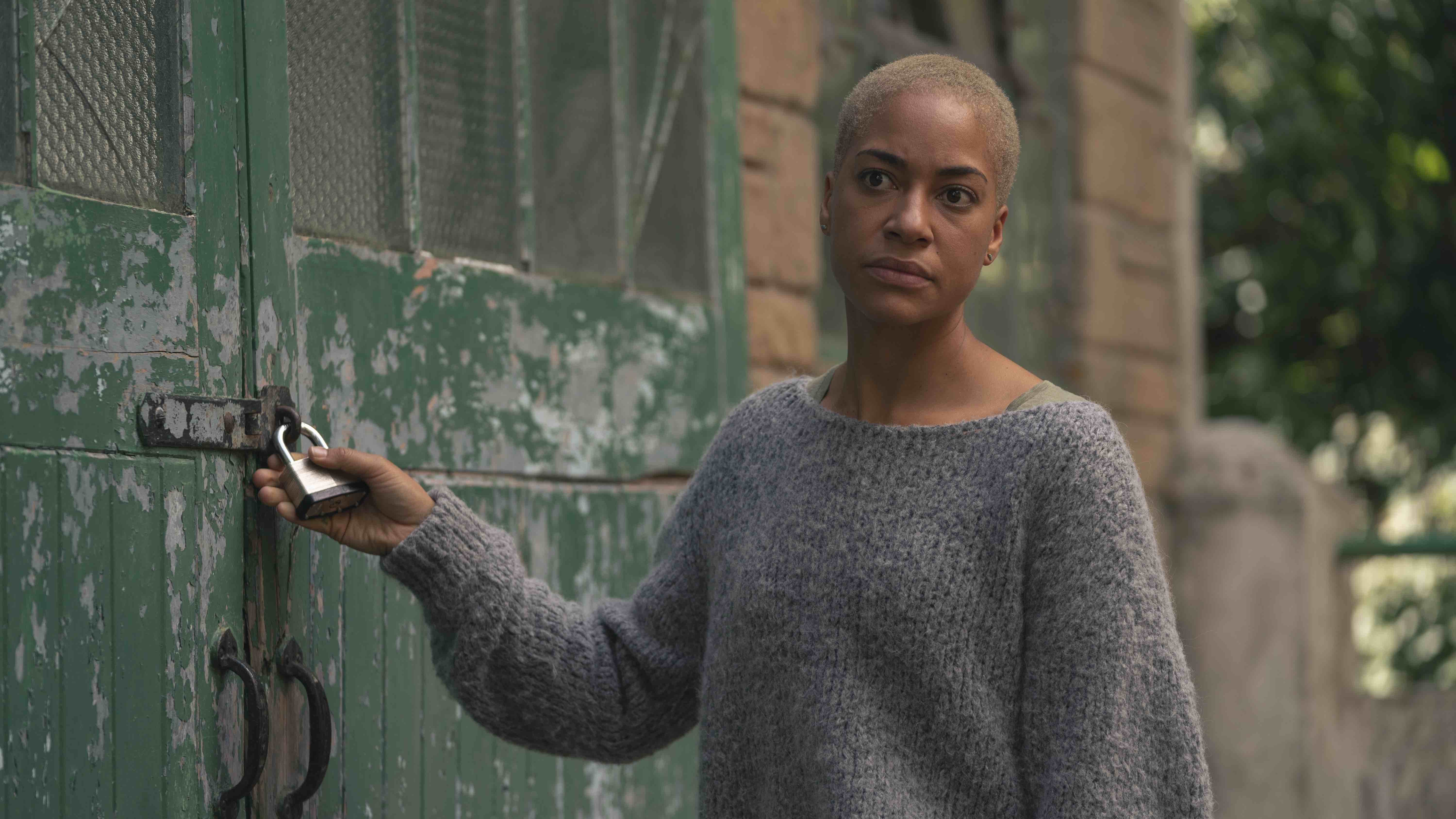
Cush Jumbo is ready to get uncomfortable. No, we don’t mean putting on “hard pants” again after a year of working from home. The 35-year-old English actor is leaving behind her best known role—to US audiences anyway—as Luca Quinn on Paramount+’s The Good Fight, to pursue projects that will challenge her in the UK.
One of those projects is The Beast Must Die, which premieres stateside on AMC+ July 5, before airing on AMC beginning July 12. In the grim, suspenseful drama (based on a 1939 novel by none other than Daniel Day-Lewis’s father), Jumbo plays Frances, a mother whose young son was killed in a hit-and-run on the Isle of Wight. When the local police fail to find the driver responsible for her son’s death, Frances sets out to find him herself. Her quest for revenge leads her to the wealthy, dysfunctional Rattery family—and their domineering patriarch George (Jared Harris).
Ahead of the series premiere, Jumbo got on Zoom with GRAZIA from her home in London where she’d just recently wrapped her final scenes for The Good Fight. We chatted about Frances’s desperation, learning to sail and, of course, Luca Quinn.
Was there a moment when you felt most in tune Frances? When you really felt most connected to who she is?
What I was always hanging onto with Frances was this idea of her being a teacher. Before you get into the epic mess of, like, revenge! She—actually quite in common with George—is very good at reading people, because she’s a very good teacher. She’s good at looking around a room and working out how she needs to interact with each child, and how she can help one advance or pull one back. And I guess adults are just grown-up kids. Also, because of that, she always had this strong moral sense. So, even when she was manipulating people, I wasn’t ever coming from a point of thinking, Frances is manipulative. It was always: Frances is struggling with the right thing to do. Because deep inside her, she knows everything she’s doing is wrong.
Also, I did a month’s sailing tutoring, because I had to sail that yacht kind of by myself for a lot of takes and not kill any of the other actors. And I weirdly wasn’t expecting to find so much of her within those lessons and learning about sailing. But it tells you a lot about a person that enjoys that. They enjoy being outdoors and somehow being able to use what they’re feeling from the wind and what they’re feeling from the sea to operate this [boat]. Someone that’s quite in contact with their feelings and what’s around them. So, weirdly, I finished those lessons, I started filming and I felt like, Ah, I think I know who this is.
I think the first image we see of Frances, she’s addressing the audience and telling us she’s going to kill someone. In that moment, I think we’re certain she means it. But as the series goes on, I wonder, are we supposed to question whether she can really go through with it?
So, one of the things I really loved about [series creator Gaby Chiappe’s] script, is that [Frances] was a very ordinary person put in an awful situation, but had nothing to lose, because she’d lost her husband and she didn’t have many close friends. And so, that frame of mind and that grief was driving her to do extraordinary things. I really hate watching stuff where very normal people suddenly are, like, really good at stabbing other people! I liked that it was like the tide: I can do this. I can do this. I can do this. Oh, no, I’m losing it. I’m losing it. I can’t do this. Why am I here? No, I’m angry! I can do it! And maybe through her eyes that would be exciting because you actually don’t know if she’s gonna be able to do it. Is she gonna break before she gets there? Does she even have the right person? Is she going off on a tangent that’s not gonna make her feel any better? So, I think it’s good if you’re not sure if she can pull it off.
What does she think killing the person responsible for her son’s death will do for her? Does she expect it to bring her peace? Satisfaction?
She’s a person who has always followed process as a teacher. She’s never had any interaction with the police before in a serious way. And this one interaction that she has with the justice system changes something in her that’s about: you do everything right and you get f**ked anyway. And something breaks in her mind. Something changes. She has this well of overwhelming grief that she’s already been living with. She’s hanging on to the fact that the process of the investigation and the answers are gonna release her from that. And then she’s told that nothing’s going to happen. I think in that frame of mind, all she is zoned in on is getting to the end goal. I don’t think she knows how she’s gonna do it, if she’ll be able to do it, if she’ll find the right person. But it’s the only thing getting her out of bed in the morning. I think she thinks she’ll be released. The question is: Does revenge release you? Does revenge get you justice? Does it feel as good as you think it’s gonna feel? Or, ultimately, are you just trapping yourself in another box?
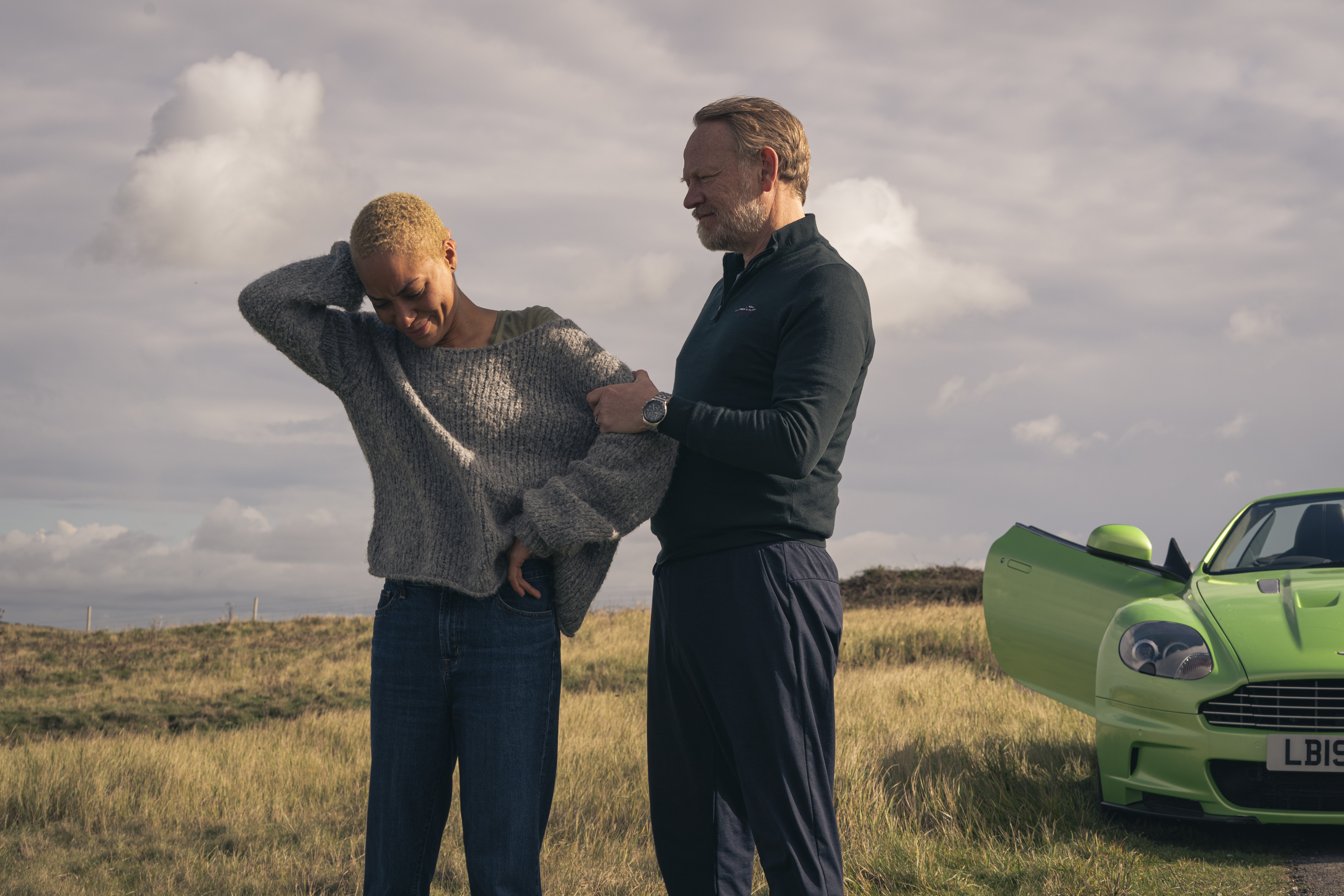
In her quest for revenge, Frances becomes enmeshed with this wealthy white family, who she believes are connected with her son’s death. How clearly does she see these people? She’s an outsider, but she’s also kind of single-minded, and maybe her perspective is clouded by her grief.
She says particularly of George that she sees him clearly. But yes, of course, the whole family. You mentioned that they’re a wealthy white family. Gabby changed the original character from a man to a woman, but I know that she hadn’t thought through what I looked like. There are a lot of things that Joy, George’s sister played by Geraldine James, says that could as easily niggle any teacher from a working-class background. Here in the UK, we still have quite a strong class system. But they niggle in an even more awful and interesting way when you say them to somebody of color who’s working class. I think with George in particular, when [Frances] says that, about him and about the family… What George does is poisoning his son and poisoning his sister-in-law, and has poisoned his wife. But on the surface, George is very charming and that’s why he’s successful. But Frances is the sort of person who—she can work these things out straight away. And that’s why I think George eventually becomes one of the only people that’s able to see through Frances. Because they’re similar. He can see her too.
She begins to help them in some ways, and I found myself wondering: Is she good for these people? I mean, she’s not like Mary Poppins coming in to fix their lives, but you know, whatever her motives, is she in some ways helping Lena and Phil?
I think that’s some of the beauty of the story, right? And one of the things that makes her an interesting character to play. Watching somebody with no empathy’s not interesting. I think that’s what makes it difficult for [Frances]. Her relationship with Lena is not fake. It’s a way into the family, but when they have fun together, they really have fun together. And when [Frances] says that [Lena] can do better in life, she really means it. And when she teaches Phil something, it’s not bullsh*t. The tragedy of it is that in another time, another place, her and Lena might have been friends and she might have been Phil’s summer tutor.
Something that I’ve been really interested in talking to actors about recently is how they approach projects that depict police work and policing. Obviously, here in the US we’re having a long overdue debate about policing, and it has filtered into how TV shows and films depict policing and how that shapes the public’s perception of cops. Of course, The Beast Must Die is about a lot of things, but it also depicts police work. So, I wanted to ask, if you don’t mind sharing, whether you as an actor and as a Black woman think about these kinds of project differently now. Are there certain criteria that a project about policing has to meet in order for you to sign on?
I moved into a different phase of being able to choose my work more carefully a few years ago, and my criteria for those pieces of work kind of encompassed quite a lot of things. But I don’t think it ever changed from thinking about how my character in particular would be viewed by a little girl like me. I watched so much television growing up and it is impactful on you. For The Beast Must Die in particular, it’s very interesting and I hope it can translate to the US, because with the police force that they’re describing—by the way, the police force on the Isle of Wight are lovely. But what it’s really depicting is this small-town idea of kind of letting things go, ’cause everyone knows everyone, everyone’s in everyone’s pockets. A kind of corruption that’s more on the small-town level, which means that things kind of stagnate. I think that’s something that people in the UK can identify with in many cities. And it’s something that we are currently looking at ourselves in the same way that the US is looking at race.
In this story, you can feel your mind flicking at the beginning. Like, Why are the police being corrupt? Is it to do with what she looks like? Is it to do with the fact that she’s not loaded? Why are they not interested in this case? As time goes on you realize that that might be a subconscious element, but that’s not really what it’s about. It’s about everybody being in everybody’s pocket.
Gaby Chiappe is developing a follow-up series focused on Billy Howle’s character Nigel Strangeways. Do you expect Frances to return?
I would say that’s unlikely.
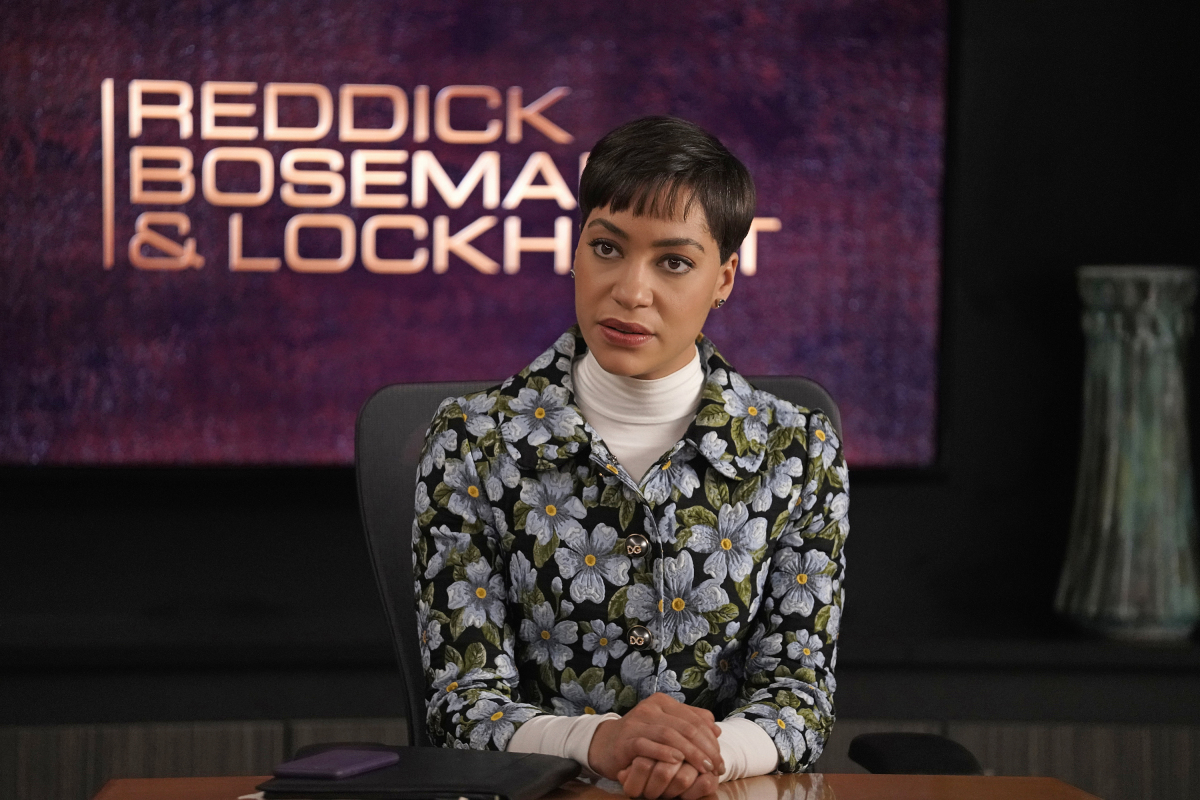
I’d love to just quickly talk about The Good Fight. I love Luca Quinn so much. Tell me about your decision to leave the show—I’m literally devastated.
I’m really sorry. I’ve been fielding letters and DMs about this. Apparently, I’ve broken a lot of people’s hearts—more than I did when I was single, which is a bit disappointing. Yes, I absolutely loved that show, and it was a huge learning curve for me. I spent five years living in New York. But I just felt like Luca had done everything that she could do and the only thing holding me there was that I loved the crew and I loved the creative team. But that is not enough to keep you creatively satisfied. And so, it was just time to move on. I missed the UK. I missed being onstage. And I’ve never played a character for that long. So, sometimes you have to be brave and take a leap to push yourself further to get better. Because I want to get better and I want to learn more and I wanna be doing this when I’m, like, 105. So, you can’t just stay comfortable. You have to get uncomfortable, so that’s what I decided to do.


