










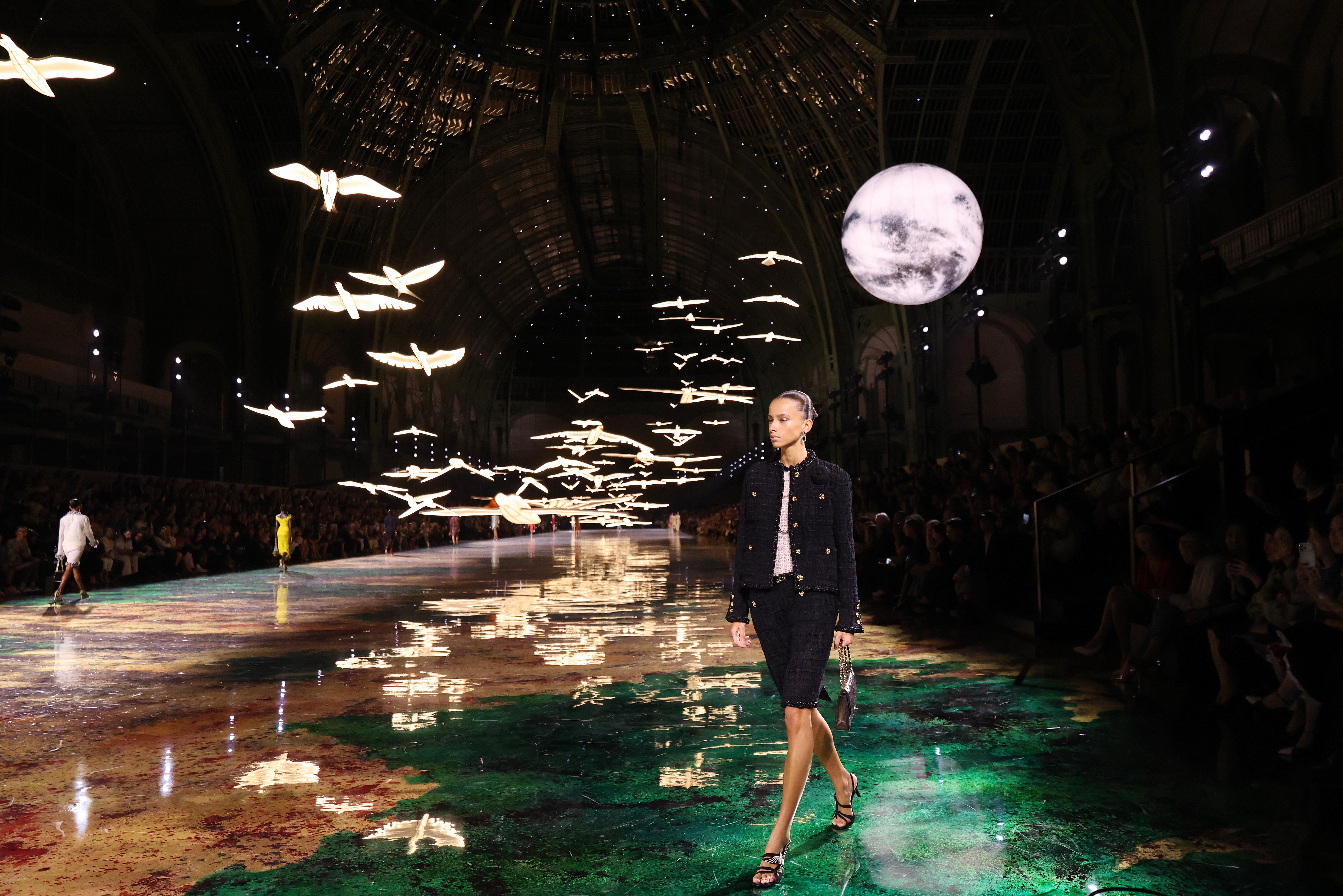
At Chanel’s Spring 2027 show, the most modern bag on the runway was also the oldest. Dyanira Hurbuscher opened the collection carrying Gabrielle Chanel’s personal 2.55, retrieved from the house’s Patrimoine archives, and returned for the final look with the same piece in hand, allowing a single object to frame the entire show with the quiet authority of something that had already witnessed fashion change many times before. Between those two appearances, Matthieu Blazy presented his vision of Chanel. The bag, almost discreetly, supplied the thesis. Created in February 1955, hence its elegantly functional name, the 2.55 altered the relationship between women and handbags by introducing a shoulder chain that granted the wearer a new physical freedom. Gabrielle Chanel’s own example possesses a different kind of eloquence today, one that comes from use rather than preservation: softened leather, worn edges and a patina accumulated through contact with a life rather than with a display case. Time has written across its surface with a sophistication that design alone could never manufacture. More than seventy years later, the bag crossed a runway devoted to the future and appeared entirely at ease there. That may be the rare privilege of a true icon: history settles into it so completely that age begins to resemble relevance.
Matthieu Blazy Turns the Chanel Archive Into a Living Language
 The gesture offers an unusually
precise key to Matthieu Blazy’s Chanel, because
his relationship with the archive begins with understanding rather
than reproduction. He treats the codes of the house as a vocabulary
whose meaning can shift through callowing tweed to acquire a softer
temperament, familiar silhouettes to move with a different cadence
and accessories to carry the intimacy of objects discovered over
time rather than produced for immediate recognition. Blazy seems
most interested in the life that gave these objects their
authority. Their permanence comes from the way they entered a
woman’s gestures and, over time, became inseparable from them. By
returning to that original intimacy, he gives
heritage a sense of movement, allowing memory to
remain present while each object acquires a contemporary
charge.
The gesture offers an unusually
precise key to Matthieu Blazy’s Chanel, because
his relationship with the archive begins with understanding rather
than reproduction. He treats the codes of the house as a vocabulary
whose meaning can shift through callowing tweed to acquire a softer
temperament, familiar silhouettes to move with a different cadence
and accessories to carry the intimacy of objects discovered over
time rather than produced for immediate recognition. Blazy seems
most interested in the life that gave these objects their
authority. Their permanence comes from the way they entered a
woman’s gestures and, over time, became inseparable from them. By
returning to that original intimacy, he gives
heritage a sense of movement, allowing memory to
remain present while each object acquires a contemporary
charge.
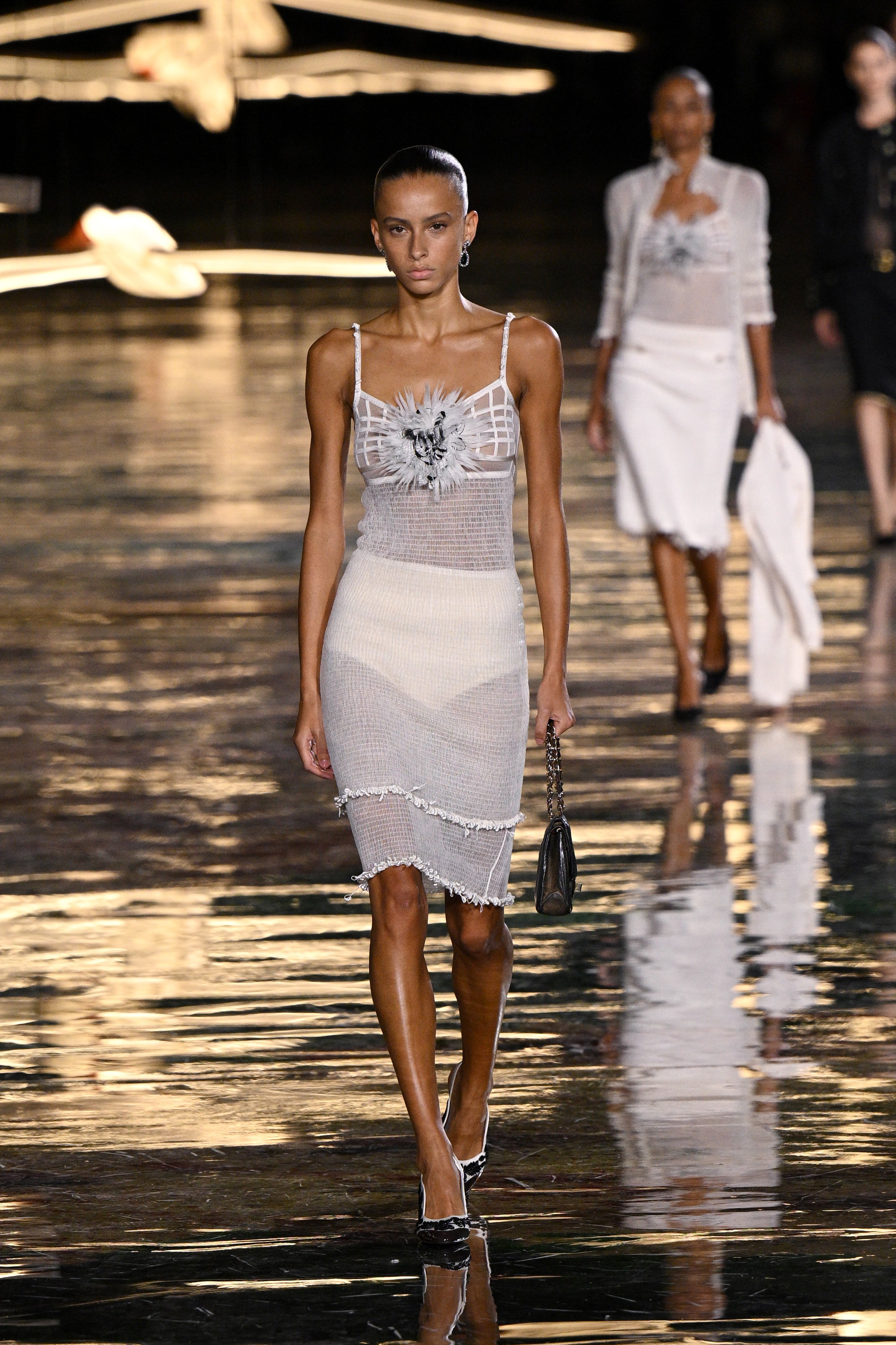
This is also where Blazy’s work acquires unusual authority. His authorship can be felt in the tactile intelligence of the clothes, in the attention given to craft, surface and the passage of time, yet the house retains its own gravitational force. His sensibility inflects the language of Chanel without overwhelming it, creating the kind of equilibrium that becomes increasingly rare at a moment when creative directors often arrive carrying fully formed aesthetic universes of their own. The distinction matters because fashion’s archives have become some of the industry’s most valuable forms of cultural capital. They contain symbols already charged with recognition, desire and mythology, which makes them endlessly seductive as sources of inspiration. Blazy approaches them with greater ambition. He seems interested in the impulse beneath the reference, in the reason an object survived long enough to become part of collective memory, and in the possibilities that emerge once that memory begins to move again. The old 2.55 therefore functions almost like a compass. It carries the past with extraordinary clarity while still pointing forward.
When the Creative Director Becomes Part of the Brand Identity

The moment also belongs to a broader transformation taking place across luxury, where creative directors increasingly possess aesthetic identities strong enough to travel from one house to another and remain instantly recognizable along the way. Audiences now read a designer’s vocabulary across institutions with a fluency once reserved for logos, and personal authorship has become a form of cultural capital in its own right. Alessandro Michele provides one of the clearest examples. The romantic excess, historical layering and cultivated eccentricity that shaped his Gucci years now inhabit Valentino through a different institutional framework, while the audience that responded to his imagination can follow that sensibility into a Maison it may previously have regarded from a greater distance. Taste has become more mobile, and the relationship between customer and designer increasingly travels alongside the customer’s relationship with the house. The commercial implications are considerable because this movement subtly alters the traditional architecture of luxury loyalty. A longtime Chanel customer enters the boutique carrying decades of visual memory and encounters those familiar codes refracted through Blazy’s eye, while a customer who once felt little affinity with the house may recognize his sensibility and discover an entirely new emotional point of entry. The Maison supplies history, symbolism and authority; the designer determines the temperature at which those elements are experienced.
 Chanel makes this tension
particularly compelling because few houses possess a visual
identity so deeply embedded in collective consciousness. Tweed,
pearls, quilting, chains and camellias already form a language
understood far beyond fashion itself, which gives any creative
director entering the house both an extraordinary inheritance and
an unusually exacting responsibility. Blazy’s achievement lies in
allowing those symbols to breathe differently while preserving the
coherence that made them powerful. Perhaps this is becoming the
defining intelligence of the modern creative director: the ability
to inhabit an existing mythology with enough confidence to
transform it, enough discipline to preserve its inner logic and
enough sensitivity to understand that authorship sometimes gains
strength through restraint. Gabrielle Chanel’s 2.55 has already
lived through decades of fashion’s appetite for reinvention, and at
Blazy’s show it required very little ceremony. It simply returned
to the runway carrying more than seventy years of memory on its
chain, and somehow looked entirely prepared for whatever comes
next.
Chanel makes this tension
particularly compelling because few houses possess a visual
identity so deeply embedded in collective consciousness. Tweed,
pearls, quilting, chains and camellias already form a language
understood far beyond fashion itself, which gives any creative
director entering the house both an extraordinary inheritance and
an unusually exacting responsibility. Blazy’s achievement lies in
allowing those symbols to breathe differently while preserving the
coherence that made them powerful. Perhaps this is becoming the
defining intelligence of the modern creative director: the ability
to inhabit an existing mythology with enough confidence to
transform it, enough discipline to preserve its inner logic and
enough sensitivity to understand that authorship sometimes gains
strength through restraint. Gabrielle Chanel’s 2.55 has already
lived through decades of fashion’s appetite for reinvention, and at
Blazy’s show it required very little ceremony. It simply returned
to the runway carrying more than seventy years of memory on its
chain, and somehow looked entirely prepared for whatever comes
next.


