









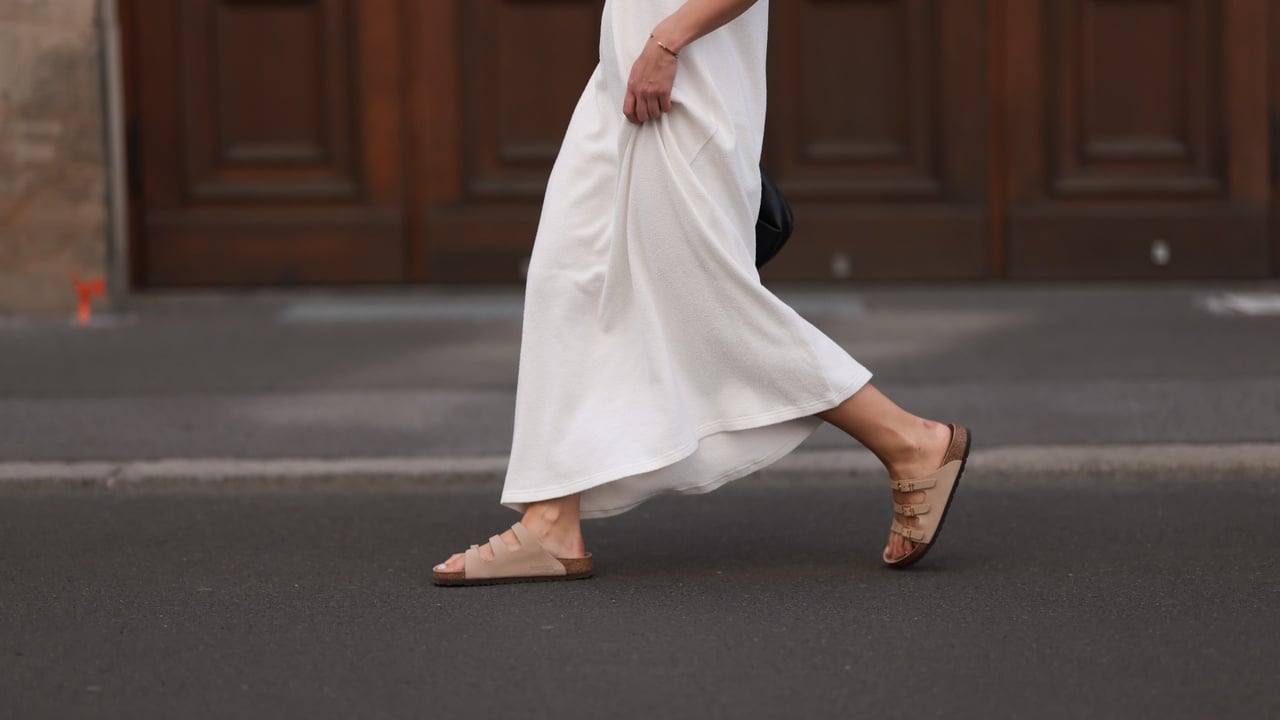
 For decades, the
Birkenstock was fashion’s great outsider. Designed
around wellbeing rather than trends, the cork-soled German sandal
built its following on honesty and comfort, and the industry repaid
that loyalty by treating it as the very opposite of glamour. That
verdict has now been overturned, and the proof costs $510. The new
1774 Gizeh Raffia, the latest release from
Birkenstock’s luxury line, takes the brand’s
iconic thong sandal and rebuilds it in natural woven
raffia framed with smooth nappa leather, in shades
of Midnight Navy and Ginger Brown. The anatomical
cork-and-latex footbed is still there, lined in
premium nappa and finished with a gold-tone buckle, but everything
around it whispers a different language. This is no longer the shoe
of the outsider. It is the shoe of arrival.
For decades, the
Birkenstock was fashion’s great outsider. Designed
around wellbeing rather than trends, the cork-soled German sandal
built its following on honesty and comfort, and the industry repaid
that loyalty by treating it as the very opposite of glamour. That
verdict has now been overturned, and the proof costs $510. The new
1774 Gizeh Raffia, the latest release from
Birkenstock’s luxury line, takes the brand’s
iconic thong sandal and rebuilds it in natural woven
raffia framed with smooth nappa leather, in shades
of Midnight Navy and Ginger Brown. The anatomical
cork-and-latex footbed is still there, lined in
premium nappa and finished with a gold-tone buckle, but everything
around it whispers a different language. This is no longer the shoe
of the outsider. It is the shoe of arrival.
From Germany to Paris: The 1774 Project
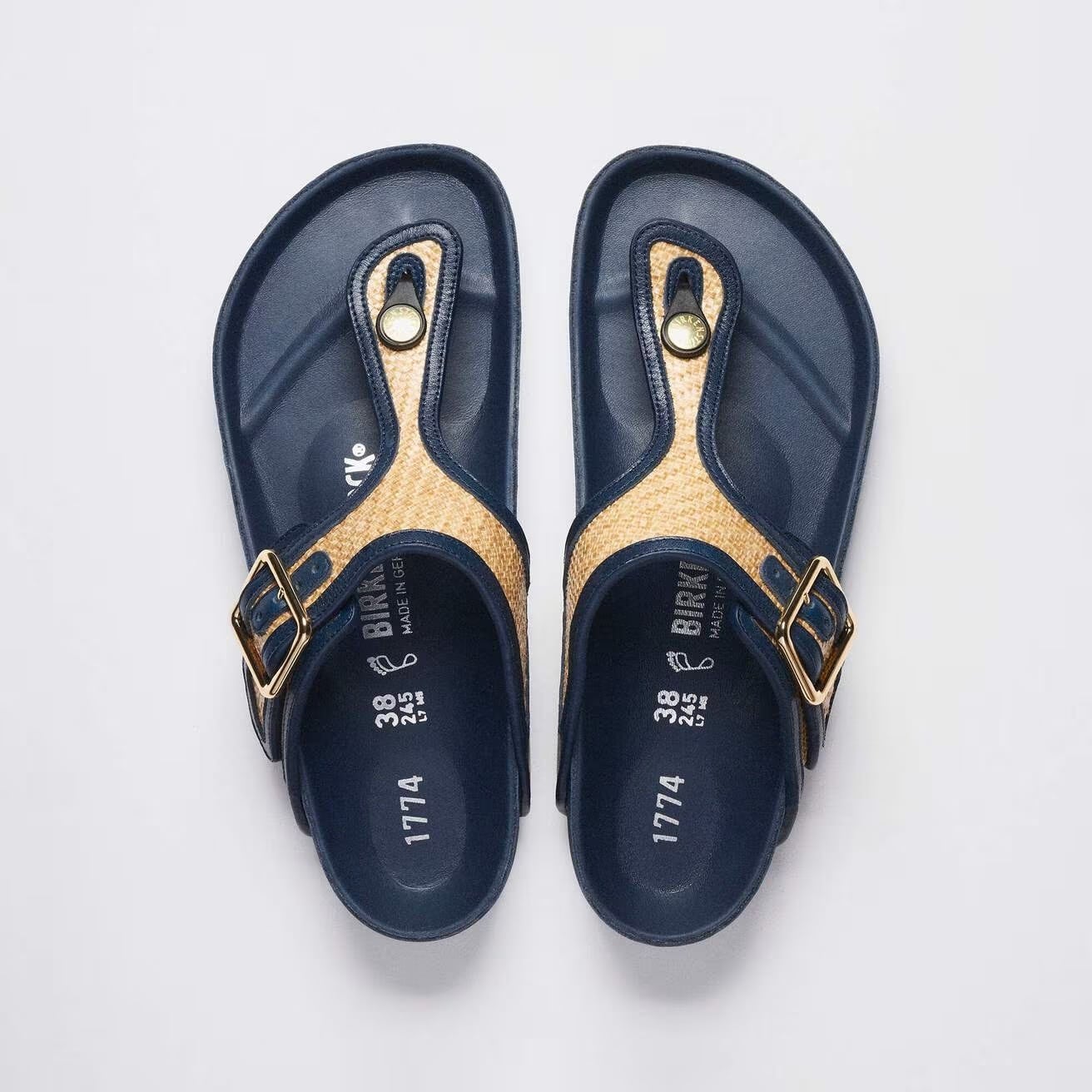
Birkenstock 1774 Gizeh Raffia, $ 510
The sandal belongs to Northeast Providence, the newest collection from Birkenstock 1774, the exclusive line named for the year the company began making shoes and headquartered, tellingly, not in Germany but in a Paris showroom. The collection pays homage to the Boston clog, which turns fifty in 2026, and channels the quiet coastal rhythm of New England into a palette of cinnamon, navy and ginger brown. Every 1774 piece is still made in the brand’s German workshops, and that is precisely the point of the exercise. The line exists to prove that orthopedic rigor and luxury craft are not opposites but ingredients, a thesis it has been testing for years through collaborations with Dior, Jil Sander, Rick Owens, Manolo Blahnik and Valentino.
The Raffia Masterstroke, or How the Ugly Shoe Won
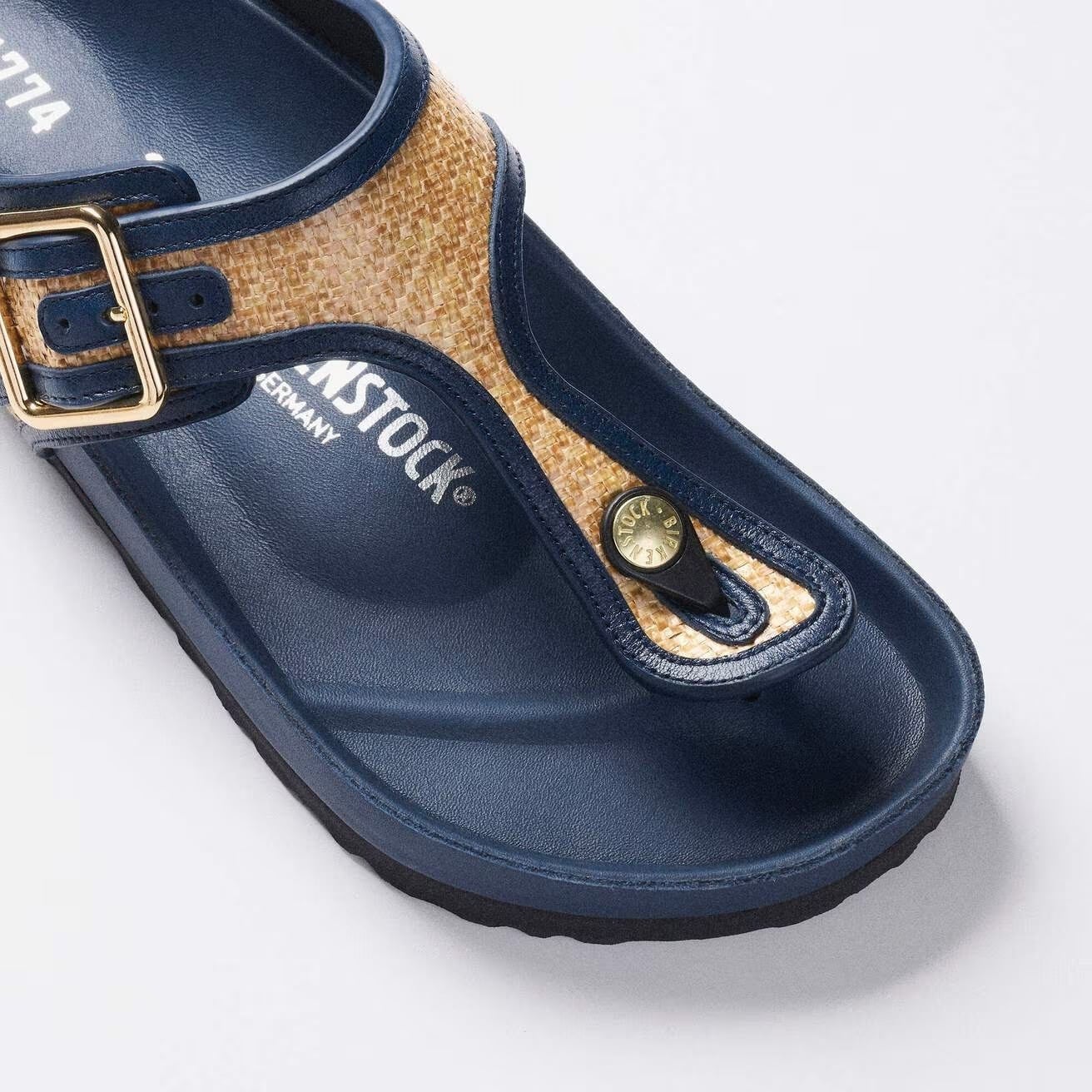
The raffia is the masterstroke. A material of market baskets and beach holidays, hand-woven and sun-bleached, it carries the same artisanal charge that turned woven totes into it-bags: the fantasy of a Mediterranean summer, rendered in texture. Grafted onto the Gizeh, whose minimal Y-shaped strap was already the most elegant silhouette in the Birkenstock canon, it completes a transformation two decades in the making. The journey runs from Phoebe Philo’s fur-lined Céline versions in 2013, which first dared the front row to reconsider, through Margot Robbie’s pink pair in the final frame of Barbie, to a stock market listing that confirmed what wardrobes already knew. The ugly shoe won. It won by refusing to change its sole while changing everything around it, and the $510 Gizeh Raffia is its victory lap: proof that in 2026, the most radical luxury is not a heel you suffer for but a footbed shaped exactly like you.


