










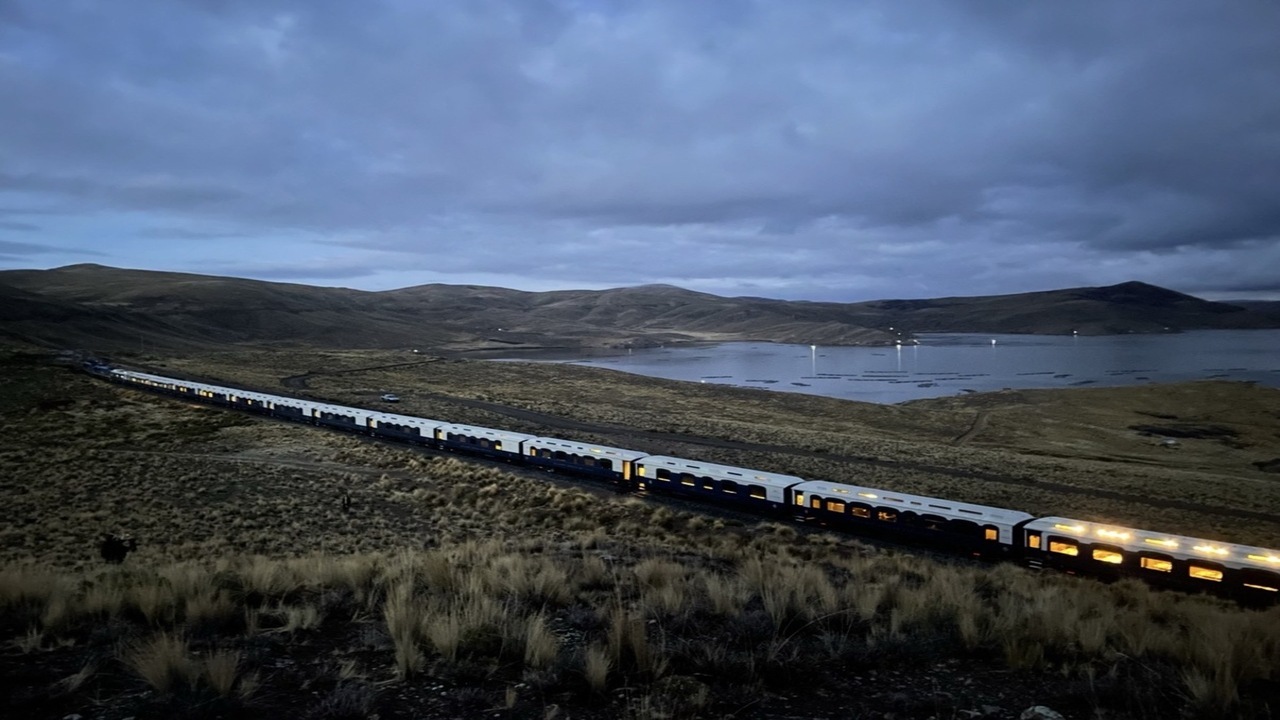
I stand shivering nearly 14,000 feet up in the quiet, windswept highlands of the Peruvian Andes, my breath escaping in wheezing bursts. It’s just after 5 a.m., and I’m on a hill overlooking Lake Saracocha on one side and Lake Lagunillas on the other, their surfaces like sheets of burnished tin in the dawn haze. Below me, between the two, my temporary home — the 18-car Andean Explorer, a Belmond train — lies motionless, snaked along the tracks amid brittle, honey-hued tufts of puna grass, its windows catching the first light.
Without WiFi here at the top of the world, my phone becomes only a camera, so I’m happily left to witness the view and simply be. I watch the memory of this place take shape in real time, already knowing it will stay with me long after I leave. I’m grateful to be wholly present as the insight settles in, bright and certain as the sun yawning awake over the altiplano.
It’s the art of creating magical scenes like this that underscores why Belmond has revolutionized and redefined slow travel, turning our most precious commodity — time — into a treasure to be indulged in. And that was exactly my intention as I embarked on my bespoke rail adventure from Machu Picchu to Arequipa.
My expedition began days earlier at Rio Sagrado, a Belmond hotel hidden away along the Urubamba River in the Sacred Valley. It’s an ideal base for acclimating to the altitude and the unhurried pace. At the property, I connected with Mother Earth over a ceremonial pachamanca — the Quechua word for “earth pot” — a feast of marinated meats slow-roasted underground on piping-hot volcanic stones. Llamas wandered the lawns, their large, dark eyes casting curious glances at the proceedings as I bottle-fed a cloud-soft white youngster named Valentina with one hand and toasted the evening with a glass of champagne in the other.
The next morning, the five-car train Hiram Bingham (named for the early-20th century American explorer who revealed Machu Picchu to the world, my next destination) lumbered into the hotel’s private station. I boarded to the lively flute, guitar and drum rhythms of traditional Huayno music. In the bar car, I sipped the tangy brightness of pisco sours. Every instant demanded my full attention: There was the lush cloud jungle and raging rivers sliding past outside, but also tiny details everywhere inside that might otherwise escape notice. A barman crowned an Amazonas Collins — a bubbly Tom Collins twist made with Gin’ca, a Peruvian gin infused with mountain pineapple botanicals — with a reddish-purple liquid recalling airampo seeds once used by the Incas to dye textiles.
Rain lashed the station as we arrived in Aguas Calientes, signaling the most anticipated leg of my adventure, the steep ascent to Machu Picchu. A father and his young daughter sprinted by, their smiles as bright as their wet-weather gear — the girl wrapped in a hot pink poncho, her father holding a violet umbrella. By the time the skies cleared and fog lifted, I felt equally flush with joy scaling the 15th-century walled citadel, believed to have been a retreat for Inca elite. The expansive views of the sky-high ancient marvel grounded me in the moment.
Later, in Cusco, two contrasting meals awaited me. For lunch at Pachapapa, I tried farm-raised guinea pig, a Peruvian delicacy surprisingly reminiscent of duck. Dinner at Mauka, helmed by Pía León, one of the world’s finest chefs, was elevated and immersive. Her cuisine is, quite literally, rooted in the region, drawing on local products, from tubers and corn to grains and native fruit. Crispy pork belly with rainbow quinoa was a masterclass in flavor, while the flaky white paiche, an Amazonian fish, came alive with the gentle sweetness of tropical fruit and the earthy richness of yucca.
That night, I felt like royalty as I slipped into bed at the hotel Palacio Nazarenas, a former 16th-century palace, where oxygen is thoughtfully pumped into the rooms to offset the thin mountain air. I fell into a deep and satisfying sleep, the perfect prelude to the main course of my trip: three days and two nights aboard a second train, the Andean Explorer.
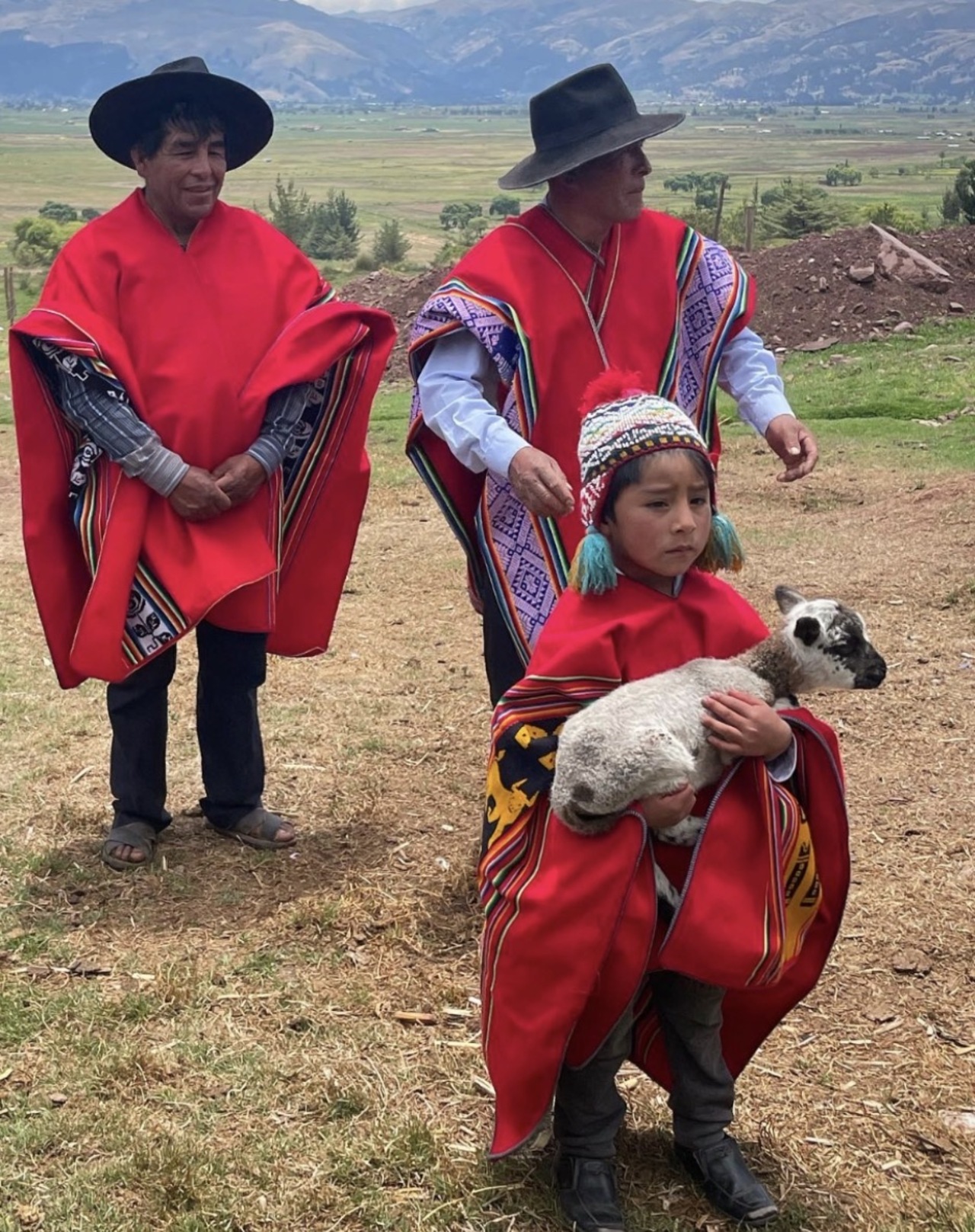
Traveling on South America’s first luxury sleeper meant moving from spacious hotel suites to more intimate quarters. The refurbished cobalt-blue and white cars, modeled after Pullman carriages of the 1920s, were a step back in time. My berth was in the Capulí car, named for a cherry-like fruit harvested in the Sacred Valley. As the train departed, I watched the world whiz by from my cabin’s two large windows. Compact villages yielded to emerald fields, where farmers tended sheep. Women in traditional garb — polleras (full, layered skirts) of fuchsia, turquoise and sunlit yellow, with matching llicllas (woven shawls) — waved as we passed. Sunbeams melted into raindrops streaking the windows, the steady click-clack of the train’s wheels coaxing me into an even deeper state of relaxation as we glided our way south.
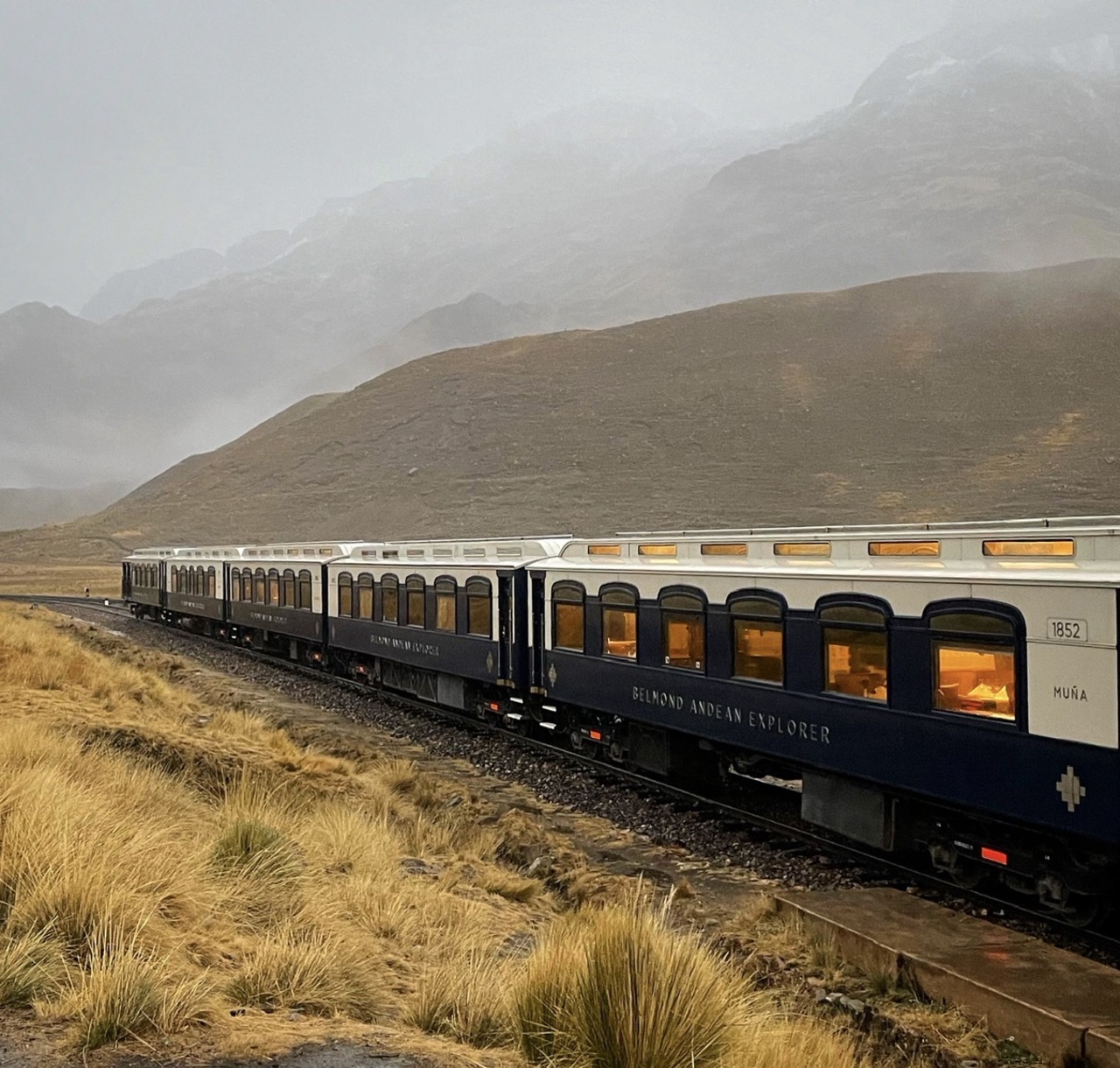
Life on the Andean Explorer struck a perfect balance of activity and leisure. I strolled between the two lounges, took in the fresh air on the observation deck, and treated myself to a massage in the spa. Some guests read; others lost themselves in the scenery, scanning hillsides for elusive vicuñas, wild relatives of llamas. Afternoons brought cocktails in the bar car while a pianist serenaded from a baby grand, followed by refined, white-table-cloth dinners featuring Peruvian fusion dishes. Evenings ushered in singing and dancing to a live band, offering moments to connect with fellow travelers and form bonds. Days and nights aboard the train were full, but they never felt rushed.
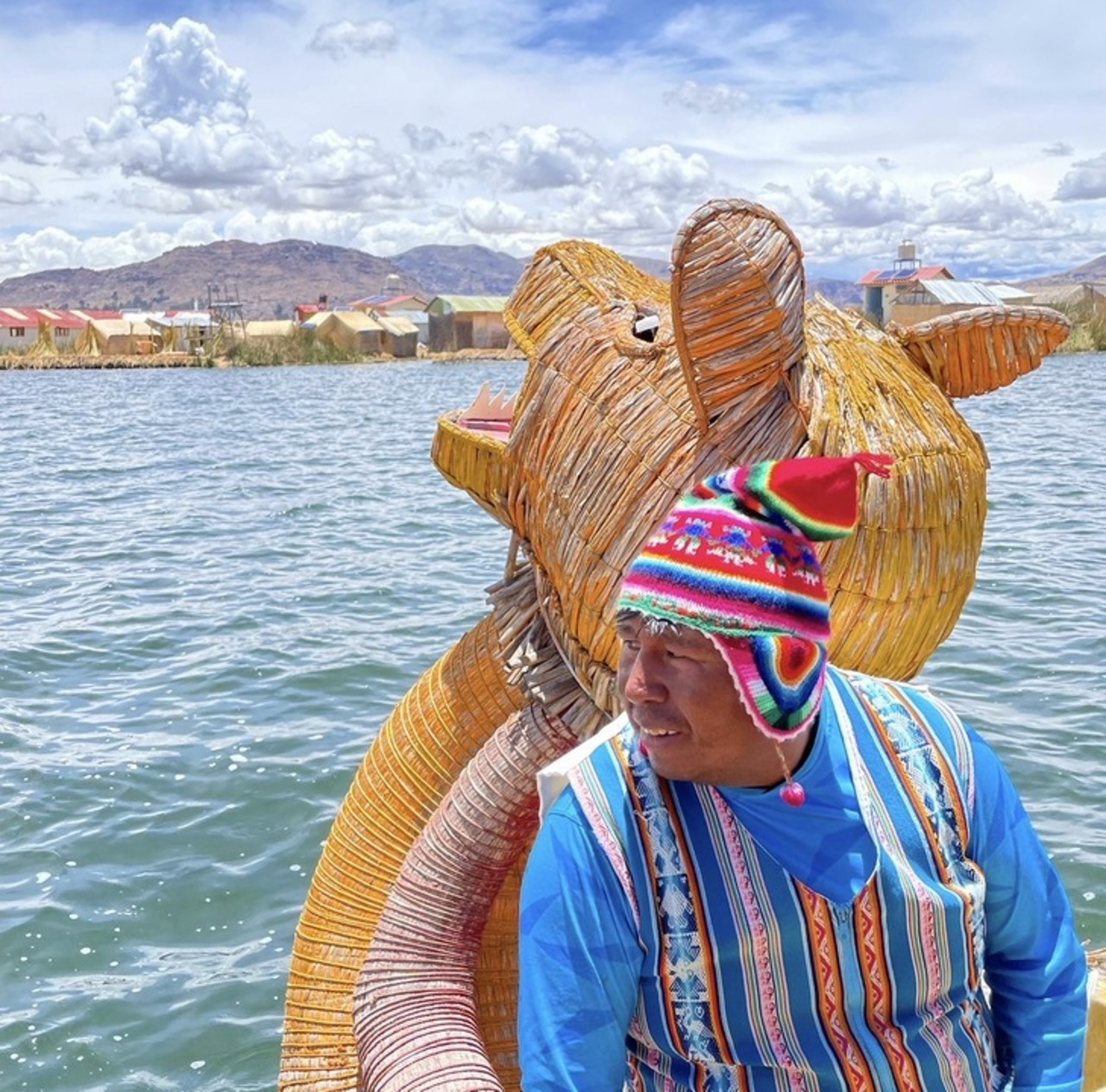
The stops on our route proved equally remarkable. On a remote grassy plain, the train ground to a halt in front of a double-spired white adobe church. Inside, local women sold buttery-soft wool sweaters and blankets to us before we reboarded. From Puno, we headed to Lake Titicaca, the world’s highest navigable lake, to visit Uros, a community of more than 100 floating, manmade reed islands maintained by Indigenous families for centuries. Stepping onto one of the islands was like treading on a springy floor of foam, and I learned that each isle must be rebuilt every few decades. Later, we explored the Paleolithic-era Sumbay Caves in Salinas and Aguada Blanca National Reserve, where rock paintings of llamas and pumas endure after 8,000 years.
All too soon, the Andean Explorer wound its way into Arequipa, the final stop of my journey. Swirling through my mind were all the wonders I had just witnessed — mist-laden Machu Picchu, devastatingly beautiful highland vistas, and surreal sunrises. At the town’s cramped airport, my WiFi signal sprang back to life, along with the onslaught of the real world and all its distractions and demands. But as if on cue, Pachamama, the Andean spirit of the land, gently nudged me, bringing me back down to earth. Looking up, I gaped at a spectacular double rainbow arching across a pink sky. I set my phone aside and let the moment wash over me.


