










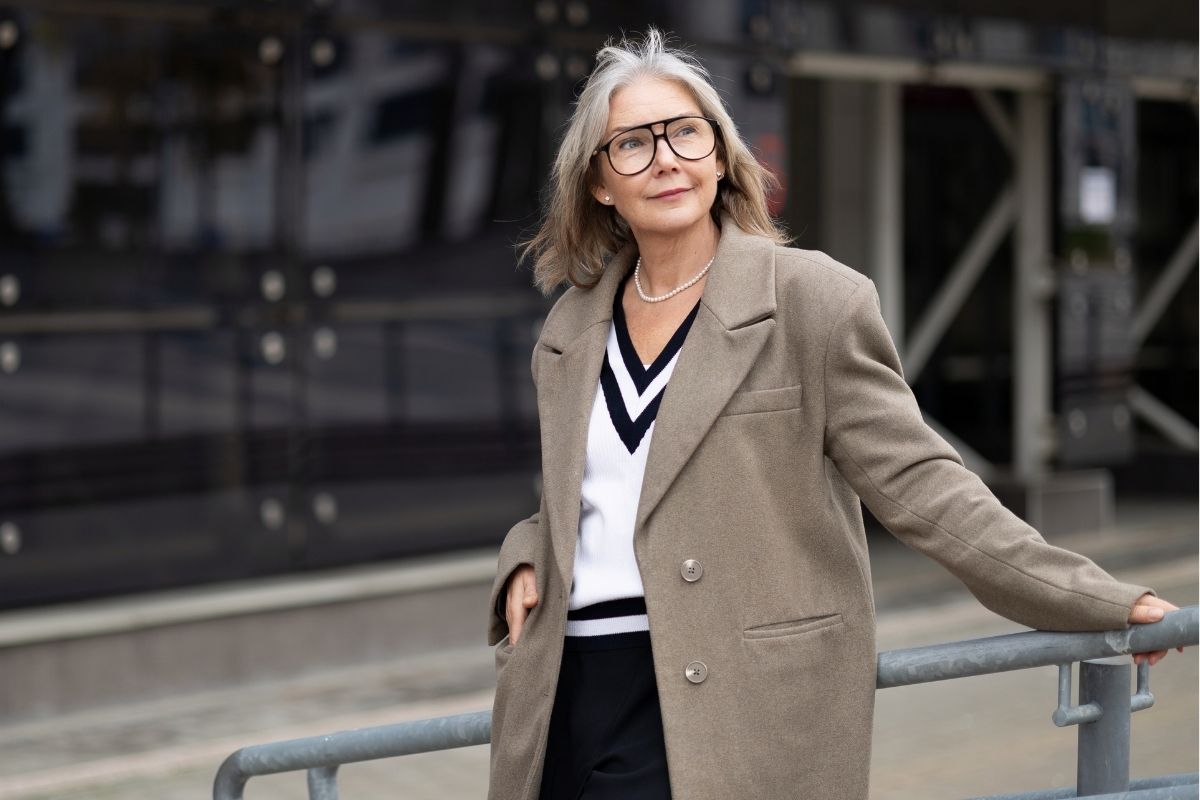
Bob, bixie or pixie, one Nashville stylist applies the same rule to every short cut he gives. Going short after 50 is often presented as a fresh start: lighter, easier and more modern. But the difference between a cut that looks fresh and one that feels severe often comes down to a single detail, and it is not the length.
Eric Marshall Wright, senior stylist and owner of Eric Marshall Salon in Nashville, Tennessee, works primarily with clients over 50. Speaking to Women.com, he shared the rule he applies to every short haircut: “keep in mind something soft around their face.”
Why Softness Matters
Wright says he always adds softness to his shorter haircuts. That softness makes the cut feel less rigid when you leave the salon and helps it grow out more gracefully over the following weeks.
As features change with age, sharp, heavy lines can emphasize angles rather than flatter them. A few soft pieces around the cheekbones, temples or forehead create movement and frame the face instead.
Blunt Lines and Strong Features
Blunt cuts are not off-limits, but they need to be chosen carefully. “A blunt cut has very strong lines and keep that in mind if you have strong features,” Wright explains. If you want to emphasize strong features, a blunt line can work. If you want to soften them, he recommends point cutting.
Point cutting means cutting into the ends vertically rather than straight across, which breaks up a hard edge. Feathering, another softening technique stylists commonly use, thins and tapers the ends for a lighter finish. On a bob, both turn a heavy line into one that moves.
The Bang Rule for a Higher Forehead
Wright’s second piece of advice concerns the forehead. “I would keep in mind if you have a higher forehead to make sure to have some sort of bangs,” he says. That does not have to mean a heavy fringe: a sweeping side fringe, curtain bangs or a few wispy pieces all work.
He also recommends keeping some softness at the front even when hair is pulled back, so the look does not feel severe, and considering the size and shape of your ears when deciding how much length to keep at the sides.
Soft pieces at the hairline and temples can also help women who have had cosmetic procedures. “These scars are very inconspicuous, but can still be shown and can cause women to be self-conscious,” Wright notes.
Shine Beats Length
Perhaps his most reassuring point is about health over length. “More than anything, if your hair is shiny, the rules are endless for keeping length,” he says. In other words, healthy, glossy hair gives you more freedom, whether you go short or keep some length.
What to Ask For
At your next appointment, ask for a soft textured bob between chin and collarbone, a classic bob with point-cut ends, or a bixie, the mix between a bob and a pixie. Whatever the shape, request softness around the face, discuss bangs if your forehead is high, and invest in a hair mask or leave-in treatment for shine.
After 50, a short haircut does not need to be dramatic to look modern. As Eric Marshall Wright shows, it just needs something soft around the face.