










Across American living rooms, many people over 70 are suddenly pressing heirlooms into younger hands. Psychologists say this late-life giveaway spree hides a deeper purpose.
Why Older People Start Giving Away Their Belongings
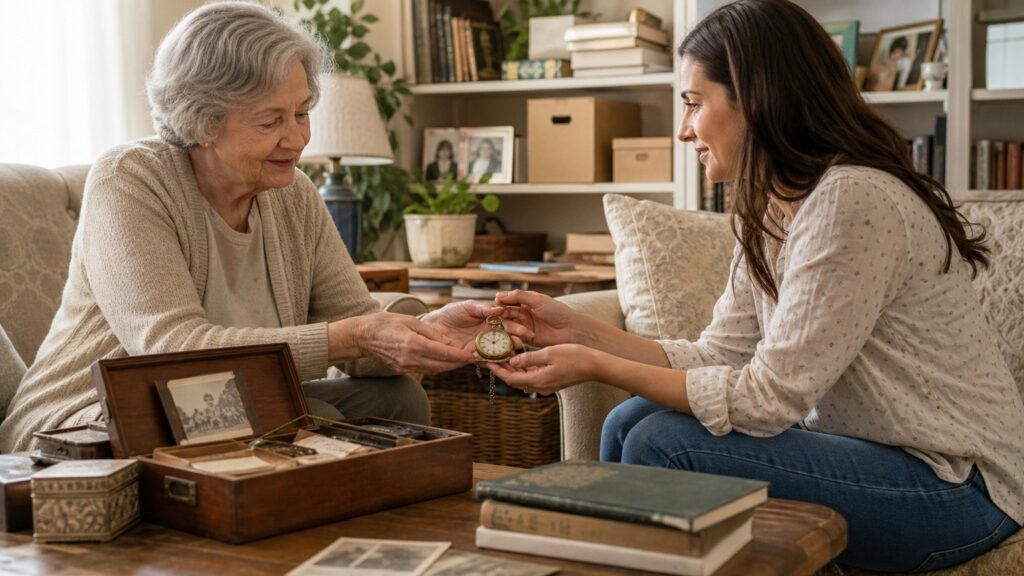
You know the scene: you stop by your grandmother’s place for coffee and leave balancing a crystal candy dish, three framed photos and a mysterious box of costume jewelry. She waves away your protests. “Take it, I do not need it anymore.” Somewhere between the front door and the Uber home, you start to wonder why older people give away their belongings with such determination.
Psychologists who study aging will tell you this is rarely random decluttering. Around 70, many people hit a quiet but profound shift: keeping objects matters less than knowing those objects, and the stories attached to them, will outlive them. Think of it as curating evidence of a life. The teacup in your tote is not clutter; it is a tiny, portable biography.
From Owning To Remembering
The Material Convoy And Swedish Death Cleaning
Gerontologists talk about our “material convoy” – the clothes, furniture and keepsakes that travel with us through decades of jobs, apartments, marriages and divorces. By later life, that convoy is huge and deeply personal. Some people never really unload it; one large US study found that roughly 30% of adults over 70 had not given away, donated or sold anything significant in the previous year.
Others start to edit. Swedish artist Margareta Magnusson popularized döstädning, or Swedish death cleaning, in her 2017 book The Gentle Art of Swedish Death Cleaning. It is the opposite of morbid. It is a deliberate sweep through your material convoy while you are still healthy enough to decide what goes where, and to place especially meaningful objects directly into chosen hands.
Why Passing Things On Matters More After 70
Legacy And Symbolic Immortality
Research in journals like The Gerontologist shows that creating a “material legacy” in later life helps people feel their story adds up to something. Psychologists call it symbolic immortality – the sense that a person continues in memory even after their body stops. A ring, a record collection, a chipped mixing bowl become proof that they were here and loved and busy.
Ethnographers studying what happens when older adults move or die call this “household disbandment”. People do not just toss things. They work to give treasured items safe passage – finding the granddaughter who will actually play the vinyl, the niece who will wear the earrings. Handing gifts over while alive lets them narrate the story and watch your reaction instead of imagining it.
There is also a brutally practical layer. Sorting now spares children the emotional grenade of clearing a packed house after a funeral. Passing things on can shrink a home to what is safe to navigate and simple to clean. None of that means they have stopped caring about objects; it means they care even more about who will hold them next.
When Giving Things Away Is Not So Harmless
Patterns That Deserve A Closer Look
Most steady, intentional gifting in later life is healthy. US caregiving groups point out that concern starts when the pattern is sudden, out of character or obviously risky. Think of an elder giving away essential items they still need, forgetting they have done so, or signing over large assets under pressure. That is less legacy work and more a cue to check on their safety.
Unexplained disappearances of valuables, a new “friend” who always leaves with bags of things, or anxiety when you ask basic questions about money can all signal exploitation or cognitive decline. If you see those patterns, loop in other family members and a doctor or elder-law professional. The goal is not to shut down their generosity; it is to make sure it is truly their choice.
What To Do With All That Inherited Emotion
Responding With Boundaries And Gratitude
When an older loved one presses something into your hands, start by treating it as a story, not a storage problem. Say something like, “I would love to know where this came from,” and let them talk. Accept what you genuinely can. If your tiny apartment cannot absorb another sideboard, choose one or two pieces and explain that you would rather cherish a few than bury many.
You can photograph pieces you cannot keep, or record a quick video of them telling the tale. That way the evidence of their life survives even if the object does not. And if you are the one over 70 feeling the urge to pare down, consider your own Swedish death cleaning. Work room by room, start with the least emotional items and involve people you trust so the edit feels shared, not lonely.


