










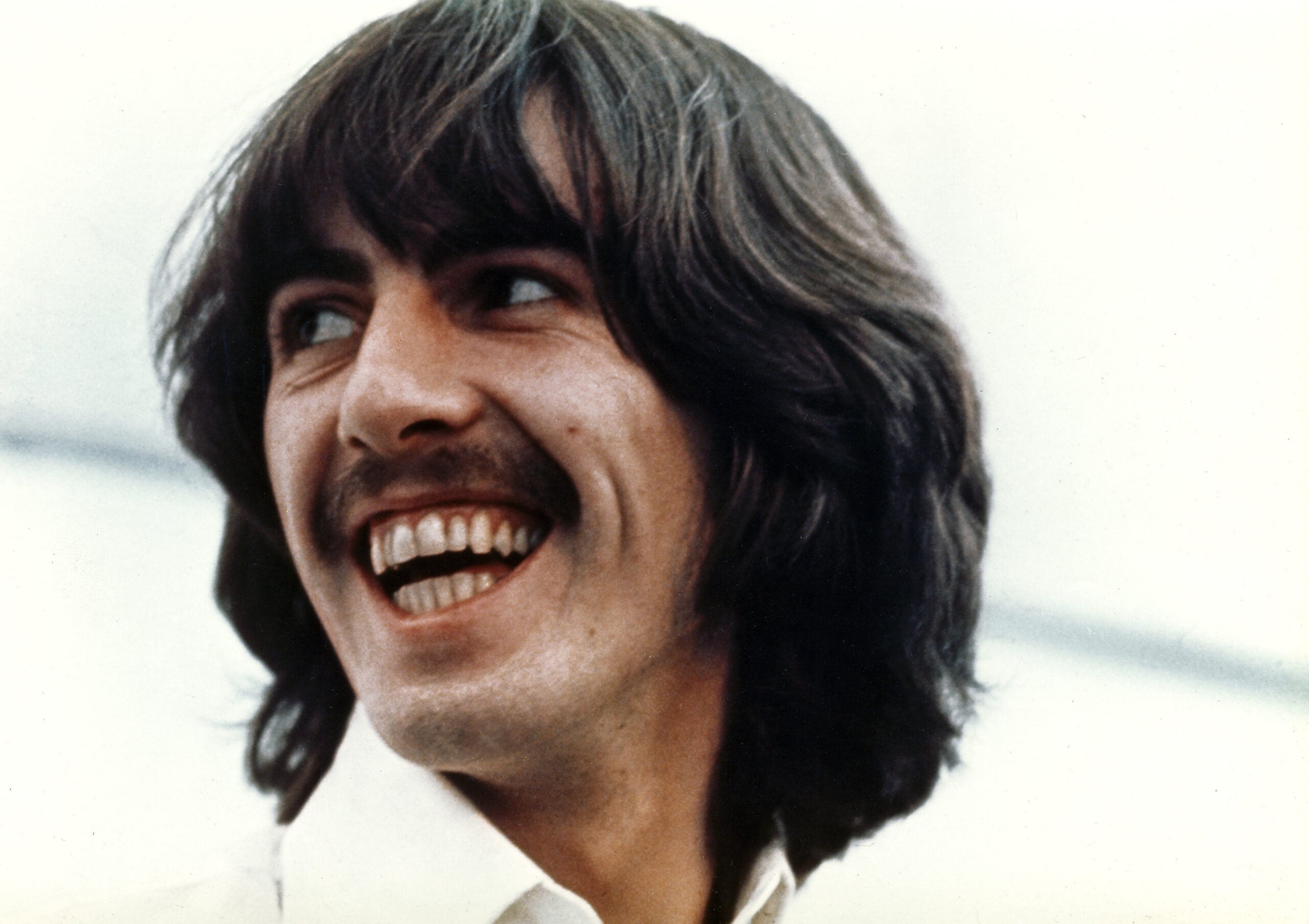
Mandatory Credit: Photo by HA/THA/Shutterstock (13970732ew)
George Harrison, “Let It Be” 1970 United Artists
Studio Film and Publicity Stills
In January 1970, George Harrison, then 27, bought a neglected neo-Gothic mansion in Henley-on-Thames, England, for £140,000. The gardens had been used as a dump, the house had no heating and he slept in a sleeping bag. More than five decades later, his widow Olivia still lives in Friar Park.
In short
- George Harrison bought Friar Park in Henley-on-Thames, Oxfordshire, for £140,000 in January 1970, about $336,000 at the time.
- The Victorian estate had previously been used by nuns of the Salesians of Don Bosco and had fallen into disrepair.
- Harrison restored its gardens for three decades, and Olivia Harrison has continued the work since his death in 2001.
A Victorian fantasy built for an eccentric lawyer
Friar Park was built between 1889 and 1895 for Sir Frank Crisp, an eccentric London lawyer and passionate horticulturalist. Crisp filled the grounds with caves, grottoes, underground passages, an underground boating lake and an alpine rock garden crowned by a 20-foot replica of the Matterhorn. Around 23,000 tons of Yorkshire stone were brought in, first by rail to Henley station and then by horse and cart.
After Crisp’s death in 1919, the estate was auctioned to Sir Percival David. It was later given over to the use of nuns of the Salesians of Don Bosco, who ran a school in Henley. By the late 1960s, the house was in disrepair and the gardens, overgrown with ivy and brambles, had been used as a local dump.
Sleeping bags in the grand hall
George and Pattie Harrison left Kinfauns, their bungalow in Esher, Surrey, for this sprawling estate of about 30 acres. At £140,000, the price was roughly $336,000 at the 1970 exchange rate of $2.40 to the pound.
The beginning was anything but glamorous. For the first few months there was no heating, no furniture and no beds. The couple slept in sleeping bags in the grand hall, in front of the huge fireplace, while friends Terry Doran and Chris O’Dell helped make the house livable. In 1972, Harrison installed a 16-track recording studio, known as FPSHOT.
Like Dolly Parton and Carl Dean’s Hollywood Hills house or the Oklahoma farm Jennifer Garner bought back, the house became inseparable from the life of the star who lived there.
Gnomes, goats and a garden on an album cover
Harrison threw himself into the gardens, restoring the Alpine, Topiary, Dutch Knot and Japanese gardens, the glass houses and the lake system. To clear the steep rock garden, he brought in two goats, which kept falling off and had to be removed. Four of the estate’s garden gnomes posed with him on the cover of his 1970 album All Things Must Pass, which also includes “Ballad of Sir Frankie Crisp (Let It Roll),” inspired by the property’s history.
Friar Park was open to visitors until 1980. After John Lennon’s murder, Harrison installed security fencing and closed the gates. On December 30, 1999, an intruder broke in and attacked George and Olivia Harrison. Harrison survived 40 stab wounds and a punctured lung.
Olivia Harrison keeps it alive
Since George Harrison’s death in 2001, Olivia Harrison has overseen the restoration and planting. The house and its gardens are both Grade II listed. In 2025, their son Dhani received planning permission to build a two-bedroom oak-framed home on a disused tennis court on the estate.
Gardener and TV presenter Monty Don, who visited, called the alpine rock garden the most “unusual and extraordinary” part of the grounds. “Each stone was carefully placed one by one,” he said. Of the topiary garden, one of the largest in Britain with more than 160 trees, he added: “To me, it looks like a kind of fancy dress party.”
Unlike Michael Jackson’s Neverland Ranch, Friar Park never changed hands after its famous owner. Bought as a ruin for £140,000, it remains a private family home, still shaped by the man who rescued it.


