










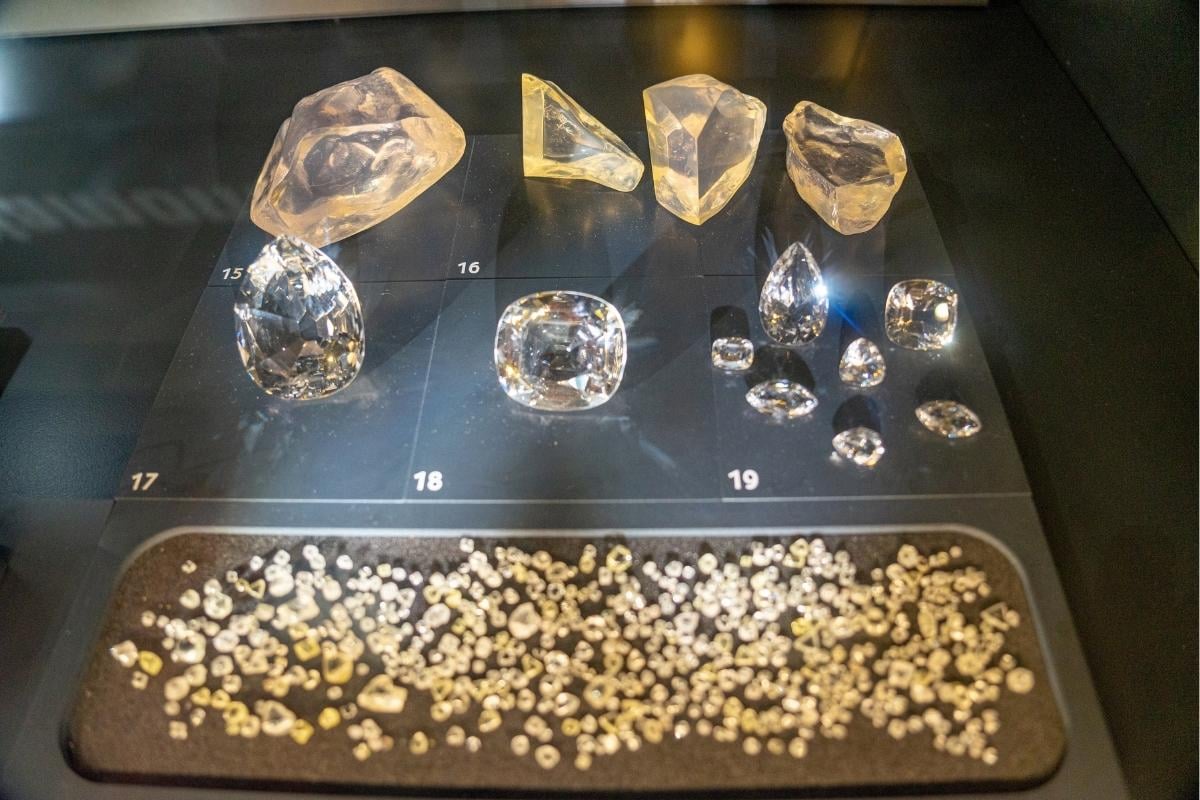
A decoy ship, a plain parcel and a stone that ended up in the Crown Jewels. Some of the world’s greatest treasures have surprisingly ordinary travel stories. The largest gem-quality rough diamond ever found did not cross the ocean in a vault guarded by soldiers. It traveled in the mail.
On January 26, 1905, surface manager Frederick Wells found a rough diamond of about 3,106 carats at the Premier No. 2 mine in Cullinan, in what was then the Transvaal Colony, near Pretoria. The stone was named after the mine’s owner, Thomas Cullinan.
A Decoy at Sea, the Real Stone by Post
Getting it to London safely was a problem. So a decoy stone was placed aboard the steamer Kenilworth Castle, locked in the captain’s safe and guarded by detectives. The real diamond, meanwhile, was sent to London in a plain box by registered post.
The trick worked. While everyone watched the guarded ship, the real stone arrived safely with the ordinary mail. Finding a buyer for something so large and so valuable, however, took much longer: it remained unsold for about two years.
A Birthday Gift for a King
On October 17, 1907, the government of the Transvaal Colony bought the diamond for £150,000. It was presented to King Edward VII at Sandringham House on November 9, 1907, his 66th birthday.
The cutting was entrusted to Joseph Asscher & Co. in Amsterdam. The stone was split on February 10, 1908, and the cutting took eight months. It produced nine major stones, together weighing more than 1,055 carats.
Where the Biggest Pieces Are Today
The largest, Cullinan I, weighs 530.2 carats and tops the Sovereign’s Sceptre with Cross, one of the most important pieces of the Crown Jewels. The second largest, Cullinan II, at 317.4 carats, is set in the Imperial State Crown. Both were part of King Charles’s coronation in 2023, and they will one day pass to the next generations, including Prince William and his son, Prince George, who recently left for Eton.
The royal family still takes security seriously, even if it no longer sends treasures by mail, as the royal travel rule Prince William and Prince George just broke shows.
How to See the Cullinan Stones
The Sovereign’s Sceptre and the Imperial State Crown are displayed with the Crown Jewels at the Tower of London, except when they are in use for state occasions such as the State Opening of Parliament. If you plan a visit, book timed tickets in advance and go early, since lines for the Jewel House can be long. Look closely at the sceptre: the pear-shaped Cullinan I sits just below the cross. The lesson worth borrowing is that the cleverest plan is sometimes the one nobody expects.
The Bottom Line
In 1905, the world’s largest diamond was sent to London in a plain box by registered post while a decoy crossed the sea. One hundred and twenty-one years later, its biggest stone, the 530.2-carat Cullinan I, sits in the King’s sceptre.


