










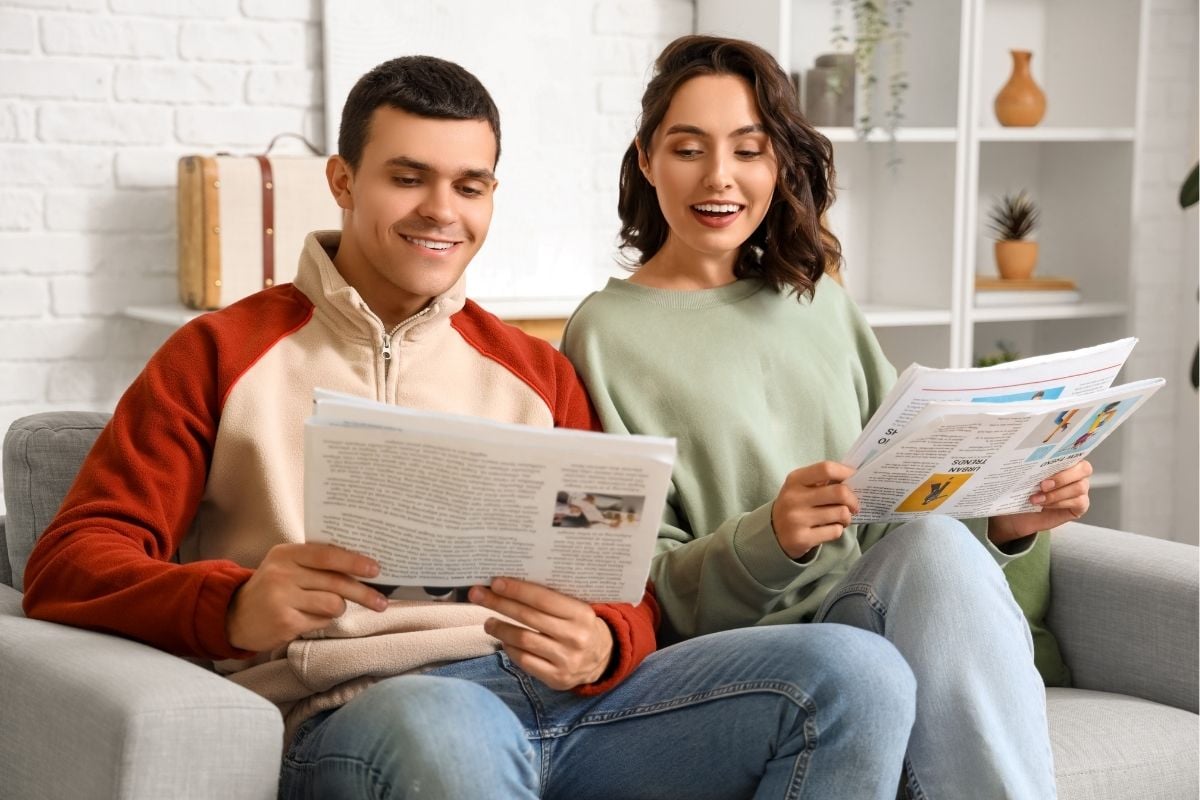
Choosing a printed page over a screen can look old-fashioned. A large body of research suggests it may simply be smarter. Picture this: a long article you actually need to understand, a quiet evening, two options. On one side, a tablet that holds a thousand books. On the other, a few printed pages and a pen. If you reach for the paper without thinking, you have probably been told it is nostalgia. The research says otherwise.
In 2018, researchers Pablo Delgado and Ladislao Salmerón of the University of Valencia, with Cristina Vargas and Rakefet Ackerman of the Technion in Israel, published a meta-analysis in the journal Educational Research Review. They pooled 54 studies run between 2000 and 2017, covering 171,055 participants. Their conclusion: people understood informational texts better on paper than on screens.
Which Paper Reader Are You?
Most loyal paper readers recognize themselves in one of three habits. The Margin Scribblers underline, circle and annotate, because a page invites a pen. The Re-Readers flip back three pages to check a detail, and know roughly where on the page it was. The Slow-Lane Readers simply refuse to skim when the text matters.
None of these is a quirk. Each one pushes against the fast, scanning style that screens tend to encourage, which is exactly what the researchers were measuring.
The Gap Grows Under Pressure
The advantage of paper was not the same everywhere. It was clearest with informational texts, the kind you read to learn something, and it widened when readers were under time pressure. When people could read at their own pace, the difference shrank.
The authors offer a few explanations. They note that people adopt “a shallower processing style in digital environments.” Earlier work by Ackerman found that readers on screens under time limits showed more overconfidence than paper readers, and scored lower. Scrolling may also add a small cognitive load, by making it harder to keep track of where you are in a text.
Why the Screen Gap Has Not Closed
Here is the twist. You might expect the gap to disappear as everyone grows used to screens. It did the opposite. Across the 17 years covered, the paper advantage grew slightly over time, a pattern the authors describe as a persistent “screen inferiority.” They are candid that their results do not explain the cause.
There is also good news for novel lovers. With purely narrative texts, the studies found no difference between paper and screen. Your e-reader thriller is safe.
The same logic shows up in other everyday habits, from people who keep a paper calendar instead of a phone to the research on writing by hand and memory.
How to Read Smarter, on Any Format
Print what you truly need to understand: a contract, a medical leaflet, a long article. Keep screens for news, fiction and quick checks. When you do read on a screen, slow down on purpose and avoid racing against a clock, since time pressure is where screens lose most. Take notes by hand, and stop now and then to sum up what you just read. The lesson worth borrowing is to match the format to the stakes.
The Bottom Line
People who still read on paper are not stuck in the past. A review of 54 studies found they often understand informational texts better, especially in a hurry, and that the screen gap has grown rather than shrunk. Sometimes the old way is simply the sharper one.


