










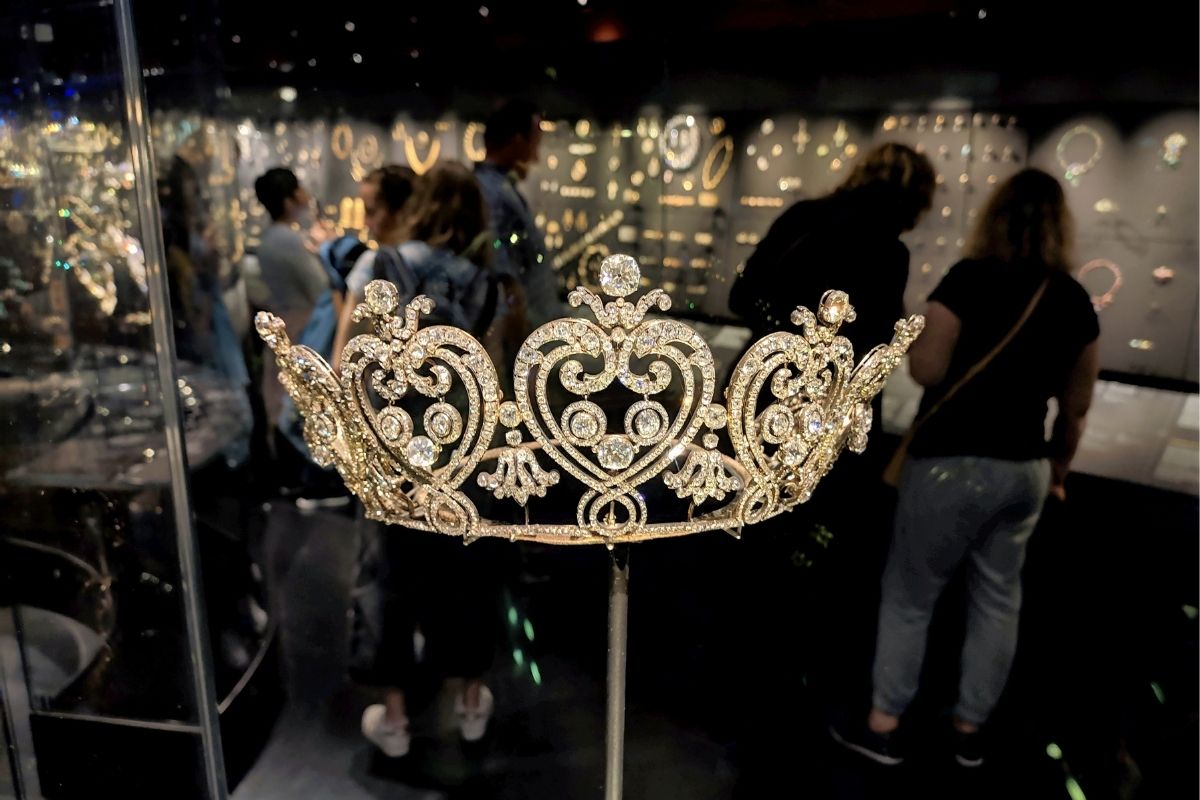
Coronation diamonds, love tokens and a brooch with a baby tooth: five centuries of royal jewelry, most of it never shown in public. Royal jewels usually appear in fleeting moments: a tiara at a state banquet, a brooch on a coat at a ceremony, a necklace glimpsed in an official portrait. Seeing them up close is rare. Seeing hundreds of them together is almost unheard of.
Next summer, that will change. Buckingham Palace is preparing its most ambitious jewelry exhibition yet, and most of the pieces have never been on public display.
A First for 500 Years of Royal Jewels
Royal Jewellery: From Coronations to Keepsakes will open at the King’s Gallery at Buckingham Palace on June 25, 2027, and run until March 19, 2028, according to the Royal Collection Trust. It will bring together more than 300 pieces dating from the 16th century to the present day, and about two-thirds of them, roughly 200 jewels, have never been displayed publicly.
The exhibition is described as the first to explore 500 years of British royal jewelry, from monarchs including Henry VIII and Charles II to Queen Victoria and Elizabeth II. Pieces will be shown alongside paintings, designs and documents, with works by makers such as Garrard, Cartier, Boucheron and Fabergé. The Crown Jewels, however, will stay at the Tower of London.
The Highlights Everyone Will Want to See
One of the stars is the Diamond Diadem, commissioned by George IV for his 1821 coronation and familiar to millions as the crown Elizabeth II wears on postage stamps.
Another is the Greville emerald necklace, worn by Elizabeth II in 2019 and by Queen Camilla in 2025. Queen Charlotte’s 18th-century garnet suite will be shown publicly for the first time, and a delicate Fabergé diamond and aquamarine pendant from 1909, acquired by Queen Mary, will also feature.
Jewels That Tell Love Stories
Many of the most moving pieces are personal rather than ceremonial. There is an early 1820s ring said to be Queen Victoria’s first, a diamond and sapphire brooch Prince Albert gave her on the eve of their 1840 wedding, and an 1841 bracelet set with pebbles the couple collected on their first journey alone together.
The most unusual is a thistle brooch containing Princess Victoria’s first baby tooth, with an inscription noting that Albert pulled it himself. There is also an 1861 mourning ring with his portrait, made after his death, and the small diamond crown placed on Queen Victoria’s coffin in 1901.
Even darker history is represented: 17th-century cufflinks said to have been worn by Charles I on the scaffold in 1649.
“Each jewel carries with it a human story,” say curators Caroline de Guitaut and Kathryn Jones, describing pieces that reflect love, loss, power, politics, family and faith.
How to Get Tickets
Tickets go on general sale on November 3, 2026, through the Royal Collection Trust, which also offered early access to its newsletter subscribers. Given the scale and rarity of the show, popular dates are likely to sell quickly, so it is worth booking early, especially for summer weekends.
If you are planning a trip, combine the exhibition with a visit to the palace’s State Rooms during the summer opening, or with the Crown Jewels at the Tower of London for a full day of royal history. A companion book, described as the first comprehensive study of the royal jewelry collection, will also be published.
Save the date for 2027: Buckingham Palace is unveiling around 200 jewels you have never seen, and each one comes with a story.


