










Fresh out of college, Catherine De Orio was living in Venice, Italy, and working at the Peggy Guggenheim Collection when she began hosting dinner parties in her apartment overlooking Dorsoduro’s majestic Basilica di Santa Maria della Salute. At night, the glow of a Murano glass chandelier caught the eye of passersby below. When De Orio spotted someone looking up, she would wave from the balcony and invite them to join the festivities. Even then, home was less a private retreat than an invitation.
That instinct took shape much earlier in the large Italian family in Chicago where De Orio grew up. At the home of her grandmother, known to loved ones as Nana Kay, a pot of Sunday gravy rich with pork neck bones was a near-constant presence as was the unspoken understanding that anyone who walked through the door would be fed. “Even if I was just tagging along with a cousin or showing up with a friend, there was an immediate sense of ‘Come in, sit down, let me feed you,’” she recalls. “There was warmth, generosity and an instinct to bring people into the fold.”
Decades later, open-heartedness and hospitality inform the way De Orio cooks, entertains, and designs. “I now show love and create connection in much the same spirit,” she says. Welcoming people into her home is an expression of affection and a way of honoring the time she and her guests choose to spend together.
That approach is also embedded in the Chicago loft she shares with her husband, renowned trial attorney John Gorey, a partner at leading civil rights firm Romanucci & Blandin. A recently completed multiyear renovation combined the original loft with a neighboring unit, bringing the home to just over 3,000 square feet. Part of a former printing press and cardboard box factory, it retains its industrial character. Limewashed brick, timber beams, and exposed piping preserve that heritage while long sightlines and high ceilings provide drama. “I think renovations can sometimes go too far,” says De Orio, who resisted smoothing the enlarged loft into a single immaculate whole. “I wanted to contrast this very Chicago industrial shell with spaces that feel decorative, glamorous, intimate, and sometimes quite European.” Open gathering spaces give way to jewel-box rooms; broad views are interrupted by doorways, shelving, and hidden passages. “I wanted smaller rooms to be discovered,” she explains, “and places where you don’t see everything all at once.”
That element of surprise is central to De Orio’s point of view. Her rooms are composed but never obedient to a single period or provenance. Italian modernism meets Art Deco; salvaged surfaces sit beside high-gloss lacquer; serious pieces coexist with candy jars and irreverent art. The tension keeps the interiors alive. So does the feeling that nearly everything has a story, memory, or joke. Much of the home is custom, less as a declaration of luxury than as an expression of De Orio’s unwillingness to settle for an approximation. When she couldn’t find what she envisioned, she designed it — or had it made.
De Orio’s path has been similarly resistant to tidy categories. A self-described “recovering attorney,” she left law to train as a chef, built a career in food and television — including hosting an Emmy-winning dining program — and established and leads the Foundation for Culinary Arts, which creates culinary career pathways for young people from historically underserved Chicago communities. She is also the founder and creative director of Casa De Orio, an editorial lifestyle platform devoted to dining, design, and la dolce vita. Bringing the strands of her career together, its “life lived well” ethos celebrates discernment, pleasure, and connection rather than perfection or display. The loft is where those ideas come to life.
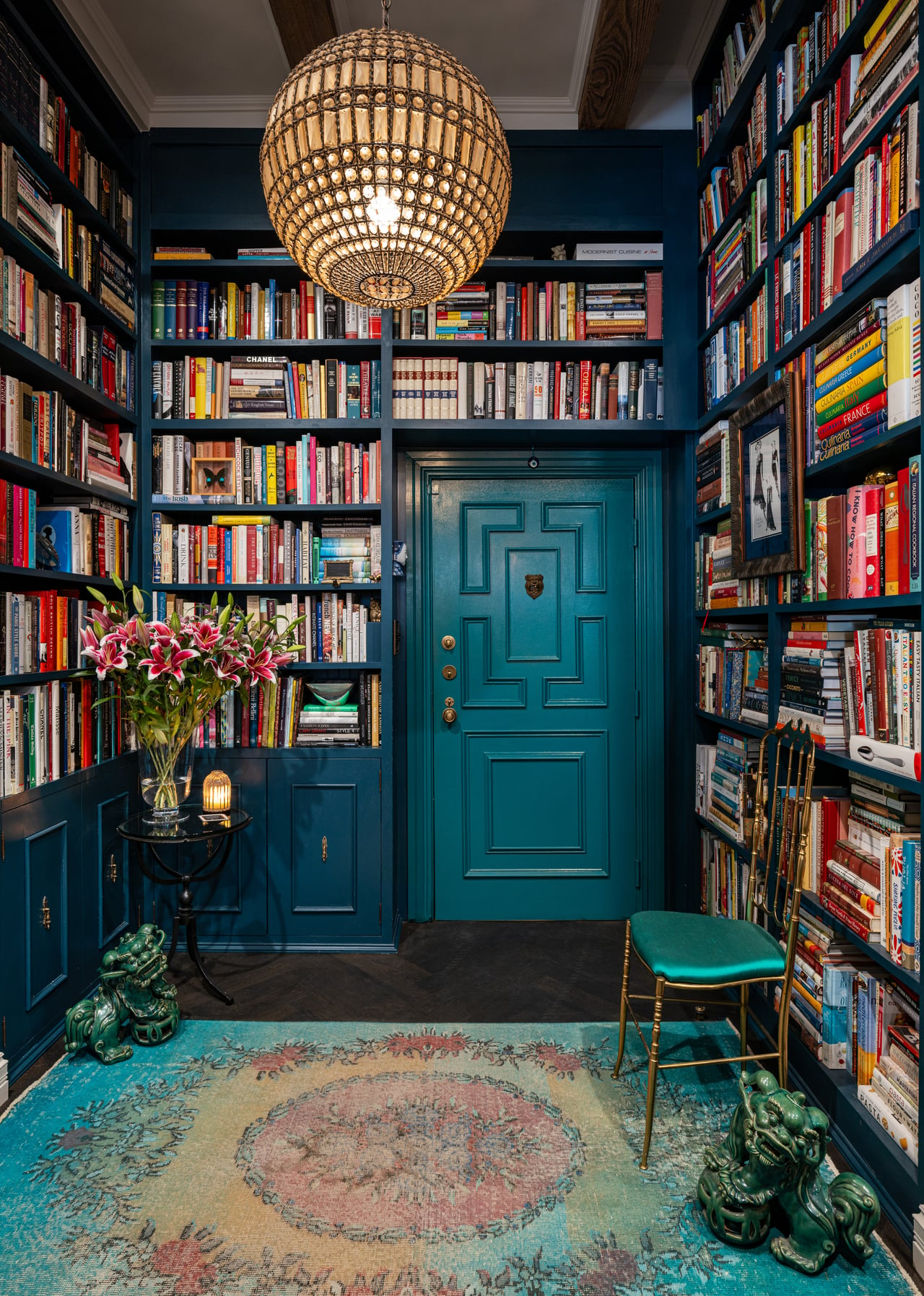
The experience begins in the entry, where an overdyed peacock-blue and green Turkish rug, sourced from Istanbul, sets the palette, and bookshelves wrap the doorway. “I wanted it to feel as if you are officially leaving the outside world behind,” De Orio says. Cookbooks mingle with volumes on fashion, art, and design — an immediate introduction to De Orio’s interests and the home’s governing principle: curiosity as a form of decoration. That idea deepens in the library hallway, where oxblood saturates every surface and 1950s André Arbus sconces shaped like hands illuminate books that De Orio and Gorey, both devoted readers, have actually read rather than selected merely for show. The hallway’s impact comes not from theatrical gestures but something quieter — the life of the mind made tangible.

The kitchen, dining room, and sitting areas occupy a continuous volume. For De Orio, who remains active in the culinary world, the kitchen is unapologetically functional. “I wanted it to look like a kitchen,” she says. “Utilitarian things can be incredibly beautiful without disguising what they are.” Unable to find a range hood with the presence the room demanded, De Orio designed one in patinated zinc with brass strapping and trim, giving the open space an architectural centerpiece.
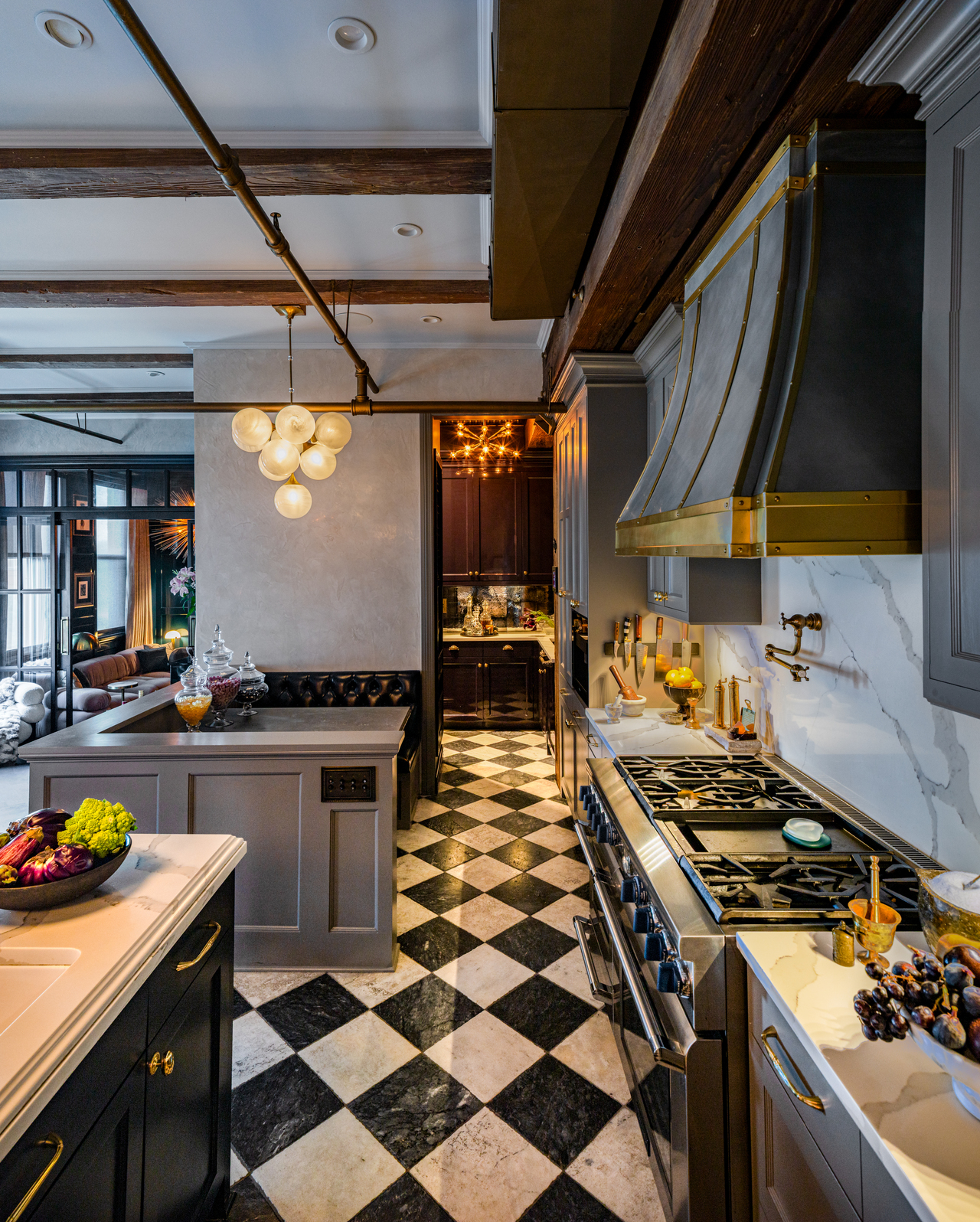
In the dining area, an Art Deco-style burlwood table is surrounded by clean-lined Guglielmo Ulrich chairs upholstered in deep green Dedar Milano fabric. A more intimate booth is tucked into one corner, lowering the scale and shifting the mood. Its zinc tabletop recalls the old bars of Parisian brasseries, a reference to De Orio’s time living in Paris, where she and Gorey still love to dine. It is slowly accumulating culaccini, the Italian term for rings left by glasses and dishware. She chose the untreated metal precisely because it would record use. “I like thinking that over time it will hold evidence of all the meals and people who have sat there,” she says. For now, she laughs, the table is in its “awkward adolescent phase” — no longer new, not yet enveloped in a silvery patina.
The booth has become one of the home’s centers of gravity, a place where De Orio works, dines with Gorey and settles in with friends. Glass jars of seasonal candy within reach add an almost childlike note. “There are plenty of serious design pieces in the house, but I never want the house itself to feel serious,” she says. “The candy jars bring whimsy and cheer, and they give people permission to help themselves.”
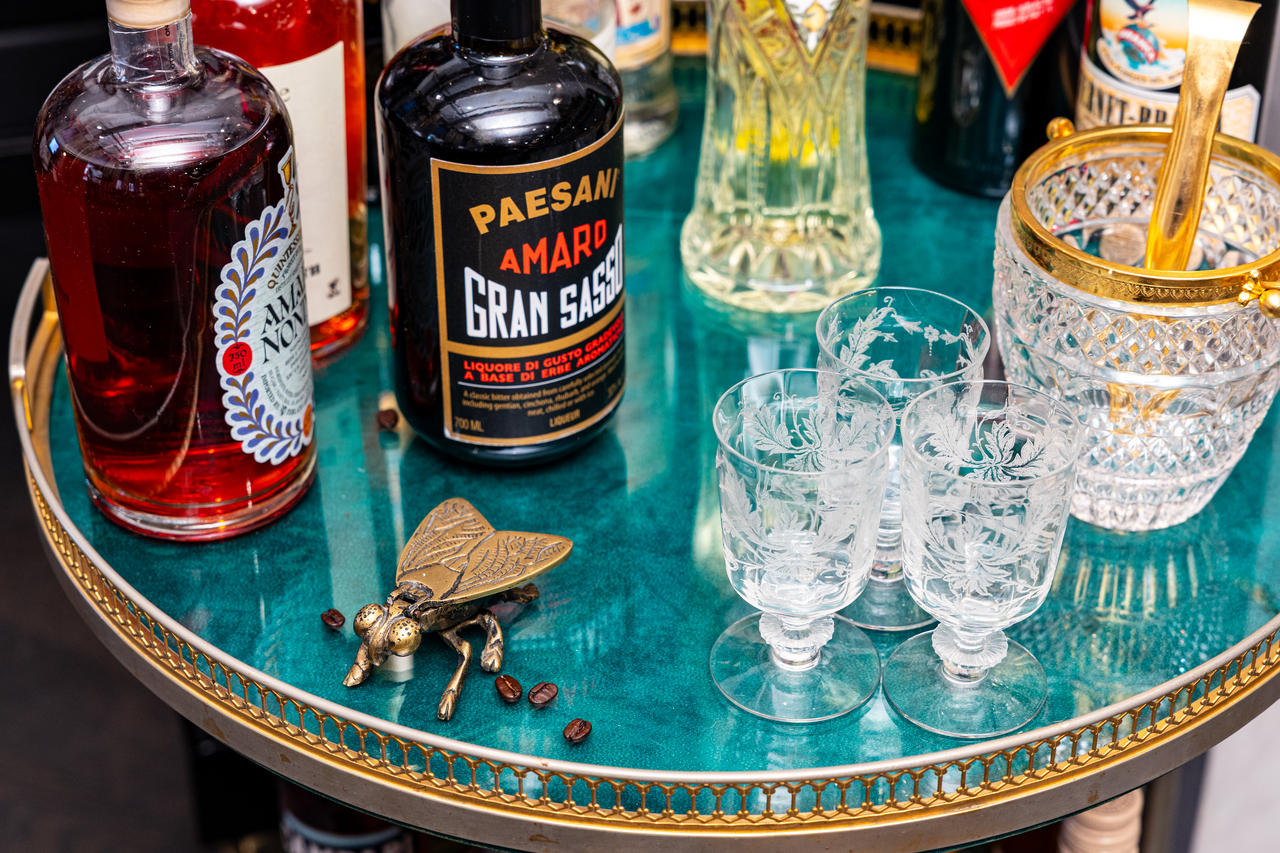
Nearby, a green goatskin Aldo Tura bar cart turns the Italian ritual of the after-dinner drink into a movable vignette. Bottles of aperitivi and amari are arranged alongside crystal and a 1950s brass ashtray shaped like a fly that has been repurposed for coffee beans, a nod to le mosche, or “the flies,” traditionally served with sambuca, Gorey’s preferred digestivo. It is at once an inside joke and a gesture of hospitality tailored to him.
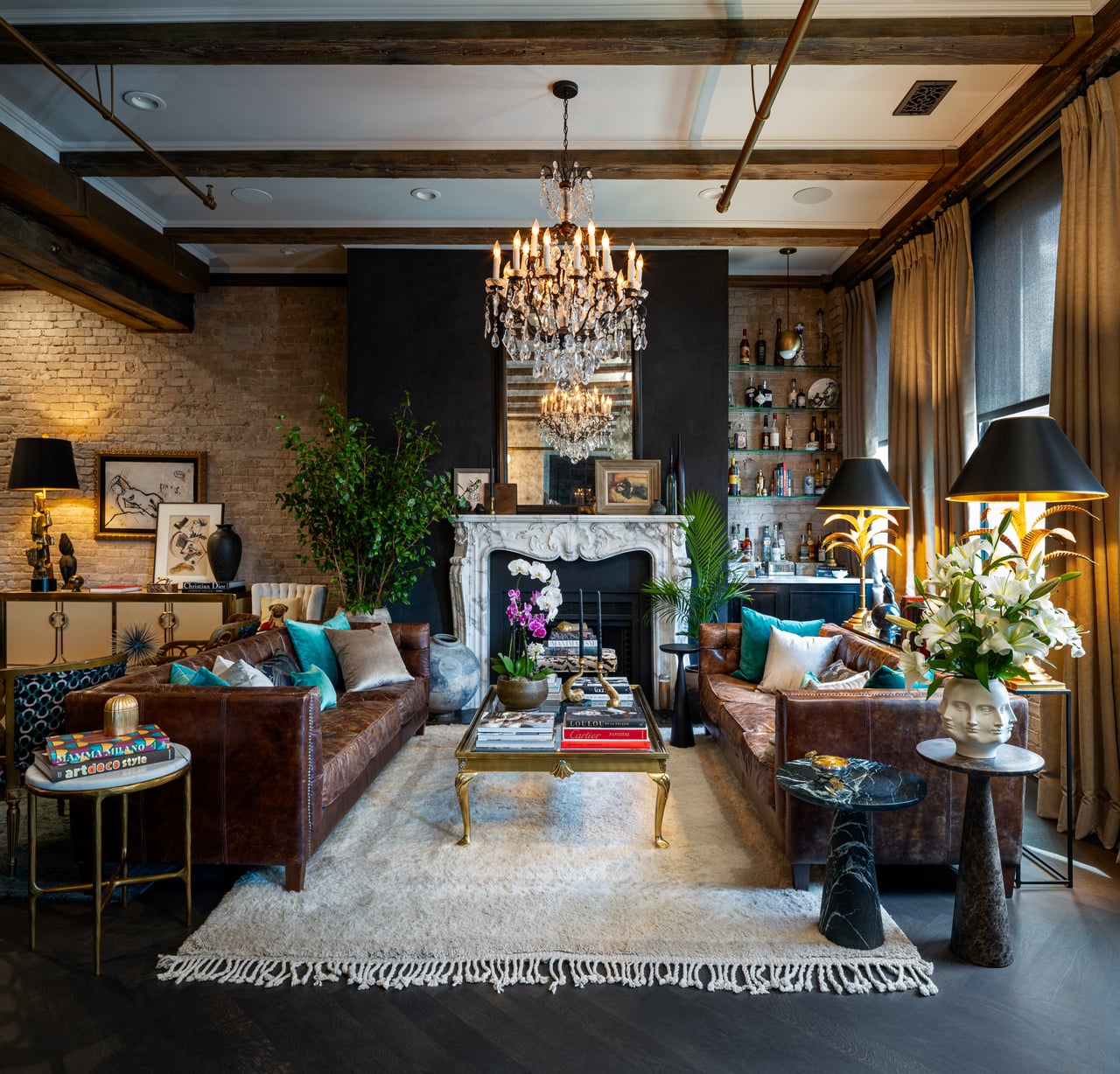
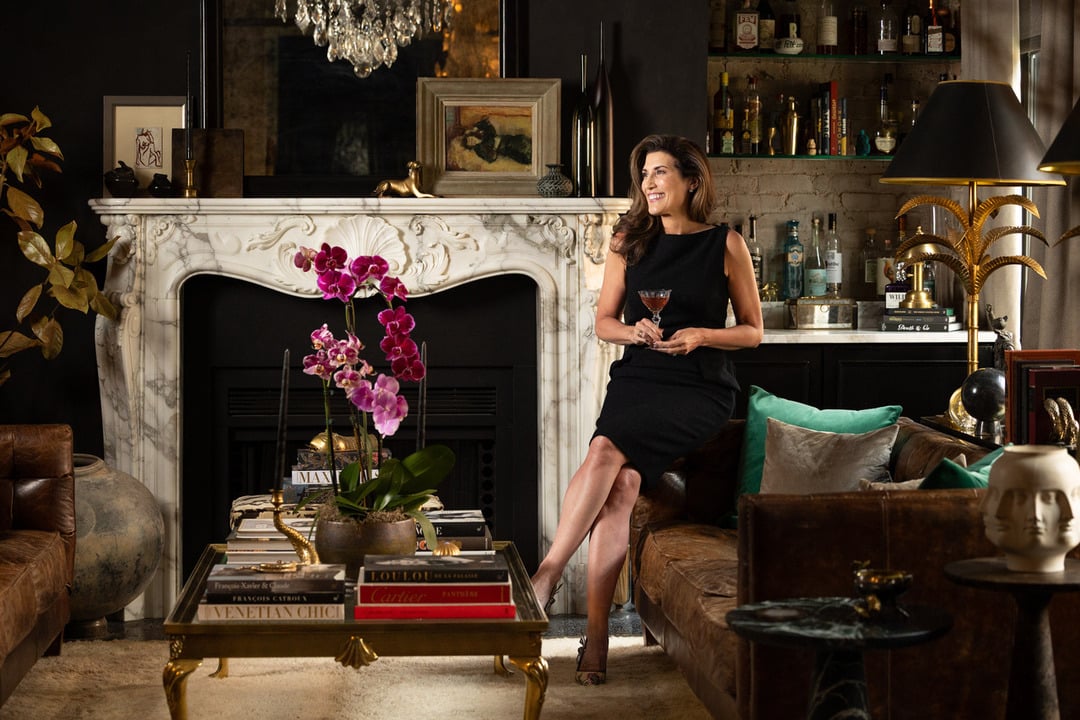
The fireplace room offers perhaps the clearest conversation between the building’s industrial origins and the world De Orio has brought into it. A carved Arabescato marble mantel is set against inky black Venetian plaster with a subtly sueded finish. An antique crystal chandelier and towering foxed mirror multiply the room’s glow and height while weathered brown Chesterfields keep the room grounded and sociable. Beneath an ornate Italian mirror, a compact Paolo Buffa dry bar holds an antique carved wooden figure of a woman, acquired in Florence and said to have once displayed jewelry in a Ponte Vecchio shop. Battered and bruised, she is all the more beloved for it. The materials are opulent, but the atmosphere is more akin to a private club than a formal salon.
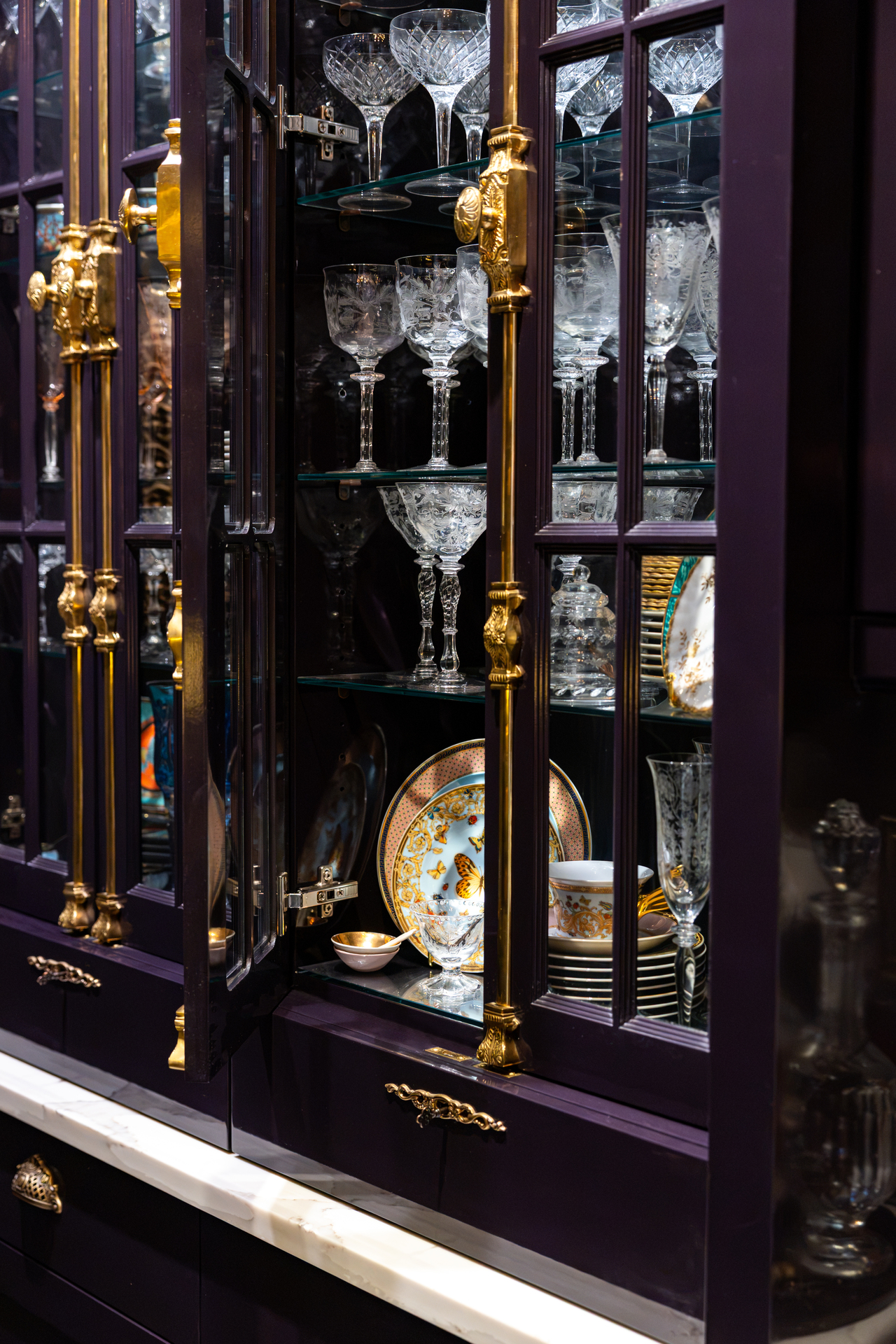
In the butler’s pantry, the loft’s expansiveness gives way to compressed glamour. Salvaged Spanish marble tiles form a checkerboard floor beneath a distressed pressed-tin ceiling. Lacquered aubergine cabinetry holds vintage china and crystal, while a Romina Ressia photograph of a woman eating pasta with the solemnity of a Renaissance sitter punctures any preciousness. The first room completed during the renovation, it became De Orio’s refuge from all the dust and disorder. Its wine fridge helped. “I would come in here, pour myself a glass of champagne, and unwind,” she says. She nicknamed it the “Cham-panic Room.” The joke, and ritual, stuck.
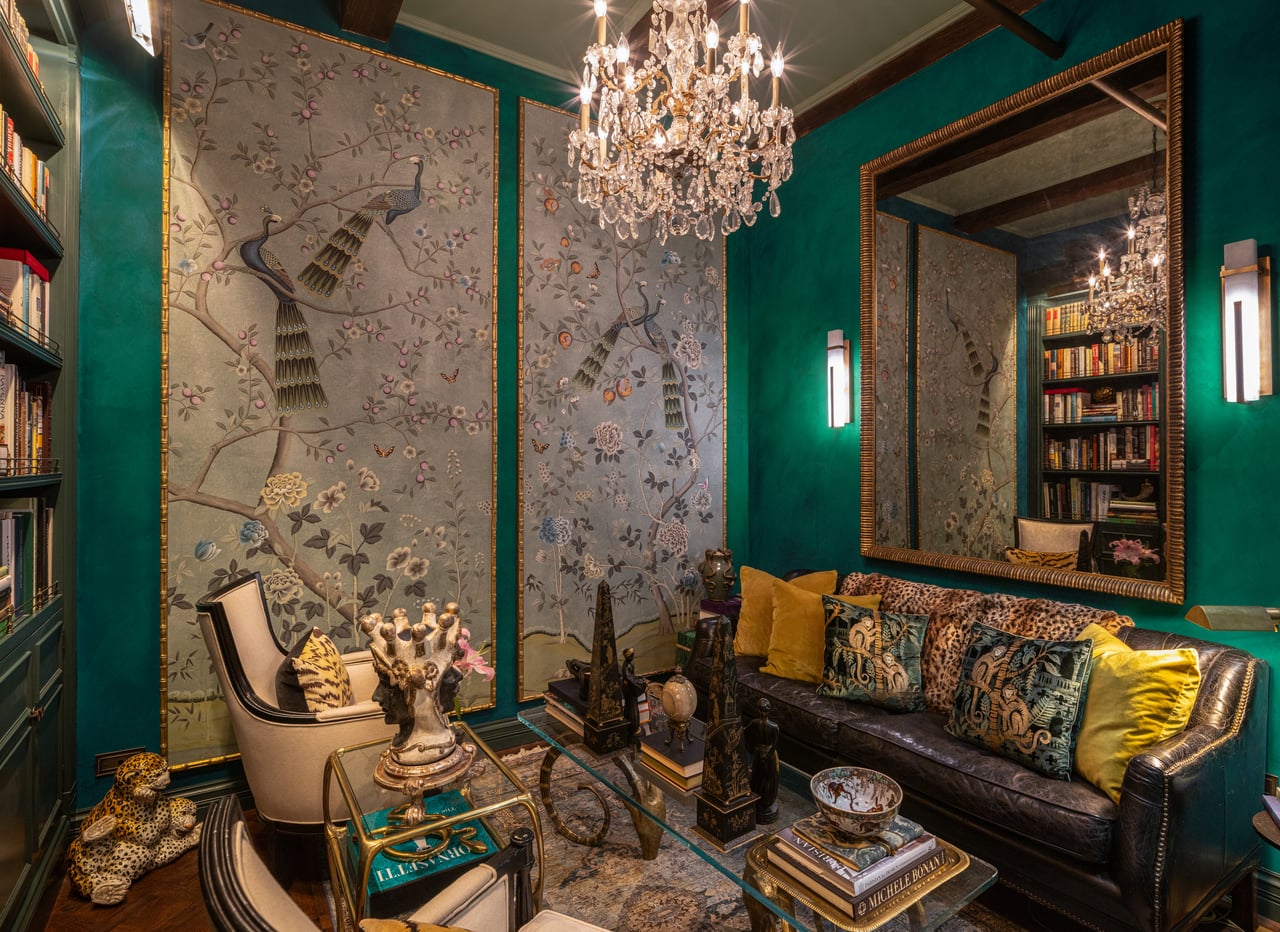
The former neighboring loft is divided into small, increasingly enclosed spaces culminating in the Green Room. Without windows or a distant view, attention turns inward. Matte Venetian plaster absorbs the light, Versailles-pattern parquet lends formal order, and towering hand-painted de Gournay panels transform the walls into a landscape of pomegranates, flowers, and peacocks, De Orio’s favorite bird. Inspired by a screen once owned by Yves Saint Laurent, the panels make the room feel transported and intensely private. An immense mirror above a leather sofa creates an illusory opening in the windowless room, doubling the chandelier, bookshelves, and panels, giving the interior unexpected depth. “It’s glamorous and cocooning because the scale is so intimate,” she says. “It’s like disappearing into a world unto itself.”
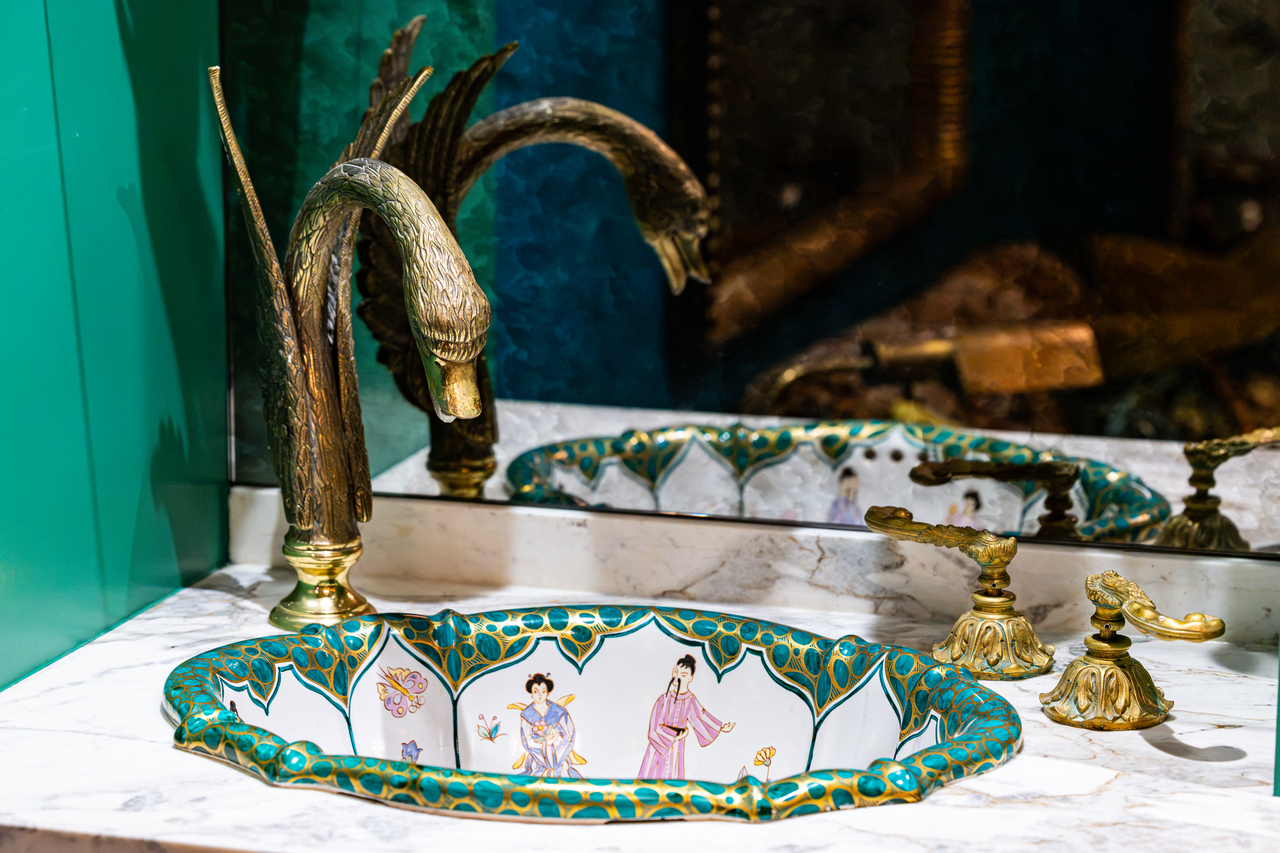
A wet bar with a vintage Sherle Wagner swan faucet and a green-and-white porcelain basin occupies one corner. Hardwired 1970s Bowers & Wilkins speakers, a turntable, and custom vinyl drawers reinforce the room’s analog character. Books, records, and patterned Scalamandré pillows soften the grandeur. Of all the rooms, it may best capture the balance at the heart of De Orio’s sensibility — erudite but playful, glamorous without being remote, and happiest when put to use. She often retreats here at day’s end, but after dinner, guests tend to follow. One recent visitor arrived for happy hour at four in the afternoon and stayed until sunrise. “The Green Room feels like something from another time, but it isn’t intimidating,” she says.
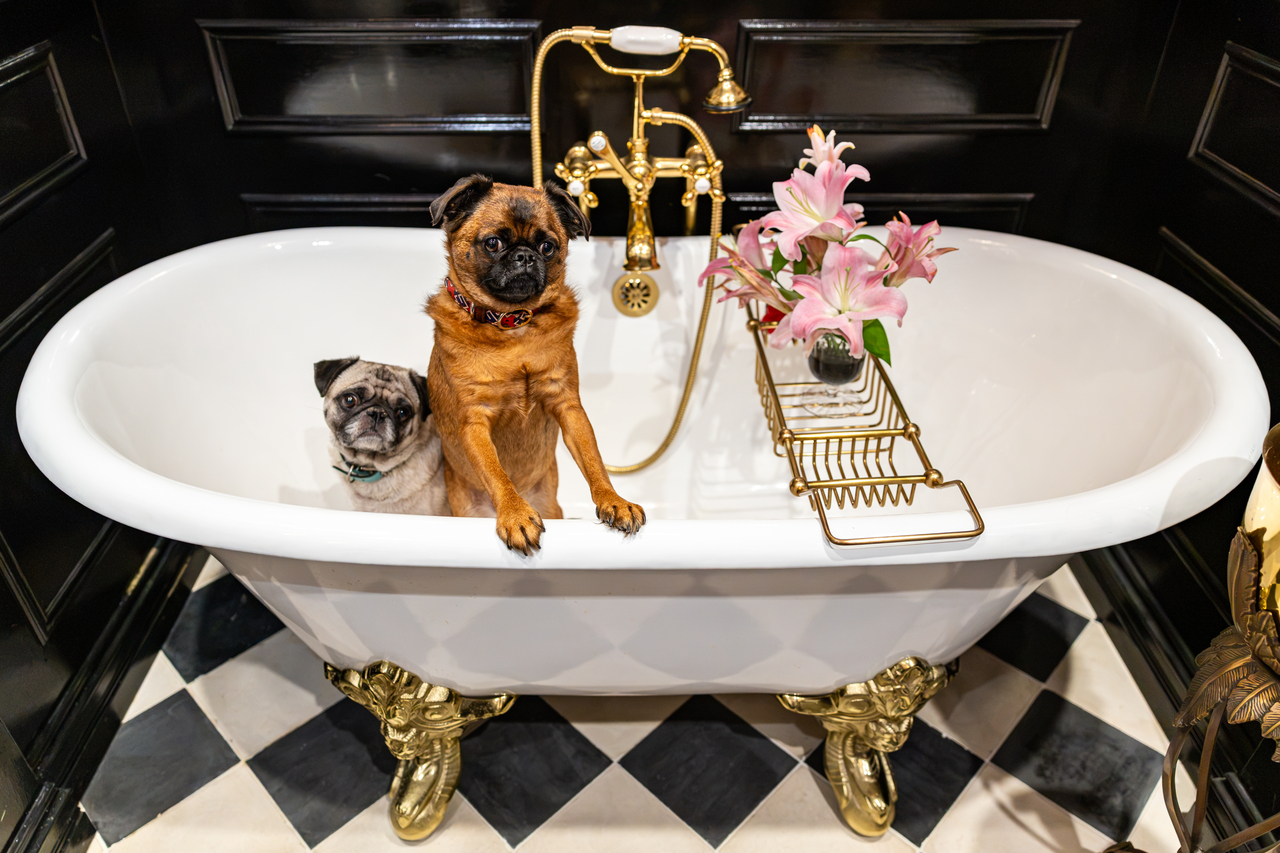
On quieter evenings, you’ll find her curled up on a blush-pink Mario Bellini Camaleonda sofa with Gnocchi, the couple’s pug, and Gatsby, their Brussels Griffon, in the Blue Room, its glossy walls catching the low light of a brass Sputnik fixture.
For all its dramatic furnishings, the home’s real luxury lies in its shifts of atmosphere and the freedom to use every room according to one’s mood. It can hold a crowd without feeling cavernous and provide solitude without feeling closed off. Its architecture provides the volume; De Orio’s layers of color, material, memory, and humor provide the emotional scale.
“An interior becomes interesting when it tells you something about the people who live there,” she says. “The places you’ve been, the people you love, your sense of humor, even your peculiarities should all make their way into a home.”
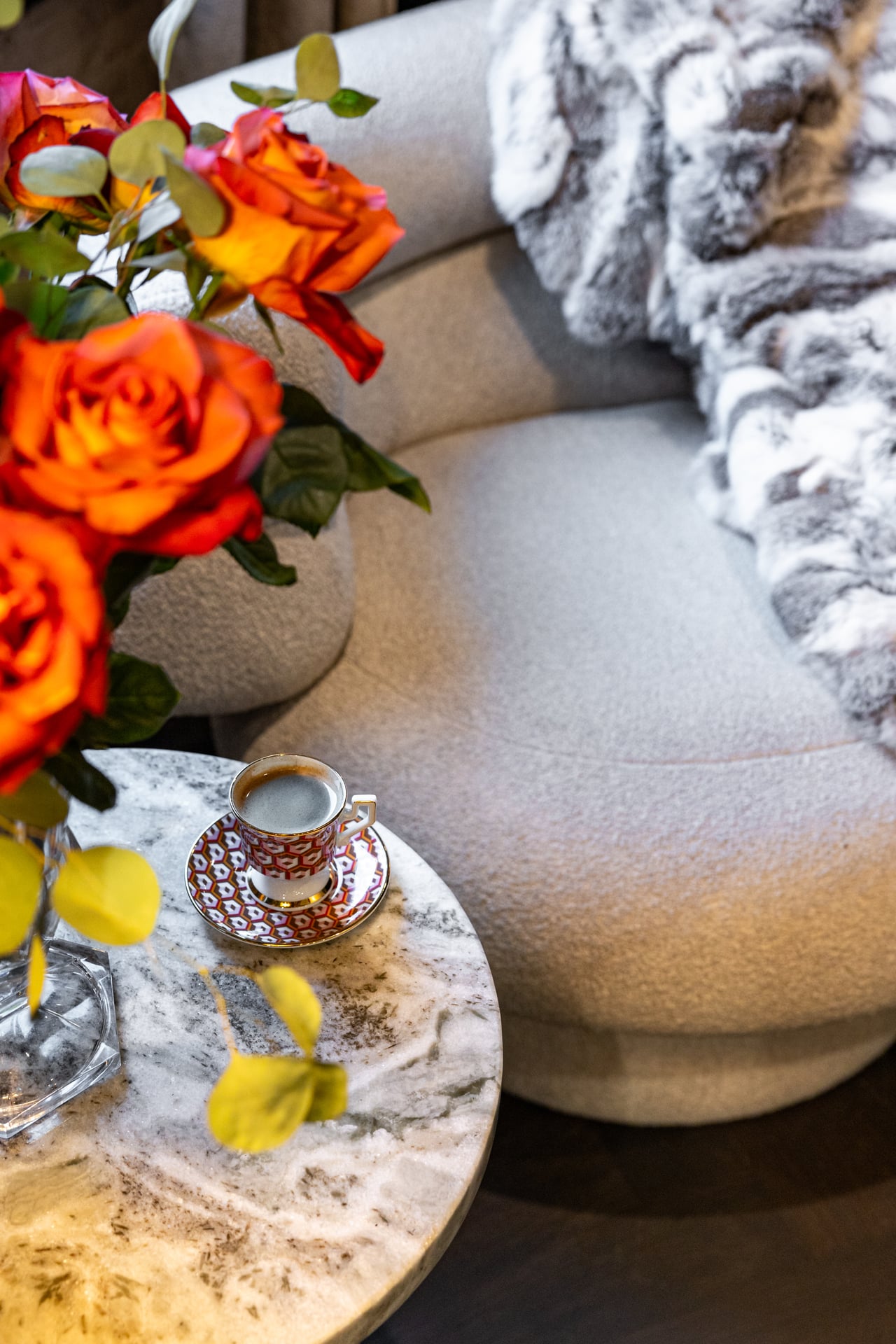
In De Orio’s loft, patina is allowed to form, doors conceal unexpected spaces, and a grand room is never too grand for a jar of candy. Beauty matters, but only insofar as it serves the life unfolding around it. The home is the most persuasive expression of Casa De Orio’s vision of a life lived well: not a perfectly styled existence, but one made richer through attention, appetite, and company. “I want the house to feel warm, layered and welcoming,” De Orio says. “The whole point, for me, is that people should want to stay.”


