










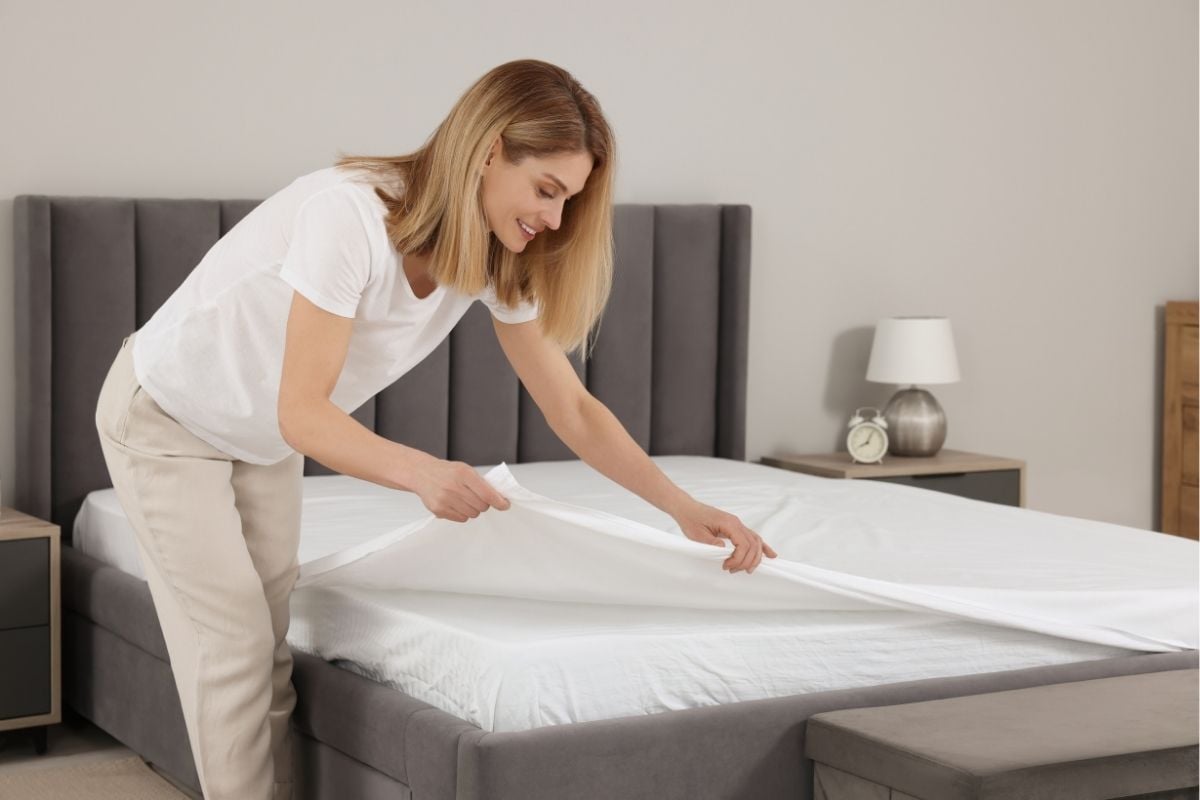
Your sheets need to breathe before you tuck them in, and dust mites are the reason why. Making your bed the moment you get up is often sold as the first win of the day. It looks tidy, it feels disciplined, and it gives the bedroom an instant sense of order. But some researchers suggest the healthier move is the opposite: pull the comforter back to the foot of the bed and leave the sheets open for a while.
The reason is invisible, and it lives in your mattress.
What Happens in Your Bed Overnight
While you sleep, your body releases heat and moisture through sweat and breath, and much of it ends up in your sheets, pillow and mattress. That warm, damp environment is exactly what house dust mites love. According to AARP, citing researchers, the average bed can host up to 1.5 million of them.
Mites themselves do not bite, but their droppings and body fragments are a common trigger for allergies and asthma. AARP notes that up to 50 percent of people are allergic to dust mites.
What the Kingston University Study Found
In 2005, researchers at Kingston University in London suggested a simple way to make beds less welcoming to mites: leave them unmade for a while. Dust mites need humidity to survive, and an open bed lets moisture escape. Leaving the bed exposed to the air “can remove moisture from the sheets and mattress,” Dr. Stephen Pretlove explained, so the mites dehydrate.
Not every expert was convinced. Andrew Wardlaw, then president of the British Society for Allergy and Clinical Immunology, said he found it “hard to believe that simply not making your bed would have any impact on the overall humidity.” Allergist Dr. Myron Zitt has also pointed out that airing the bed does not wipe out an existing mite population. Still, letting bedding dry is an easy habit with no downside.
How Long to Leave It Open
There is no official timing, but a practical rule is to pull the comforter back to the foot of the bed as soon as you get up and leave the sheets uncovered for at least 30 minutes to an hour, ideally while you shower and have breakfast. Open a window or the bedroom door to help moisture escape, then make the bed.
Why It Matters More in Fall and Winter
As the weather cools, windows stay closed and bedrooms get less fresh air. Heavier comforters also trap more heat and moisture against the mattress. A few minutes of airing each morning helps counter that, especially in rooms that feel stuffy or damp.
The Rules Allergists Recommend
Airing the bed works best as part of a routine. Dr. Zitt, past president of the American College of Allergy, Asthma and Immunology, recommends washing sheets, pillowcases and blankets weekly in hot water, following the care label, and keeping indoor humidity below 50 percent, ideally between 35 and 40 percent. A small hygrometer helps you check, and a dehumidifier can bring levels down.
He also suggests zippered, allergen-impermeable covers for mattresses and pillows, a vacuum with a high-efficiency filter and, for people with allergies, keeping pets out of the bedroom.
The Bottom Line
Pulling your comforter back every morning will not eliminate dust mites, but it gives your bedding a chance to dry out before you trap the moisture under a neatly made duvet. Combined with weekly washing and controlled humidity, it is one of the simplest ways to keep your bed fresher.