










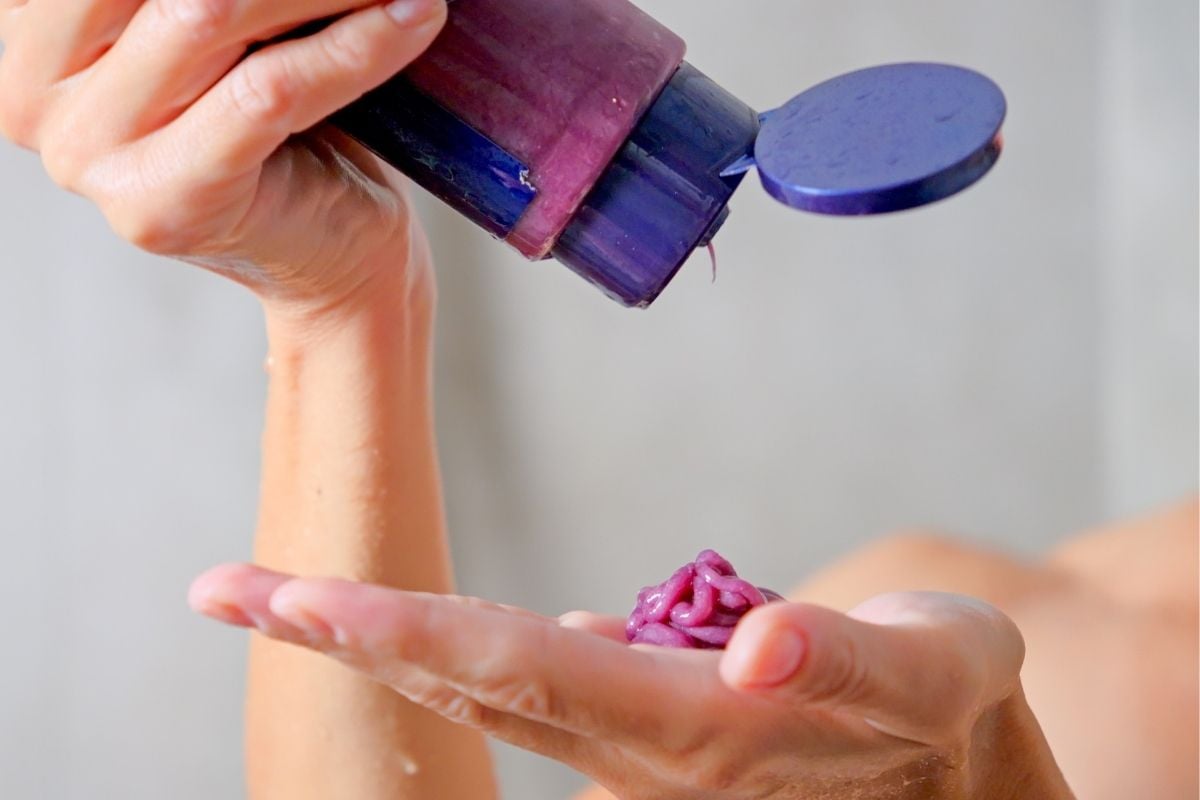
Buildup, hard water and heat are often the real culprits behind yellow strands, and toning alone will not fix them. For years, the answer to yellowing gray hair has been the same: grab a purple shampoo. It works, up to a point. But many hairstylists now say it treats the symptom, not the cause, and that relying on it too much can leave silver hair dull, dry or even slightly lilac.
The real fix, they explain, starts with understanding why gray hair turns yellow in the first place.
Why Gray Hair Turns Yellow
Gray and white hair has lost its melanin, which makes it more vulnerable to outside factors. “Gray hair can turn yellow due to product build-up, heat styling, sun exposure, and other external factors,” Nina Rubel, head of color at Rob Peetoom Salon in Williamsburg, told Vogue Philippines.
Hard water is another common cause. Hairstylist Jeremy Pugh explained that minerals “like copper, calcium, and iron” can “give gray hair a yellow tint over time.” Pollution and excess oils add to the problem, and scientist Dr. Gaby Longsworth notes that white and gray hair is “more likely to oxidize, looking yellow and tarnished.”
Purple shampoo can mask that yellow. It cannot remove the residue causing it.
What Stylists Recommend Instead: Clarify, Then Hydrate
The first step is a clarifying or detox shampoo, which removes product buildup, pollution and oils. Pugh recommends using one every two to three weeks. If you live in an area with hard water or your gray looks persistently dull, he suggests a chelating shampoo, designed to remove mineral deposits, about once a month. These formulas are not meant for daily use.
Because clarifying can be drying, follow it with a moisture mask or a bond-building treatment, Pugh advises.
The rest of the time, a hydrating shampoo does more for shine than any pigment. Gray hair tends to be drier and coarser, and smooth, moisturized strands reflect light better. Celebrity hairstylist Sean James, who works with Jamie Lee Curtis, uses a deep moisture shampoo on non-toning days. Linda Gattineri, owner of Equo Co. Salon, adds that moisture treatments keep gray hair shiny and manageable.
When Purple Shampoo Still Earns Its Place
Purple shampoo is not banned. It simply becomes a quick fix rather than a daily habit. James advises against using it with every wash and suggests about once a week. Leave it on only briefly, following the product’s directions, then rinse and condition. If your hair starts to look ashy or violet, space out the applications.
Protect Against What Causes Yellowing
Heat is a major factor. Overworked gray hair “can become dull and turn a yellowish tone due to the heat,” Rubel warns. Lower the temperature of your tools, use a heat protectant and air-dry when you can.
Sun matters too. Pugh calls skipping UV protection one of the biggest mistakes, since gray hair has no melanin to shield it. A hat or a UV-protective hair spray helps. Finally, Gattineri notes that the scalp produces less oil as hair grays, so a gentle scalp routine supports softer, shinier strands.
Your New Gray Hair Routine
Use a hydrating shampoo and conditioner for most washes, a clarifying shampoo every two to three weeks, a chelating formula monthly if you have hard water, and purple shampoo only when yellow tones appear. Add heat and UV protection, and your silver should stay bright on its own.
Goodbye purple shampoo as a daily habit. For gray hair that truly shines, the secret is a clean, hydrated base.