










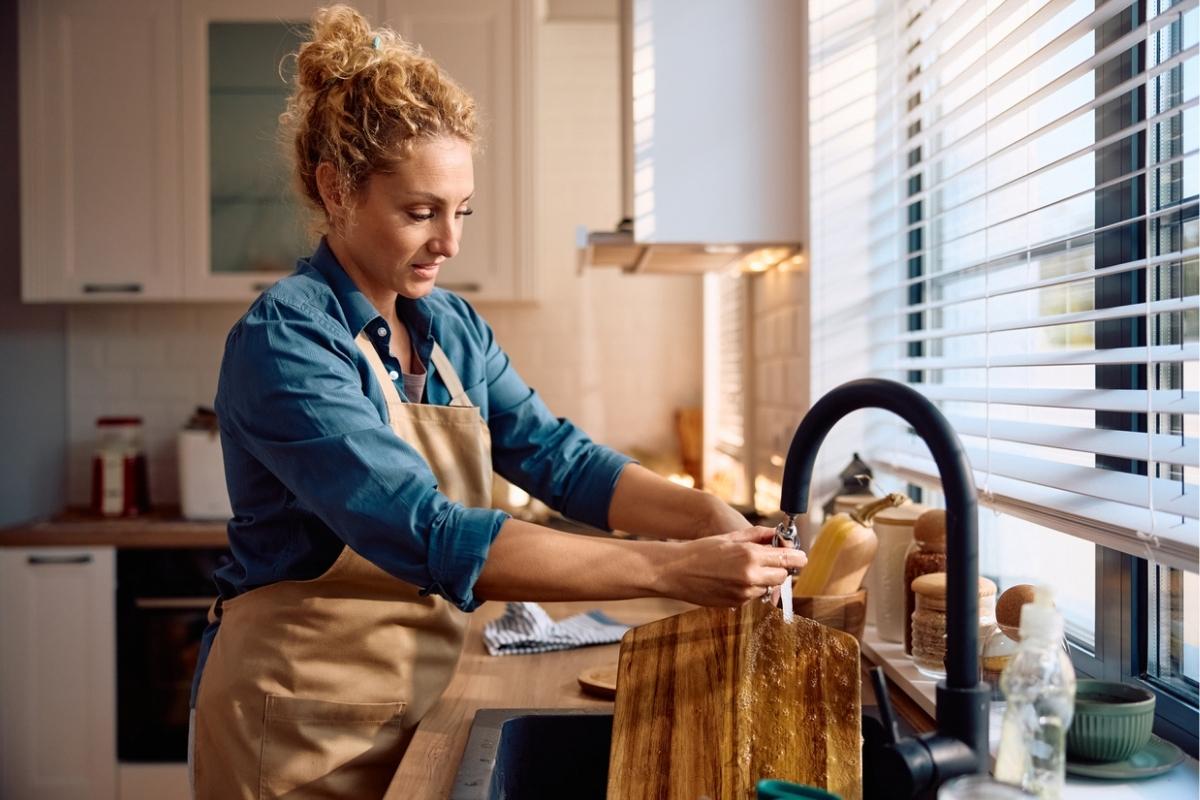
You have probably had this moment: standing in a kitchen aisle, weighing a sleek plastic cutting board against a gorgeous wooden one, and quietly wondering which is actually cleaner. Most of us grew up hearing that plastic is the hygienic choice – easy to sanitize, dishwasher-friendly, modern. Wood, meanwhile, can feel like something your grandmother swore by but that modern food safety left behind. The truth, though, is far more interesting than the assumption. And it might just change the way you think about one of the most-used tools in your kitchen.
The long-standing myth about plastic and cleanliness
For years, the conventional wisdom was straightforward: plastic surfaces are nonporous, so they must be easier to keep germ-free. Wood, with its natural grain and texture, seemed like a breeding ground for bacteria. It is an assumption that sounds logical on the surface, and it is exactly why so many home cooks defaulted to plastic without a second thought.
But does looking clean actually mean being clean? That is precisely the question a team of researchers decided to investigate decades ago. Microbiologist Dean Cliver and his colleagues at the University of Wisconsin set out in the early 1990s to measure how bacteria like E. coli and Salmonella behaved on wood compared to plastic. Their goal was simple – put both materials to a rigorous, side-by-side test and let the data speak.
What they found upended a deeply held kitchen belief, and the findings have been supported by further research since then. The plastic board that everyone assumed was the safer bet turned out to have a significant vulnerability hiding in plain sight.
What the research actually revealed about bacteria and your board
The results of Cliver’s study were striking. Plastic boards may have appeared cleaner on the surface, but bacteria actually survived longer in the grooves and scratches that accumulate over time from knife use. Every slice, every chop leaves tiny cuts in the plastic – and those microscopic channels become ideal hiding spots for germs. Washing helps, but it does not always reach deep into those scored surfaces.
Wooden boards told a completely different story. When bacteria were introduced to wood, the material absorbed the microbes beneath the surface. And then, within a few hours, those bacteria died off. It is almost as if wood has a built-in defense system – a natural mechanism that draws pathogens in and neutralizes them, rather than letting them linger on the surface where they can transfer to food.
Plastic, by comparison, has no such natural resistance. Once the surface is damaged by repeated knife use, it simply collects bacteria in its grooves with no ability to fight them off. The irony is hard to miss: the material we trusted to be cleaner may actually harbor more germs over time than the one we doubted.
Choosing the right wood – and why bamboo is not the same thing
Not every wooden board delivers the same performance. Boards made from acacia hardwood, for instance, are built to last. They resist bacteria naturally and are sourced from renewable plantations, making them a sustainable choice alongside a hygienic one. Maple is another wood noted for its natural antibacterial properties.
Bamboo, on the other hand, is worth a closer look before you assume it belongs in the same category. Bamboo is technically a grass, not a hardwood. While it is slightly eco-friendly, it tends to blunt your knife blade quickly and can eventually damage it with extended use. More importantly, bamboo does not share the same natural antibacterial properties found in acacia or maple. So if hygiene and knife longevity matter to you, choosing the right material is just as important as choosing the right form.
For home cooks who care about sustainability, wooden chopping boards also reflect a broader shift toward natural, quality-driven kitchen tools. They are not just practical – they embody a commitment to cooking with materials that feel right and can genuinely last a lifetime. Paired with simple cleaning habits, a well-chosen wooden board becomes one of the safest, most durable tools in your kitchen.
What this means for your kitchen right now
Here is what you know now that you probably did not before: the plastic board you assumed was more hygienic may actually be harboring bacteria in its knife-scarred surface, while a quality wooden board actively works to eliminate those same microbes within hours. Dean Cliver’s research from the early 1990s started this conversation, and subsequent studies have reinforced it.
The takeaway is refreshingly simple. You can enjoy the warmth, beauty, and durability of a wooden chopping board – especially one made from acacia hardwood or maple – without sacrificing food safety. Keep it clean, treat it well, and you have a kitchen essential that is safe, sustainable, and built to stay with you for years to come.