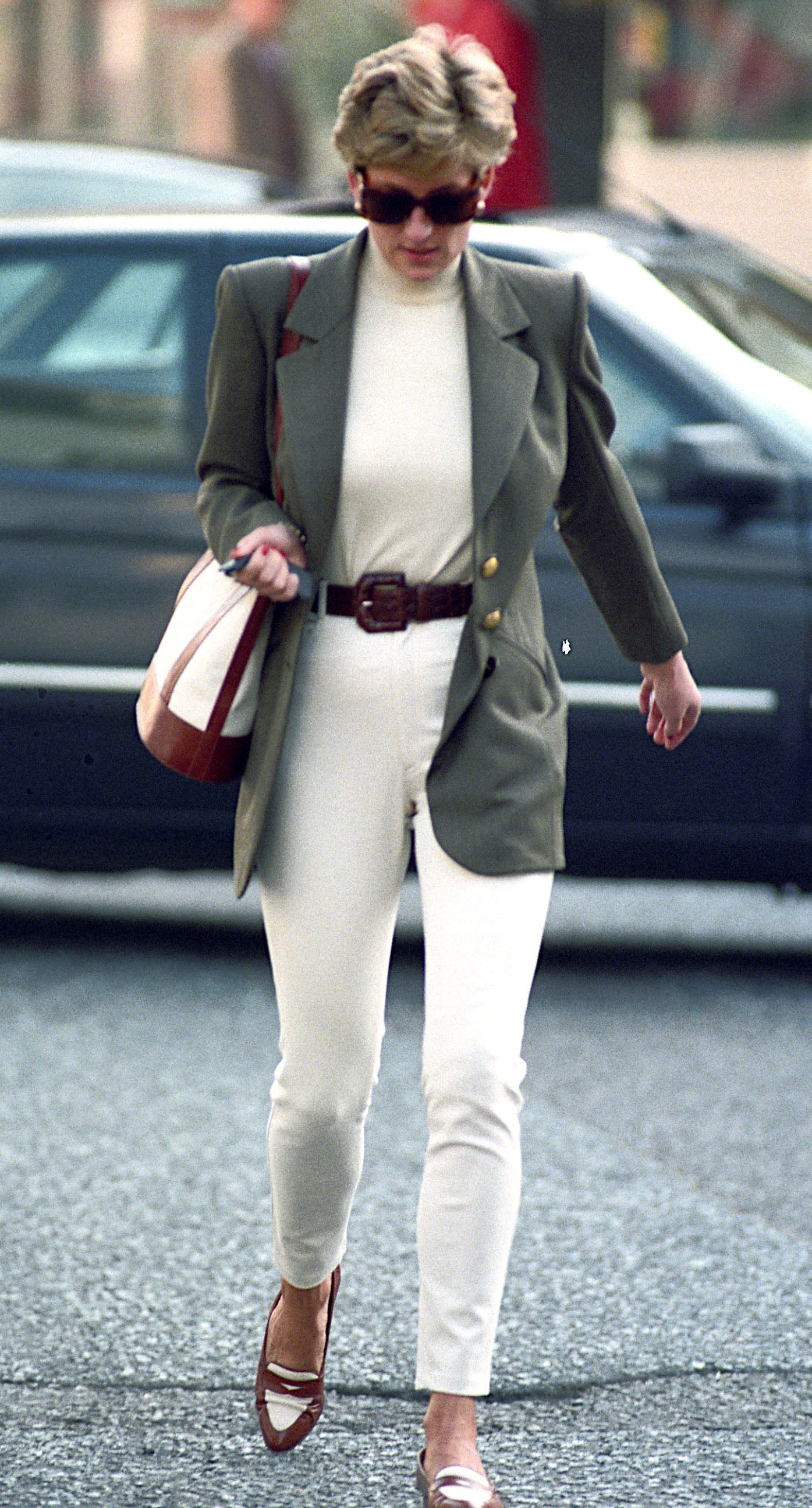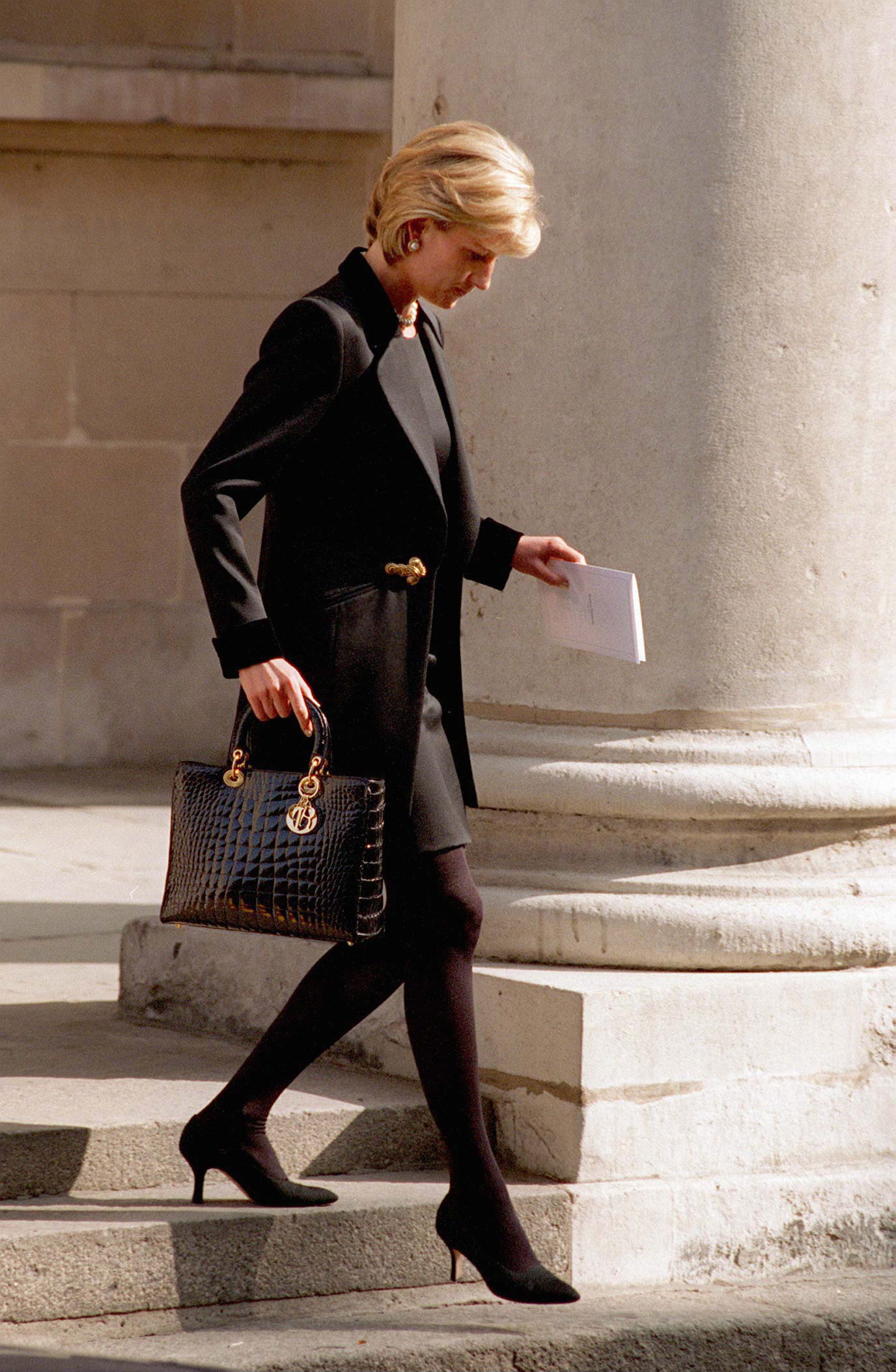










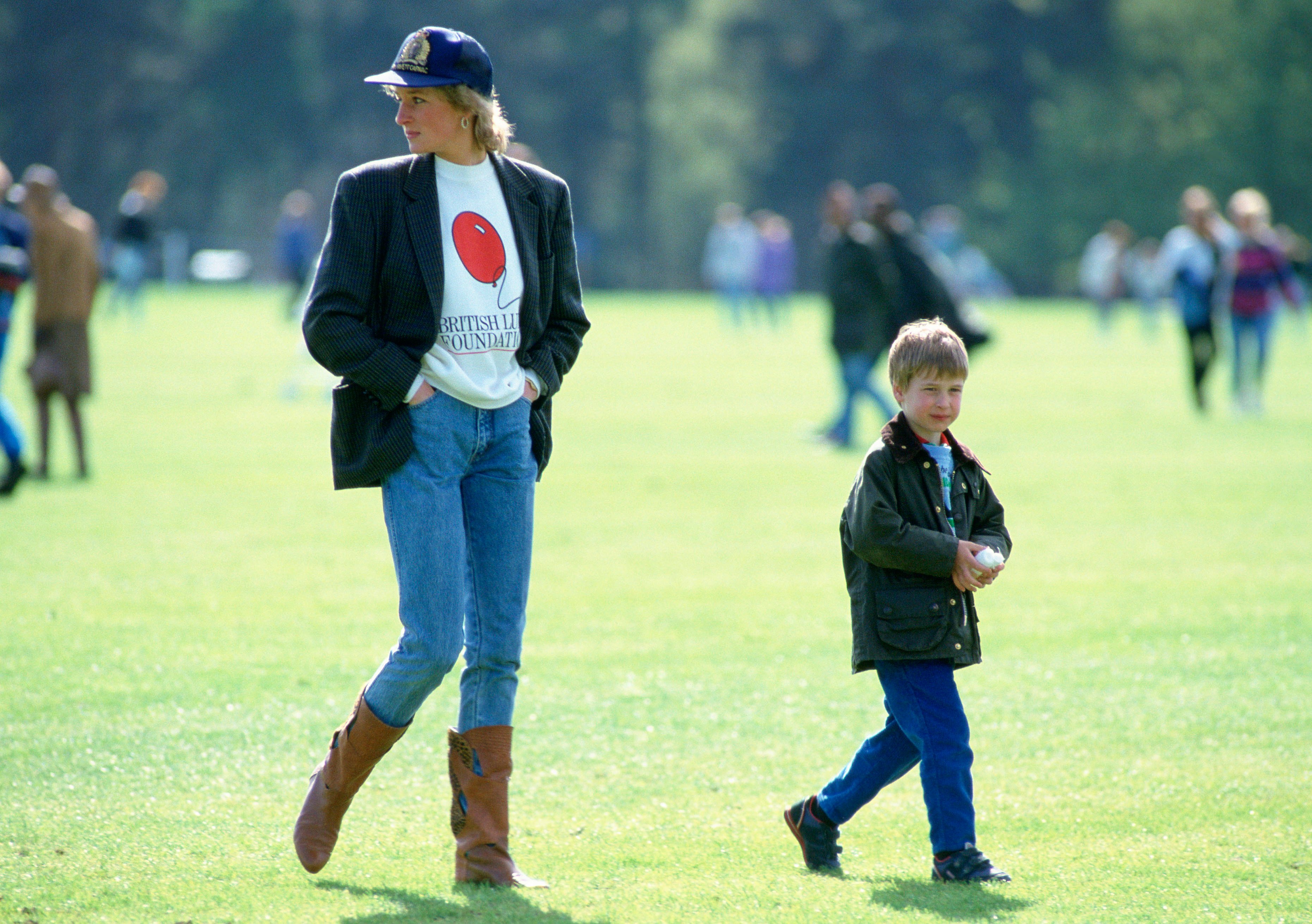
The photographs taken outside her gym were never meant as style references. Lady Diana left the building each morning in whatever came to hand. Consequently the tabloids ran the images as evidence of a private life besieged. Three decades on, however, those same frames circulate as mood boards. They are pinned by people with no memory of the era that produced them. The reversal in turn says something about how taste operates. A wardrobe assembled under pressure now reads as more desirable than any red carpet she walked. Some of the appeal belongs to the clothes, while most of it belongs to the composure. Nothing in her off-duty rotation appears arranged for an onlooker. That, naturally, remains the hardest effect to counterfeit. Fall suits her vocabulary particularly well, since every piece she favored depends on layering.
The Blazer and Sweatshirt Formula
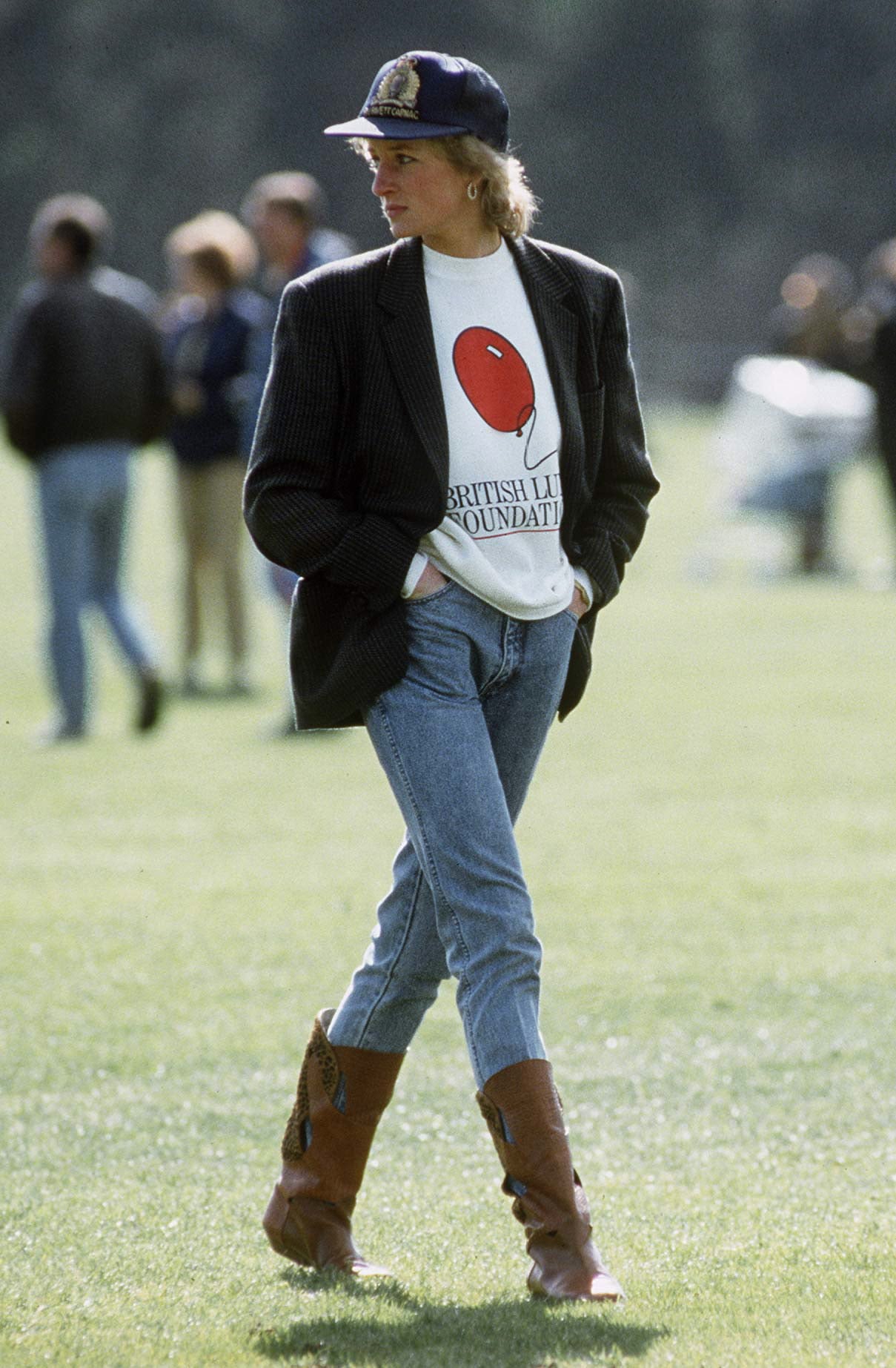
The first arrangement sounds improbable until you see it. Diana
wore an oversized blazer directly over a plain
sweatshirt in grey or navy. The jacket came
double-breasted, with shoulders built for a boardroom. Tailoring
therefore supplied the architecture while jersey dissolved the
formality. Straight-leg denim finishes the proposition today.
Meanwhile the blazer wants a size beyond instinct, since proportion
carries the whole argument.
The Varsity Jacket and the Waxed Coat
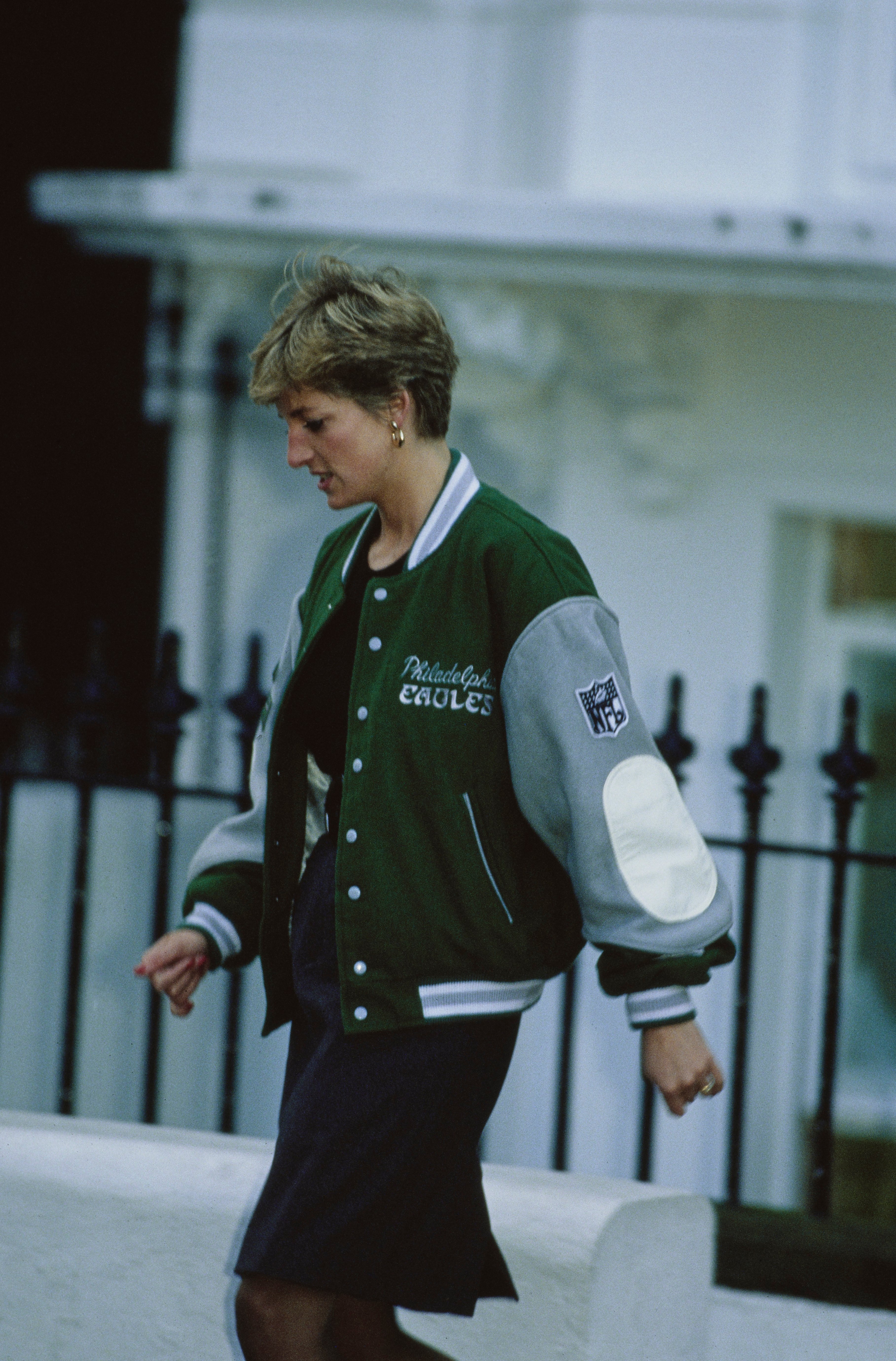
The second formula arrived instead from American football. A green
Philadelphia Eagles varsity jacket entered her
wardrobe after a visit to the United States in 1991. Afterwards she
wore it repeatedly over leggings, long before anyone invented the
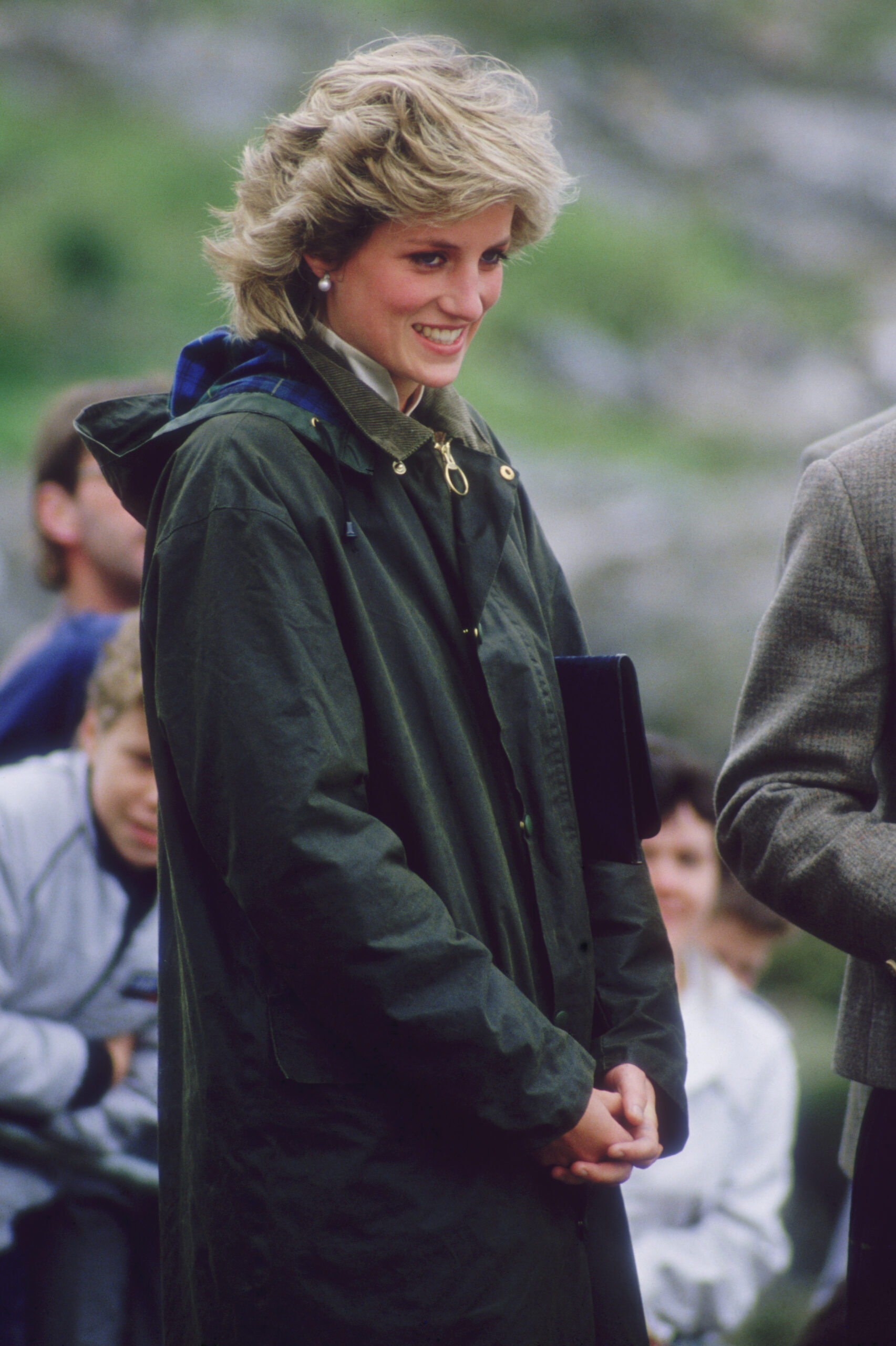
phrase sports nostalgia. The third belongs to the countryside. At
Balmoral, for instance, she favored a waxed
Barbour worn with sturdy boots. Both obey the same
principle as the first, pairing a resolute outer layer with
something yielding beneath.
Knitwear and Tailoring, the Louder Half
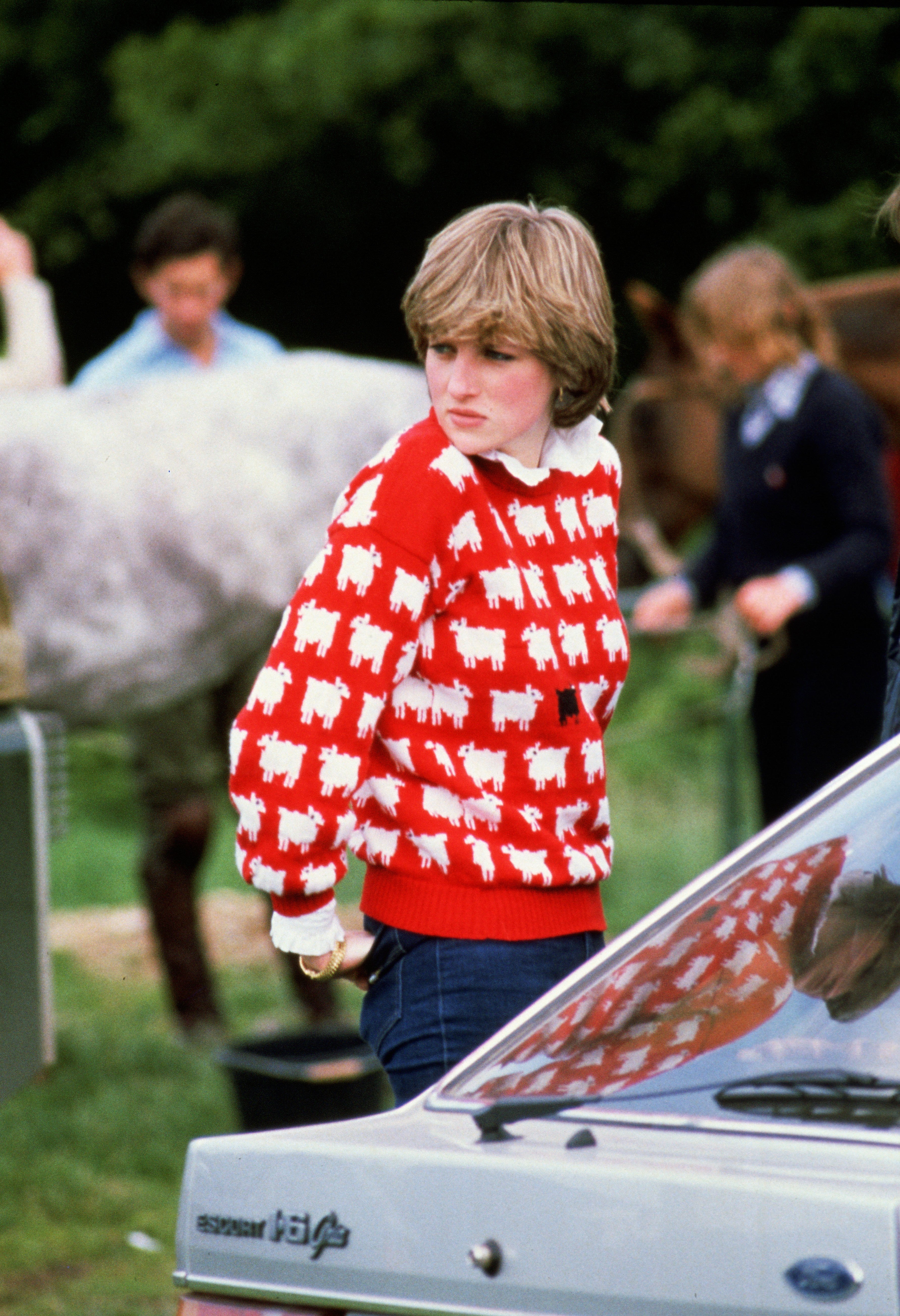
June 1981 produced the most consequential jumper in modern fashion.
A nineteen-year-old Diana Spencer appeared at a
polo match in red wool, covered in white sheep with a single black
one among them. A small London label called Warm &
Wonderful had knitted it. As a result the brand sold out
within weeks. The garment later reached auction and fetched over a
million dollars. Her instinct transfers neatly to any autumn
wardrobe.
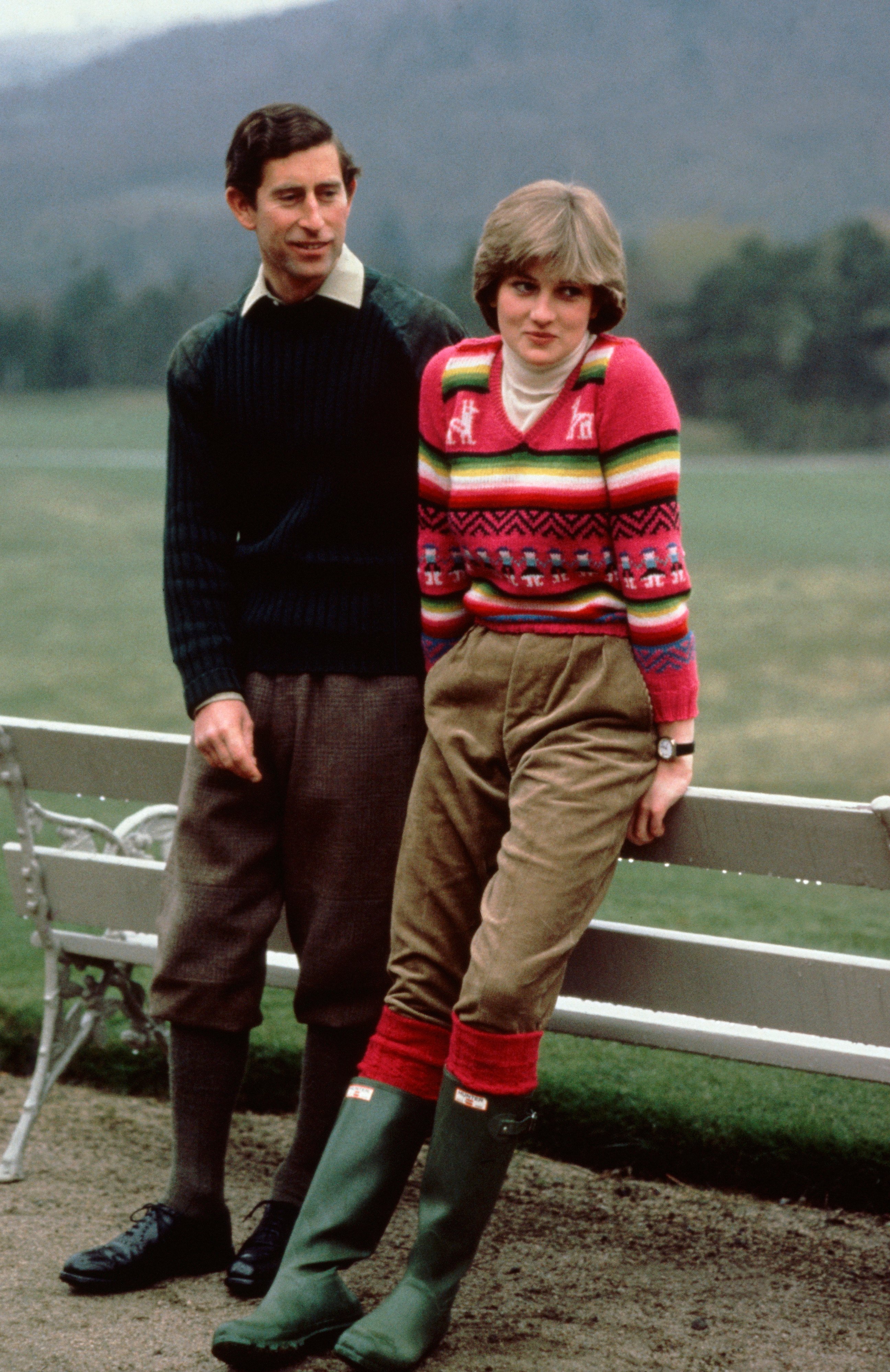
A colorful knit performs the labor of an entire outfit, which explains the emerald and scarlet versions she accumulated. Her tailored suits obeyed the reverse logic. Cut close with emphatic shoulders, they came in single blocks of color that made silhouette the only event. Either approach demands one decision and silence from everything else. She chose that sweater without a stylist, and forty years later it was still issuing instructions.