










You watch your cat stare out the window for what feels like hours, and a small pang of guilt settles in. Are they bored? Are they missing out? If you have ever wondered whether keeping your feline companion indoors means depriving them of a full life, you are far from alone. Over the past few years, a growing number of pet owners have made the same choice – and it turns out the answer is not about letting them roam, but about rethinking the space they already have.
Why more cats are staying inside – and why that is a good thing
The trend toward indoor-only cats is not just a lifestyle preference anymore. In some parts of Australia, keeping your cat indoors is actually becoming mandatory. And the reasoning behind the shift is hard to argue with: indoor cats tend to live longer and are significantly less likely to get injured.
Still, choosing to keep a cat inside comes with its own responsibility. A bare apartment with a food bowl and a litter tray is not going to cut it. You need to make sure your home meets every one of your cat’s physical and psychological needs – from sleep to stimulation, from exercise to instinct. So what does that look like in practice?
The good news is that creating the ideal indoor environment does not require a renovation. It requires intention. And according to veterinary guidance, there are a handful of priorities that can transform a regular living space into a place where a cat genuinely thrives.
Vertical space, variety and a touch of the outdoors
The single most important thing you can do for an indoor cat is create an enriched environment. That means giving them plenty of things to do while also providing dedicated spots to sleep and relax. Cats love to perch and sleep in high places – it is one of their most hardwired instincts. A climbing tree is considered essential for any indoor cat, offering both a vantage point and a cozy retreat.
You do not need to stop there, though. Simple shelves can be mounted on a wall to form a cat ladder, and existing furniture can be strategically positioned so your cat can reach higher spots they naturally gravitate toward – the top of a wardrobe, for instance, or a sunny window sill. Think of your home in three dimensions, the way your cat already does.
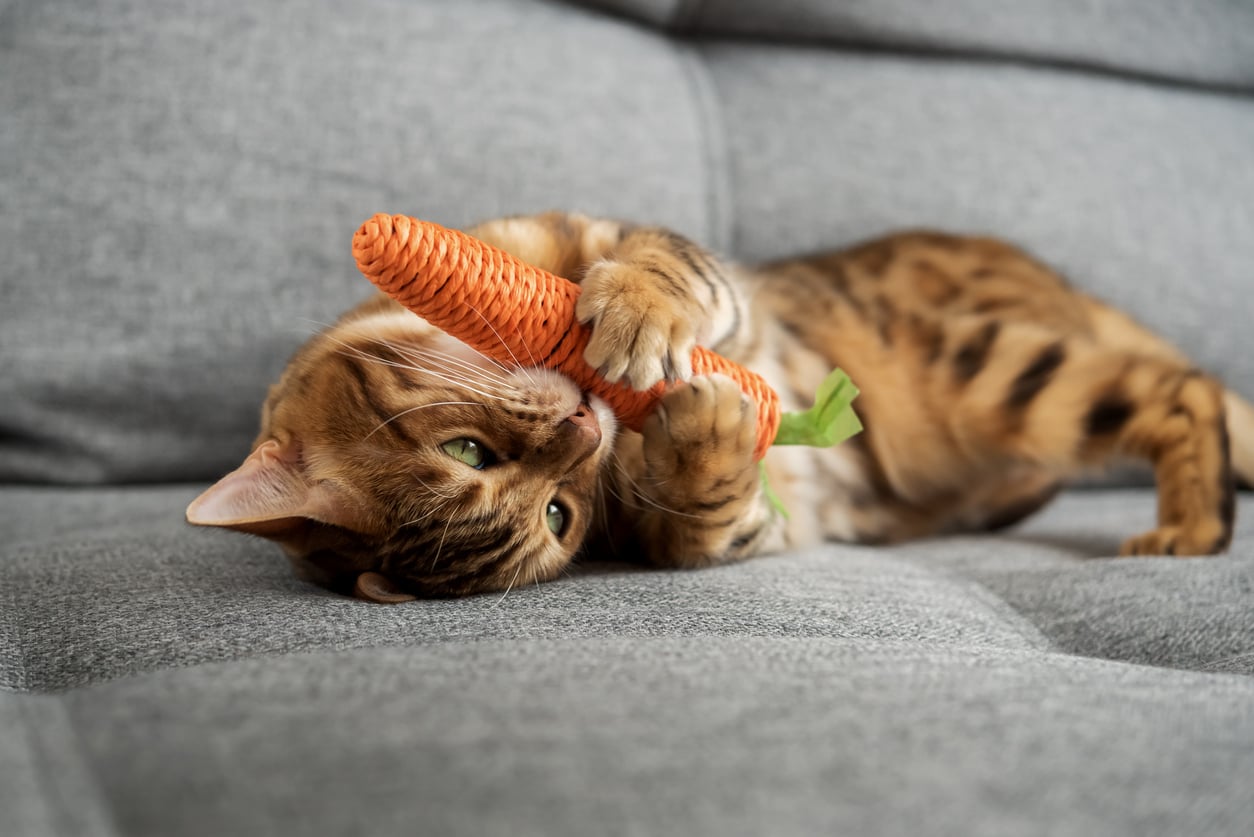
When it comes to toys, variety is king. Furry ones, colored ones, jingly ones, dangly ones, rolling ones – the point is to mix things up regularly so your cat stays interested rather than losing enthusiasm after the first five minutes. Rotation keeps novelty alive without a constant stream of new purchases.
And then there is the outdoors question. You can absolutely bring a taste of nature inside without ever opening the front door. Safe potted plants such as cat grass and catnip give your cat something organic to explore, sniff and nibble on. It is a small gesture that bridges the gap between a fully indoor life and the sensory world outside.
Scratching is non-negotiable – and exercise matters more than you think
Here is something every cat owner needs to internalize: all cats need to scratch. It is not misbehavior. It is not defiance. Scratching is a natural behavior that serves two distinct purposes – it is how a cat marks its territory, and it is the mechanism through which they remove the outer sheath of their claws. Providing appropriate scratching surfaces is not optional; it is fundamental to your cat’s wellbeing and will save your furniture in the process.
Exercise is another area where indoor cats need deliberate support. Yes, cats sleep a lot, but they still need physical and mental stimulation. Without enough exercise, cats – especially young ones – may actually become destructive. That restless energy has to go somewhere, and if you do not channel it, your couch cushions might pay the price.
The commitment is smaller than you might expect. Just 5 to 10 minutes a day can make a genuine difference to your cat’s overall wellbeing. Toss a toy across the room so your cat chases it. Use fishing rod type toys that mimic the movement of prey. You can even consider taking your cat for a walk if they are amenable to a harness. The key is consistency – a short daily play session beats an occasional marathon.
What this means for you and your cat
Keeping a cat indoors is not a compromise. It is a conscious decision that, when paired with the right environment, gives your cat a longer, safer life without sacrificing enrichment. You now know the essentials: vertical territory, toy variety, safe plants, proper scratching surfaces and a few minutes of active play each day.
None of this requires a massive budget or a sprawling home. It requires paying attention to what your cat actually needs – height, stimulation, instinct and movement – and weaving those elements into the space you already share. Your cat is not missing the outdoors nearly as much as they are waiting for you to make the indoors worth staying in.


