









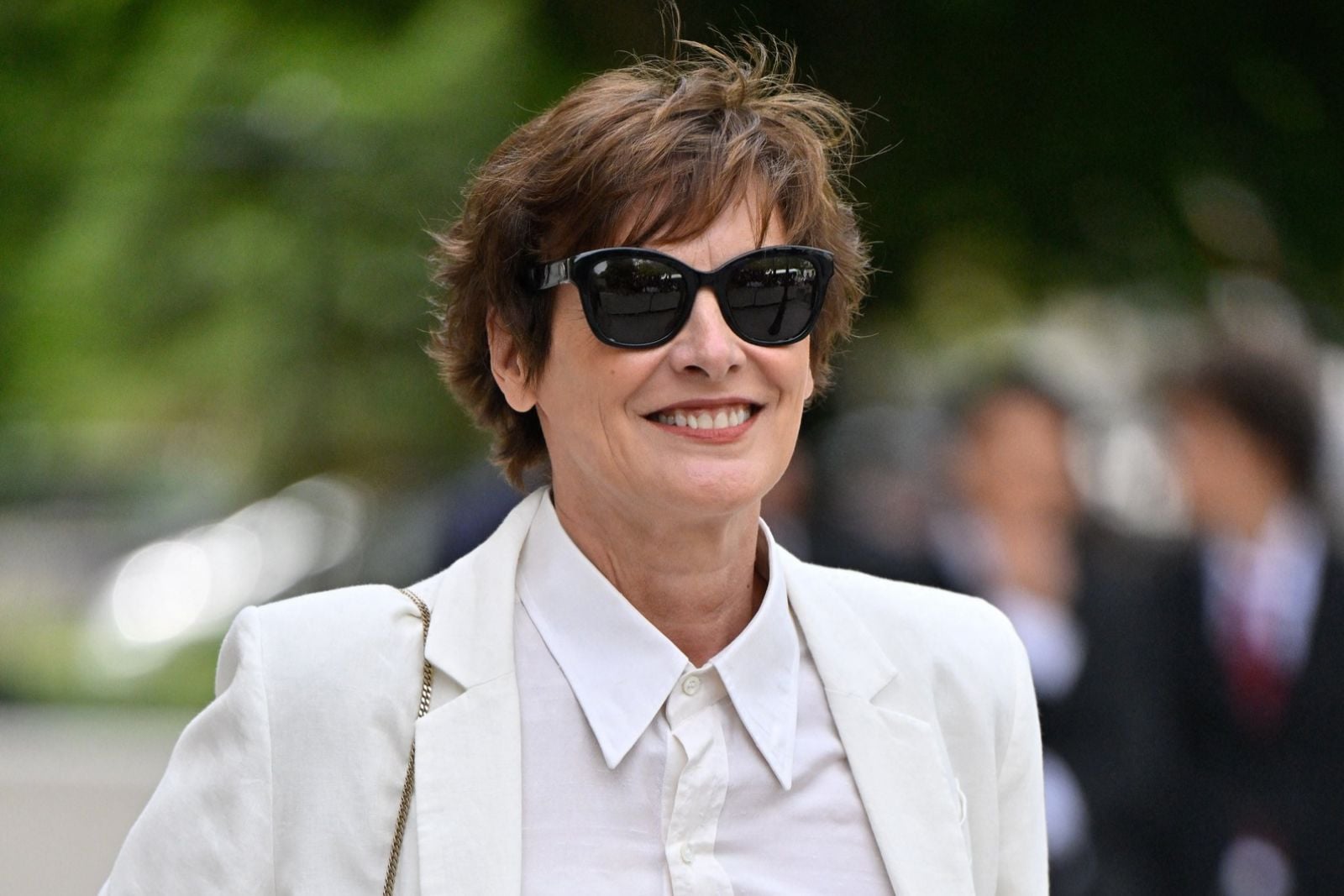
You have probably scrolled past it a hundred times: a Parisian woman in a simple blazer and straight-leg jeans, hair slightly undone, looking as though she spent zero effort yet somehow radiating more style than an entire mood board. You may have tried to recreate that look yourself, adding the linen shirt, the loafers, the muted palette. And yet something felt off. That is because what the world romanticizes as effortless French style is actually the product of quiet, almost invisible discipline – and the rules governing it are rarely spelled out.
The mythology we bought into
Cinema and fashion constructed the archetype of the French woman with careful precision. The sensual ease of Vanessa Paradis, the controlled elegance of Catherine Deneuve, the razor-sharp silhouettes of Betty Catroux and the studied nonchalance of Jane Birkin all fed into a global image that international media amplified until it became almost fictional. We internalized it without questioning it.
But here is the more honest picture. France is diverse, regional and generational. Some French women embrace maximalism, others prefer streetwear, and some genuinely do not care about fashion at all. Beneath that variety, though, a shared foundation often surfaces: a sense of proportion, a tendency to edit, a preference for clothes that feel aligned with the person wearing them. What one calls good taste, another may call boring. Taste is, after all, subjective. So what are the actual principles at work?
Counterbalance, fit and the art of knowing where to stop
The legend of natural chic owes much to figures such as Jane Birkin, Inès de la Fressange and Emmanuelle Béart. Nothing about their seemingly effortless outfits was accidental. A shirt unbuttoned to the precise point where it reads as relaxed yet sensual, denim that sits just right on the hip – every detail is calibrated. Parisian women understand proportion instinctively. When the silhouette is sharp, the hair softens. When the lipstick is bold, the outfit retreats into simplicity. There is always a counterbalance, and the real secret to looking effortless is knowing exactly where to stop. If you want to start somewhere, think about a linen shirt, an oversized knee-length wool coat and a pair of straight-leg jeans bought secondhand.
Equally non-negotiable is fit. If there is one unforgivable misstep in France, it is clothing that does not sit properly on the body. Shoulders must align, trousers should skim the shoe and a coat needs structure. When Yves Saint Laurent introduced Le Smoking for women in 1966, the power of the look lay entirely in its cut. Precision transformed a borrowed garment into a symbol of autonomy, and that same logic applies today whether the piece comes from couture or the high street. Alterations are common: hemlines are adjusted and waistbands refined, because clothes are expected to adapt to the body, not the other way around.
How trends are filtered and why colour stays cautious
Paris may be the capital of fashion week spectacle, but daily life tells a completely different story. French women do not jump straight into the trends they just saw on the runways. They analyse, observe and finally adopt select new directions – but only in their most wearable form. A woman might take up the season’s colour yet pair it with decade-old tailoring. She may experiment with a silhouette spotted on the runway at Courrèges, then ground it with simple denim or loafers. The wardrobe is treated as a long-term investment that must be built carefully.
When it comes to colour, French wardrobes lean heavily on neutrals – black, navy, grey and ivory from winter through summer. The legacy of Coco Chanel remains tangible in this restraint; her embrace of black as modern and urban reshaped the 20th-century wardrobe. The common approach is to permit just one piece of colour, whether that is a bag, a coat or even just nail polish. It can feel limiting, and frankly, it sometimes is. But within those boundaries, the editing becomes the statement itself.
Freedom is the most seductive rule of all
Perhaps the most understated principle of French good taste is that the women’s section is not a boundary. For decades, French style icons have borrowed freely from traditionally masculine wardrobes, and designers from Thierry Mugler to Jacquemus legitimized the idea that elegance has no gender. Sharp tailoring, starched shirts, formal loafers and structured coats have become staples. Walk through Paris and you will see oversized blazers, men’s knitwear, straight-cut trousers and vintage suiting sourced from the opposite rack. It is, paradoxically, the most seductive and feminine approach you could take to dressing well.
What you now know is this: French style is not a gift bestowed at birth. It is a set of quiet habits – counterbalance, disciplined fit, cautious trend adoption, a restrained palette and the confidence to shop without regard for gendered labels. None of it is accidental, and all of it is learnable. The only real rule? Understand what works on your body, edit ruthlessly and treat your wardrobe as something you build over years, not seasons.


