











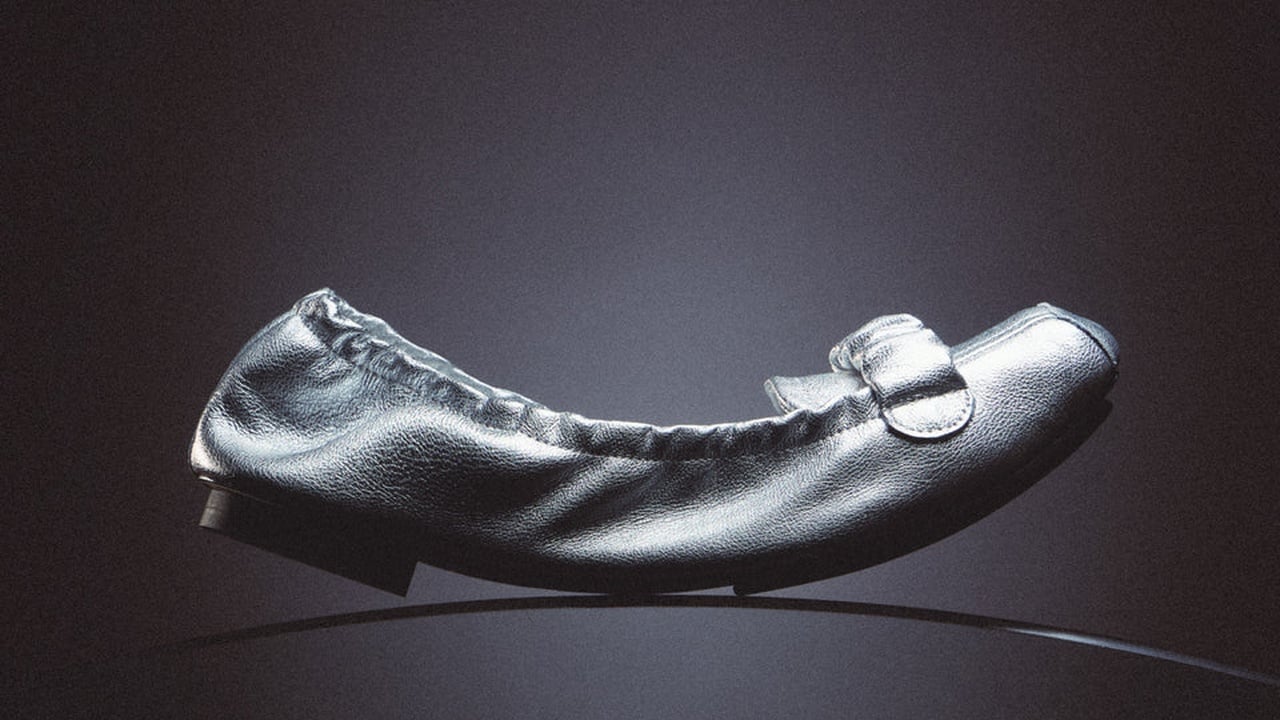
In Among School Children, William Butler Yeats closes on a question that has haunted every art built around the body, how can we know the dancer from the dance, as if the two might blur into a single, indivisible gesture. Repetto has spent its entire history inside that same riddle, shaping shoes that disappear into movement rather than decorate it, felt more than seen once a dancer steps into the light. Something of that same tension, the wish to let structure dissolve into motion, runs through Yohji Yamamoto‘s own work, where fabric so often seems to move before the body wearing it does. Their new collaboration lets both instincts meet inside a single shoe, though this particular gesture seems far less interested in philosophy than in looking extremely good on cobblestones.
A Pointe Shoe Reimagined as a Loafer
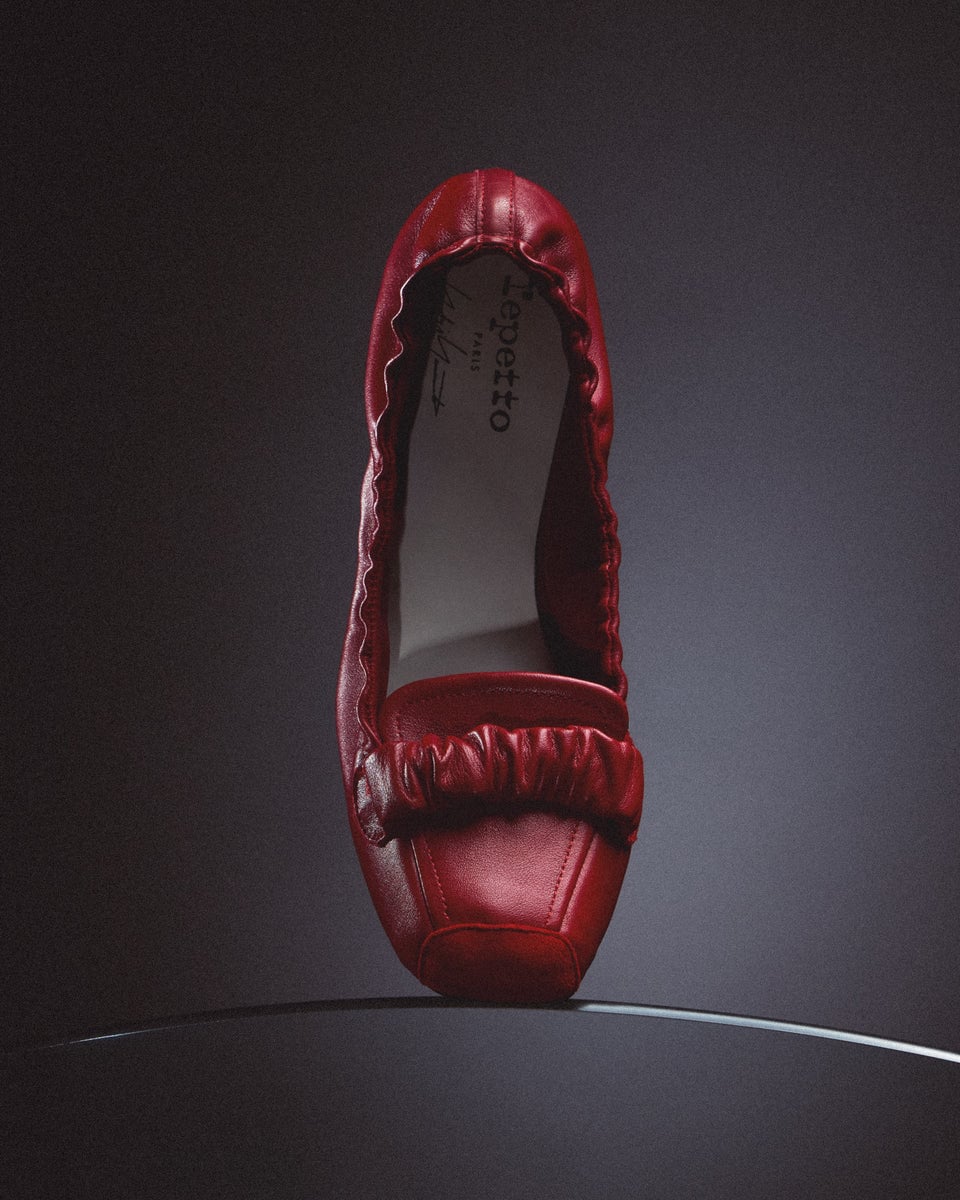
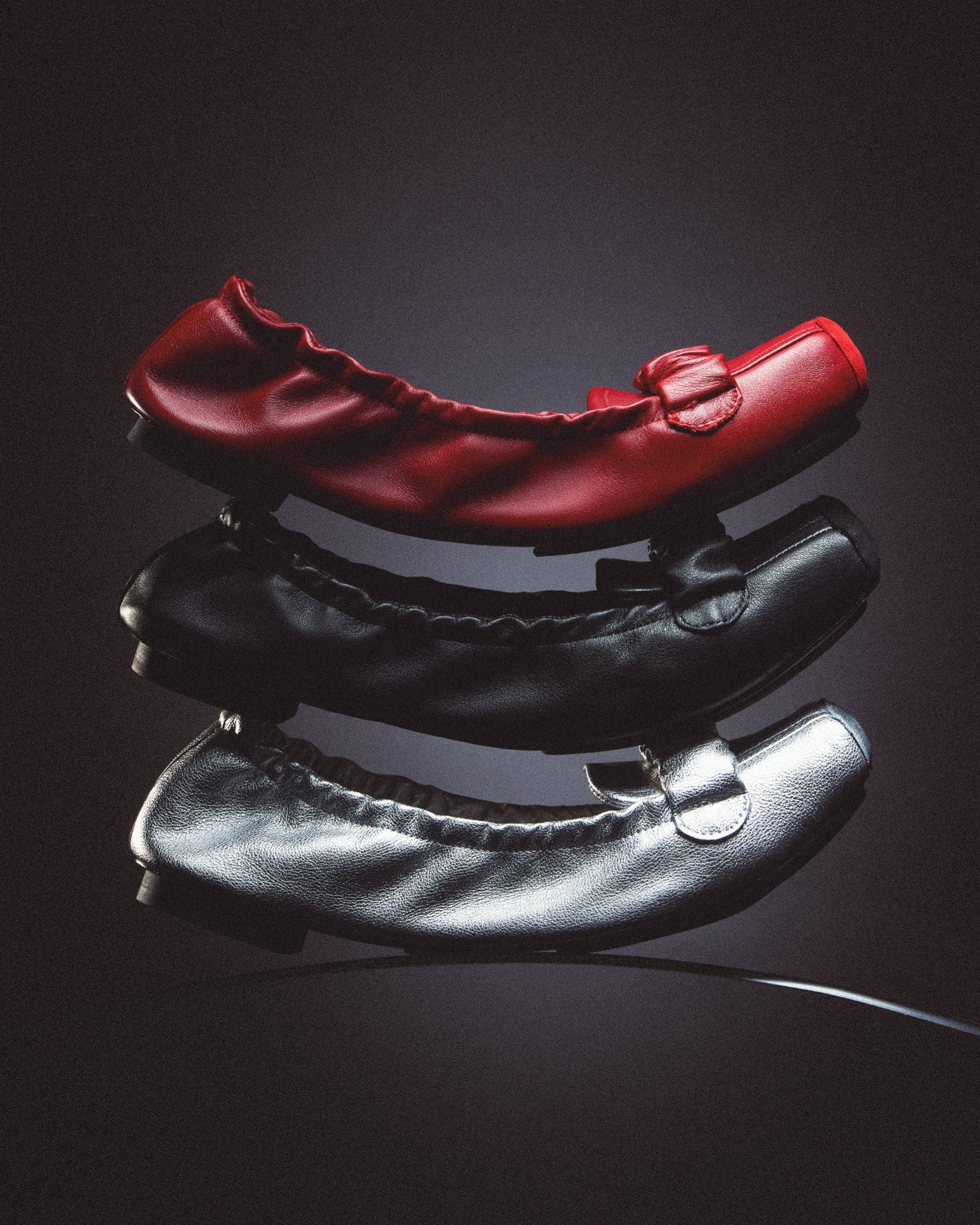
The capsule takes Repetto’s pointe shoe, arguably the house’s most recognizable silhouette, and filters it through Yamamoto’s sharper, more sculptural sensibility, landing somewhere between a ballet flat and a loafer that refuses to sit still. Presented during Yamamoto’s Paris Fashion Week show, the collection was produced in France in famously small quantities, a detail that suits its origins as a piece meant for the stage before it was ever meant for the sidewalk. It arrives in three colorways, a deep black that has become something of a Yamamoto signature, a bold flame red, and a luminous silver that feels distinctly contemporary against the other two. Every pair carries the same exacting craftsmanship Repetto has applied to dancers’ shoes for decades, only now aimed at something considerably less obedient to choreography, and considerably more likely to end up under a café table than under stage lights.
Two Houses, Two Decades of Dialogue
Repetto’s own story begins with Rose Repetto, who started making shoes in 1947 for her son, the choreographer Roland Petit, long before the brand became shorthand for Parisian ballet flats. That origin gives the house a kind of built-in reverence for the body in motion, which makes its ongoing dialogue with Yamamoto, now well past its twentieth year, feel less like a marketing partnership and more like two ways of thinking about movement finally comparing notes over an extremely long coffee. Where Repetto brings precision and choreographic memory, Yamamoto brings his familiar instinct for asymmetry and shadow, and the result balances tradition against creative freedom without letting either side overpower the other, which might be the only known instance of two decades of artistic dialogue ending in something you can also wear to brunch. The Repetto x Yohji Yamamoto capsule is available starting September 14th.


