










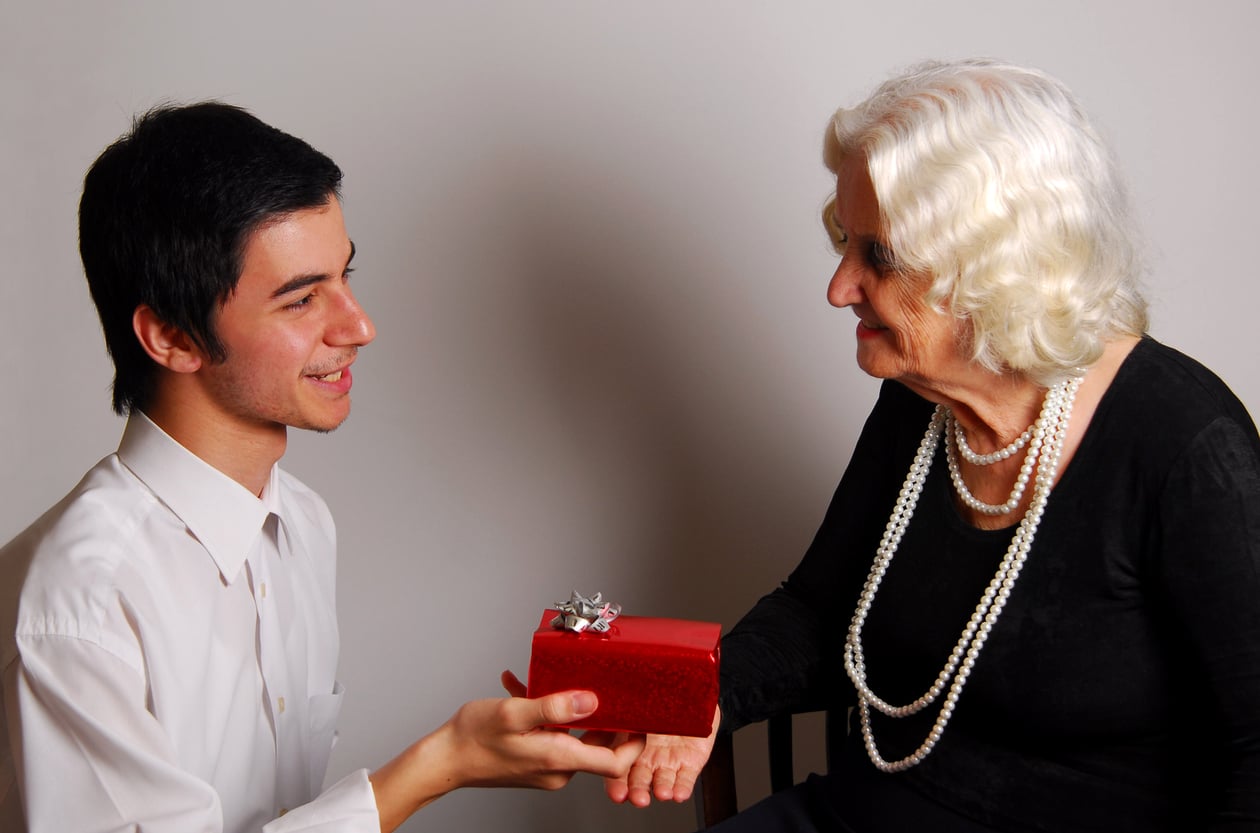
You visit your grandparents for the afternoon, and somehow you leave carrying a tea set, a box of vinyl records, a piece of jewelry you have admired since childhood. It has been happening more and more in recent years. When you gently ask whether they feel sad about parting with possessions they have owned for decades, they dodge the question, change the subject, or simply smile. You have probably assumed they are just decluttering. But the real explanation runs much deeper than a tidy living room.
Why older adults start distributing their belongings after 70
According to Swedish essayist Margareta Magnusson, many older adults begin engaging in a practice known as Swedish death cleaning once they pass the age of 70. The concept involves deliberately reducing and organizing one’s possessions in anticipation of one’s final years. Whether done consciously or unconsciously, the goal is the same: sparing loved ones from having to sort through an entire house after a death.
At first glance, it might look like a practical errand, the kind of large-scale purge we all fantasize about on a rainy Sunday. But when you look closer, the motivation is rarely about efficiency. It is about meaning. So why do so many people feel compelled to hand over their most cherished objects rather than simply throwing things away?
Magnusson notes that this behavior is not exclusive to the elderly. It can actually begin as early as 40 or 50 in some people. That detail alone suggests the impulse is not solely tied to aging. It is tied to a shift in how we relate to the things we own and, ultimately, to the story we want to leave behind.
The emotional weight behind every handed-down object
A study published in The Gerontologist found that creating a material legacy is valuable for giving meaning to one’s life and can foster a form of symbolic immortality – the feeling of continuing to live after death by allowing an individual to remain in the memory of loved ones. In other words, when your grandmother hands you her ring or your grandfather insists you take his old vinyl collection, they are not letting go. They are ensuring a piece of themselves endures.
Passing on a piece of jewelry, a family heirloom, or even a simple household item to someone who will assign it special value carries a genuine emotional dimension. It allows memories and family history to circulate rather than sit frozen in a drawer. The object becomes a vessel – not for nostalgia alone, but for identity. Each gift says: this mattered to me, and now it matters to you.
This is precisely why the act of giving things away during one’s lifetime is not a sign of material detachment. It is, paradoxically, an expression of deep material attachment. The person cares so much about these objects that they refuse to leave their fate to chance.
Choosing the future of what you treasure most
There is another layer to this behavior that we rarely consider. By intentionally placing belongings during their lifetime, older adults get to decide who – or which organization – will inherit their most precious items. Nothing is left to randomness. Nothing ends up in a donation bin by default or gets divided in a way that strips away the story attached to it.
This level of intentionality reveals something important. It shows that the people distributing their possessions are not indifferent to the material world. Quite the opposite: they care enough to curate the afterlife of each item. They want the tea set to land in a kitchen where it will be used for Sunday gatherings, the records to end up on a turntable rather than a shelf, the artwork to hang where someone will actually look at it every morning.
For many, this process also becomes a quiet way of initiating conversations about family history. An object with a story attached is far more powerful than a paragraph in a will. It is tangible, immediate, and personal. And it allows the giver to witness the moment of transmission, something a posthumous inheritance can never offer.
What this means the next time you are handed an heirloom
The next time your grandmother extends her old tea set toward you or your grandfather pulls out a crate of vintage records with your name on it, resist the urge to see it as mere spring cleaning. Behind every object is a memory, a chapter of family history, and a quiet desire to pass on a small part of oneself.
What you now know is that this gesture is not about loss. It is about legacy, connection, and a deeply human need to remain present in the lives of the people we love – even after we are gone. Accepting those objects with the weight they deserve might be one of the most meaningful things you can do for someone who is trying, in their own way, to live on.


