









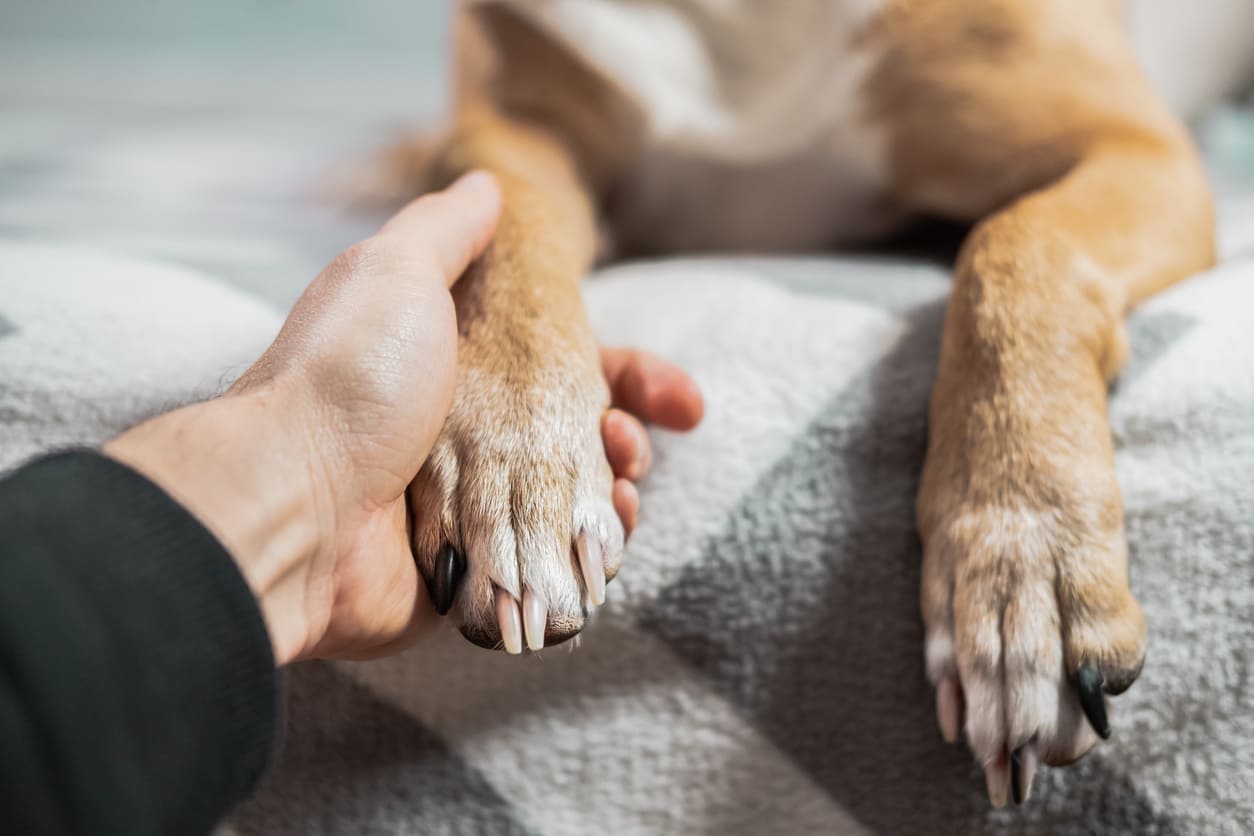
You are sitting on the couch, scrolling through your phone, and there it is again – a warm, insistent paw pressing against your leg. You glance down, and your dog stares back at you with wide, expectant eyes. Most of us assume this little gesture is simply a request for belly rubs or a treat, but the truth is more layered than that. What your dog is communicating with that deliberate touch depends on context, timing, and the rest of their body language. And once you start paying attention to the full picture, you will never look at that paw tap the same way.
Why pawing is hardwired from day one
This behavior is not something your dog picked up from watching a cute video. Pawing is an instinctive action that begins in puppyhood – pups will paw at their mothers to stimulate milk flow. It is one of the earliest communication tools a dog ever learns, and it works. Because pet parents almost always respond to pawing, dogs quickly figure out that a well-placed paw is an incredibly effective way to get what they need.
As dogs mature, this built-in reflex evolves into a versatile language. They can tap, pat, pounce, whack, push, and even hit us with their paws – each variation carrying its own nuance. And even if you try to discourage the habit with a verbal correction like the word “no,” your dog still received the attention they were seeking. In their mind, the paw did its job.
That is precisely why understanding the motivation behind the paw matters more than simply reacting to it. Not all pawing is a plea for affection. Your dog’s body language can reveal important information about their emotions and what they are truly trying to accomplish when they reach out and touch you.
Decoding what the paw actually means
Context is everything. If your dog places a gentle paw on your arm while you are petting them, there is a good chance they are expressing love. Dogs possess all three neurotransmitters associated with emotional bonding, which means they can genuinely experience affection – and resting a paw on you is one way they show it.
Hunger is another common driver. Many pet parents notice that their pup becomes restless about 30 minutes before mealtime. When their stomach starts to rumble, a paw on your knee is essentially a polite dinner bell. Similarly, if your dog needs to go to the bathroom or is chasing a sunspot outside, pawing can signal that they want to go out. Look for additional cues, like standing by the door, which often precede the paw tap.
Then there is the less comfortable possibility: stress. If a dog lifts their paw without touching anything, this might be a sign of anxiety. But touching someone can also be a stress response, especially if they are trying to push you away with their paw. Pawing that indicates stress, anxiety, or medical issues needs to be handled differently than pawing for pets and playtime. The first step is always to assess the situation before you respond.
Smart ways to redirect the behavior
There will be moments when you simply cannot drop everything to attend to a pawing pup – and that is perfectly fine. Providing a self-directed activity is a great way to keep your dog occupied. Dog puzzles or food-dispensing toys, like a Kong or a Toppl, can be stuffed with vet-recommended dog treats to give your pet something engaging to focus on.
For an even longer distraction, you can freeze these toys with peanut butter, bananas, and Kong Stuff’N Eat fillers. This extends the fun and gives you more uninterrupted time without being continuously pawed by your furry companion. Just remember to speak to your vet before introducing new treats, and keep treats to no more than 10% of a dog’s daily calories.
If your dog is a particularly enthusiastic communicator, they might enjoy talking button toys like the Hunger for Words Talking Dog Toy. With this toy, your dog can use their paw to tap a button with a symbol on it to express what they want – a creative channel for that natural pawing instinct.
When stress is the underlying cause, the approach shifts entirely. Give your dog time and space to acclimate to a new event or unfamiliar person. That might mean taking them out for a walk, heading into the yard to play, or simply allowing them to calmly observe from a safe distance until they feel secure.
The real takeaway for every dog owner
Your dog’s paw is not just a paw – it is a sentence. Sometimes it says “I love you,” sometimes “I am hungry,” and occasionally “I am overwhelmed and need space.” The difference lies in the body language that accompanies the touch and the circumstances surrounding it. Now that you know what to look for, you can respond in a way that actually meets your dog’s needs rather than just quieting the behavior. That is the kind of understanding that strengthens the bond between you and your pet in a meaningful, lasting way.


