











Something worth noticing occurred on the pavements outside the shows in Paris and Milan this year. Amid the bug-eye frames that Pierpaolo Piccioli installed at the center of his first Balenciaga collection, and the slender ovals lifted wholesale from the Nineties, the most photographed sunglasses of the season turned out to be the ones already lying forgotten in a drawer in almost every apartment. Ray-Ban Wayfarers have returned, cut slimmer than the pair you remember and closer to their Nineties proportions, and the fashion crowd has embraced them with the fervor ordinarily reserved for a discovery.
A 1952 Design That Declined to Retire
 The frame appeared in 1952, when
Raymond Stegeman abandoned the wire rims that had
governed eyewear since the military supplied its aesthetic, molding
acetate into a trapezoid that borrowed its confidence from the
furniture of the moment, from the curved plywood and pressed
plastics with which Charles and Ray
Eames were then reorganizing the American living room.
Roland Barthes, writing about plastic in
Mythologies five years later, described the material as a
kind of alchemy capable of assuming any form it wished, and the
Wayfarer belongs precisely to that generation of objects,
engineered to look effortless while concealing considerable
ambition.
The frame appeared in 1952, when
Raymond Stegeman abandoned the wire rims that had
governed eyewear since the military supplied its aesthetic, molding
acetate into a trapezoid that borrowed its confidence from the
furniture of the moment, from the curved plywood and pressed
plastics with which Charles and Ray
Eames were then reorganizing the American living room.
Roland Barthes, writing about plastic in
Mythologies five years later, described the material as a
kind of alchemy capable of assuming any form it wished, and the
Wayfarer belongs precisely to that generation of objects,
engineered to look effortless while concealing considerable
ambition.
 Cinema attended to the rest.
James Dean wore them, then Bob
Dylan, then a procession of musicians who grasped that a
dark lens conceals rather less than it suggests and flatters rather
more than it admits. The Seventies proved inhospitable, until a
determined placement strategy deposited the frame in more than
sixty films and television series across the following decade.
The Blues Brothers adopted them as livery in 1980,
Tom Cruise turned them into an event in Risky
Business three years afterward, and Madonna
and Michael Jackson ensured they remained
perpetually in view. Kurt Cobain and
Rivers Cuomo later reclaimed the shape on behalf
of anyone wishing to appear studiously indifferent.
Cinema attended to the rest.
James Dean wore them, then Bob
Dylan, then a procession of musicians who grasped that a
dark lens conceals rather less than it suggests and flatters rather
more than it admits. The Seventies proved inhospitable, until a
determined placement strategy deposited the frame in more than
sixty films and television series across the following decade.
The Blues Brothers adopted them as livery in 1980,
Tom Cruise turned them into an event in Risky
Business three years afterward, and Madonna
and Michael Jackson ensured they remained
perpetually in view. Kurt Cobain and
Rivers Cuomo later reclaimed the shape on behalf
of anyone wishing to appear studiously indifferent.
Why the Street Style Set Reached for Them Again
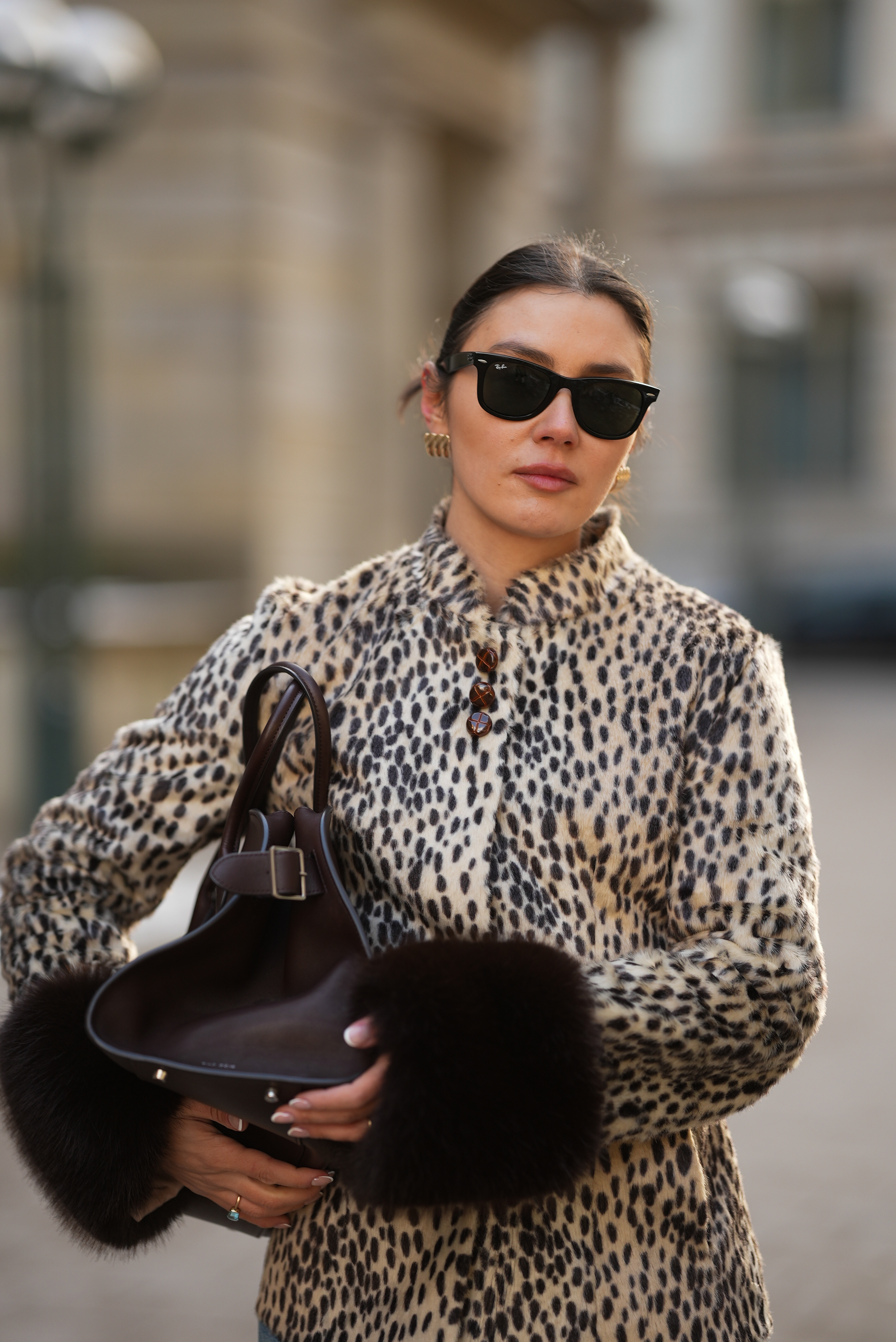 The previous revival began
discreetly in the mid-2000s, when Chloë Sevigny
and Mary-Kate Olsen took to wearing vintage pairs
and resale prices climbed high enough for Ray-Ban to reissue the
original RB2140 in 2007. An indie uniform followed, then a
saturation so complete that fashion set the frame aside with some
embarrassment.
The previous revival began
discreetly in the mid-2000s, when Chloë Sevigny
and Mary-Kate Olsen took to wearing vintage pairs
and resale prices climbed high enough for Ray-Ban to reissue the
original RB2140 in 2007. An indie uniform followed, then a
saturation so complete that fashion set the frame aside with some
embarrassment.
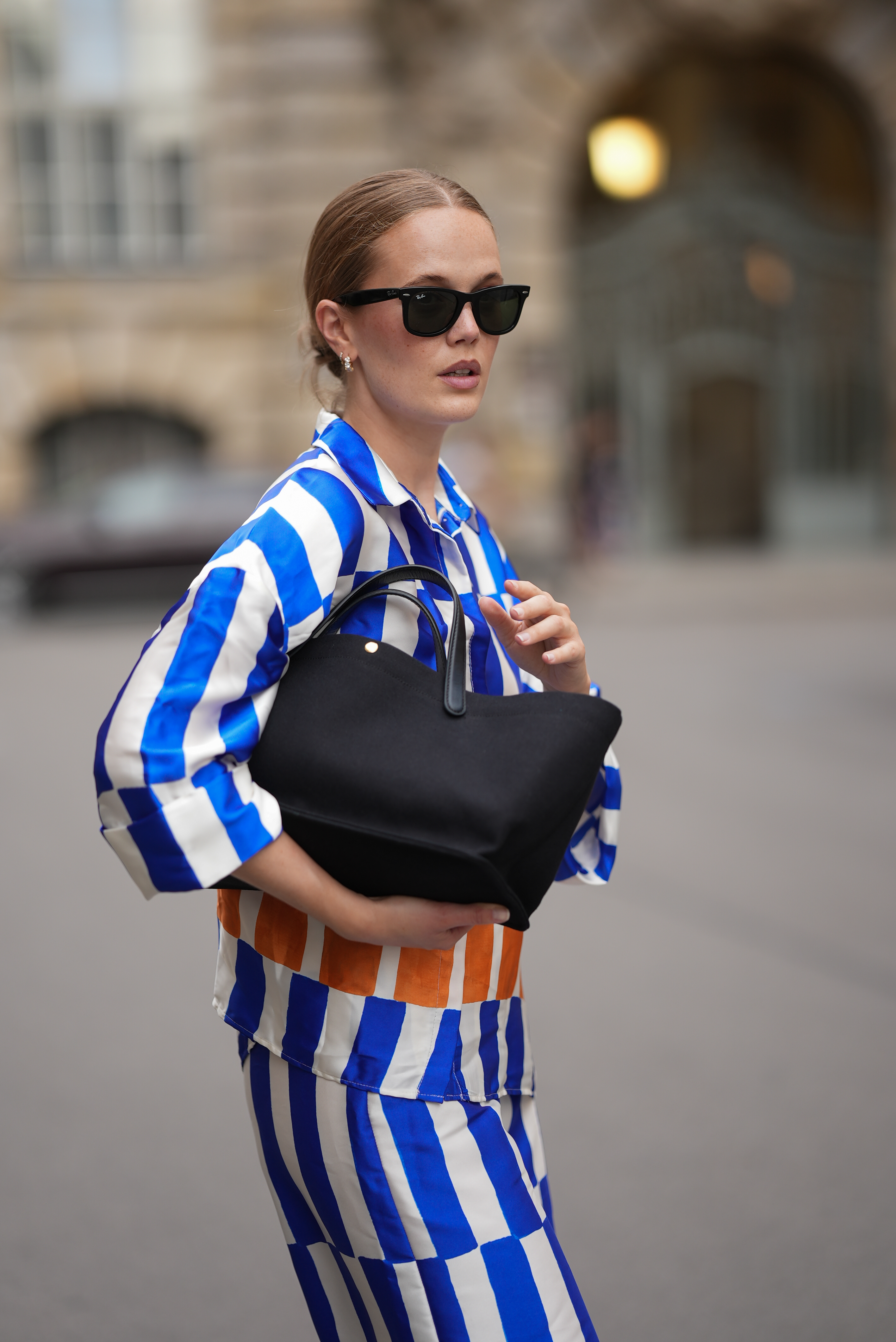 Its reappearance functions as a
correction. Stylist and fashion director Dara
Allen wore hers from one European show to the next,
declaring that dressing up had exhausted itself, while Marc
Forné conducted a parallel campaign from front row to
front row. In a season of theatrical eyewear, the plainest
available frame reads as the most assured gesture in the room. Wear
them with tailoring, and accept that half your acquaintances own
the same pair.
Its reappearance functions as a
correction. Stylist and fashion director Dara
Allen wore hers from one European show to the next,
declaring that dressing up had exhausted itself, while Marc
Forné conducted a parallel campaign from front row to
front row. In a season of theatrical eyewear, the plainest
available frame reads as the most assured gesture in the room. Wear
them with tailoring, and accept that half your acquaintances own
the same pair.


