










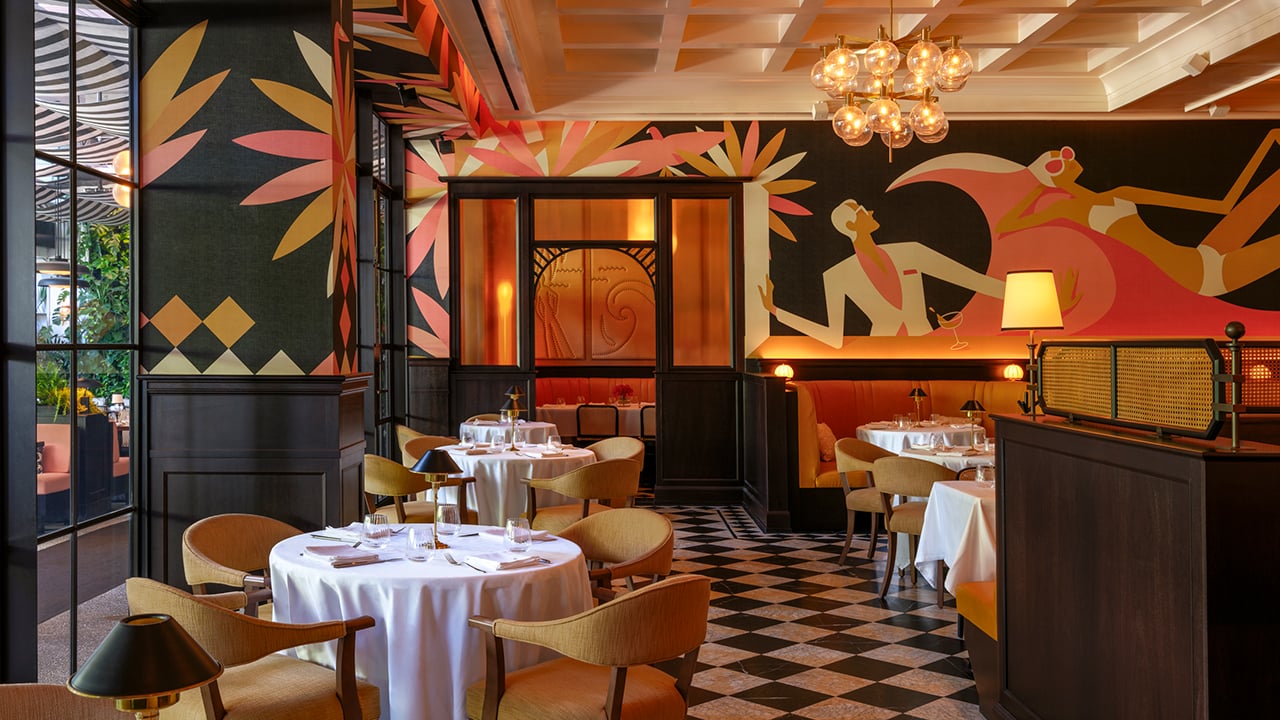
There are plenty of decisions to make when ordering a steak: cut, temperature, sauce, sides. At Slim’s Bal Harbour, Stephen Starr’s modern steakhouse at Bal Harbour Shops in Miami, even the meat itself comes with plenty to consider. The menu leans into exceptional cuts, from Japanese and Australian Wagyu to USDA Prime beef, served in a setting that trades the traditional steakhouse formula of dark wood and clubby seriousness for something decidedly more playful.
And once you’ve chosen your steak, there’s one more decision to make — and it may be the most fun one.
Before the steak arrives, a custom pink box is brought to the table. Open it and, instead of jewelry, you’ll find a collection of seriously beautiful steak knives sourced from around the world. Guests choose the one they want to use for dinner, turning an otherwise forgettable piece of flatware into a small tableside ritual.
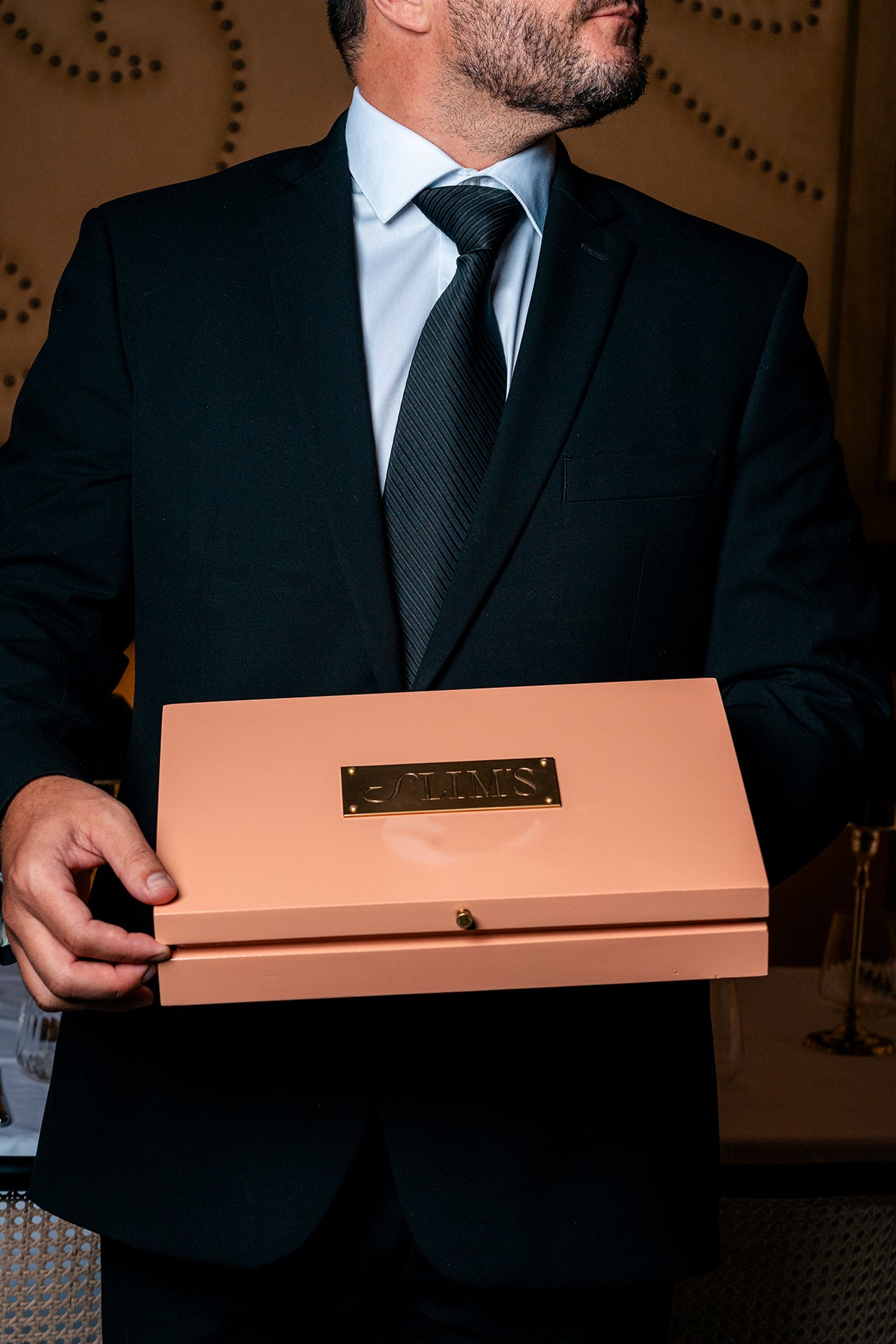
The Knife Box at SLIM’S features knives from Italy, Germany, Spain, France and Japan, with each one selected as much for its looks and feel as for its ability to slice through a steak. But the presentation goes beyond simply setting the box down and letting diners choose. A member of the SLIM’S team hand-delivers it and gives guests a brief introduction to each knife, with a deeper dive available for anyone curious about the craftsmanship and provenance behind the blades.
“We find our guests absolutely love the steak knife program,” says SLIM’S General Manager Justin Maas, who calls it one of the restaurant’s top highlights, alongside its Bananas Foster. “Guests rave about it. It’s a popular tag on social media and is mentioned very often in our reviews.”
And, according to Maas, favorites can change from night to night.
Some evenings, it’s the pink-handled French Atelier Perceval that gets the most attention; on others, guests gravitate toward the Italian Falorni steak knife with its ox-horn handle. Saturdays, Maas says, tend to bring particularly high demand for SLIM’S custom-designed Florentine kitchen knife, perhaps because of its more formal appearance.
For serious steak enthusiasts, there’s the Japanese Shun Shima, which Maas says provides the cleanest cut and allows the tenderness of the beef to stand out. Another option is a Schmidt Brothers knife with a 100-percent German-steel blade, finished in the same matte steel used on aircraft engines and substantial enough to take on the restaurant’s biggest cuts.
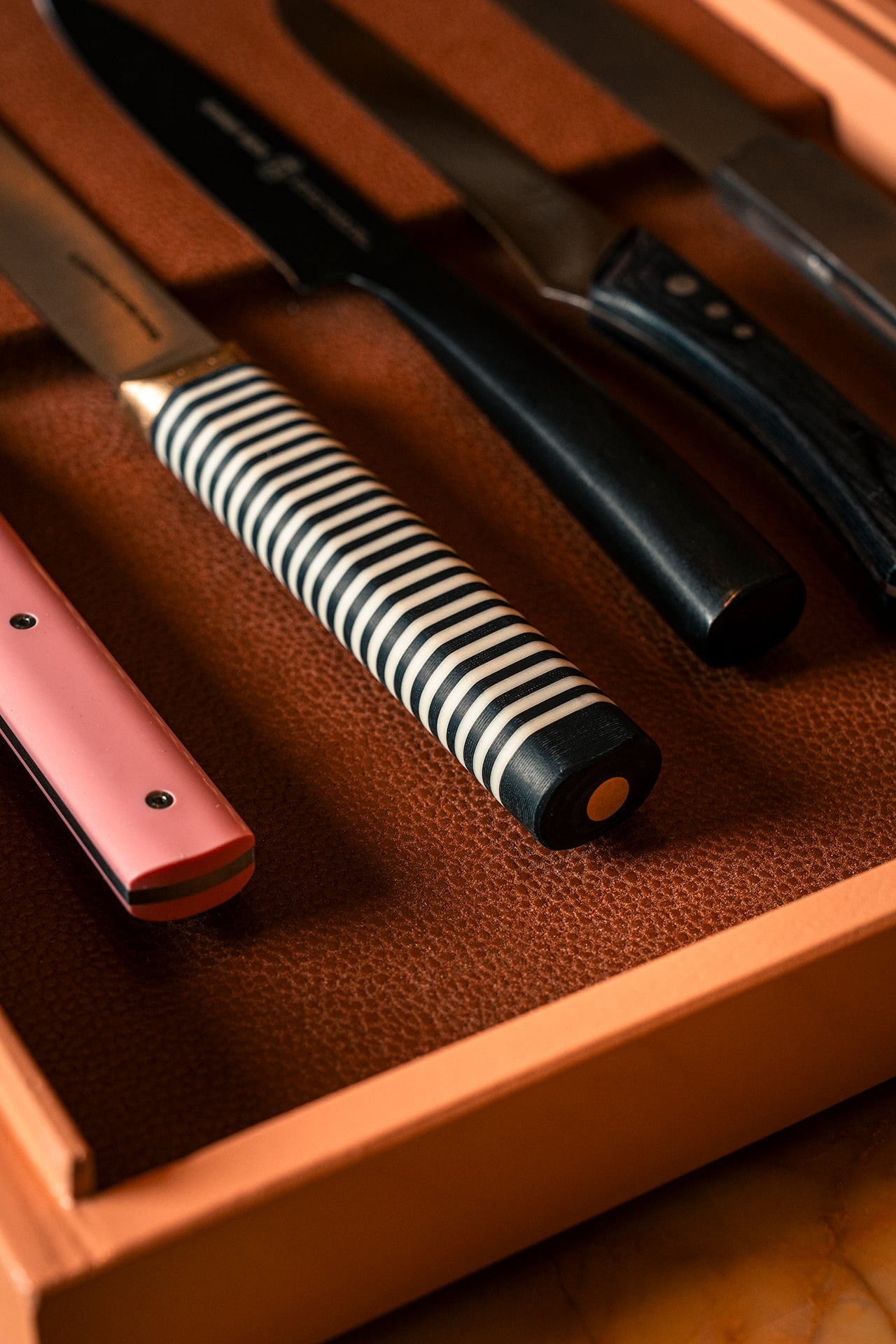
Then there are the handles. A set of graphic black-and-white striped versions was custom designed in a bespoke studio in Barcelona specifically for SLIM’S, giving the knives an almost fashion-accessory quality. Against the restaurant’s signature pink, they look particularly good.
The aesthetics are deliberate. SLIM’S approaches the knife as something that can be both utilitarian and beautiful—an object you actually notice rather than something automatically placed beside your plate.
But this isn’t a case of choosing form over function. Consideration went into how each knife sits in the hand, its weight and balance and, most importantly, how it cuts. A good steak knife should slice cleanly through meat rather than saw or tear at it, and the collection was assembled with that experience in mind.
It’s also exactly the sort of detail that makes sense in Bal Harbour, where people are accustomed to having options—and to those options being very, very good-looking. Located at Bal Harbour Shops, SLIM’S brings a playful point of view to the classic steakhouse rather than leaning into the dark wood, leather booths and clubby seriousness traditionally associated with the genre.
The Knife Box fits neatly into that world. Choosing between a French or Japanese blade — or simply picking the one with the handle you like best—makes dinner feel a little more personal. There’s no wrong answer, and you don’t need to know anything about knives to participate. You can choose based on provenance, craftsmanship, how it feels in your hand or, frankly, because one looks better with your manicure.
That element of choice also creates something increasingly valuable in restaurants: an interaction that feels genuine rather than performative. “The steak knives allow for a unique connection between our team and the guest,” Maas says. For diners who want to know more, the staff can talk through the stories and distinctions behind each blade; for everyone else, choosing a favorite is enough.
Restaurants have become increasingly interested in the tiny details that make a meal memorable: the tableside martini, the vintage glassware, the butter presentation, the custom ceramics. At SLIM’S, it happens to be the steak knife.
Because if you’re going to spend time deciding what you’re wearing to dinner, why shouldn’t your knife have a little personality too?


