










You trust your washing machine to handle the dirty work. Toss in a pile of sweaty gym clothes or muddy jeans, add detergent, press start, and walk away. It seems impossible that the appliance responsible for making everything fresh could itself be anything but spotless. Yet the reality is more unsettling than most of us want to admit – and the science behind it might change the way you think about laundry day forever.
Why your washer isn’t as clean as you think
Jennifer Ahoni, principal scientist for Tide and senior scientific communications manager at P&G Home Care, points out something we tend to overlook: a washing machine cleans clothes, but it does not sanitize them. That distinction matters more than you might expect. Germs that arrive on your dirty laundry can spread to other garments and to the interior of the machine itself. The consequences range from skin rashes, allergies, and irritation to potentially life-threatening infections.
The damp, dark environment inside the drum, combined with a constant stream of contaminants from soiled clothing, creates ideal conditions for mold, fungi, and bacteria to flourish. And the research backs that up. A 2019 study published in Applied and Environmental Microbiology identified a washing machine as a reservoir of multidrug-resistant pathogens after it transmitted bacteria to newborns in a hospital neonatal intensive care unit. A 2015 study in Frontiers in Microbiology found that bacteria from fecal matter on underwear survived the wash cycle – and the process actually spread those germs to other clothing in the same load.
So what does that mean for the average household? Even if your health isn’t immediately at risk, the buildup of mold and fungi is likely the reason your freshly washed towels sometimes come out smelling worse than when they went in. Mold and fungi thrive in warm, dark, moist spaces, and your washer is essentially their dream home. For people with allergies, this can trigger genuine health problems. For everyone else, it is at least responsible for that stubborn musty odor we all dread.
How to clean and sanitize your machine the right way
Diana Rodriguez-Zaba, a cleaning specialist certified by the Institute of Inspection, Cleaning, and Restoration and president of ServiceMaster Restoration by Zaba, explains that over time, washing machines accumulate grime and residue from detergents. Dirt and germs get trapped inside, making the washer less efficient and increasing the chance of cross-contamination. That is why it is essential to both clean – meaning remove germs, dirt, and debris – and sanitize, meaning kill germs. She recommends doing this at least once a month.
Before you begin, Ahoni stresses the importance of checking the manufacturer’s instructions. Some machines have built-in cleaning cycles, while others call for special cleaning solutions. The process can also differ depending on whether you own a top-loading or front-loading model, and ignoring those guidelines can lead to expensive repairs.
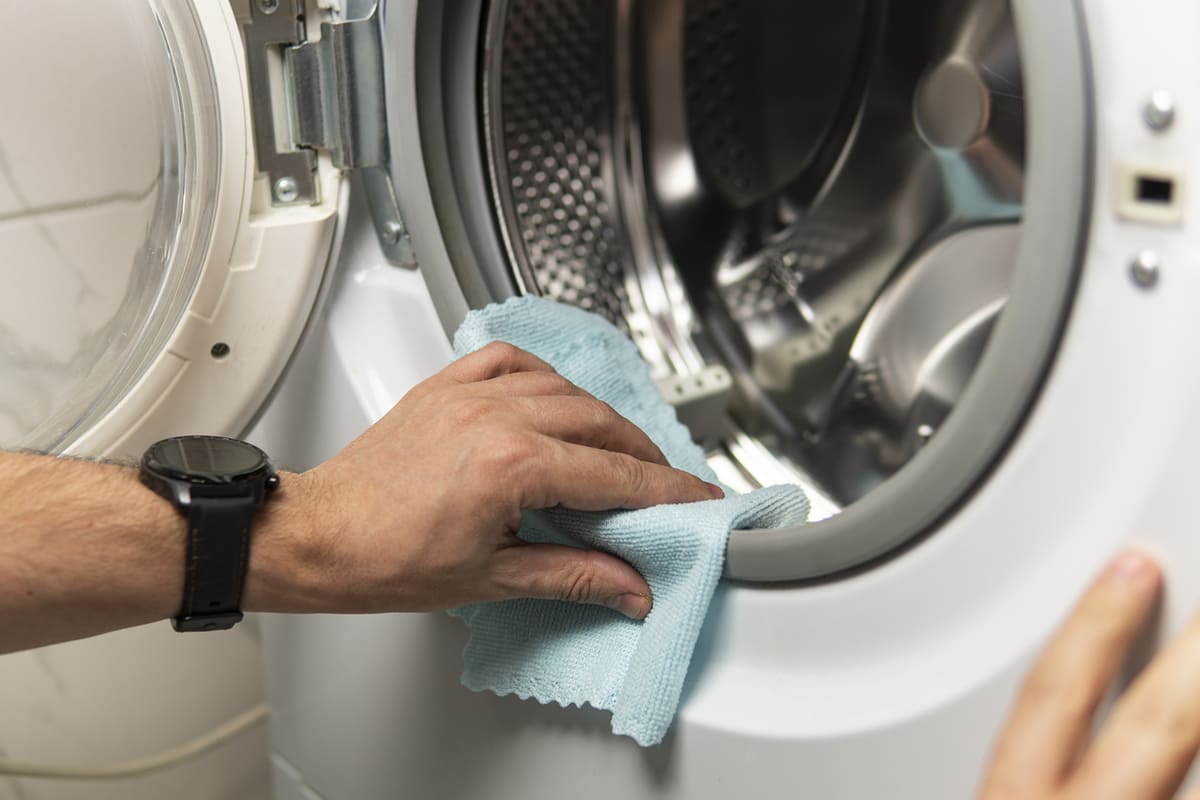
Start by using a clean, damp cloth to wipe away visible dirt, debris, and any buildup from detergent or fabric softeners – including the chapstick or gum that accidentally melted to the drum. Natalie Barrett, cleaning expert and quality supervisor for Nifty Cleaning Services, recommends adding a cup or two of baking soda as a gentle abrasive for a more thorough interior scrub. If your machine has a special interior finish, proceed with caution. For front-loading machines, you can use glass cleaner on the door window and a mild cleaning spray on the exterior.
Pay close attention to the rubber gasket. In front-loading machines, it seals around the door to prevent leaks; in top-loaders, it may sit around the top of the drum or lid. Barrett advises using a folded paper towel or a toothbrush to clean out any gunk hiding in the cracks and folds, because this is where mold tends to accumulate most aggressively.
Two ways to sanitize your drum
Once the interior is wiped down, it is time to sanitize. Your machine may already have a preprogrammed sterilizing cycle – if so, simply follow the directions. If not, there is a straightforward DIY approach. Run a long, hot cycle and add two to four cups of white vinegar directly to the drum. Rodriguez-Zaba notes that for stubborn smells, you can pause the cycle midway through and let the vinegar-and-water mixture sit for a couple of hours before finishing the rinse.
A second option is to use a dedicated washing machine cleaner. These come in the form of cleaning tablets, pouches, and powders, and they contain antimicrobial chemicals designed to kill most kinds of viruses and bacteria, according to Ahoni. Either method works – the key is consistency.
Between deep cleans, daily habits make a real difference. Ahoni suggests leaving the washer door or lid and the dispenser drawer slightly open when the machine is not in use. This allows the interior to dry out and prevents water from pooling inside the drum. Choosing the right cycle for each load – based on the manufacturer’s recommendations for water amount, temperature, and cycle length – also helps keep the washer cleaner over time and extends its lifespan.
Fresh laundry starts with a fresh machine
Barrett puts it simply: the secret to clean laundry is a clean washing machine. Staying on top of routine maintenance prevents sticky buildup and stains, making each monthly deep clean faster and easier. Regular cleaning also protects your investment, keeping the machine’s parts in working order and preventing soap, dirt, or clothing fibers from gumming things up.
Now you know something most people never consider – that the appliance doing the washing needs washing too, and that skipping this step can affect everything from how your clothes smell to how long your machine lasts. Work it into your routine once a month, and the days of mysteriously funky-smelling sheets are behind you for good.


