










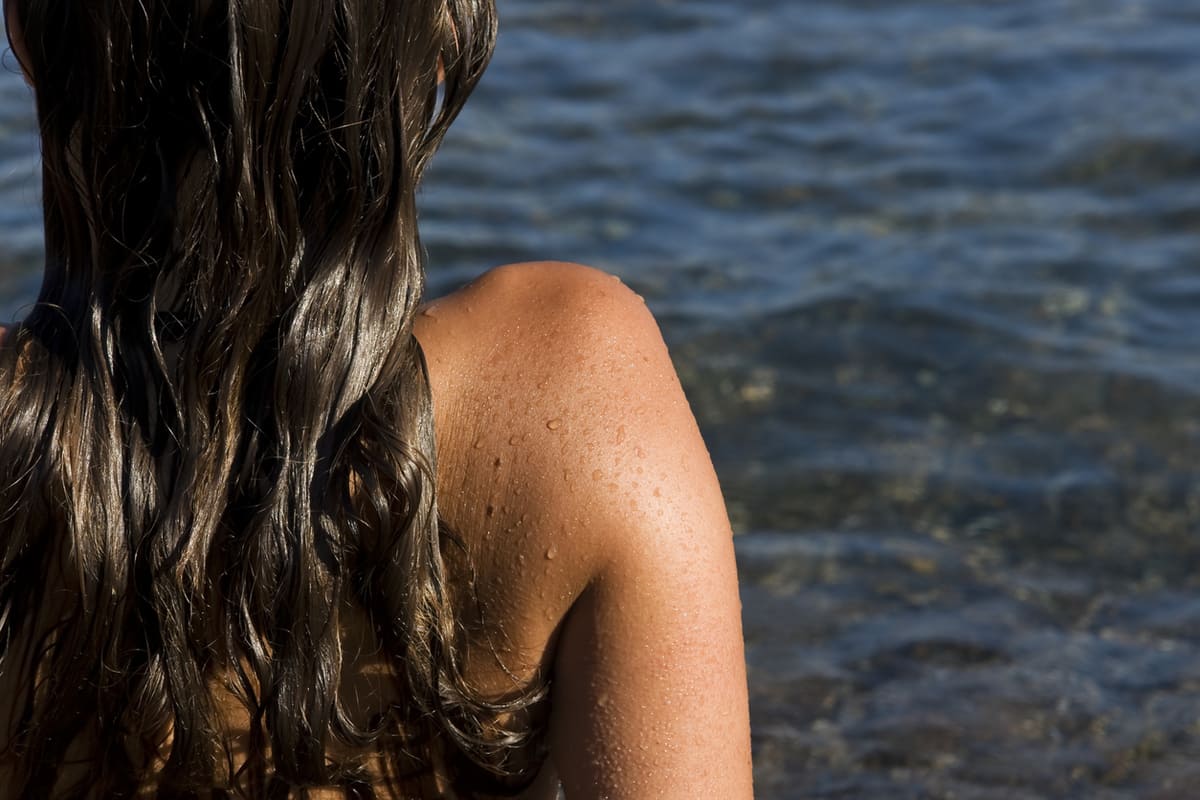
You step out of the ocean feeling refreshed, your hair looking perfectly tousled with that effortless volume everyone tries to replicate with sea salt sprays. It feels like the sea just gave you a free styling session. But what if that coveted texture comes at a cost you can not see right away? The science behind what saltwater actually does to your strands and scalp tells a very different story from the one we have been sold – and it starts with basic chemistry.
Why ocean water works against your hair’s natural balance
Seawater is about 96.5% water, with the remaining portion composed of around 2.5% salts, along with organic materials and pollutants. That salt concentration varies depending on location – seas like the Baltic Sea have much lower levels due to inflow from large rivers – but in most cases, the amount of salt is significantly higher than what your hair is designed to handle.
Here is where it gets interesting. Your hair and scalp are naturally slightly acidic, with your hair sitting at an optimal pH of around 4.5-5.5 and your scalp at about 5.5. Seawater, on the other hand, has a pH of around 8.1, making it far more alkaline. When your hair is submerged in that alkaline environment, the cuticles – the outermost protective layer of each strand – begin to lift, dry out, and crack. That disruption weakens individual strands and compromises scalp health and hair follicle function. So why does it feel so good in the moment?
The high salt content creates an osmotic imbalance that draws moisture out of your hair, much like salt is used to preserve food by removing water. The result is dehydration from the inside out. And while many people believe the minerals in seawater exfoliate the scalp or add volume, those beliefs are not rooted in science. The temporary plumping effect that salt creates actually comes from roughing up the hair cuticle, leaving strands drier and more brittle over time.
The real toll on your strands, color, and scalp
The damage goes beyond simple dryness. When salt strips natural oils from your scalp and hair, it leads to an irritated scalp and dull, brittle strands that are more prone to breakage and split ends. The high salt concentration can also disrupt the protein bonds in your hair, weakening its overall structure. This is particularly problematic for anyone with chemically treated or already damaged hair.
If you color your hair, the news is not great either. Salt crystals create friction on the cuticle, which allows moisture and product to both enter and escape more easily. That makes it harder for hair to retain pigments, so dyed strands – especially vibrant colors and highlights – tend to fade faster after ocean exposure. Salt residue on the hair’s surface can also make it look matte rather than glossy.
Perhaps the most overlooked concern is what happens on your scalp. If salt is not thoroughly rinsed away, it accumulates alongside dead skin cells, sebum, and product residue. This buildup can clog hair follicles, cause irritation, and hinder healthy hair growth. While seawater itself does not directly cause hair loss, inadequate cleansing and hydrating can lead to shedding over time. People who already have compromised scalp health – which is not uncommon – can experience contact reactions after being in seawater for even a short period. Products containing SLS, parabens, and silicones can further compromise the scalp’s resilience.
Your hair type matters too. Straight hair tends to be more resilient thanks to its smooth cuticle structure, which allows natural oils to travel down the shaft more easily. Wavy hair may initially look more defined after a swim, but as seawater evaporates, the remaining salt dries it out and makes it fragile. Curly and coily hair, which tends to be more porous and can hold more water, is particularly susceptible to dehydration, dullness, and breakage from saltwater exposure.
How to protect your hair before, during, and after the ocean
None of this means you should abandon your surf sessions or ocean swims. The key is a straightforward protection strategy, similar to what you would use for chlorinated pool water. Before you get in, saturate your hair with fresh water from a tap, shower, or even a bottle you bring to the beach. Because your hair can only absorb a certain amount of water, pre-soaking it limits how much saltwater it will take in.
After wetting your hair, apply a hydrating mask and let it work for at least five minutes before entering the water. A leave-in moisturizing product helps counteract the drying effects of salt. Once you are out, rinse your hair with lukewarm water as soon as possible. At home, cleanse with a gentle, balanced shampoo suited to your scalp’s needs – and always follow with conditioner. Look for premium quality, silicone-free conditioners that actually hydrate your strands rather than simply coating them. Applying a leave-in treatment to damp hair afterward will help lock in moisture, boosting elasticity, softness, and strength.
If you want that tousled texture without the risk, you can create beachy waves at home. Apply a leave-in hydrating product to clean, damp hair, add a small amount of styling gel to your lengths, then gently scrunch from the tips to the roots. Let your hair air-dry and enjoy the volume and bounce – no ocean required.
What to take away from all of this
The beach hair aesthetic we all love is essentially the visible sign of cuticle damage – texture and volume created by dehydration and friction. Now that you understand the osmotic and pH imbalances at play, you can enjoy the ocean without letting it quietly compromise your hair and scalp health. Pre-soak, protect, rinse, and condition. That simple routine is the difference between a great beach day and weeks of trying to repair the aftermath.


