










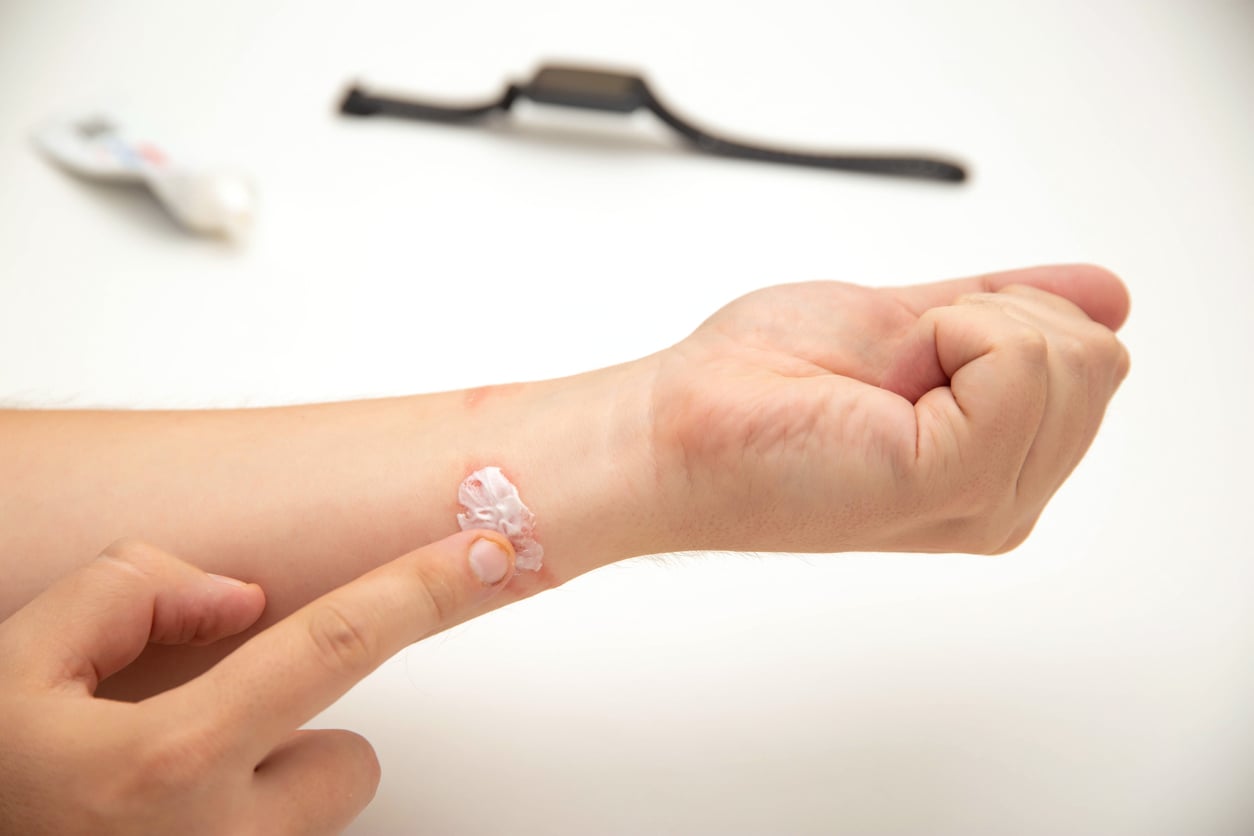
You probably do it without even thinking about it. You strap on your smartwatch first thing in the morning – or, more accurately, you never took it off in the first place. It tracks your sleep, counts your steps, monitors your heart rate, and even nudges you to breathe. It has become such a seamless part of your routine that the idea of removing it feels almost counterproductive. But have you flipped your wrist lately and really looked at the skin underneath? That pale, slightly damp patch hiding beneath your band might be telling you something your health data never will.
Why your wrist never gets a break anymore
The reason so many of us have fused with our fitness trackers comes down to one thing: battery life. Today’s smartwatch models offer battery autonomy stretching several weeks, and some even feature near-unlimited solar recharging. That kind of endurance means there is no practical reason to take the device off – not at night, not in the shower, not during a workout. We keep them strapped on around the clock to capture continuous data on sleep quality, heart rate, and athletic performance.
It is this relentless pursuit of metrics that has quietly pushed skin health to the bottom of the priority list. And social media has not helped. A growing number of smartwatch devotees proudly show off their wrist tan line – that lighter strip of skin left behind after weeks in the sun. The look has gone viral, almost like a badge of dedication. But dermatologists say the reality lurking beneath that band can be far less charming. They have given it a blunt name: watch rot.
What happens when sweat, bacteria, and friction have nowhere to go
According to Maddie Evans, a skincare expert at SpaSeekers.com, the core issue is accumulation. When a watch band stays pressed against your skin day and night, sweat, moisture, bacteria, and residue become trapped underneath with no opportunity to evaporate or be washed away. Over time, that cocktail can compromise the skin barrier and trigger a condition known as irritant contact dermatitis – essentially, an inflammatory reaction caused by prolonged exposure to an irritating substance.
The early warning signs are usually straightforward to spot. Redness directly under the watch face or band is the most common clue. Itching, a burning sensation, or a localized rash confined to the exact footprint of the device can follow shortly after. If you notice any of these and simply push through, the situation can escalate. Repeated friction from the band against already weakened skin creates tiny openings that bacteria can exploit, potentially leading to an infection that requires medical attention.
So the equation is fairly simple: a few minutes of freedom for your wrist now can spare you a trip to the dermatologist later. The irony is hard to miss – a device designed to optimize your health could end up undermining it in the most literal, skin-deep way.
Small habits that keep your skin – and your data – intact
The good news is that preventing watch rot does not require giving up your device or abandoning your health stats. It just takes a handful of easy, consistent habits. Experts recommend wiping down both the watch case and the band regularly with an antibacterial wipe or a suitable cloth, especially after a workout when sweat levels are at their peak.
Equally important is making it a daily practice to remove your watch, wash your wrist thoroughly, and let the skin breathe for a stretch of time. Think of it the same way you think about taking off your shoes at the end of the day – your skin needs air and a chance to reset. If irritation has already started to appear, applying a fragrance-free moisturizer can help restore the skin barrier and soothe the affected area.
Specialists also point out that stepping away from constant health monitoring can be beneficial in its own right. A few hours without counting your steps or analyzing your sleep cycles will not erase your fitness progress. Your body does not forget how to function just because a screen is not recording it.
Your skin is data worth paying attention to
We have grown so accustomed to outsourcing health awareness to our wrists that we sometimes overlook the health of the wrist itself. What you now know is this: the combination of sweat, moisture, bacteria, and nonstop friction under a smartwatch band can damage your skin barrier, cause irritant contact dermatitis, and in more severe cases, open the door to infection. The fix is refreshingly low-tech – clean your device often, give your wrist daily breathing room, and reach for a fragrance-free moisturizer at the first sign of redness. Your smartwatch can tell you a lot about your body, but when it comes to the skin right beneath it, you are the only sensor that matters.


