











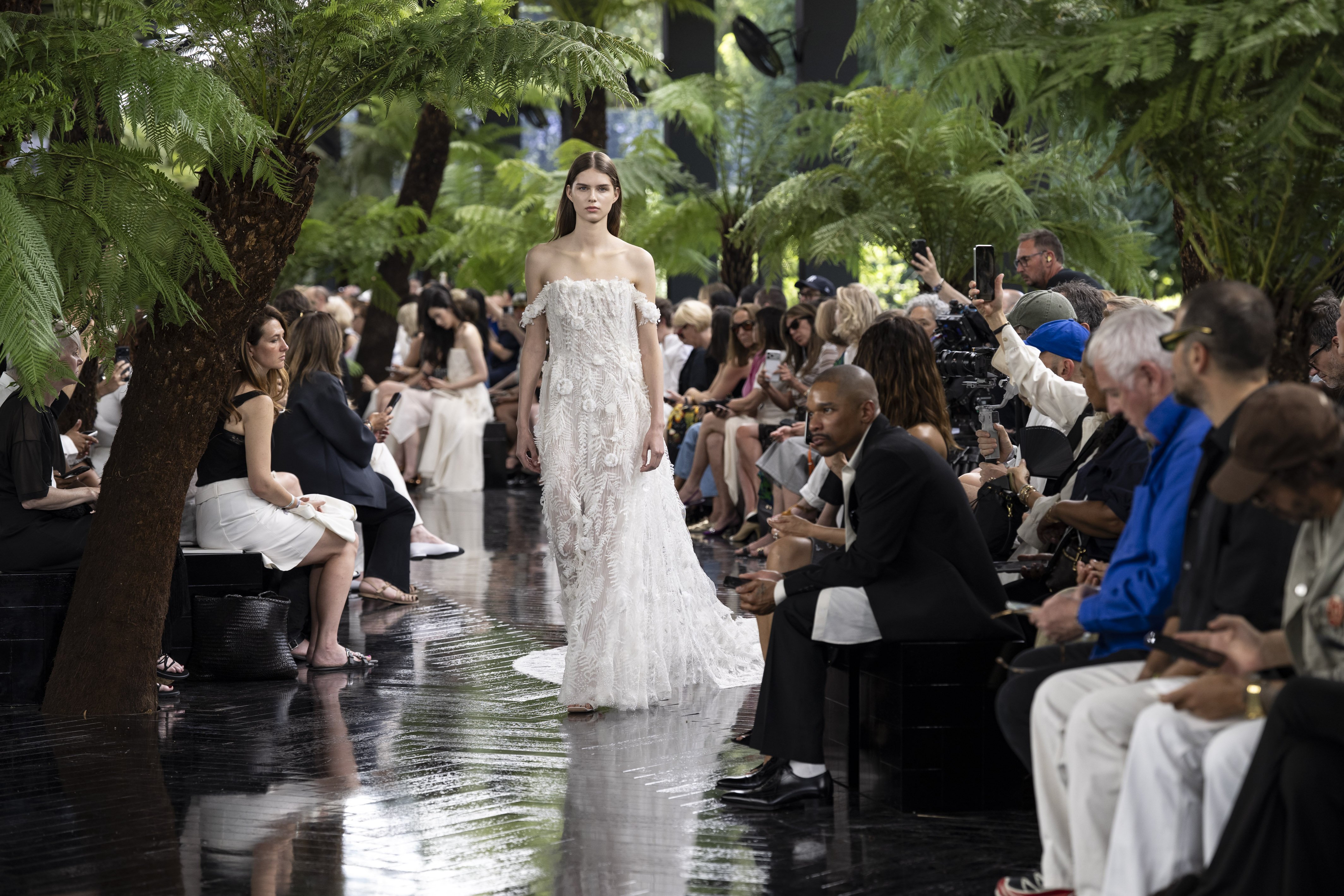
We recount fashion and its places as spaces transcending our capacity for movement, as though the sets of a runway show belonged to extra-experiential dimensions our sense of orientation fails to recognize. When Dior announced the choice of its next location, that geolocation system short-circuited. Jonathan Anderson chooses Ireland, homeland of the towering Carmel Snow, the first to define Monsieur Dior’s style as “a new look.” The anomaly in the system? An overlapping of addresses: the address entrusted with the show, dearer to me than that of home, is Trinity College’s. There exist places that do more than receive us: they keep us, sealing within their stones the part of ourselves we dare not carry elsewhere. Trinity College is, for the one writing these lines, among such rare reliquaries of the soul, the place where a promise was laid down with the very reverence with which William Butler Yeats, in He Wishes for the Cloths of Heaven, longed to spread at his beloved’s feet a mantle woven of light and of heaven’s shadow, begging her to rest her step upon it with the gentleness owed to another’s dreams. I too, on a day now impossibly distant in my adolescence, laid down in that place the most precious fabric I possessed, unaware whether I would ever return to gather up its threads.
At Eighteen, a Vow Made to Trinity College
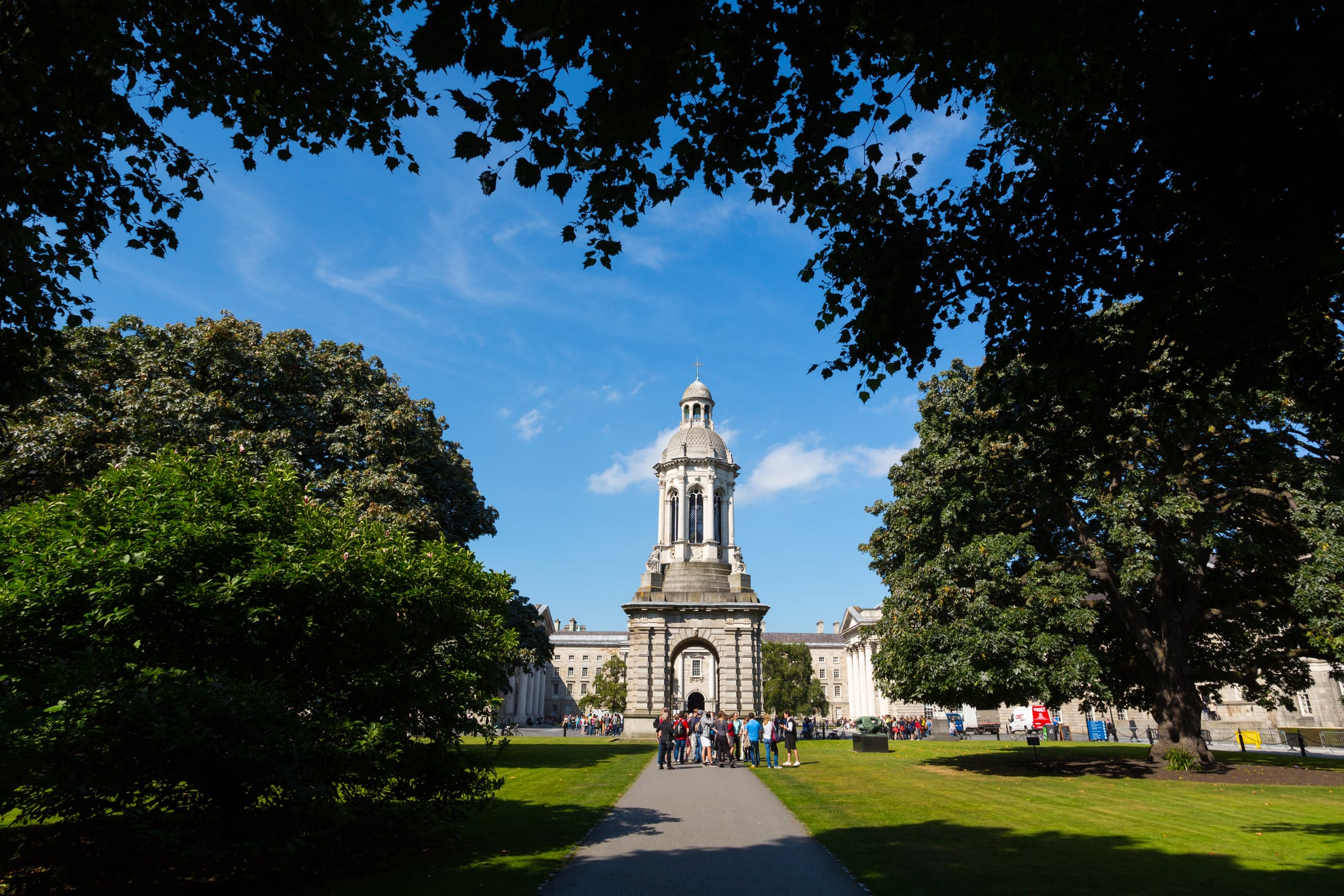
It was during my senior trip that I saw it for the first time, and what took place was less an encounter than an immediate recognition, the same silent turmoil with which one falls in love in Shakespearean drama, when the soul discerns, in a face never seen before, a fidelity already written elsewhere. Before taking my leave I promised those granite walls that we would find each other again three years on, my bachelor’s degree complete, with the same solemnity with which one promises a beloved to meet again beyond distance and beyond time.
That promise unbound itself slowly, page after page, when destiny led me back there for my courses in Comparative Literature. I learned to turn centuries-old manuscripts wearing white gloves, priestly vestments donned to approach an altar far more than mere philological safeguards. Every leaf turned with that liturgy was a threshold half-opened onto my dreams, never flung wide all at once, and through that seam of light I came to understand how fashion had always been a language literature had long practiced, stitched into the description of every garment the novels I loved had given me, into the silk or the rust of a fabric able to reveal a temperament better than a hundred adjectives. I recognized in those yellowed lines the very alphabet with which I now narrate the collections, learned among pages that smelled of ancient dust and of things to come.
Tears in the Long Room, Where the Circle Now Closes
The promise fulfilled itself with the silent punctuality reserved for things already written elsewhere. Admitted to the university, arrived in Dublin with two suitcases and a heart unable to contain itself, the first private liturgy I performed was to put on my headphones and let the soundtrack of October Sky carry me, a hushed hymn devoted to anyone who pursues a dream even when the entire world seems to deny them the right to it. I walked alone toward the Long Room, the beating heart of Trinity’s library, beneath vaults of dark wood and rows of marble busts that watched over my passage like silent keepers of a story already written. It was there that, for the first time in my life, I wept tears dense and unending, tears of a joy for which I did not yet possess a name. They were tears of a home truer than the one left behind. Those were happy years, because there survived intact the promise of a future I glimpsed whole within fashion, a future that was then merely desire and is today the craft that steadies this pen.
Today, upon learning that it will be the Long Room itself to welcome Dior‘s show, I feel the need to perform the gesture Yeats, in When You Are Old, reserved for those who had loved in truth, to lean beside the fire when the hair has long turned gray and to seek, among the lines of an altered face, the memory of a wandering soul loved longer than the grace of a single day. Though I am not yet that woman bent over the hearth, I already sense the gesture within me, for I see with identical clarity the possible unfolding of that show and the girl who ran toward the Long Room with her headphones still on, unaware that the two images would one day mirror one another. What renders this circle all the more necessary is Carmel Snow herself, born a few steps from that very library, who in 1947 handed Christian Dior the name capable of making him eternal. A name that blossomed, like every decisive thing in my life, on this small island that seems to have always kept watch over the debuts of those who still believe in their dreams.
And so I renew, with the voice of that eighteen-year-old I have never ceased to be, my promise to Trinity. See you soon!


