










You know the feeling. School lets out, the kids take over the living room, the kitchen becomes a revolving door of snacks, and suddenly every corner of your home vibrates with noise and movement. You love it – of course you do – but somewhere around week two, you start fantasizing about a door you can close. A space that feels like yours. Not a hotel across the country, just a quiet pocket inside the walls you already live in. It turns out architects have been listening to that exact wish, and what they are building now barely resembles the bedrooms we grew up with.
Why the traditional bedroom no longer cuts it
Summer vacation floods a home with family time, but it also floods it with nonstop activity. When the house is working harder than ever, more families are coming to the same realization: parents need a space of their own, somewhere to pause, breathe, and feel as though they have escaped on vacation without ever leaving the property.
Nirit Frenkel, owner of an architecture, planning, and interior design studio, says this shift is exactly why the master suite has changed so dramatically in recent years. She has stopped thinking of these rooms as bedrooms at all. Instead, she describes her work as designing complete master suites – private retreats where parents can disconnect from the daily family routine even when the children are at home. For Frenkel, this is not a conversation about luxury. It is a conversation about quality of life.
So what does that look like in practice? And why are so many families choosing to invest in a room they technically already have?
What a modern parent retreat actually includes
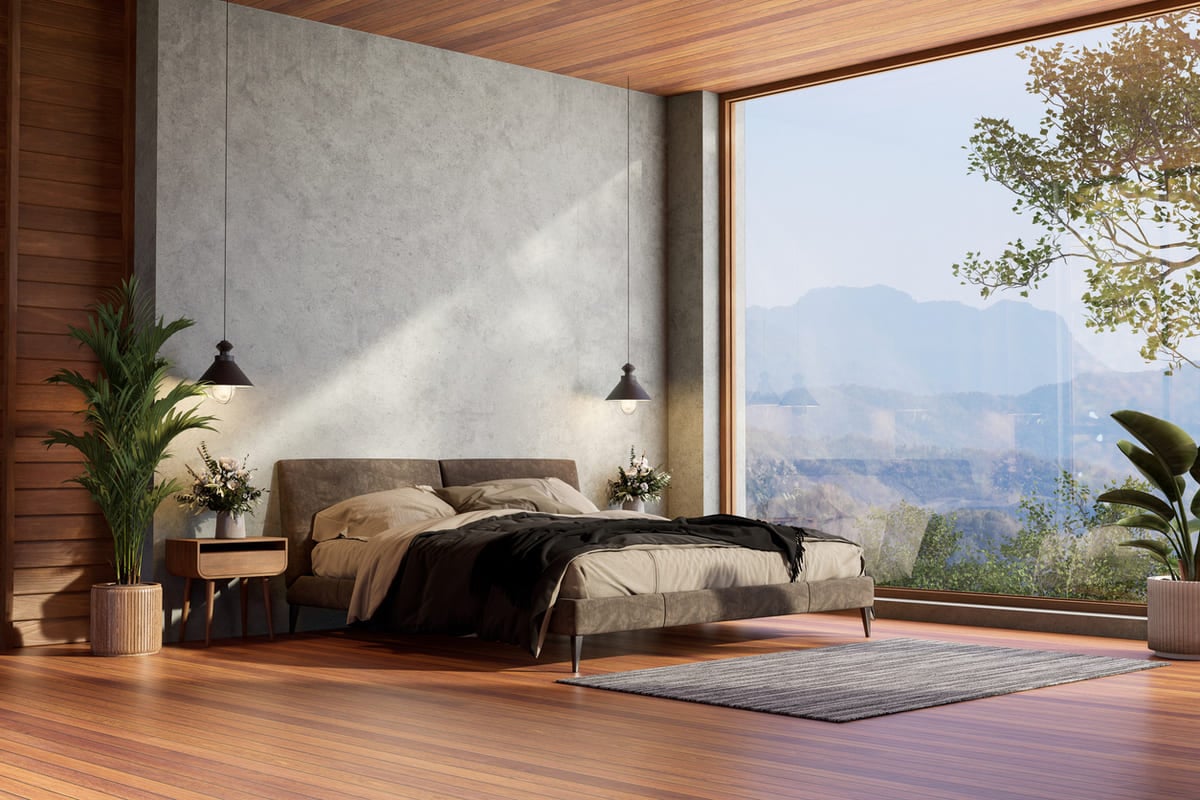
Today’s master suite, according to Frenkel, is conceived as a self-contained living space. It may feature a spacious bedroom, a luxurious bathroom, a walk-in closet, and – in many cases – a sitting area, a private balcony, or direct access to a garden. The goal is an atmosphere that evokes a private resort, not in an extravagant way, but in the sense of calm it delivers. Opening the balcony doors on a summer morning, sipping coffee while overlooking the garden, or ending the day in a quiet corner of your own can completely change how the entire home feels.
One of the key elements Frenkel emphasizes is the connection between indoor and outdoor living. Working in a Mediterranean climate, she consistently tries to make the most of the conditions outside. A private balcony, a small courtyard, or even a large picture window that brings greenery indoors and overlooks the swimming pool can extend a suite far beyond its four walls. That blurred boundary between inside and out is where much of the emotional payoff lives.
The bathroom has evolved just as dramatically. Frenkel designs it as a natural extension of the bedroom rather than a utilitarian afterthought. Spacious walk-in showers, a bathtub whenever space allows, natural light, organic materials, and soft lighting all play a role. Because we begin and end each day in these spaces, she believes they should actively create a sense of calm rather than merely serve a function.
Closets, materials, and the meaning of timeless design
The walk-in closet, too, has taken on a new identity. Frenkel describes it as no longer just a functional storage area but an integral part of the suite and of the daily experience. When planned properly – with custom carpentry, thoughtful lighting, and comfortable circulation – it adds order, calm, and a greater sense of space to the room as a whole.
When it comes to material choices, Frenkel gravitates toward elements that feel timeless rather than trend-driven. Natural wood, stone, quality textiles, soft lighting, and a calm color palette create interiors that do not quickly feel dated. In her view, that enduring quality is the essence of true luxury. You are not decorating for the next social-media cycle; you are building a feeling that will last for years.
This philosophy matters especially during summer, when the home becomes the center of daily life. Children need places where they can play and grow, but parents also need a space where they can slow down, reconnect, and recharge. When a master suite is thoughtfully planned, Frenkel notes, it becomes the place you look forward to returning to every single day.
What this means for the way we think about home
The shift Frenkel describes reframes a room most of us have taken for granted. A bedroom used to be defined by a bed, a nightstand, and maybe a dresser. Now it can be an entire ecosystem designed around rest, beauty, and personal renewal – without a single suitcase packed. The takeaway is refreshingly simple: a well-designed home should make room for everyone. Give the kids their playgrounds, but carve out a sanctuary that reminds you why you love being home in the first place. Your summer self will thank you.
And you don’t need a full renovation to start. Even small moves capture the spirit: a lock on the door, a comfortable armchair in a quiet corner, blackout curtains for slow mornings, or clearing the clutter so the room reads as a retreat rather than storage. The sanctuary is as much about intention as it is about square footage.


