










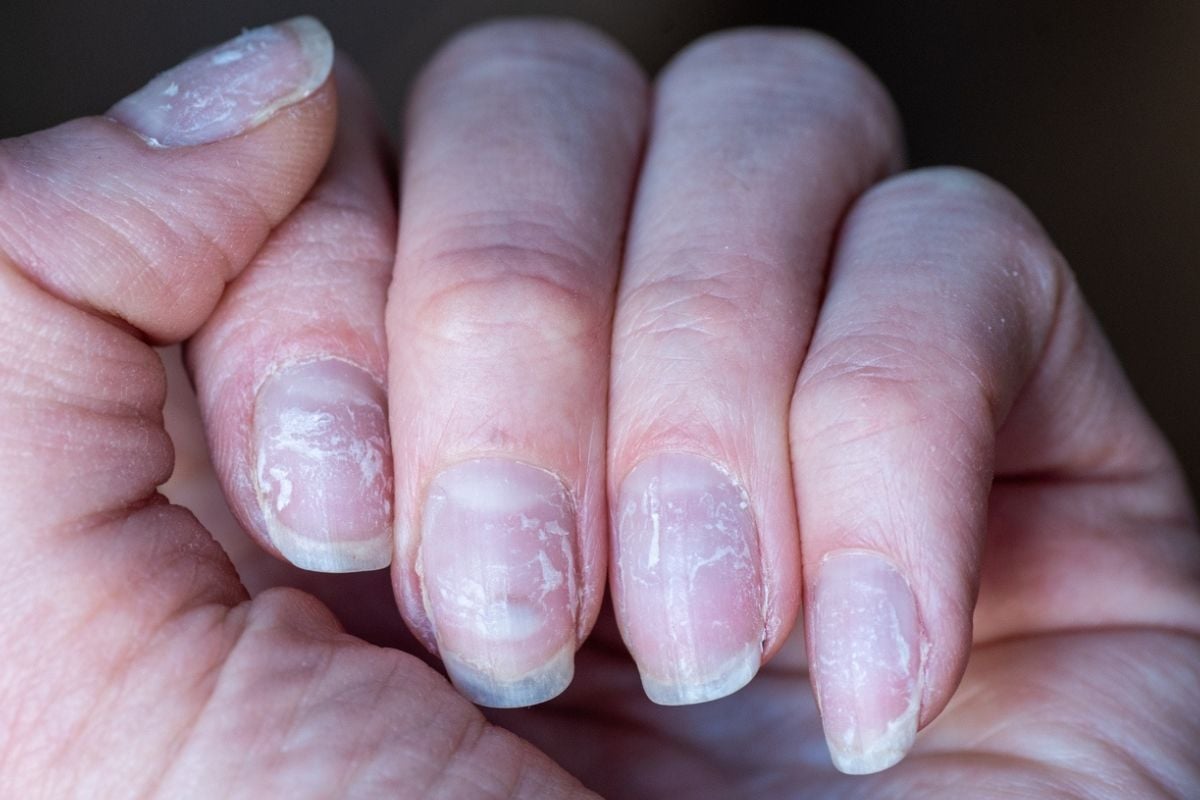
You finally take off your nail polish after a couple of weeks, and instead of the smooth, healthy surface you were expecting, you notice thin, flaky layers lifting away from the nail bed. It feels like something cosmetic – maybe you left the lacquer on too long, or perhaps the remover was a little harsh. But what if those fragile, splitting nails are actually trying to tell you something about what is going on inside your body? Dermatologists say this is one of those everyday beauty annoyances that deserves a closer look.
What actually happens when a nail starts to peel
Before jumping to worst-case scenarios, it helps to understand the basic science. According to Blair Murphy-Rose, M.D., F.A.A.D., a board-certified dermatologist and clinical instructor at New York-Presbyterian Hospital Weill Cornell Medical Center, nails are composed of many layers of compacted cells. Peeling occurs when cell-to-cell adhesion is disrupted – the bonds between adjacent cells loosen, causing layers to separate. The exact mechanism is not entirely understood, but the end result is visible: sheets of nail lift and split away.
So what triggers that breakdown? The most common culprit is surprisingly mundane. Dr. Murphy-Rose explains that repetitive wetting and drying of the hands is the leading cause. That is why hairdressers, house cleaners, and anyone whose job involves frequent soaking of the hands tends to deal with this more often than others.
Hot or humid environments can compound the problem. Shirin Peters, M.D., founder of Bethany Medical Clinic in New York City, notes that prolonged exposure to moisture causes the nail to swell with water and become soft, leaving it susceptible to damage from even minimal trauma. On the flip side, excessive dryness from too much buffing or over-exfoliation can make nails brittle, meaning a small nick can quickly turn into a significant split.
Hidden triggers you might not expect
Chemical exposure is another factor worth considering. Dr. Peters points out that the adhesives used for gel or acrylic nails, along with ingredients in hand soap, sanitizers, and laundry detergent, can strip nails of moisture and leave them prone to peeling. Even habits that seem harmless – picking at polish, biting your nails, or using a nail tip to pop open a can of seltzer – can cause enough micro-trauma to start the peeling process.
But external stressors are only part of the picture. Nutritional deficiencies have also been associated with peeling nails. Dr. Peters notes that low calcium, iron, vitamin D, and B vitamins like biotin can all play a role. These nutrients help keratin – the protein tissue that nails are made of – grow stronger. A well-balanced diet rich in fruits, vegetables, and lean proteins is a solid starting point, and asking your doctor to run blood tests can confirm whether supplements might help.
Then there are the medical conditions that use peeling nails as a quiet signal. Thyroid disease, for instance, slows the turnover rate of skin and nails, so older nail tissue sticks around longer and becomes brittle, according to Dr. Peters. The more familiar symptoms of thyroid issues – weight changes, anxiety, fatigue, and brain fog – often steal the spotlight, making peeling nails easy to overlook as a red flag.
Onychomycosis, the clinical term for a fungal infection of the nail, can cause several types of nail dystrophy including peeling. Thickening of the nails and white or yellow-brown discoloration may accompany it. Fungal infections can be tricky to treat, and a dermatologist will likely prescribe oral antifungal medication to help the nail heal. Skin conditions like eczema are another possibility. Dana Stern, M.D., a New York City-based board-certified dermatologist and founder of Dr. Dana, explains that when inflammation surrounds the nail, it can impact normal growth and cause nails to develop irregularities, including a tendency to peel.
Practical steps to protect your nails starting today
Prevention starts with moisture management. Dr. Peters recommends wearing gloves when doing the dishes, drying your hands and nails thoroughly after washing, and regularly applying a hand cream that contains vitamin E to replenish lost moisture. For added strength, Dr. Murphy-Rose suggests using a nail strengthener such as Ella+Mila First Aid Kiss Nail Strengthener or OPI Nail Envy Nail Strengthener, and switching to a gentle, acetone-free nail polish remover rather than picking polish off piece by piece.
If those at-home strategies do not resolve the issue, a visit to your primary care doctor or dermatologist is the next logical step. Dr. Peters notes that a dermatologist will ask about possible causes, chemical exposures, medical conditions, and medications that could be contributing. In some cases, they may take a nail clipping and send it to a dermatopathologist for examination under a microscope to get a clearer picture of what is happening.
The bottom line on flaking fingernails
Peeling nails are common and usually not a reason to panic. In most cases, there is no internal cause, and symptoms should subside with time and proper care. However, if the peeling is not healing or comes on suddenly, Dr. Stern advises seeing a dermatologist or primary care physician to explore deeper possibilities like thyroid disease or anemia. Bloodwork and a thorough examination can help clarify the situation. Your nails are small, but the information they carry about your overall health is anything but minor – so the next time you strip away a coat of polish, take a moment to read what they are saying.


