










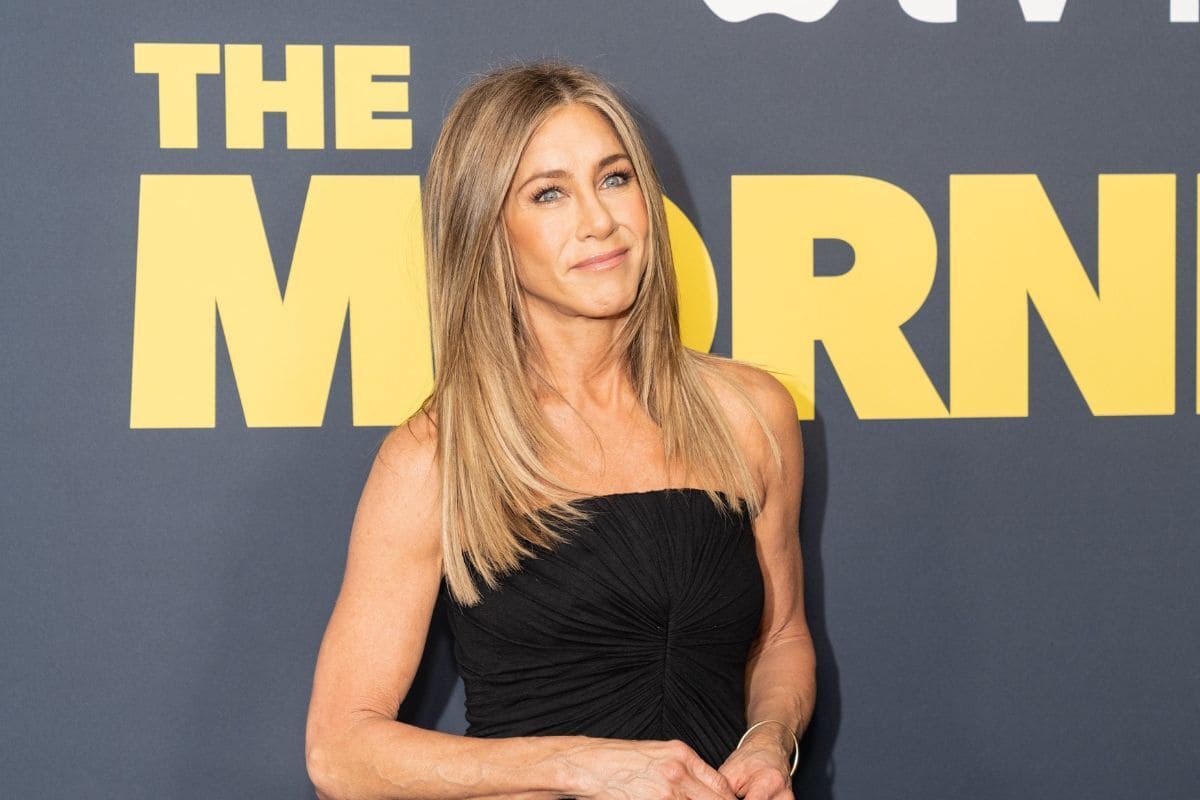
You scroll past another Pilates reel, watch a professional football player wince his way through a reformer sequence, and quietly wonder whether your own core has simply packed up and moved out. The concept of strengthening and lengthening sounds appealing, but the reality of a $1,000-plus reformer machine or a $40-to-$80 drop-in class in New York City feels like a different kind of pain altogether. What if the workout behind Jennifer Aniston’s enviably toned physique at 55 could happen in your living room, on a 60-by-48-inch mat, for a fraction of the cost?
Why traditional studio classes keep falling short
Core-focused fitness has exploded online, yet access remains a sticking point for many of us. Reformer Pilates requires bulky equipment and premium studio fees, and high-intensity interval sessions can leave you so drained that consistency becomes the real challenge. For anyone juggling a 9-to-5 and family life, carving out a two-hour gym window is closer to fantasy than routine.
That gap in the market is exactly what Rachel Katzman identified when she founded Pvolve in 2017. Her goal was to build a more holistic program for women at all stages of life – one that pairs functional movements with compact, precision-toning equipment to sculpt and strengthen the entire body without overtaxing the joints. Could micro-movements and three-pound weights really deliver visible results?
How the method actually works – and what the numbers show
Pvolve’s philosophy flips the old mantra on its head. Instead of chasing heavier loads and faster reps, the platform focuses on corrective movement patterns we already perform every day – bending, rotating, reaching – and layers in light resistance to make them transformative. According to Dani Coleman, Head Trainer and Director of Training at Pvolve, the workout is three-dimensional and designed so you leave feeling energized rather than drained. The platform’s training team, advised by a Clinical Advisory Board, created specialized programs addressing common trouble spots.
The library is substantial: 1,400 on-demand classes, more than 40 live sessions per week via a two-way Live Virtual Studio, and over 44 specialized workout series targeting areas like the lower back, the pelvic floor, and menopause. A study conducted with the University of Minnesota found that 12 weeks of Pvolve’s Back Strengthening Series was clinically proven to significantly reduce lower back pain by 80 percent – a figure that caught Aniston’s attention after she came to the platform following a back injury.
Aniston was introduced to Pvolve by a friend in 2021 during the pandemic. After months on the streaming membership, she moved to one-on-one personal sessions and connected with Coleman in 2022. She has said publicly that she wishes she had discovered the method 20 years earlier, noting it could have spared her a great deal of pain from years of punishing her body.
Living with Pvolve: the practical side you need to know
Pricing is where Pvolve diverges sharply from studio culture. A streaming membership runs $14.99 a month, with the annual plan bringing the cost down to $14 per month. Curated equipment kits ship with a three-month digital membership and include one-on-one consultations with personal trainers to align the program with your goals. And if you prefer to skip the gear entirely, Coleman notes that a variety of classes are designed for bodyweight only.
Sessions range from quick 15-minute bursts to fuller 45-minute classes, which means you can squeeze one in before work or after the kids are asleep. The equipment – items like the P. Band for upper-body activation, an ankle band that adds constant tension to glutes and thighs, three-pound ankle weights, a Slant Board with multiple height settings, a resistance strap with four tension levels, and smooth-sliding gliders with floor protectors – is compact enough to stash under a couch.
First-timers should expect a learning curve with the gear. Some pieces feature clips and straps for feet and fingers that look unlike anything in a traditional gym bag, and you may need to pause a class to figure out the setup. By the second week, however, movements start feeling intuitive. Each instructor brings a distinct flow, and modifications are offered in every session – whether you want to intensify or scale back. That built-in variety keeps the body from going on autopilot, which is a common complaint with repetitive mat routines.
On the question of whether Pvolve replaces Pilates, the honest answer is that it targets similar deep-core muscle groups and delivers a comparable burn, but tends to leave you less sore in the hours afterward. That reduced recovery time makes it easier to stay consistent. It also feels more dynamic than some Pilates formats because every movement mirrors real-life actions – picking up a child, navigating a crowded subway, rolling out of bed.
The bottom line on this low-impact core revival
Pvolve is not a high-intensity sweat fest, and it does not pretend to be one. What it offers instead is a clinically backed, joint-friendly method that builds genuine core strength through deliberate micro-movements and lightweight resistance tools. The streaming model makes it accessible at a price point that undercuts a single NYC Pilates drop-in. And the fact that every workout fits on a small mat inside a tiny apartment is a practical win that cannot be overstated. If a 55-year-old Hollywood icon’s physique is any proof of concept, the method is clearly doing its job – and your abs might just be closer to the surface than you think.


