










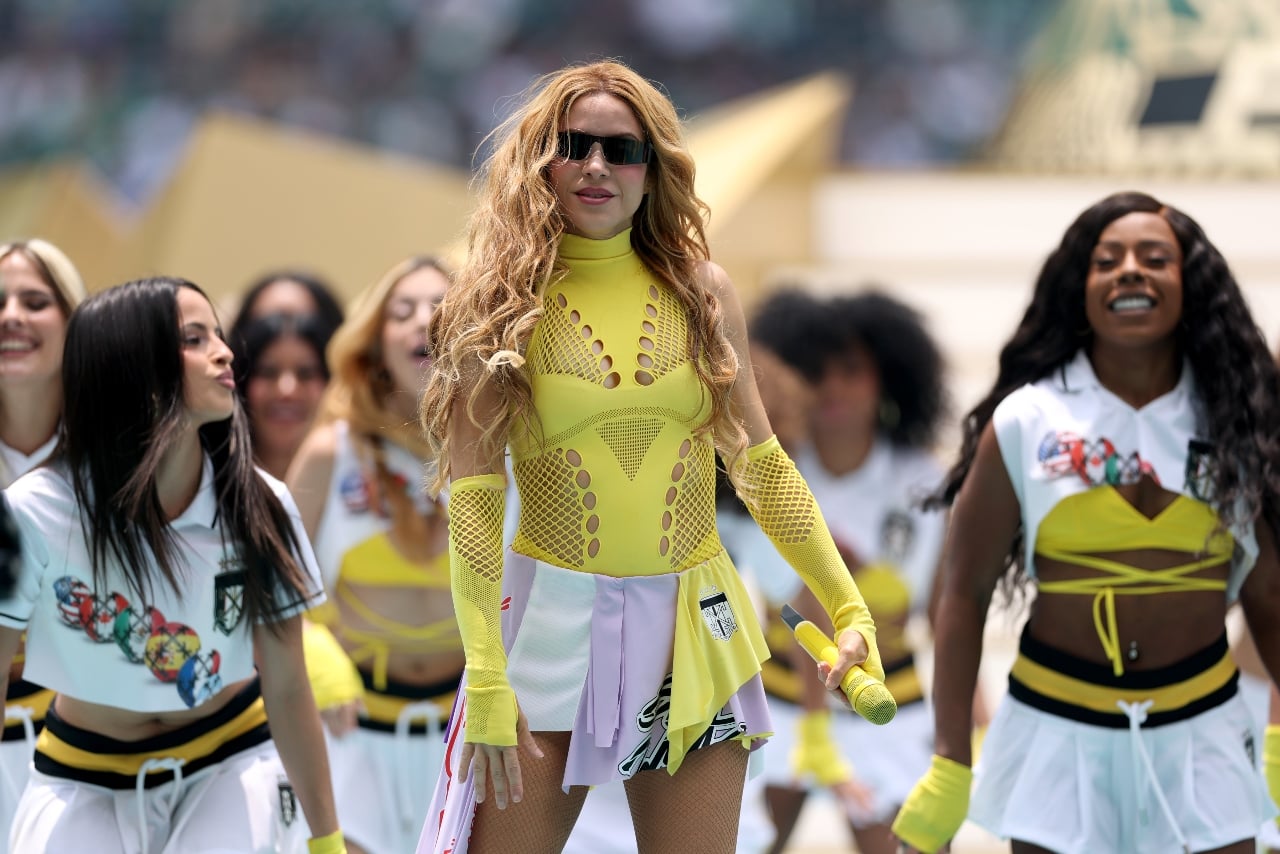
The 2026 World Cup opening ceremony was supposed to be about football, fireworks and Shakira reclaiming her status as the patron saint of global anthems. Instead, within hours of kick-off at Mexico City’s Estadio Azteca, the internet decided otherwise.
If your For You Page has turned into a wall of “Shakira World Cup body double” clips, you are not alone. Between the sunglasses, the new hair and the US broadcast drama, confusion was practically built into the staging. So let us untangle what actually happened on that pitch – no tinfoil hat required.
The Basics Shakira’s 2026 World Cup Performance
On Thursday 11 June, before Mexico faced South Africa, Shakira opened the 2026 FIFA World Cup in Mexico City. In front of around 80,000 fans, she performed “Dai Dai” – the official tournament song – with Burna Boy, backed by a small army of dancers and pyrotechnics.
She ran onto the grass in a bright yellow top, white shorts and platform sneakers, plus a huge pair of dark sunglasses that never left her face. That 30-odd minute spectacle is the raw material from which an entire conspiracy was born.
Why Some Fans Think It Wasn’t Really Shakira
Visually, this was not 2010’s barefoot Waka Waka Shakira. The look was sportier, more street, and crucially, half her face was covered. Her hair also skewed slightly lighter and redder than some fans expected from recent appearances.
On X and TikTok, users dissected screenshots side by side with older photos, circled jawlines and legs, and slowed down the choreography frame by frame. `”That is not Shakira, it is a double,” one fan says, pointing to a missed step on the “Dai Dai” chorus.` The sunglasses became Exhibit A; the hair shade, Exhibit B.
Once a few viral clips questioned her identity, the narrative wrote itself. Threads on Reddit repeated the same talking points: the dancing looked “stiffer,” the hair “like a wig,” the body “a little different.” Spanish-language posts called the performer a “doble.”
Layer on top the general mistrust shaped by deepfakes and AI filters, and you get a perfect storm. People are primed to believe that what they see on a massive stage cannot possibly be real – even when it is just a global pop star in big shades and comfortable shoes.
All Signs Point To The Real Shakira
The cleanest piece of evidence is Shakira’s scar. The singer has a small, well-documented mark on her forehead, visible in numerous photos across the years. Associated Press images from a New York event in May 2026 show it clearly.
In close-ups from the World Cup opening ceremony, the exact same scar appears in the same position, under the same lighting kind of conditions. For the body-double theory to work, you would need an impersonator who not only copies decades of choreography but also replicates a tiny, specific facial scar. Possible in a sci-fi script, less convincing in real life.
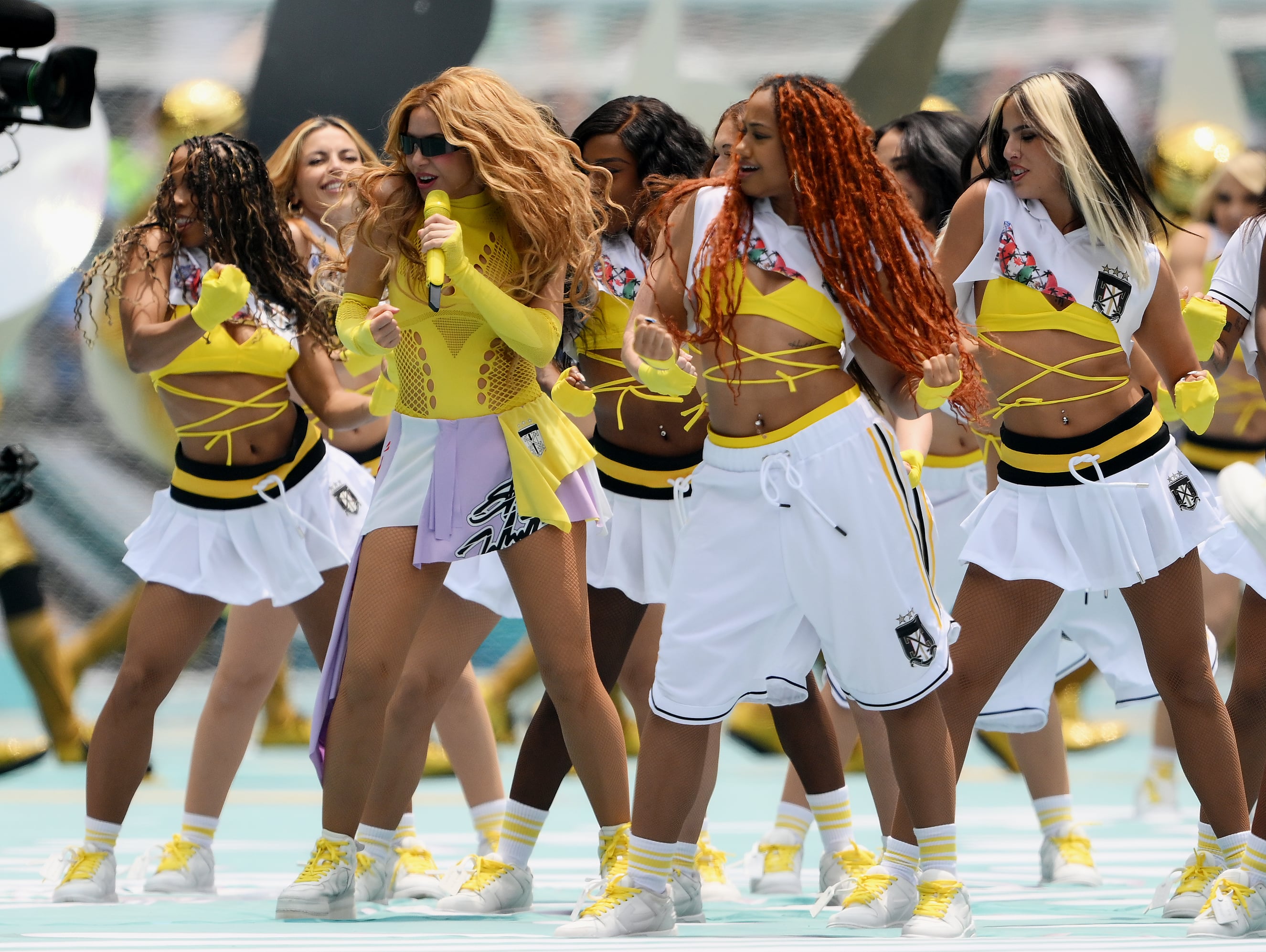
Official FIFA broadcasts and high-resolution stills all credit Shakira, not a mysterious stand-in. Outlets reviewing rehearsal clips on her own channels describe consistent staging, costuming and movement from practice to live show.
So far, neither Shakira’s team nor FIFA has dignified the rumor with a statement. Silence is not proof, of course, but there is also zero credible sourcing backing the idea of a double – only speculation bouncing between platforms.
Some conspiracy threads attempt to connect the performance to Rebeca Maiellano, a Venezuelan Shakira impersonator known as “Shakibecca,” who has indeed worked in Mexico around the tournament. She is very good at her job; she is also not documented on that pitch.
There are no verified photos, contracts or production notes placing Maiellano at Estadio Azteca for the ceremony. The link exists mainly because the human brain loves a character to pin a story on.
Dai Dai, An Ode To Resilience
“Dai dai” in Italian slang loosely means “come on, come on,” and the track pushes resilience, second chances and collective energy – not subtle parallels with Shakira’s own reinvention era. Before the first whistle, the video had already cleared well over 100 million YouTube views, with coverage in Spain noting links to a FIFA-related education fund.
Fans are split: some crown it a new gym playlist essential; others shrug that “it is no ‘Waka Waka’.” That is less a critique of “Dai Dai” and more a reminder that lightning-in-a-bottle moments are hard to repeat on command.


