










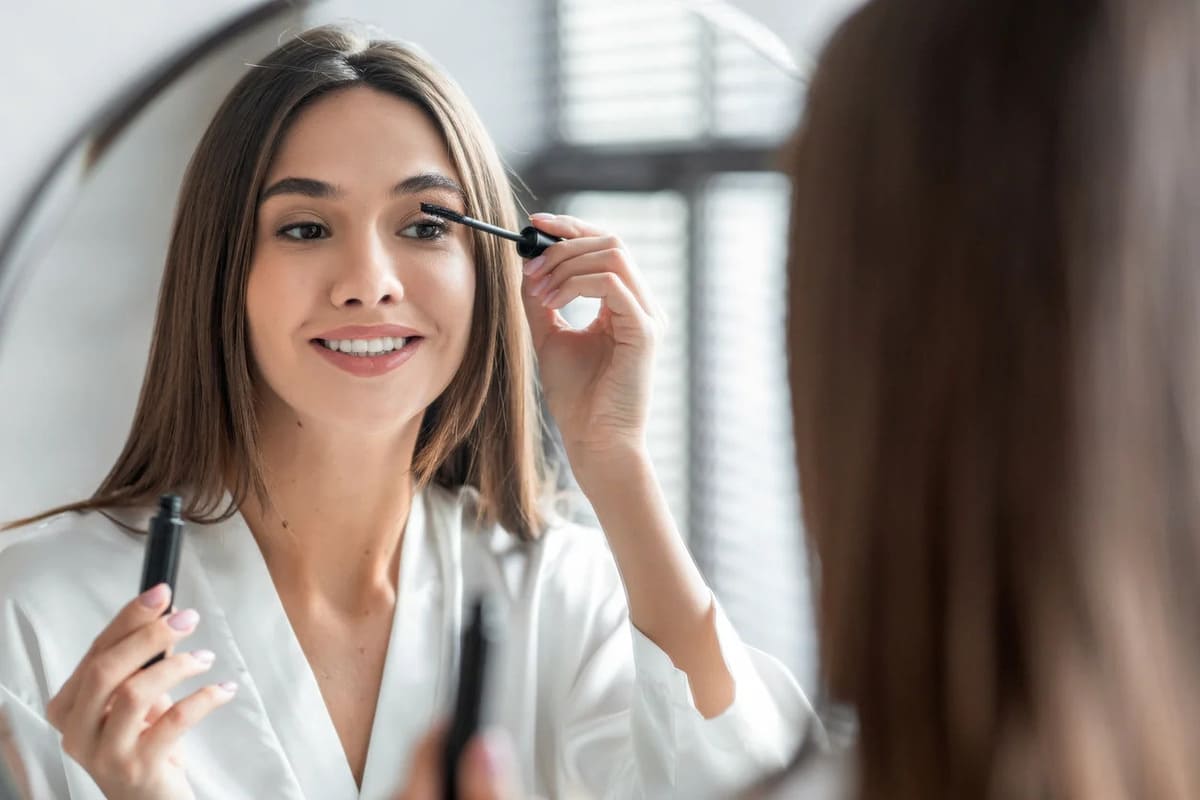
Think about your morning routine for a second. Foundation, maybe some concealer, a swipe of lip balm – and then, almost on autopilot, you reach for that familiar tube. Mascara has been there for as long as most of us can remember, the one product we would never dream of skipping. It felt untouchable, a beauty staple that had survived every era from antiquity to the age of TikTok. So what happens when the unthinkable starts to look… normal?
The product we thought was bulletproof
For generations, mascara sat comfortably at the top of the makeup hierarchy. Whether you favored a pared-back five-minute face or a fully layered glam look, it was the ultimate go-to product – the one item that made nearly every beauty shortlist. Its popularity seemed invincible, stretching across centuries and countless trend cycles without ever truly losing its grip.
Then came the clean girl aesthetic. When that wave of minimal, streamlined makeup swept social media, skipping mascara became part of the uniform. At the time, most of us assumed it was a passing phase. And sure enough, the full face made a swift comeback, riding the nostalgia of 2016-era matte makeup. But here is the twist nobody expected: even after maximalism returned, the no-mascara habit refused to disappear. It lingered on social media feeds, quietly gaining momentum instead of fading out.
So was the clean girl movement really just a blip, or did it crack open something deeper about how we think about our lashes?
Why bare lashes are sticking around
What makes this shift so remarkable is that it is not tied to a single aesthetic anymore. Skipping mascara has outlived the trend that popularized it. According to makeup artist Mary Phillips, speaking to Harper’s Bazaar US, there is a broader movement toward eyes that look lighter, softer, and more natural. Ditching mascara, she noted, is one of the simplest ways to maintain a fresh, modern appearance while putting the focus on beautiful, healthy skin instead.
That perspective reframes the conversation entirely. It is no longer about doing less out of laziness or minimalism for minimalism’s sake. It is about redirecting attention – letting skin quality speak louder than pigment. And when a professional who works at the highest levels of the industry validates bare lashes as intentionally chic rather than unfinished, the message lands differently.
Alongside this shift in mindset, the beauty market has responded with something concrete. A wave of new products dedicated specifically to lash care has flooded shelves and feeds alike. We are witnessing the rise of what the industry now calls lashcare – and it is growing fast.
Welcome to the age of lash skinification
You have probably heard the term skinification applied to hair or lips – the idea that a body part previously treated as secondary deserves the same meticulous care routine we give to our facial skin. After the eye contour area and the lips, it is now the lashes’ turn. Serums, essences, and conditioners designed exclusively for lash health are no longer niche finds buried in specialist stores. They are mainstream.
The numbers tell a striking story. The global lash care market – encompassing serums, essences, and conditioners – was valued at roughly 1.65 billion dollars in 2022. Projections suggest it will reach close to 3 billion dollars by 2030. Those are colossal figures, and they signal a genuine behavioral shift rather than a passing curiosity. When consumers invest that kind of money in caring for their lashes rather than coating them, it says something about where priorities are heading.
This does not necessarily mean mascara is disappearing from bathroom shelves tomorrow. But the growing enthusiasm for treating lashes as something to nourish rather than simply decorate could increasingly overshadow the product that once seemed untouchable. The beauty world is not abandoning lashes – it is just rethinking what loving them actually looks like.
The bottom line
Mascara has enjoyed centuries of loyalty, but for the first time, a credible alternative philosophy is gaining real ground. The movement is not about stripping your routine bare – it is about shifting the spotlight from coverage to care, from coating lashes to conditioning them. A lash care market on track to nearly double in under a decade tells you this is more than a social media whim. Whether you keep your favorite tube or swap it for a serum, the choice now feels genuinely open – and that, in beauty, is always a good thing.


