



Newsfeed

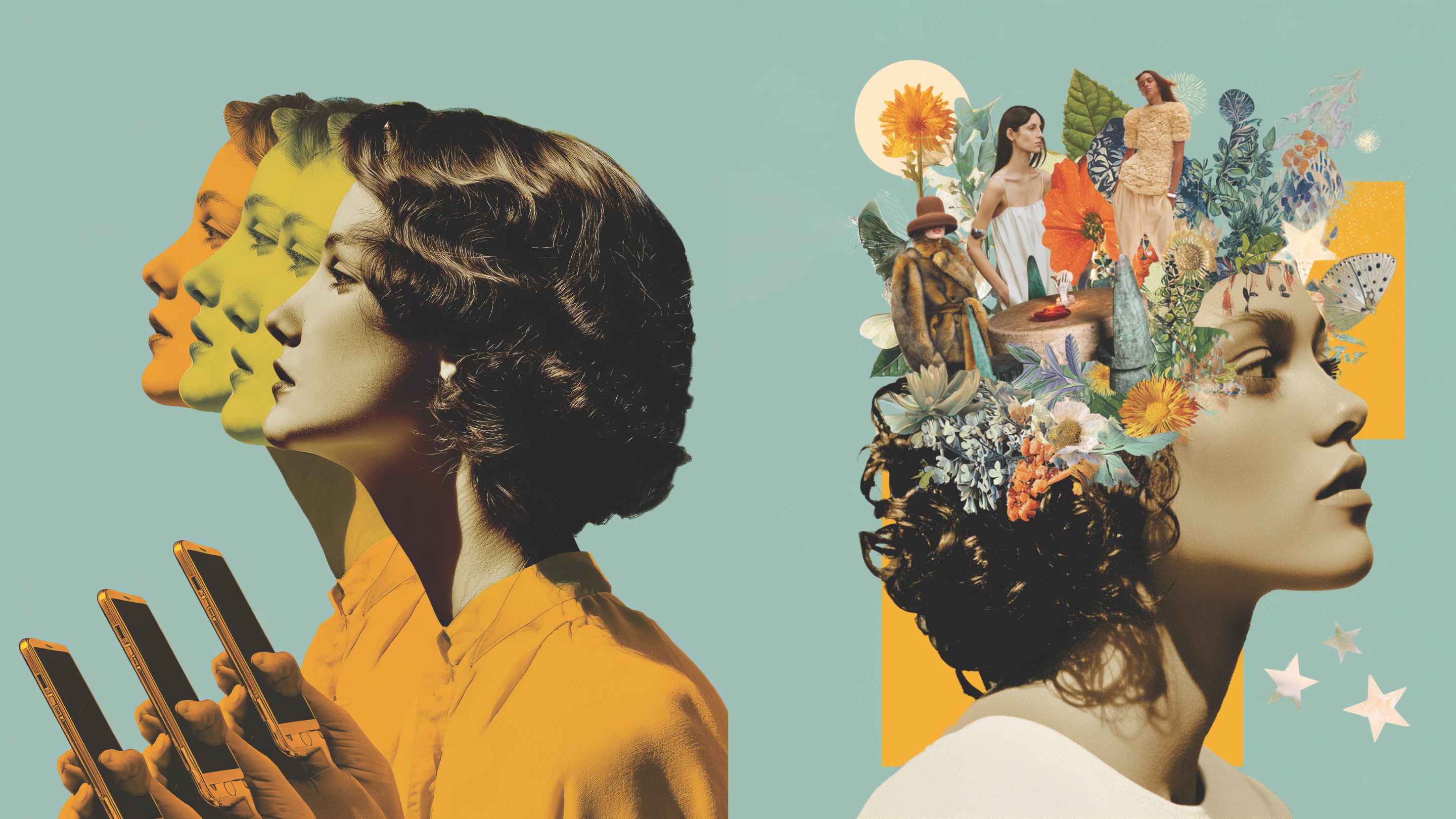 During a routine scroll, you save a photo of someone’s living room setup because you want your home to evoke the same feel. You buy the coat that the internet decided was the must-have this season. You order the book that everyone stylish seems to have casually placed in their Instagram dumps. For a moment, the purchase feels strangely transformative, as though proximity to the object might somehow pull you closer to the life orbiting around it. Only, as time passes, so too does the excitement. The coat hangs barely touched. The book was abandoned a third of the way through. The apartment still doesn’t quite feel like the picture – or you.
In recent years, we’ve seen algorithms upheave the way we engage with our own interests. What has been described as a ‘flattening’ of culture, in which everything seems increasingly optimised for mass appeal, has given way to a countermovement that positions individuality as the ultimate flex. Where once it was believed that resources, connections, and time were all one needed to be at the forefront of culture, the democratisation of the internet has seen taste emerge as the most vital social currency. One Dazed writer even appraised taste as “all we have left” in a world of AI and infinite streams of content.
But the problem, of course, is that without metrics, rules or much palpability, taste remains a concept largely shrouded in mystery. Particularly as we succumb to platforms designed to homogenise us, often prioritising safety and popularity over risk, our cultural lexicons inevitably merge with the masses. Where we are more visually informed than ever before, yet increasingly terrified of looking exactly like everyone else, the modern battle cry to cultivate one’s own taste has left many scratching their heads.
But what’s often missed in these conversations about taste is that, despite how visual it appears on the surface, it is not really about aesthetics. Or at least, not solely.
Sure, it can be evidenced in the clothes we wear, the places where we dine out, and the films we watch. Even the sheets we sleep on. But beneath these surfaces lies something far more layered: memory, environment, exposure, aspiration, and identity. Taste is not an outcome, as social media would have you believe, but an accumulation. Something shaped gradually through the people we admire, the worlds we move through, the things we encounter repeatedly enough to understand rather than simply recognise.
And while social media has exacerbated the process, it’s not an altogether modern problem. The sociologist Pierre Bourdieu famously argued in Distinction: A Social Critique of the Judgement of Taste (1979) that taste is not innate, but socially conditioned. What we perceive as tasteful reflects our upbringing, education, geography and class position as much as any authentic instinct. According to Bourdieu, taste functions as a form of cultural capital, a social language through which we communicate belonging, knowledge and status. Crucially, he emphasises the sociological need for it as cultural capital, noting how it can afford a person access to opportunities, trust, networks and recognition previously unknown to them.
It sounds clinical, but in practice, it is deeply human. Shared taste creates familiarity, hence why we’re prone to gravitate towards people whose references and sensibilities resemble our own. Whether consciously or not, we often interpret someone’s cultural preferences as evidence of compatibility, intelligence or social fluency. It is why employers speak about a ‘cultural fit’ during job interviews, and why certain restaurants and institutions become social shorthand, and why fashion has always operated as both self-expression and coded communication.
Though Bourdieu never suggested that people sit around strategically deciding what to like, he did highlight how the social value attached to certain things subtly shapes our preferences over time until they begin to feel genuinely personal. In his thesis, taste is not just about what we consume, but what our choices imply about who we are.

Historically, these codes of taste were relatively stable. Elite taste swung constantly between communicating itself through conspicuous access (pineapples were dubbed so rare in the 18th century that wealthy people would rent them to display at parties) to understatement through immaculate details that spoke for themselves. This is precisely why the recent obsession with ‘quiet luxury’ felt so familiar. It was framed as a new aesthetic movement, when in reality it was simply the resurfacing of long-standing class signifiers, dressed up for the algorithmic era.
What has changed now is not the existence of taste or its need to be known, but the speed at which it appears to form. Social media’s transactional nature has compressed identity development into something immediate, highly visible, and, of course, purchasable. What has taken tastemakers years – developing a coherent sense of style, discovering obscure references, refining personal preferences– is now sold as something that can be achieved overnight through aesthetics with pre-packaged names and personalities: ‘coastal grandmother’, ‘cottagecore’, ‘old money’, ‘clean girl”, to name a few.
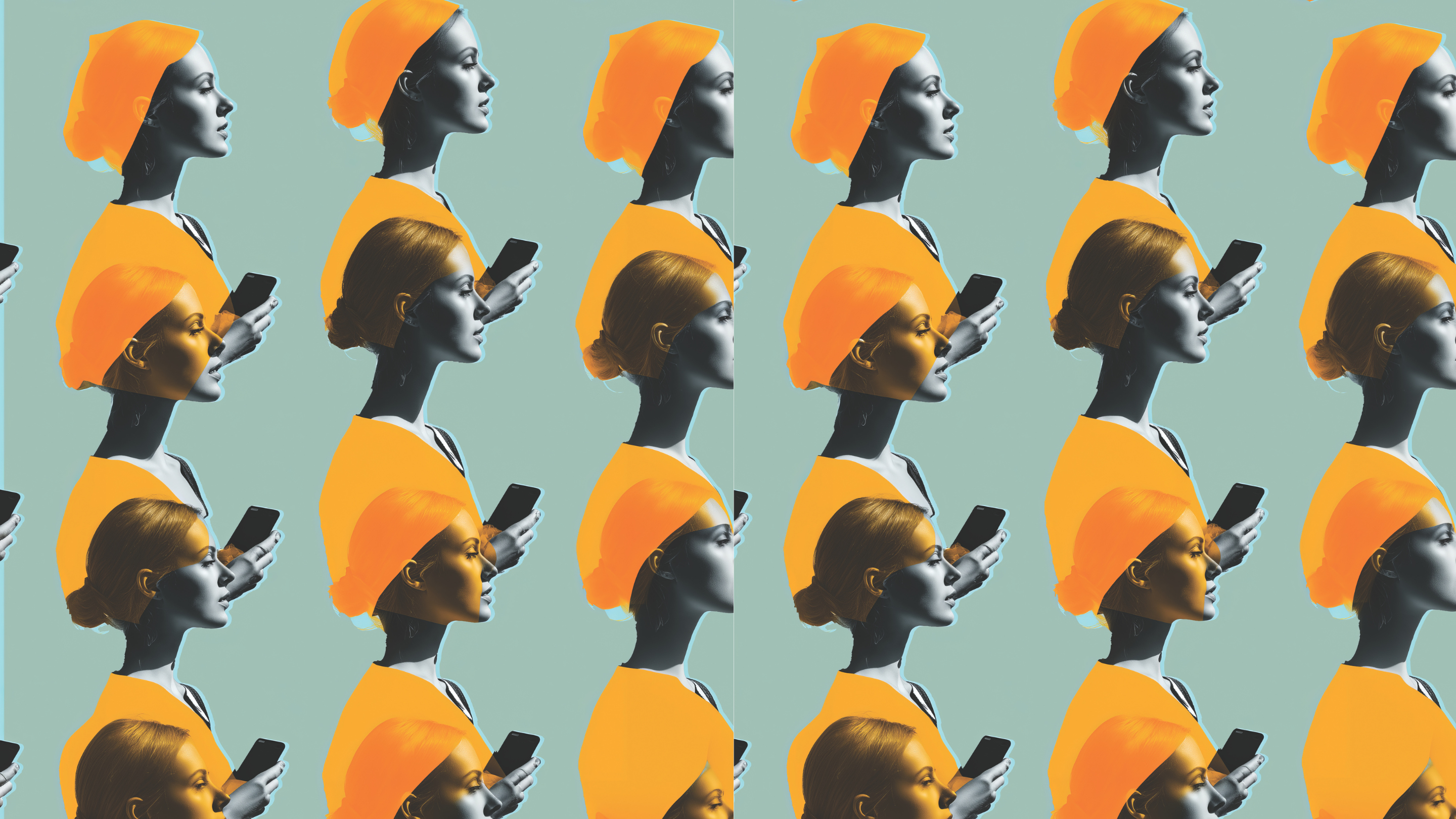
These aesthetics are not inherently shallow, and it’s worth noting that trends can be a wonderful way to experiment and comment on the cultural climate. It is mostly through trends that we are able to look back and reflect on the collective moods and desires of any given time. But problems arise when aesthetics become substitutes for identity itself, having us believe that we are all just one Pinterest board away from arriving where we need to be. When we attempt to shortcut our way towards individuality through consumption alone, what we often end up with is imitation without intimacy.
It is a phenomenon that creator Anne Valois has articulated particularly well in a series of viral videos examining taste in the age of algorithms. “You can’t scroll your way to good taste,” she argues.
“People confuse a curated board with taste,” she says. “Saving the right images, following the right accounts, building mood boards… But when it comes time to actually making something, there’s nothing behind it.”
Her point is not anti-internet, nor anti-inspiration; rather, she distinguishes between passive consumption and discernment. “Much of what we call taste is actually discernment – understanding why something works, not just recognising that it does,” she explains, noting that what’s equally important is examining what we don’t like. “Look at things outside of your comfort zone. You don’t have to like it, but try to understand why someone else might.”
“The difference between scrolling and training your eye is like the difference between hearing and listening.” That distinction feels increasingly important. Modern culture encourages us to fill identity gaps quickly. Feeling directionless? There is an aesthetic for that. Feeling uninspired? Buy the objects associated with a more interesting life. But identity is not a purchase, and taste cannot be meaningfully developed at the speed at which consumption is being pushed. We see this constantly in fashion, where we follow people whom we admire, and buy something because of how it looked on them, when it ultimately reveals itself as another short-lived attachment. Th e thrill fades because what we were really buying was proximity to an imagined version of ourselves. By contrast, the pieces that become foundational to our wardrobes are usually the ones we gravitate towards instinctively and repeatedly, often without much explanation. As Valois urges, “Attraction creates impulse. Connection creates longevity.”
Take Jane Birkin’s famous basket bag, which, decades later, remains on many a modern woman’s moodboard. Its appeal was never simply aesthetic, but what it communicated about her life and personality: insouciance, practicality and spontaneity. Likewise, jewellery designer Elsa Peretti’s interiors have become iconic not because they were perfectly styled, but because they evolved organically over her lifetime. They were layered, personal and deeply lived-in – which, in an algorithmic wasteland of beige Amazon finds, feels revolutionary. But when we attempt to recreate these worlds through purchases and imitation, we forget that the objects were shaped by the life, not the other way around. The same logic applies to designers like Phoebe Philo, whose work continues to resonate because it feels coherent rather than reactive. Her aesthetic language of subtle sensuality meets modern function was cultivated through continuity and conviction.
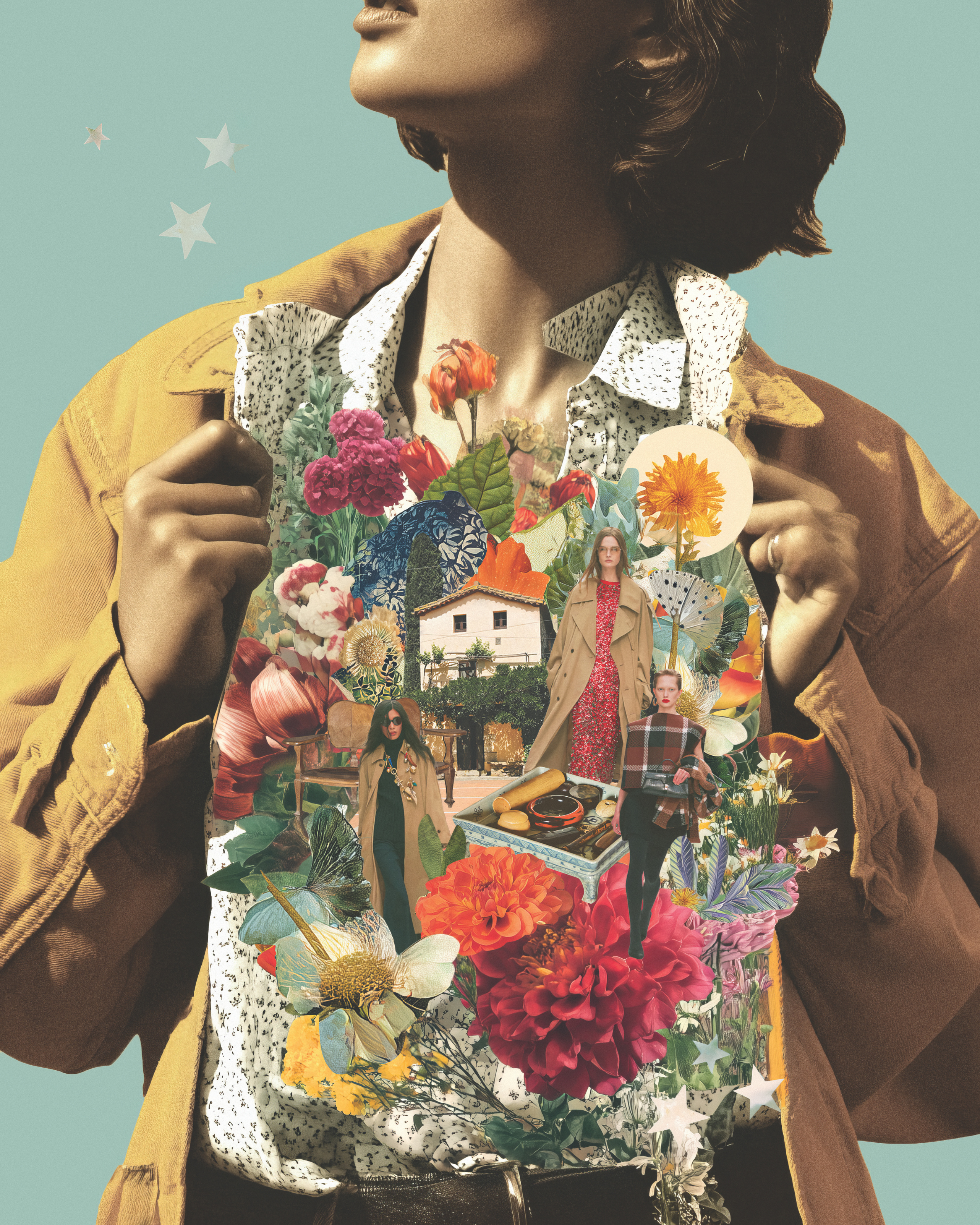
Perhaps this is why people seem more anxious about taste than ever before. Visibility has transformed taste from something privately experienced into something publicly performed. Every purchase now carries the potential to become content, evidence, or branding. We are no longer simply developing taste; we are proving it.
And yet, the irony is that the most compelling taste rarely feels performative at all. It tends to emerge when someone has cultivated a life expansive enough to sustain it, one shaped by curiosity outside the algorithm. Books stumbled upon accidentally. Conversations that alter your perspective. Films watched alone. Restaurants discovered through wandering rather than recommendation lists. People observed in real life rather than pigeonholed into identities or flattened into content.
Perhaps this is why people-watching remains one of the best antidotes to algorithmic sameness. There is no better way to sharpen your instincts than by observing how people actually inhabit their clothes and environments away from curated feeds. Personal taste is not just about sorting through clothing racks until you are drawn to something; it is a natural product of the art you consume, the people you surround yourself with, and the places you go. And just as our relationships with people are best fostered through connection over attraction, so too is the case for the things we accrue.
Because, ultimately, good taste is not about wealth, trend fluency or aesthetic perfection. It is not even about originality in the strictest sense. It is curiosity and consistency. Patience and self-knowledge. It is built slowly, through the accumulation of references, memories and lived experience. Taste may look visual on the surface, but beneath it lies something far more difficult to imitate: a life genuinely, curiously and imperfectly lived.
“taste test” IS PUBLISHED IN THE 18th EDITION OF GRAZIA middle east. ORDER YOUR COPY HERE.


