



Newsfeed

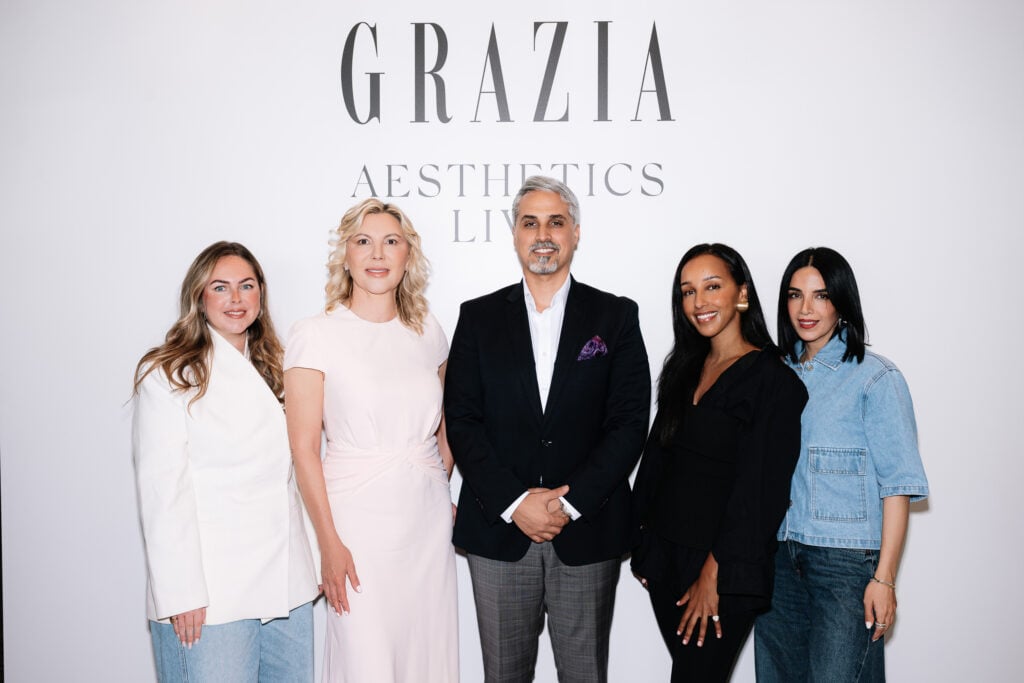
This panel at GRAZIA Aesthetics Live brings together four beauty and wellness experts to explore the intersection of real skin and facial balancing in an era that increasingly embraces invisible ageing. Moderated by GRAZIA Deputy Editor Olivia Morris (OM), the discussion features Dr. Radmila Lukian (RL), founder of Lucia Clinic, Dr. Khalid Hannouneh (KH), founder of GBT Clinic, Zahra Khalil (ZK), beauty and fashion content creator, and Amina Lula (AL), founder of Skin Deep. Together, they examine evolving perspectives on beauty and ageing in a world that has traditionally focused on slowing it down.
OM: How would you define real beauty?
ZK: I think there is a shift toward more natural beauty. Social media has advanced tremendously when it comes to filters and AI. Whatever it takes, whether topical or invasive, the idea of looking flawless is very much at the forefront. Younger generations have shifted beauty standards toward wellness and being confident in your own skin, rather than focusing on image.
OM: Would you say we’re moving towards authenticity or just a curated version of it?
ZK: I think there is definitely a shift toward authenticity. But again, nothing is perfect, and there are people who try to find an easier way. True authenticity is what lasts. The consistency of that really helps a person stay relevant in a type of social media where every week there’s a new face coming up.
OM: Through the lens of aesthetics, how would you see this shift in how we approach beauty?
AL: There’s a lot coming at us. I think we consume a ton of information every single day, whether that’s on TikTok, Instagram, or Snapchat. And I think for Skin Deep, the real goal was: how do we help people understand what they’re consuming? There’s a lack of literacy around beauty and wellness. People are walking into clinics, speaking to professionals, and exploring treatments they may not fully understand. So how do you empower yourself? First, by understanding what works for you. There isn’t a “one size fits all” approach to beauty. You really need to figure out what works best for yourself. We really want to empower people to make more informed decisions based on facts. The better informed you are, the more confident you can be when you walk into clinics and speak to experts, so you can get the most out of your appointments.
OM: How are you trying to champion literacy in the community?
AL: So I think we’re partnering with brands to create a sense of belonging between the product and users. A lot of the community is either made up of customers or influencers who are constantly being gifted products and introduced to new things, and it’s really important to understand the product and connect with it.
Our goal when we work with brands is: how do you create a stronger connection with the product so that people are able to talk about it in a way that feels authentic and makes sense? The second way is that we’re quite literally building a glossary through social media with people, where we want them to converse and share notes about the experiences they’ve had with certain treatments, products, or topicals. That’s our goal, bringing people together and allowing them to share experiences so you can find similarities in the person next to you and say, “Okay, we have similar complexions or hair textures, so what’s worked for you, and what’s worked for me?” Then it becomes about building community through that.
OM: What are patients coming to you right now to have done?
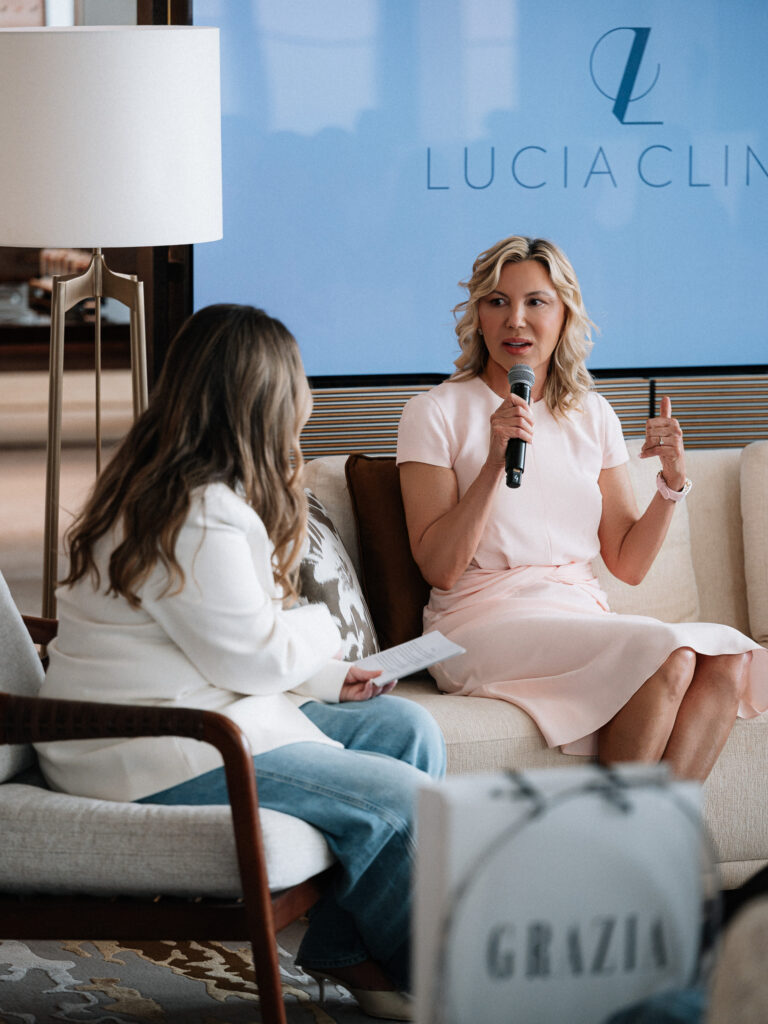
RL: My transformations are an invisible touch. You have to go back to authenticity to maintain your identity. When patients come to my team or me, our role is always to improve the skin on every level and in every parameter before we talk about any aesthetic appearance or enhancement. I can truly say this goal is universal. Patients from all over the world come in asking for the same thing: they want to look like themselves, they are looking for the best version of themselves. Of course, as a dermatologist, I find myself spending more time on education because today, patients are looking for prevention more than correction. This is the global shift. They understand that if they start at an early age with the right treatments, advised by professional doctors and experts in the aesthetic industry, they can help prevent signs of ageing. They want to look fresher and look the way they feel.
OM: How would you manage expectations when you’re planning treatment for someone?
RL: Especially Gen Z’s, today, they are very keen to come into the office with photos of themselves using artificial intelligence and filters, saying, “This looks like my best version.” Before, patients used to come in with photos of celebrities. Today, in our region, I think it’s different. It may still be more common in the US – I recently went to New York, and my colleagues there still experience patients coming in asking to look like celebrities. Here, though, I think more patients want to look like the best version of themselves. The challenge as a doctor is always education. We now spend more time on the educational part of the consultation than on the actual examination or treatment itself. And honestly, it’s very pleasant to speak with Gen-Z and younger patients, especially those entering aesthetic medicine for the first time, because many of them are already informed. They educate themselves through social media. You have someone who is eager to learn, your patient becomes the student. Human touch comes first. It’s very important to approach patients with care and consideration, especially when discussing age-related procedures. Sometimes, you meet very young patients who want to achieve an unrealistic appearance, and in those moments, you have to educate them and explain that perfect or ideal beauty does not exist in the natural world. You have to love your own version of yourself and focus on enhancement, not transformation. As a dermatologist, as I said, I always like to improve the skin and overall skin condition first. With younger patients, when the skin is already healthy, it becomes much easier to enhance and refine the appearance naturally. I think this is what I feel our mission is as doctors today: to reflect reality through social media and help people pursue beauty in a healthy, authentic way.
OM: Are you seeing any trends that people are coming in with?
RL: Definitely in skin treatments. Before, we saw many trends like overfilled faces, excessive Botox, foxy eyes, Russian lips, and sharply contoured jawlines with additional filler injections. Today, patients are much more interested in talking about skin quality and understanding how healthy skin is the key to enhancing appearance. They want to understand how these practical treatments actually work. Yes, lasers play a big role. I’m a huge advocate for laser treatments because our industry has seen incredible advancements in energy-based devices. We now have fantastic technologies, many guided by artificial intelligence, that allow us to personalise treatment protocols for each patient much more easily. We can achieve better results with less aggressive energy settings, reduced downtime, and more effective treatments in a shorter amount of time. Also, working here in our region, it’s especially important to provide safe treatments for patients who are frequently exposed to the sun. With the new generation of laser technologies, treatments have become safer and more advanced for different skin types and lifestyles.
OM: Why do you think the smile has so much impact on how we perceive the way someone looks, how we show ourselves to the world, and how we would present ourselves online in this day and age of social media?
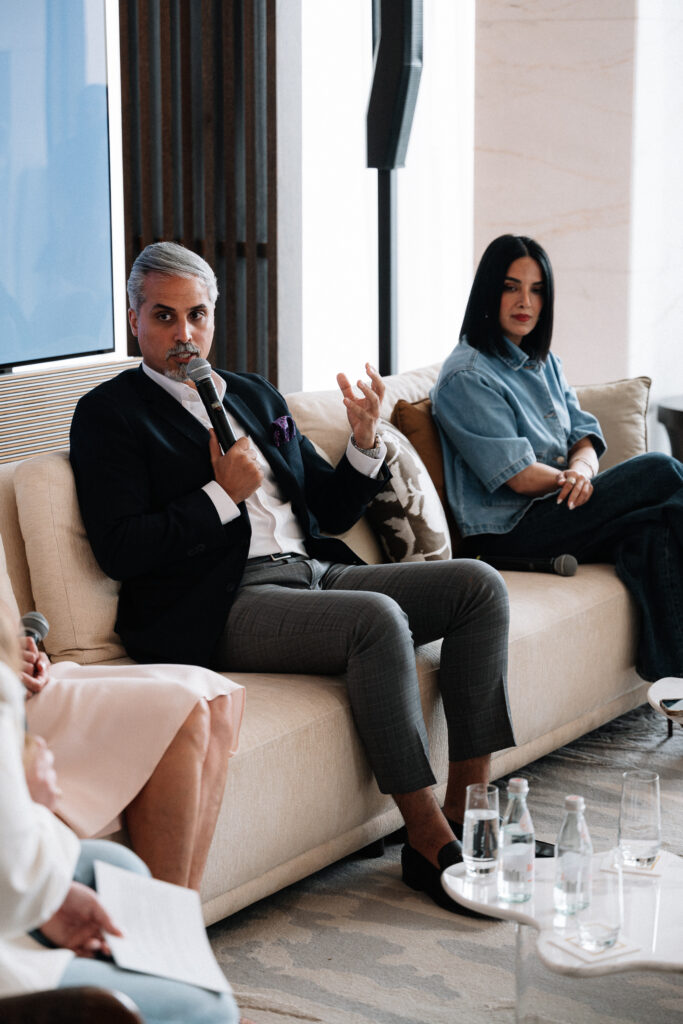
KH: First of all, we have to define the importance of a smile. We all agree that it’s a universal language. When you enter any room, one of the first things you look for is a smile. It’s an icebreaker. From a psychological and subconscious perspective, around 50% of your first impression of someone comes from their smile. You can even, to some extent, associate a person’s social or economic status with their smile. Hollywood has made this very clear. If they want to portray someone poor or homeless, that character will most likely have missing or damaged teeth. Even characters like Dracula are strongly associated with teeth, specifically the canines. So, from someone’s teeth, people often subconsciously make assumptions about whether a person is healthy, wealthy, approachable, or even dangerous. That’s why the impact of a smile is so significant. As I said, it accounts for more than 50% of the first impression you have of someone. Of course, this goes hand in hand with what Dr. Radmila does. A smile is not only about the teeth, it’s also about the lips, the gingiva or gums, and the relationship between all of those elements. Some people may have perfect teeth, perfect gums, and beautiful lips, but if the jaw proportions are slightly off, the smile may still not feel harmonious.That’s why we collaborate with specialists like Dr. Radmila to create better balance and harmony in the smile. For example, if a patient is planning to enhance their lips, we usually recommend completing the dental work first because the teeth and bite structure are the foundation. Then Dr. Radmila can enhance the lips in a way that complements the smile naturally. The smile is truly one of the very first things people notice.
OM: Would you say there’s no such thing as reaching the perfect white smile anymore?
KH: As previously mentioned, things are changing with time. Perspectives surrounding beauty, what is considered perfect or imperfect, are constantly evolving. Around 15 years ago, the trend of perfectly white teeth came from the idea of the “Hollywood smile.” But a Hollywood smile doesn’t simply mean extremely white teeth. It was originally inspired by celebrity smiles – healthy, balanced, and naturally attractive smiles. Unfortunately, for a period of time, this was taken too far. Even today, we still see what is referred to as the “Turkey smile” trend, overly bright, artificial-looking teeth that often lack natural character. While it became popular, it can make smiles appear less authentic.
Personally, when I see extremely white, artificial-looking teeth that don’t match a person’s facial features or gums, I feel it highlights the need for better education. As Dr. Radmila mentioned earlier, patient education has become essential. Dentistry and aesthetics are not typically taught in school, and traditionally dentists focused more on treatment than explaining the principles of smile design and facial harmony. Today, there is a stronger focus on education and on understanding that a white smile is not necessarily a beautiful smile. The key question is: what is the right shade for you? It varies from person to person, depending on skin tone, eye-colour, facial features, and overall harmony. Even natural elements like skin tone can influence how white teeth appear through contrast. We are now seeing a clear shift back toward more natural aesthetics.
OM: If you don’t have a nice smile and it’s not healthy, can you notice?
KH: Dr. Radmila spoke about prevention, and we’re seeing this growing across all fields. There’s a broader shift toward preventive medicine in general. We see people doing IV therapies like NAD, NAD+ and stem cell treatments, and there’s an increasing focus on improving quality of life. This is especially visible in places like Dubai, where people have the luxury of taking extra care of their health and appearance. More and more, people are shifting toward prevention. They don’t only want to look beautiful – they want to live healthier.
When we neglect gum health, it plays a major role in overall wellness. The mouth is often a starting point for systemic health issues, and gum disease has been linked to broader inflammation in the body. For example, bleeding gums can be a sign of gingivitis, which may reflect underlying systemic inflammation. More recently, studies have suggested links between oral bacteria and conditions such as Alzheimer’s disease.
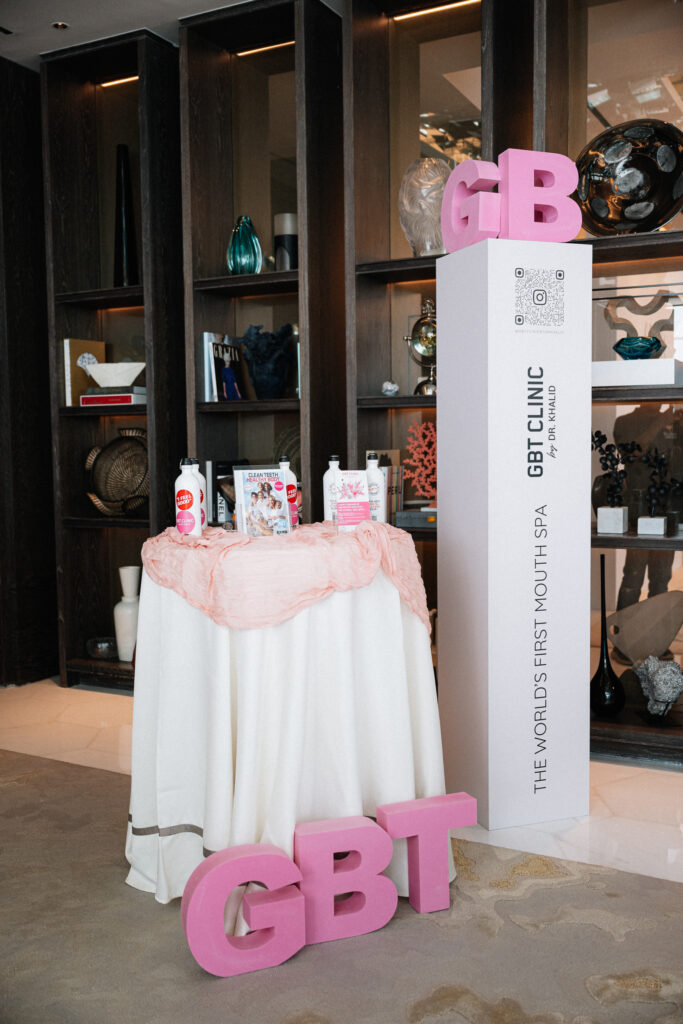
In GBT Clinic (Guided Biofilm Therapy), a Swiss concept developed in Geneva around 2017–2018, the focus is on maintaining oral health by controlling biofilm — the bacterial layer in the mouth. The aim is to keep the oral microbiome balanced through advanced, gentle cleaning methods that support overall health. At the same time, dental anxiety remains very common. It’s not that people dislike dentists, but that the experience can feel invasive or uncomfortable. That’s why we are working to transform it into something more comfortable and positive – a more preventive, spa-like approach sometimes referred to as a “mouth spa,” where comfort, prevention, and high scientific standards come together.
OM: Do you feel pressure to be that educator for people and pressure for yourself as well to be showing up as your most authentic self?
ZK: As someone who uses skincare and has a proper skincare routine, of course, everyone’s skin is different. Everyone’s circumstances, lifestyles, and environments are different. It’s about being educated and giving the right type of advice. Yes, I’ll be completely transparent, I do have days where I don’t even want to look at my face, let alone have hundreds of thousands of people looking at me. But we have to be authentic. We have to show people that no one is perfect. I’ve been online for so long, and I still find myself looking at other girls and comparing myself, thinking, “Oh, she looks amazing.” But I know she probably has a filter on, so you kind of forget that filters and AI are still very much part of what we see online. I think the people who are shifting toward authenticity and really showing their true selves and essence are the ones who can truly survive in this space. But at the same time, I think it’s about education. Just because someone says something doesn’t mean it’s true; you have to take that information, see if it works for you, and then make your own informed decisions. Seeking experts really helps as well, especially doctors. Having a degree and proper medical training is still very important, particularly when it comes to health-related issues.
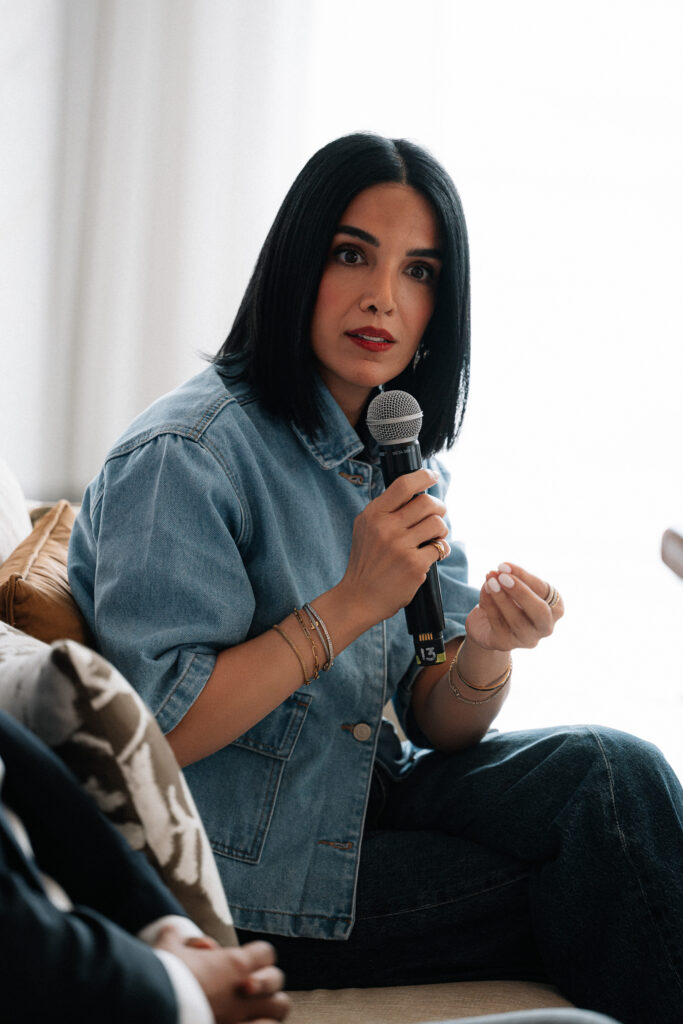
OM: What do you find that you’re gravitating towards right now in terms of how you’re treating your skin clinically?
ZK: I am definitely more focused on my skin and how it reacts to certain products. With time, gravity isn’t my best friend, so I look at treatments that help with lifting.
OM: Any specific groundbreaking treatments that you’re seeing that are kind of ticking the boxes for many people and clients that are coming to you with facial harmony concerns, skin concerns, all the above?
RL: Consistency is a must. The idea of a quick fix is quite outdated. You have to consider that the skin has three layers. When we talk about caring for the skin, especially in a professional setting with a dermatologist or aesthetic medicine provider, you have to explain to the patient that each layer must be treated. The skin is an organ; we cannot isolate one treatment to one level without considering the whole system. In our region, especially in Dubai, we see many advanced regenerative options, including exosomes, biosomes, stem-cell–based approaches, and biostimulators. Each patient must be evaluated individually because treatment is not one-size-fits-all. When we look at the skin in the mirror, we cannot stop chronological ageing. That is fixed. But biological ageing, how we look and how the skin behaves, can be influenced by lifestyle, health, and proper skincare. Once a patient decides to see a dermatologist, consistency becomes extremely important. You cannot achieve healthy, glowing skin without it.
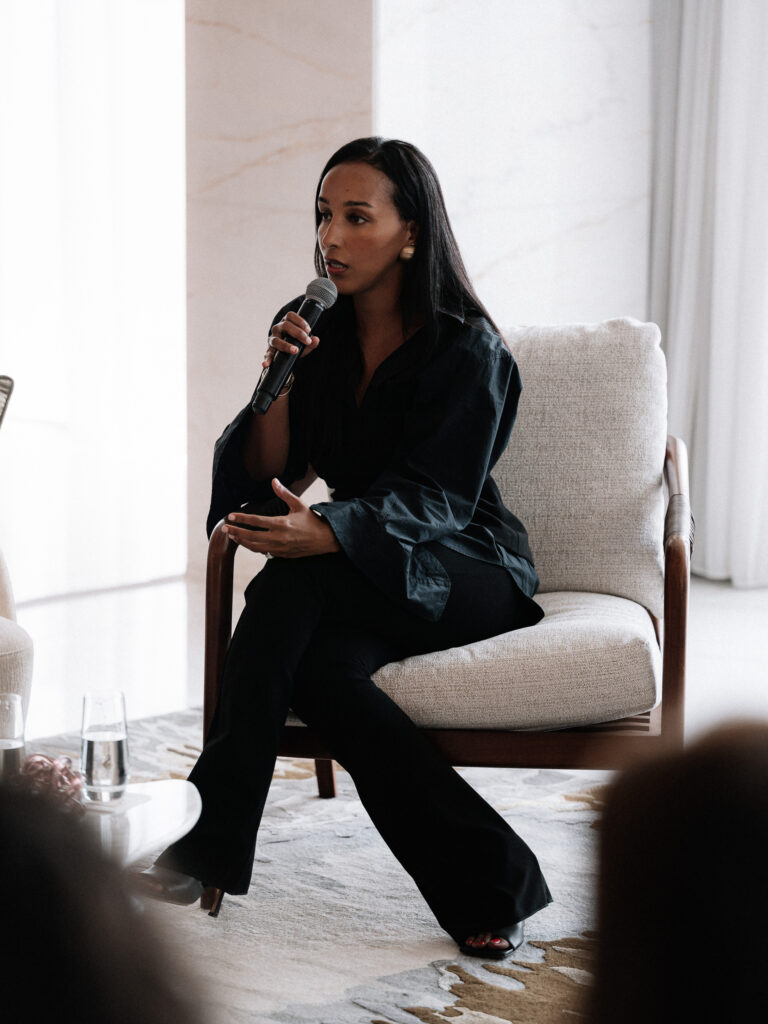
OM: How are you trying to educate people through aesthetics and wellness to make sure they are informed, do you think there is power in community to be able to properly educate?
AL: I think it kind of all started really organically for me because I was a bit of a guinea pig for my own personal community, especially with my friends and family. I was talking to doctors and experts like Dr. Radmila and asking all the questions because I’m very curious by nature and I like to dig a bit deeper. You can’t just focus on outward appearance and not think about what’s going on inside. So for me, I’m always chasing questions and follow-up questions. Once I’ve tried something and confirmed it works, I can share it with my community. There doesn’t have to be a trade-off. It’s not about looking good only on the outside; it’s about balance. I think people are more willing now to put in that effort and have the discipline to think about mind, body, and soul, and how it all plays a role in how we look and feel.
OM: What does real beauty look like for each one of you in terms of the clinical perspective, the personal perspective, what would you say?
RL: Beauty is a story. We all have our journey, and this is what we reflect. Our appearance is our story. The more we love ourselves and care in the right way about our health, our personality, and everything in our lives, the more it shows. Even in your profession and how you manage everything in your life, your skin will reflect your story. This is beauty. This beauty comes from who you are.
KH: Through the experience of seeing different people living in this country, where you encounter over 200 different nationalities, and having the privilege of treating patients from very diverse backgrounds, you realise that beauty means different things to different people. There is a procedure where we remove pigmentation from the gums using lasers. Some people naturally have darker pigmentation in their gums, and we sometimes offer this treatment for aesthetic reasons. I had a case once with an African patient where I offered to remove the pigmentation, and she told me, “What are you talking about? I paid money to have my gums tattooed this colour.” That moment made me realise that it doesn’t matter what you think is beautiful, what matters is what the patient thinks about themselves. So beauty is not a perfect smile. The smile you feel confident with, the one that preserves your identity, is the perfect smile for you. The priority is to keep it healthy. Because beauty is connected to wellness. As long as you are healthy from the inside, through training, nutrition, and overall self-care, it reflects from the inside out.
ZK: I agree, beauty isn’t a cookie-cutter thing. Beauty is subjective; it comes in so many different ways. For me, beauty is also what’s up here. Mental health is so important, and I think it reflects on your skin and your face. And just being a kind person, I think we’ve lost that a bit in this time. Kindness is sexy. So I think just being a good person and really taking care of yourself inside matters. Everyone is beautiful in their own way.
AL: I feel like we all have variations of the same answer, but I would say, yeah, for me, I don’t think people should chase beauty. I think you should just optimise what you have and make that better. So don’t chase a look, but look better for yourself, you know? And yeah, don’t chase beauty — just optimise yourself to be the best version of yourself, inside and out.
See more from the first-ever GRAZIA Aesthetics Live here.


