

Newsfeed

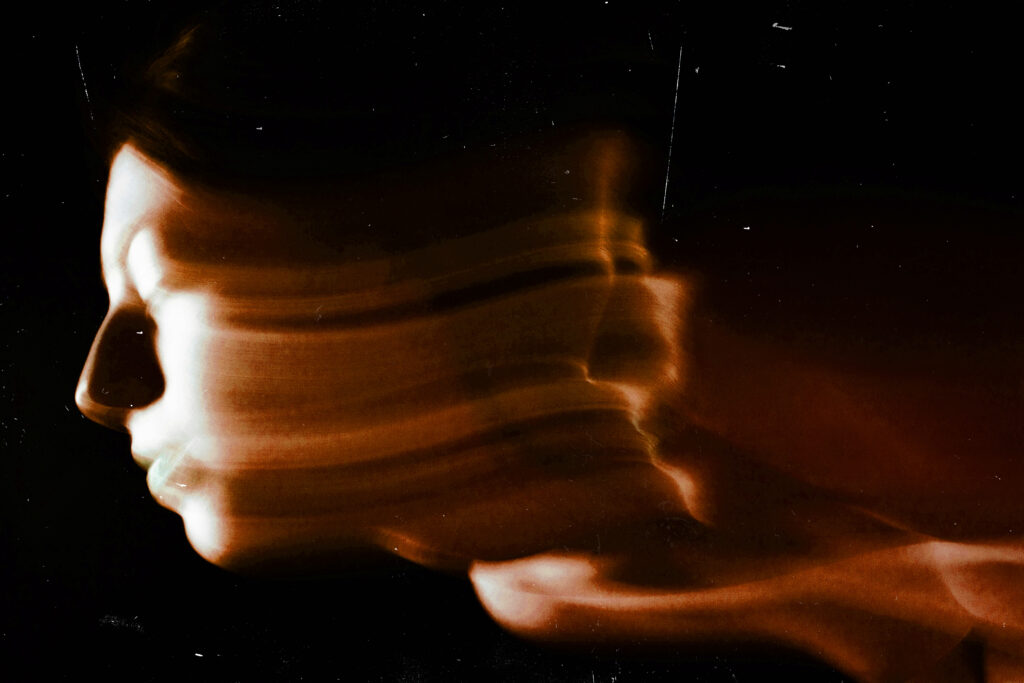
I don’t do repeat viewings – at least, not as a rule. But Evil Dead Rise broke it. Four times, to be exact. Four times of flinching, grabbing the end of my seat, and quietly admiring the audacity of Lee Cronin turning horror into something both feral and strangely chic. That movie wasn’t just a hit, it was one of the most talked-about horror launches of the past five years – the kind that lingers in group chats and rewires your tolerance for fear. So yes, when I slipped into my seat at Vox in Mall of the Emirates for his take on The Mummy, the anticipation wasn’t subtle. It was a palpable, borderline theatrical kind of excitement that only comes when you suspect you’re about to watch something shift the narrative, not just follow it.
Perhaps naivety, perhaps blind faith, I hadn’t done a deep dive – or any research at all, for that matter – into the reviews, the cast, or the setting. I walked into that cinema expecting spectacle (maybe even with a hint of Brendan Fraser); I didn’t expect an ode. And ode to the Arab world. Half the film unfolds in Egypt, sun-drenched and steeped in something far more intimate than cliché, while whole stretches are delivered in Arabic, unapologetically subtitled and all the better for it. And at the centre of it all? Two women who don’t just hold the frame, they command it: May Calamawy and May Elghety.
“I couldn’t quite believe it,” May Elghety told me when I asked about her reaction to learning she had been offered the role of Layla Khalil in this movie. “I loved Lee Cronin’s work on Evil Dead Rise, and I’ve always loved horror as a genre. After speaking with him and understanding that he wanted to create something very different from the earlier Mummy films, I was really excited to be part of it.”
For Cronin, the casting of these two Arab women was entirely foundational. In a genre that has historically treated the Arab world as aesthetic rather than lived experience, he was adamant that Calamawy and Elghety weren’t simply cast into the story, but woven into its DNA. “It was of absolute importance to me,” he explained when I asked about authenticity and regional perspective in shaping the film. “I like to create movies with grounded and believable characters, and with my exploring a culture that was different to my own experiences and upbringing, it was vital that the characters from Egypt were represented faithfully and with huge respect.”
The film follows grieving couple Charlie and Larissa Cannon, whose daughter Katie mysteriously vanishes whilst they are living in Egypt, only to return out of nowhere eight years later. But, for the family, relief quickly curdles into terror when they realise the child who has returned is no longer entirely their daughter, possessed instead by the spirit of an ancient demon unearthed through a long-buried Egyptian ritual. What unfolds is part possession thriller, part psychological horror, as the family is forced into a deadly race against time to stop the evil from spreading. In Cronin’s hands, the film becomes far more than a monster movie; it’s an exploration of grief, guilt, and the terrifying lengths we go to for the people we love – even when something inside them has fundamentally changed.
“I play Layla Khalil,” Elghety tells me about her role. “She is Katie’s childhood best friend and, without giving too much away, Layla is instrumental in both Katie’s disappearance and the eventual reveal of the truth. She’s incredibly resilient and brave. Lee recently described her as ‘heroic’ in an interview, and I’m inclined to agree.”
For Cronin, Egypt was never simply a setting; it was the emotional and symbolic heartbeat of the film itself. “I have always been drawn to hidden worlds and secrets,” he told me, explaining that his fascination stretches back to childhood. “Nothing embodies that type of mysterious past more than Ancient Egypt. Egypt in the movie symbolised deep history, and how history from many millennia back can still have an impact in our present day. The past is always relevant.” And perhaps that’s what gives The Mummy its strange pull. Beneath the jump scares and visceral horror sits something more cerebral: a meditation on memory, inheritance, and the impossibility of ever truly burying what came before us.
The portrayal of the Arab world in cinema is often split between reductive Western stereotypes and the nuanced, authentic realities presented by indigenous regional filmmakers. Across the 22 Arab countries, storytellers have long been reclaiming their own narratives – humanising their societies, interrogating identity, and challenging both external misconceptions and internal taboos. What makes The Mummy so striking, then, is that it appears to understand this distinction. Cronin tells me there were fewer conversations on set about actively avoiding cliché and more about pursuing “truth and authenticity at all times” – whether through character behaviour, visual language, or the atmosphere of the world itself. “This movie was always about making a point of difference in how Mummy movies have been presented before. And I think this is really clear and stark in some of the choices we made – even the Sarcophagus alone has more in common with the obelisk from 2001: A Space Odyssey than it does a traditional Sarcpophaguys you expect to see in a Hollywood telling of a Mummy story.”
What’s striking in Lee Cronin’s framing is how deliberately he resists the temptation to “explain” Egypt, instead leaning into its scale and its enduring sense of the undiscovered. Speaking about his inspirations, he describes being less interested in recycling familiar mythology than in the idea of absence itself – of everything still buried beneath the sand, unrecorded and unknowable. “The real draw for me,” he says, “was the idea of what is unknown… as much history has been uncovered in Egypt, there is still so much that remains secret, buried and unknown.” That sense of vastness becomes the film’s creative permission slip: not to retell Egypt as cinematic shorthand, but to imagine within it.
And when it comes to regional audiences, Cronin is equally clear that the intention was never extraction, but respect – a hope that viewers across the Arab world might recognise both the effort and the recalibration at play. “I truly hope that local audiences will enjoy this very different story,” he says, “and will appreciate the efforts that were made to capture some truth and to bring wonderful talent from the region to the fore on a global stage.”
For May Elghety, that intention carries through into the lived experience of making the film. “I knew the visuals would be strong with Lee,” she nods. “He has such a clear, confident vision but what really stood out was how collaborative he is. He creates atmosphere through tension and detail rather than just shock, which gives you a lot to work with as an actor.” It’s a balance she returns to repeatedly: the sense of a director who arrives with control, but doesn’t enforce it at the expense of performance or texture. “He listens, he gives actors space to explore, and he makes you feel included in every part of the process, from the tone to the language to even the music. It was such a generous environment, and I’d work with him again in a heartbeat. He’s also incredibly fun,” she adds – which, given he’s the man behind a film that practically rewrote the rulebook on how much fake blood a production can convincingly justify, probably tracks.
There’s a sense, then, that The Mummy isn’t just another Hollywood reboot, but a shift in who gets to sit at the centre of a big horror film. With Lee Cronin focusing on mood and tension over spectacle, and May Calamawy and May Elghety grounding the story, Egypt and Arabic dialogue don’t feel like additions – they feel like part of the film’s core. The result is a blockbuster that doesn’t treat Arab representation as something unusual, but as something natural, opening the door a little wider for Arab stories and talent in mainstream horror. And for anyone like me who loves this genre a little too much for their own good, it’s hard not to leave the cinema feeling like horror’s map just got a bit bigger – and a lot more exciting.


