

Newsfeed
Before there was content, there was storytelling. We are, first and foremost, story-making machines – we mediate the world through stories, and our compulsion is to fashion our experiences into a coherent narrative. Our values, judgements and dreams are crystallised through those stories we tell ourselves. Some of the most ancient fables – whose fragments are carried into our lives through the sweet, hypnotic breeze of bedtime lullabies, our earliest, most technicoloured readings, and whose momentum is continued through our own rereading to our children – are not mere forms of entertainment; they are windows into our collective soul.
Folklore contains a significance we carry with us in our very bones, that we inherit from one generation and pass diligently on to the next. It’s no wonder, then, that Scheherazade – the eyes through which we intrude into the metastory of One Thousand and One Nights – arguably some of the most retold in the entire world – is herself a mother. Society implicitly trusts mothers with our most intimate projections – our stories. They are the self-effacing presence in every tale; from the moment we are born, they are a soothing background presence and a foregrounding influence.
And while mothers have always been the site of this kind of contrary obsession, present but absent, significant but silent, spoken about but not to or for, recent changes have shifted the gears in our favour. While birth rates continue to take a plunge across most of the world, we are returning to the subject of motherhood with the kind of urgency and panic of an existential crisis. As the maths of fertility rates persists in, well, not mathing – we are forced to revisit the epic of motherhood anew. And this is being felt on every level, from the rhetorical contours refashioning ‘mother’ from frumpy and outdated to a term of approbation, to our legal and policy frameworks – the recent change in the UAE to identify mothers as ‘generation shapers’ is just one of them.
Crucially, this renaissance has also had a radical insistence on centring the mother’s perspective herself – though the medical industry has a similar tendency to neglect the female and maternal body, we are now seeing terms such as ‘matrescence’ being arduously planted into the clinical lexicon. Used to describe the cognitive, emotional and identity shift that occurs in motherhood, matrescence is one of those specific words that allows us to recognise and honour those intimate changes we have always felt, but of which we did not have an adequate social expression. It represents the ultimate closing of this gap between language, lore and legacy and the personal vantage of the mother.
So, with pen in hand, and a new arsenal of vocabulary to better express our intimate experiences, what do women in the Gulf have to say about the anciently contested site of motherhood? A lot, it turns out.
Ascia Al Faraj, Kuwaiti actress, business owner and one of the region’s most celebrated young mums, describes how becoming a mother radically altered her perceptions. “Motherhood made me a much more cautious person,” she admits to GRAZIA. “I do try my best to romanticise everything, but also now stairs are potential bone breakers, and the wind carries in flu season, instead of just ethereally blowing my hair around.”
This ability to see the world anew from a perspective that is both cautious and optimistic reflects this fundamental change in perspective. Dr Amina Yonis, a British mother currently living in Sharjah, describes a similar reawakening. “Motherhood has been the most profound reimagining of myself I’ve ever experienced,” she explains. “It quietly dismantled [parts of me] and rebuilt me from the ground up.”
Dina Shamlawi, a psychologist who works at Thrive Wellbeing Centre in Dubai, recognises the positive social impact of these rhetorical shifts, which allow us to reconceptualise motherhood on new, personally centred grounds. “What we are talking about is the significance of words and how they alter the way we carry experience,” she says of ‘matrescence’.
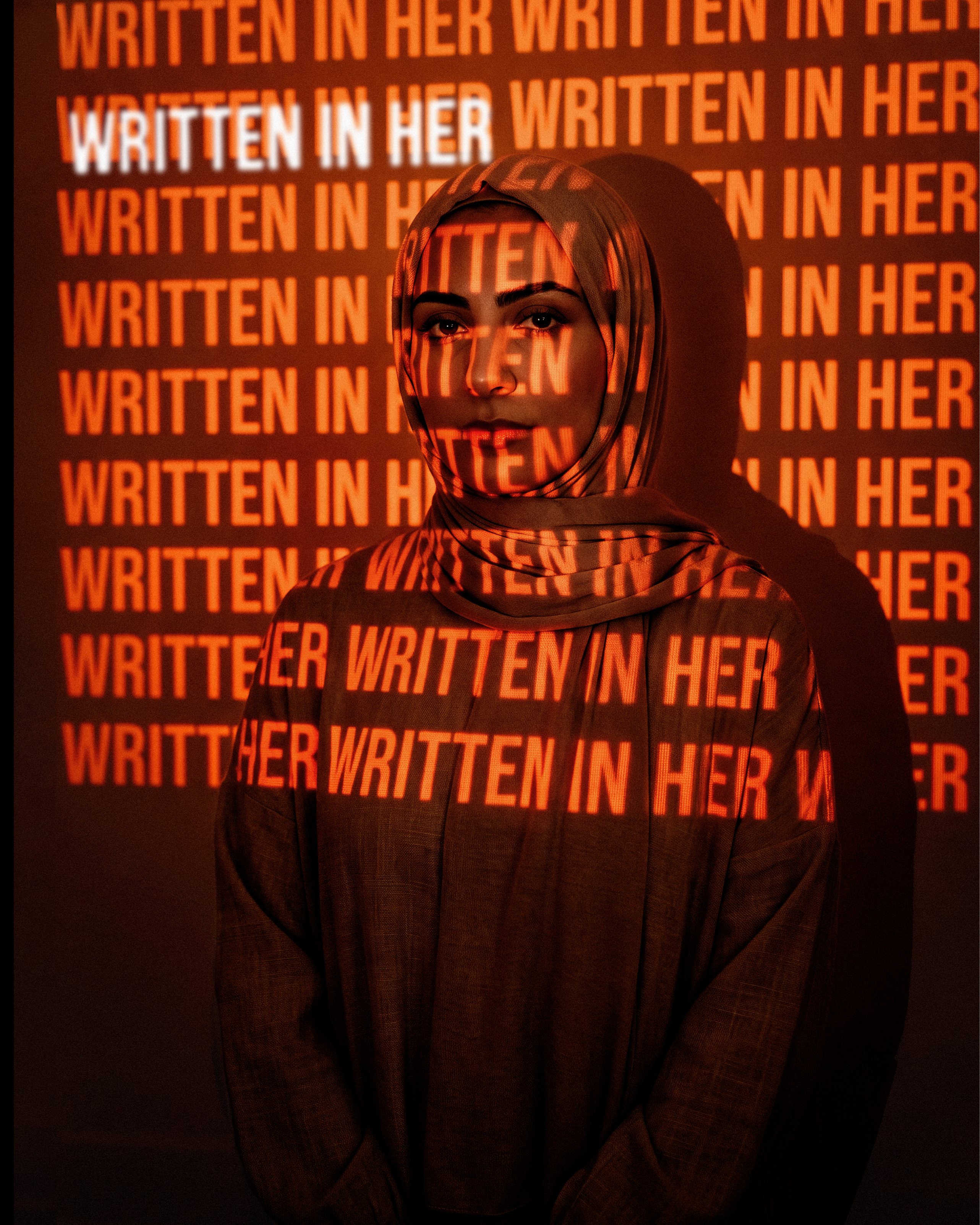
She describes it as a useful term to house the multitude of experiences that women speak to her about, whether that’s “changes in identity, changes in physical relationship – how you feel about and connect with your body – how we manage our relationships with others and how we even connect with our babies.” The recognition of this transient identity we embody as women, whose very borders of existence are transformed, is already powering through the global community of mothers, with women feeling enabled to share their stories of transition.
This linguistic evolution, happening in tandem with changes in legal and political frameworks, feels like a move in the right direction for women of the Gulf. Shamlawi says there is value in the way the language of policy is evolving, expanding to recognise the scope of parenting, and the impact this has on public perception: “Any attempts to try to challenge some of the stereotypes that limit the role of motherhood are good – it broadens the ability of mothers to see beyond the box we put them in, shifts public perception, and allows society to have a broader conversation.”
While motherhood in the West is the primary field of social excavation – projected as the default form of mothering, and the primary source of maternal agency, mothers in the GCC are quietly reshaping their own destinies in radical ways. If the mother has been the burdened and downtrodden part of us that was necessary but minimised, then the tendency to shape women in the region as ‘just mothers’ (that horrific phrase) has its own astringent aftertaste.
The rhetorical framing handed to women in the region by a language that has sought to minimise their experience has been to either double down on this label or resist it entirely. To nobly accept the term of mother or fiercely rebel against it.
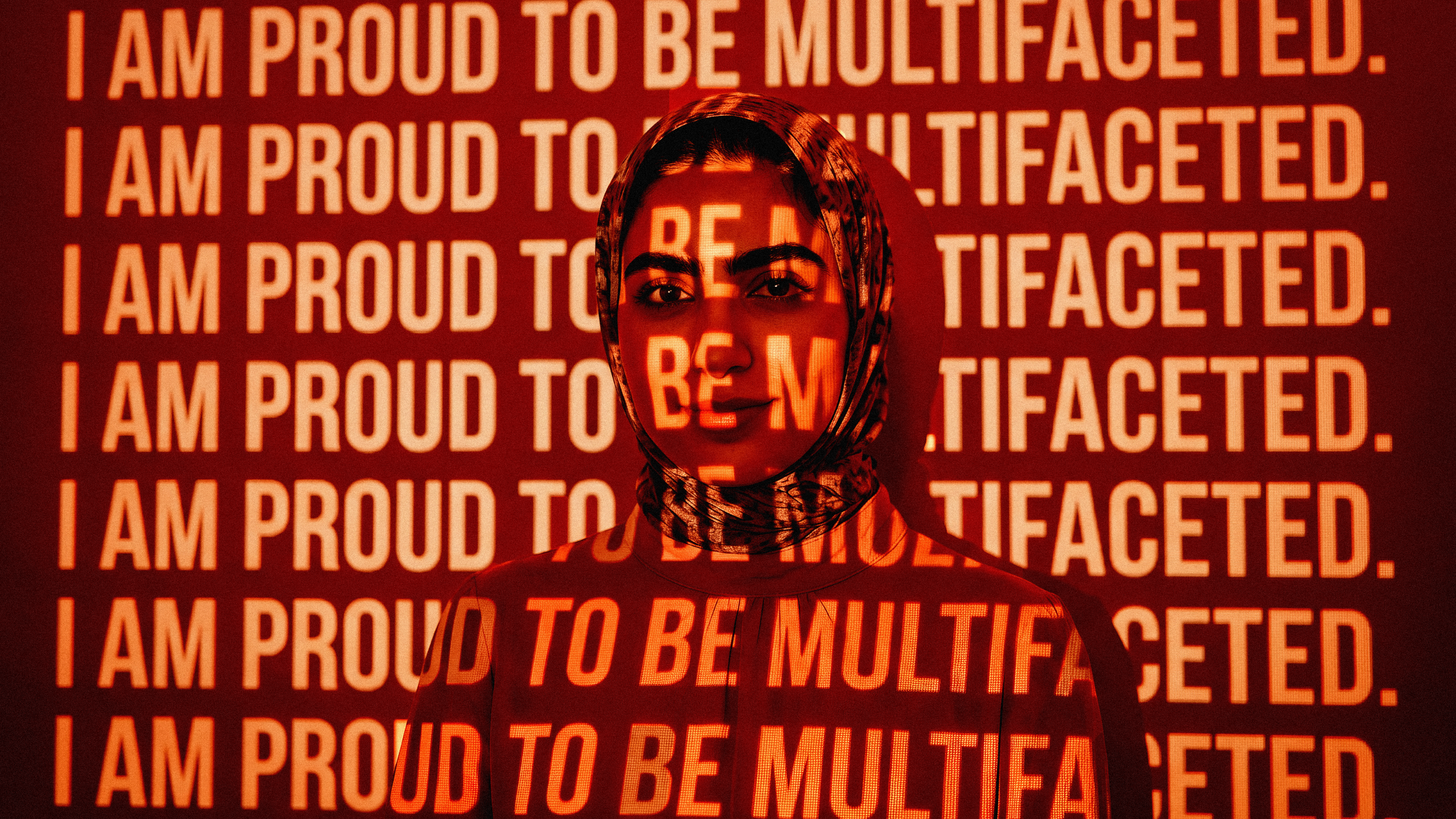
In reality, motherhood has taken on different hues in each woman’s journey. Being subject to metanarratives that have sought to cage them from both a global and local perspective, women who call the GCC home are now reasserting their own truth, and the plurality of truths that belong to the community of mums in the Arabian Peninsula. Interestingly, the dual narrative that focuses on female aspiration in this either-or binary has loosened its chokehold on the region while being re-enlivened in the West, as evidenced by emerging social media tropes that have had no such GCC-trending digital footprint. Namely, the three-hour mum girl boss, and its opposite, the homesteading tradwife, which have had no such raptured audience in the region. Instead, women of the Gulf are embracing plurality in unprecedented ways.
Saudi entrepreneur Lujain Abulfaraj’s journey of motherhood charts this evolution, where motherhood is joy, and her career is an equally enriching component of life. When Abulfaraj was pregnant with her first child 14 years ago, the two models she saw around her were the career woman or the stay-at-home mum. Abulfaraj carved a path for herself that evolved into the model of womanhood we see across much of the Gulf today, one that seamlessly incorporates parenting into professional life and career goals into motherhood.
“Finding my identity was difficult, but I noted down when I felt the happiest, and I realised I felt the happiest when I was playing with my kids and designing. I realised my identity was both,” she affirms.
Abulfaraj’s experience reflects a common truth about parenting – a 2023 Pew Research Center study into women’s attitudes towards parenting demonstrated that although motherhood is no longer as high an aspiration for women in America, it is a ‘meaningful’ outlet for many of them. Women evidently enjoy having children, though much-quoted birth rates suggest other demands on time and aspiration are outpacing maternal ambitions.
The Gulf itself continues to enjoy rapidly rising rates of female labour force participation – countries such as Kuwait and Bahrain meet or exceed global rates, and Saudi Arabia witnessed an almost 70 per cent increase in the past five years alone. That’s despite not all global measures including entrepreneurship, which is a common route into the professional world for many Gulf women. This is in addition to a slew of initiatives across the region designed to accommodate women in the workplace – including ratifying International Labour Organizsation conventions on gender equality and equal pay, mandated in-work childcare in fi rms in Saudi Arabia with more than 50 female employees, and subsidised childcare in Kuwait, Qatar and the UAE, to name a few.
While the global discourse around these shifts is framed as women in the region playing ‘catch-up’, the reality couldn’t be further from the truth. Rather, women in the region are asserting their public presence in ways that are devoid of the regular conversations concerning ‘mum guilt’ and the repeating conversations about being all things to all people. There is an effortless fit between the working woman in the Gulf and the mother.
This acceptance of mothering in the very structures which shape the economy means women are able to feel the jubilation of parenting more, and society is able to benefit from a public life that is increasingly shaped by women.
Abulfaraj describes how she was able to reconnect with her children through the language of play – something she experienced with her mum in her own formative years, and which went on to inform her business of creating Arabic-language learning toys; demonstrating this circular benefit – social, economic and familial – and the intergenerational legacy which is valued in societies where traditional kinship structures persist. Equally, Ascia’s content, which is followed by over two million people, switches effortlessly between warm and relatable Mother’s Day posts featuring her young sons, and her many ventures as a young professional woman, without the contrived feel that pulls it in either direction – a key ingredient to her ongoing popularity with young women across the world. Being able to parent while still honouring professional goals is an experience that appears to be common to the region.
Lubna Ahmed-Haque, a British mother and founder of Writers in Riyadh – her new home – has embraced the benefits of living in the region as a mother. “In Saudi, there’s a greater sense of understanding when it comes to balancing work and motherhood – less pressure to separate the two, and more openness around the realities of being a working mother,” she explains. “I’ve had to learn how to make space for both: my creative ambitions and the responsibility of being a mum.”
Yonis echoes this and recognises it in her own move to the region. “There’s a growing recognition here that mothers bring enormous value to the workforce and to society; this is really empowering,” she says.
This plurality of narratives constitutes a key feature in public life for women, and an important therapeutic tool. Shamlawi speaks of her experiences working with clients through narrative therapy – a method which recognises the stories we tell ourselves about our lives and how we package them in framing. The period of motherhood, she says, is a new chapter in our story that requires us to reauthor it and honour our narrative shift.
“I talk to mothers a lot about accepting that part of them before motherhood is different – what we need to do is create a new story for the identity we have now, rather than hold on to things we did or were,” Shamlawi asserts. “When women reach that phase of acceptance, they claim agency over their lives in a new way.”
Meanwhile, Abulfaraj speaks of the energising force parenting continues to have on her professional practice. “I can see how my two roles fit together, and I continue to hone and build on this – parenting taught me how to use my voice, how you can still be respectful and clear, fun and strict. Motherhood fed a lot into my style of leadership.”
Yonis, similarly, says, “I learned how to hold onto my professional identity and let motherhood expand it. The two are not in competition. If anything, becoming a mother made me a better academic and teacher; more empathetic, more attuned, more human.”
Other underpinning value systems in the region equally contribute a dimension to mothering that is largely misinterpreted or downplayed by the outside world, intent on falling back onto old stereotypes.
Dr Sohaira Siddiqui, executive director of Al-Mujadilah in Doha, Qatar, the first purpose-built contemporary women’s mosque in the world, mentions faith as another key underpinning moral framework that can enable women to thrive.
“Faith situates motherhood within a broader moral and spiritual horizon. It gives language to experiences that can otherwise feel isolating: exhaustion, self-doubt, the quiet reshaping of one’s identity,” Dr. Siddiqui says, adding the social implications of which can be incredibly nourishing to mothers.
She continues, “We often speak about ‘society’ in abstract terms, but faith brings this responsibility back to community as something lived and tangible. In Muslim traditions, the idea that ‘it takes a village’ is not rhetorical; it is embedded in practice. The postnatal period, for example, was historically understood as a time in which a woman is relieved of certain ritual obligations, not as a deficit, but as a recognition of her need for rest and recovery. Faith, in this sense, distributes responsibility and embeds an individual within a larger system of support, recognising the fundamental reality that care is collective, not individualised.”
This faith-inspired cultural DNA permeates throughout the region, impacting the broader social environment, which cultivates a kind of ease in mothering that many women in the region value.
In Saudi Arabia, Ahmed-Haque has found “family considerations are naturally integrated into daily life”.
Meanwhile, Yonis underlines the huge differences between the UK and the Gulf. “The biggest difference, for me, is the visibility and value placed on motherhood,” she explains. “In the UK, there’s a tendency to treat motherhood as something to move through quickly and to bounce back from. Here in the UAE, and across the wider region, motherhood carries a deep cultural reverence.”
Ascia describes a similar feeling in her home country of Kuwait. “Because I’m from a small country, it can feel like a village is raising your kids alongside you. My neighbours and friends don’t hesitate from kindly instilling and teaching my children the importance of a giving nature, and they do this either intentionally or by example. The safety, the sense of community, and the ease with which you can instil values of gracious care into them is due to the fact that our country sets the standard of that in its social and political system.”
That’s not to negate the challenges of motherhood, but for Shamlawi, the key to overcoming this is to broaden the conversation – to share our stories and the pressures we may feel. “The more we can personalise the story of motherhood to each person, the more we can use that story to forgive ourselves. We need to recognise that our character arc in our own story is different,” she explains.
Abulfaraj states this is also the advice she would share with young mums. “Don’t use anyone’s path as your bible; there is no one way to do things.” Ascia’s offering to young mothers echoes this sentiment: “Don’t be afraid to create your own pathway through parenting. We have so many traditions that are passed down from generation to generation, but it’s our responsibility as mothers to discern which are most valuable to our own family units.”
Perhaps this is why Scheherazade and her capacity for carrying a multitude of stories is so time-honoured, and so revisited by generations again and again. Perhaps as women we recognise the need to honour and make space for the plethora of stories ours are situated alongside, while honouring both. Maybe this part of the chronicle is the baton we also need to pass on.
Words by Mariya bint Rehan
“Written in her” IS PUBLISHED IN THE 18TH EDITION OF GRAZIA MIDDLE EAST. ORDER YOUR COPY HERE.


