



Newsfeed

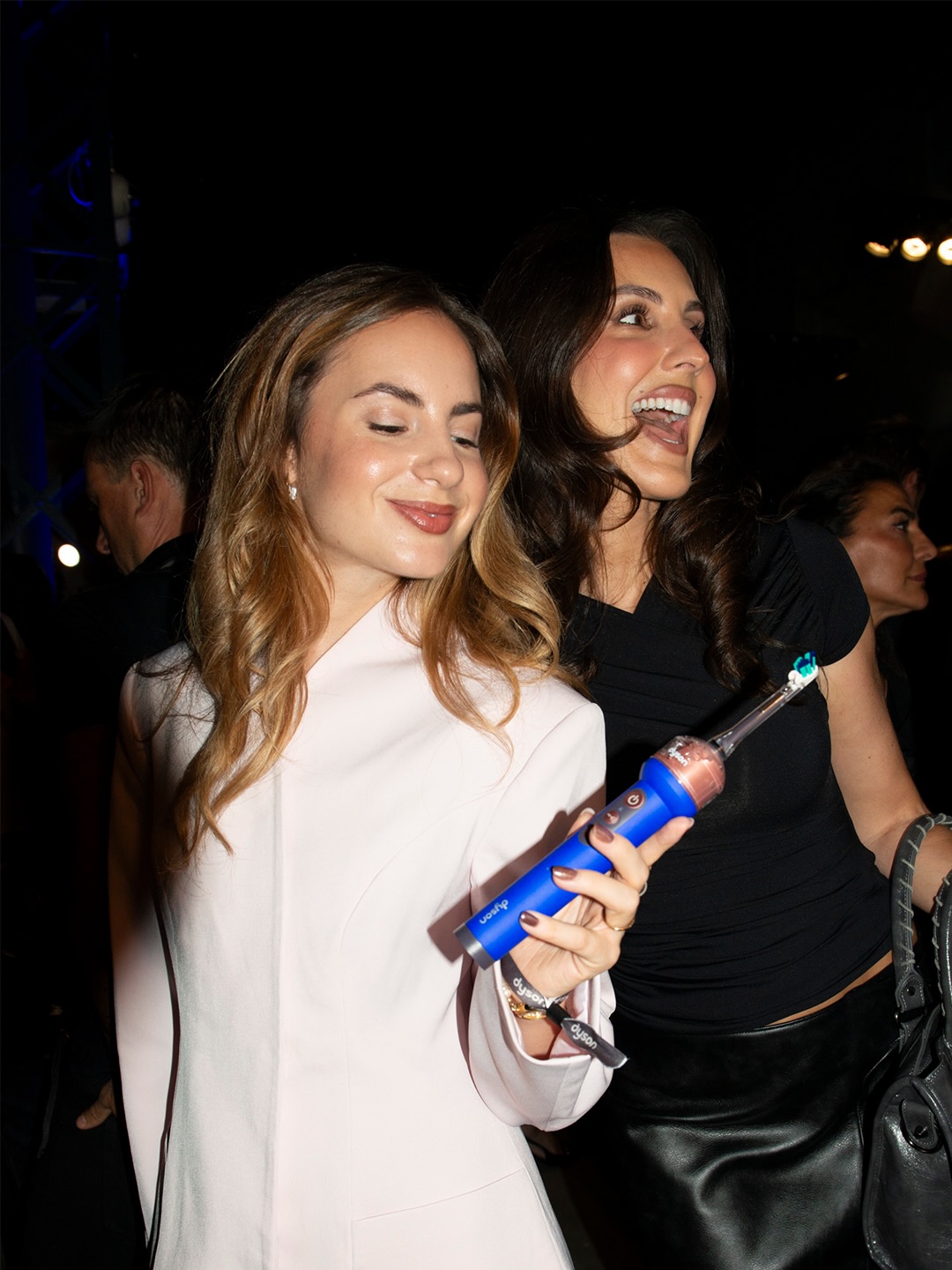
Just when you thought there was nothing left to reinvent in your bathroom, Dyson turns its attention to the toothbrush.
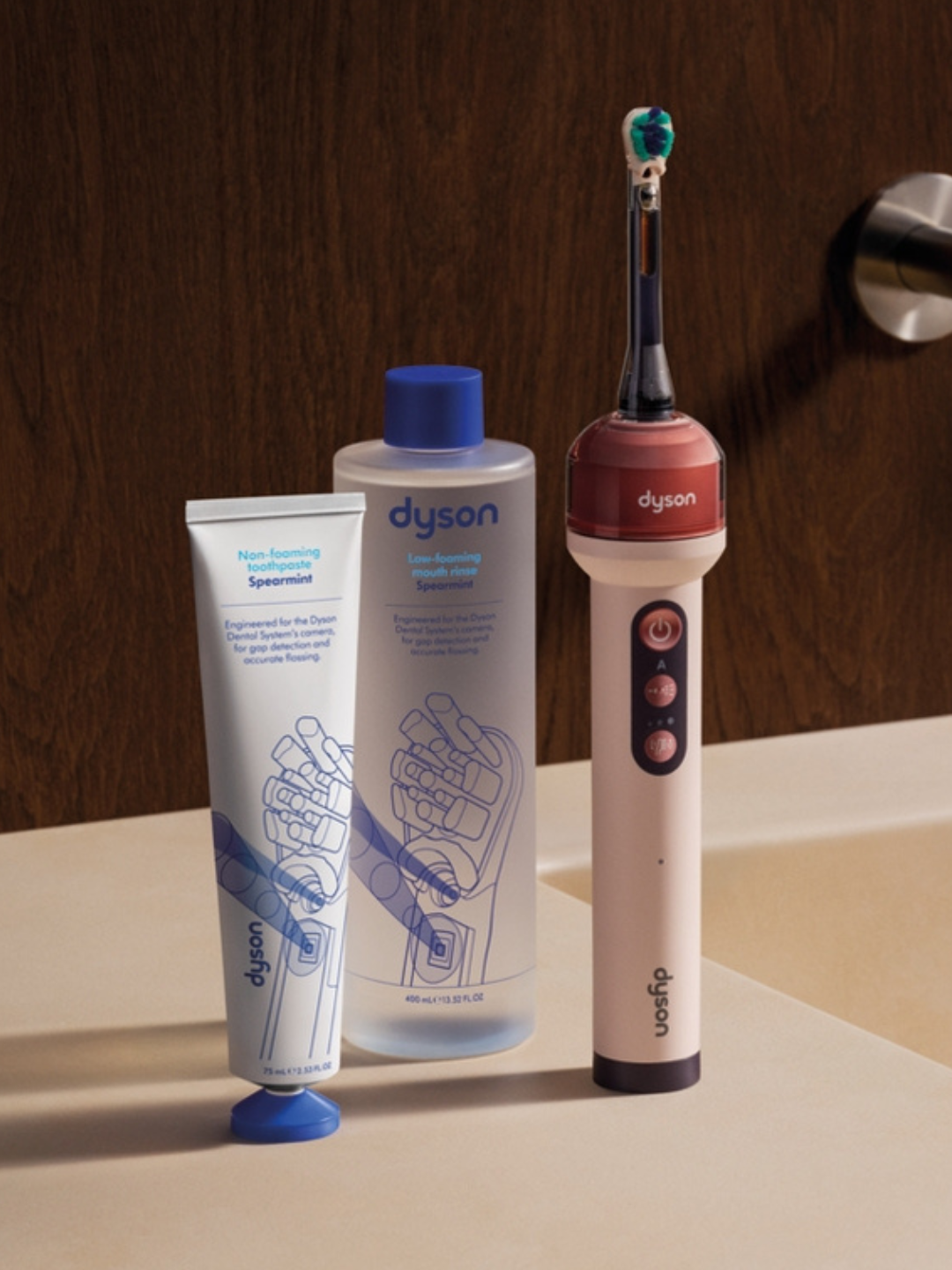
GRAZIA Middle East was in Paris for the global reveal of the new Dyson CameraJet, where Sir James Dyson unveiled what is, quite literally, a toothbrush with a camera inside it. And a precision jet. And AI. It can see the gaps between your teeth, work out where you’ve missed and fire a targeted burst of mouthrinse into them – all while you brush. And, of course, Dyson hasn’t stopped at the toothbrush. There’s a new line of oral care to go with it, including a non-foaming toothpaste designed to keep the camera’s view clear and a low-foaming mouthrinse made to work with the precision jet.
A lot for something that sits next to your sink? Absolutely. But this is Dyson, a company that has made something of a habit of looking at everyday objects we’ve used in much the same way for decades and asking whether they could work better.
This time, the problem is one most of us are guilty of: flossing.
Yes, There’s Actually A Camera In It
The CameraJet has been six years in the making, and the headline feature is a 100k-pixel macro camera built directly into the toothbrush. It scans 28 images every second and uses Dyson’s AI-powered Gap Optical Targeting technology to identify and predict the spaces between your teeth in real time. When it spots one, it can trigger a conical jet of mouthrinse within 100 milliseconds, effectively flossing the gap while you continue brushing.
Dyson engineer Richard Bacon summed the whole thing up to GRAZIA in one word: “Groundbreaking.”
“We started with the problem – and this problem has been out there for a long time,” he told us. “It’s evident that no one has been able to solve it because it’s very difficult to do, from a technological perspective.” The breakthrough, he explains, came as the technology caught up with the idea. “For us, it’s really the maturing of technologies – like AI, the vision system and the fluid system – all adding up so we’re able to integrate them into a convenient product to use that delivers all those benefits.”
For context, the CameraJet runs on 16 million lines of code, while its machine-learning system was trained on 470,000 dental images. Again: we are still talking about a toothbrush.
Even James Dyson Wasn’t Flossing Properly
The idea isn’t to add yet another complicated step to your bathroom routine. It’s to deal with the steps most of us are already skipping. According to Dyson, nine in 10 people don’t floss as regularly as recommended, while the average person spends just 45 seconds brushing their teeth – well short of the recommended two minutes. “We’re not looking to change people’s behaviour, because that hasn’t changed,” Bacon told GRAZIA. “So we think: how can we elevate people’s experience and oral care awareness?”
Part of the answer is making it more engaging. Through the MyDyson app, you can see inside your own mouth via a live camera feed, map where you’ve cleaned and get feedback on the areas you keep missing. “This makes it fun – you almost get that kind of gamification for feedback and insight,” says Bacon. “It’s a really elegant piece of physics and engineering to solve a genuine problem.”
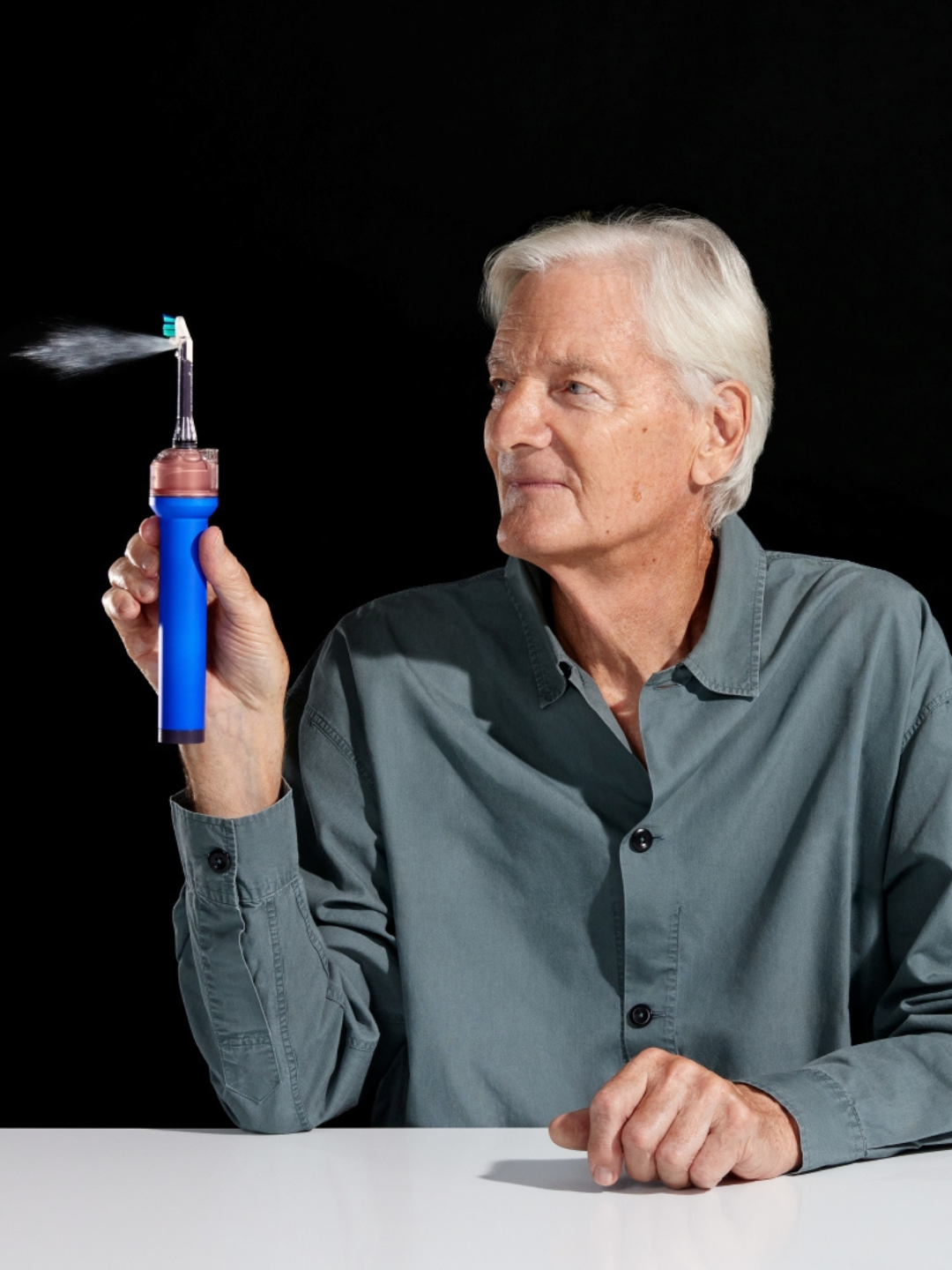
And if you’re feeling judged by your new toothbrush, Sir James Dyson has a confession of his own. “I didn’t floss until about five years ago, and I got into trouble with my hygienist all the time – quite rightly,” he told GRAZIA with a laugh. “Then when I did start flossing, I found that it took a long time and it’s quite a difficult thing to do and to know if you’re doing it correctly or not.”
He’s been using CameraJet for the past year. The result? “I’ve been to the hygienist twice and she had nothing to do – no plaque! Just a quick polish.”
the biggest challenge
Putting a camera inside a toothbrush sounds like it would be the engineering headache, but as Sir James Dyson told us. “The biggest challenge was finding the gap. About a year ago, we were only hitting about 65% of the gaps between the teeth, so getting it from 65 to 100% was the hardest task. It’s a difficult thing to do.”
Once the CameraJet finds one, its jet is designed differently from the narrow stream used by traditional water flossers. Dyson engineers found that those streams could pierce through plaque rather than sweep it away, so they developed a broader conical spray designed to cover more of the gap at a lower pressure.
There’s also a 12.5ml mouthrinse tank engineered to work at different angles – including when the brush is horizontal at the back of your mouth – and a dock that refills it in three seconds.
The brush itself hasn’t escaped the Dyson treatment either. Its contoured head uses two types of bristles, while variable sonic oscillation is designed to keep them moving rather than stalling against the teeth. Each head even has its own RFID tag so the brush knows how many times it has been used and when it needs replacing.
So, Do We Really Need A Smart Toothbrush?
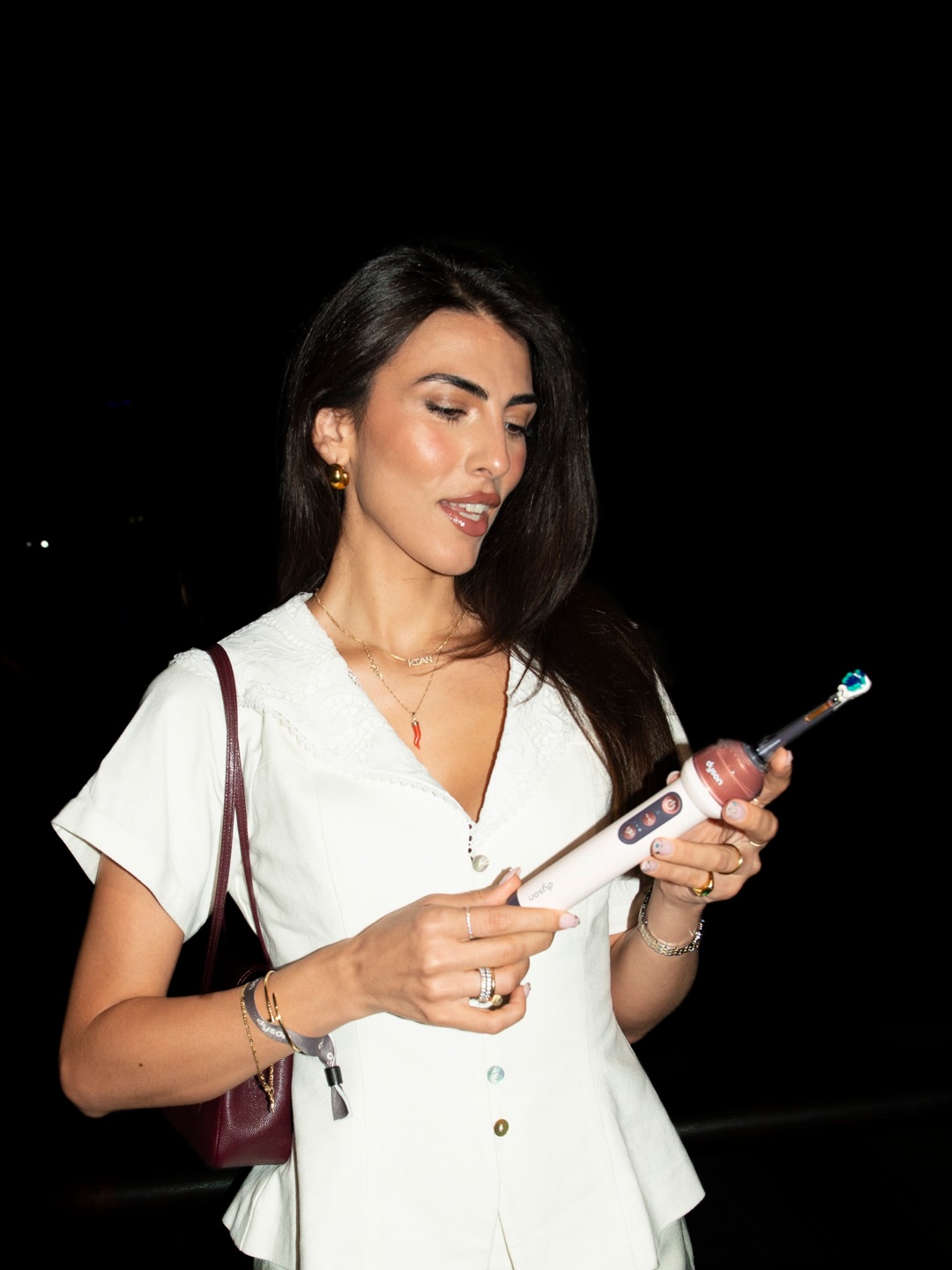
Need? Perhaps that’s a question for your dentist. But there is something very Dyson about taking one of the most ordinary objects in the house, pulling apart everything we assume about how it works and rebuilding it around a problem most of us haven’t managed to solve particularly well ourselves.
The camera initially sounds like the headline-grabbing bit – because, well, there is a camera in your toothbrush. But seeing your own brushing in real time, finding the gaps you’ve missed and having the device do something about them is where CameraJet starts to make sense.
And after seeing it up close in Paris, one thing is clear: the humble toothbrush just got considerably less humble.


