


Newsfeed
Ciao, Milano. As fashion month picks up speed, Milan runways have a way of upping the ante. Not necessarily with adornment or palette, as minimalism often reigns supreme in Italy’s fashion capital—but instead, in an introspective, intellectual take on fashion that has us questioning the very basics of the business.
The week kicked off with Prada, where Mrs Prada and Raf Simons staged an ode to the humble skirt, presenting a collection that consisted entirely of the sleek and precise silhouette in linen, knit, tulle, and more. Far from feeling one-note, the collection’s narrow purview meant that the pair could take the skirt to new heights, pushing material and technical boundaries with nylon plissé and leather-like cotton. “Engineered for freedom, the skirt is a Prada obsession,” stated the collection notes—and aren’t obsessions all the more fun when they’re indulged?
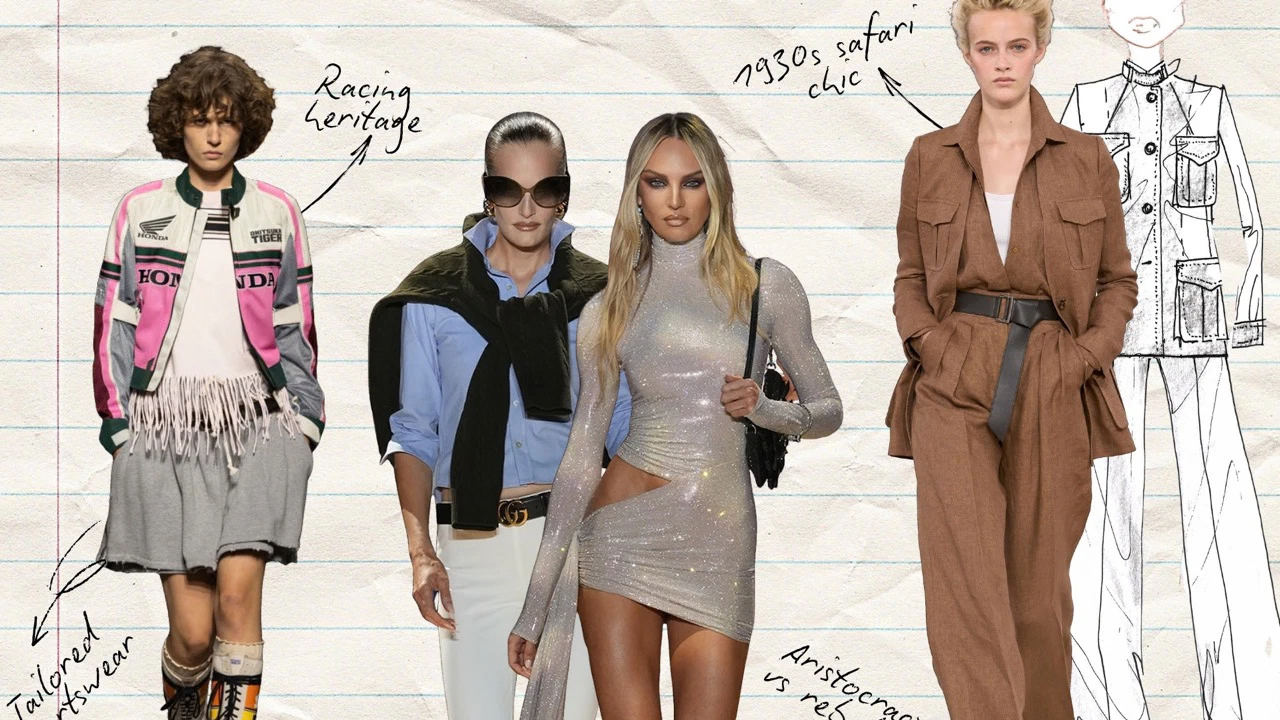
The following day saw a refined yet sensual Fendi collection by Maria Grazia Chiuri, envisioned as a celebration of the body. Chiuri blended effortless and sleek black silhouettes with seductively exposed lingerie and materials like luxe fur and delicate lace. The season’s inspirations were equally as thought-provoking, ranging from archival Fendi designs to E. E. Cummings poems. Streetwear favourite Onitsuka Tiger presented a typically eclectic collection later that same day, mixing officewear codes and motorcycle culture with bright pops of colour and those unmistakable sneakers.
Later in the week, we can expect collections from more of Italian fashion’s heavyweights. From Gucci and Max Mara to Armani and Ferragamo, the Spring/Summer 2027 edition of Milan Fashion Week promises not to disappoint. Ahead, we round up the standout looks of the season.
Bottega Veneta
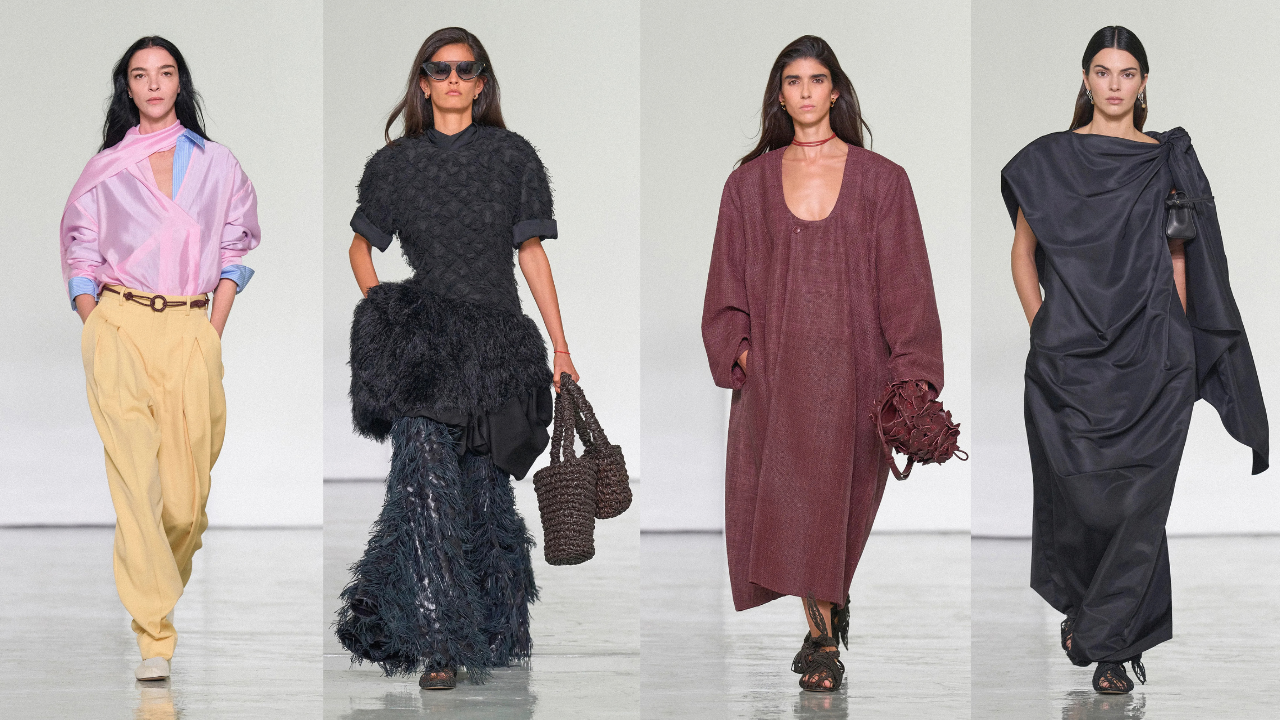
Lightness and ease were the main directives at Bottega Veneta this season. Creative director Louise Trotter showed the house’s iconic intrecciato in a palette of soft white, lavender, and pale yellow, with draped and cinched silhouettes bringing a sense of movement. Craftsmanship—in all its irregularities and imperfections—was also a centrepoint of the collection. Aside from woven leather, the season’s standout looks also featured cascading satin fringes, feathered embellishments, and delicate crochet.
Dolce & Gabbana
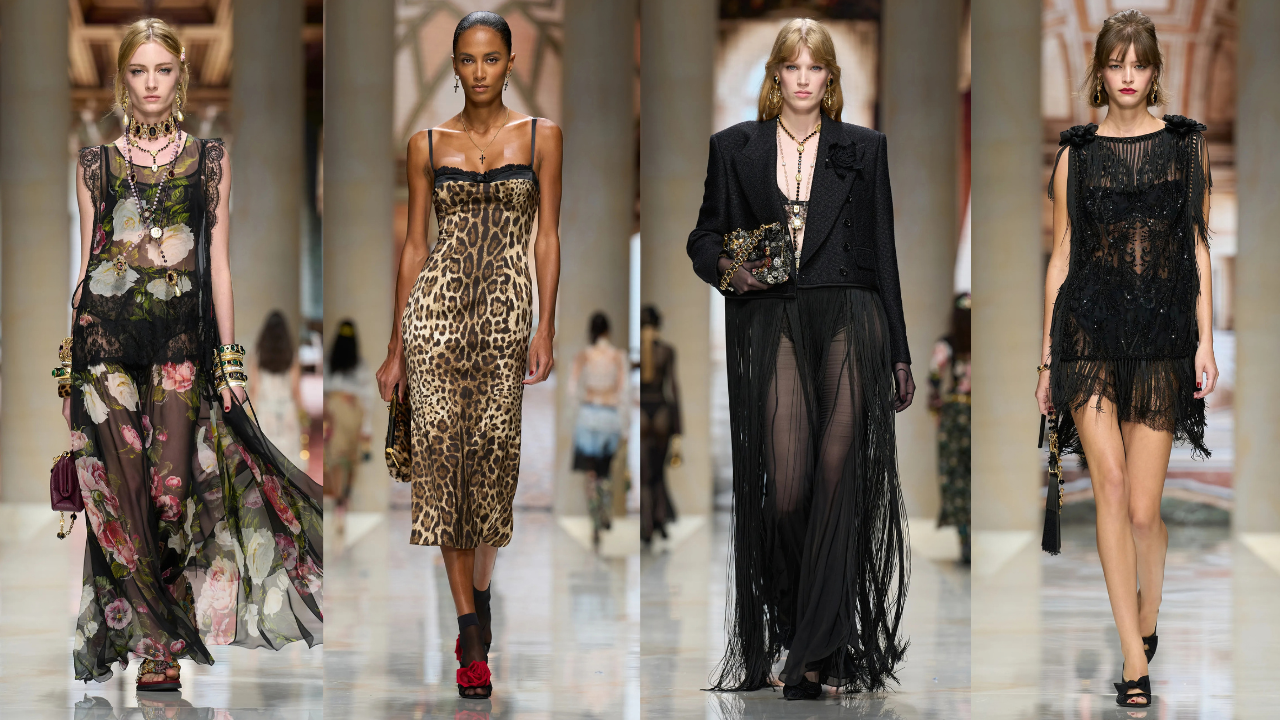
Stravaganza was at the heart of Dolce & Gabbana’s latest collection—an Italian word that means extravagant, eccentric, and slightly off-kilter all at once. The result was an eclectic collection chock full of textures and embellishments. Dolce & Gabbana’s classic black lace was a mainstay, but it was rarely shown solo: house codes were paired with sequins, metallic fabrics, pearls, jewels, and fierce animal prints. Sicilian heritage still stayed at the core of the season’s inspirations, but it wasn’t confined to the usual fare of body-hugging black dresses and intricate lace. Instead, the collection drew inspiration from architecture, history, and literature: palazzo brocade and upholstery turned into jackets and dresses, while leopard print nodded to ancient Roman mosaics and Lampedusa’s novel Il Gattopardo.
Ferragamo
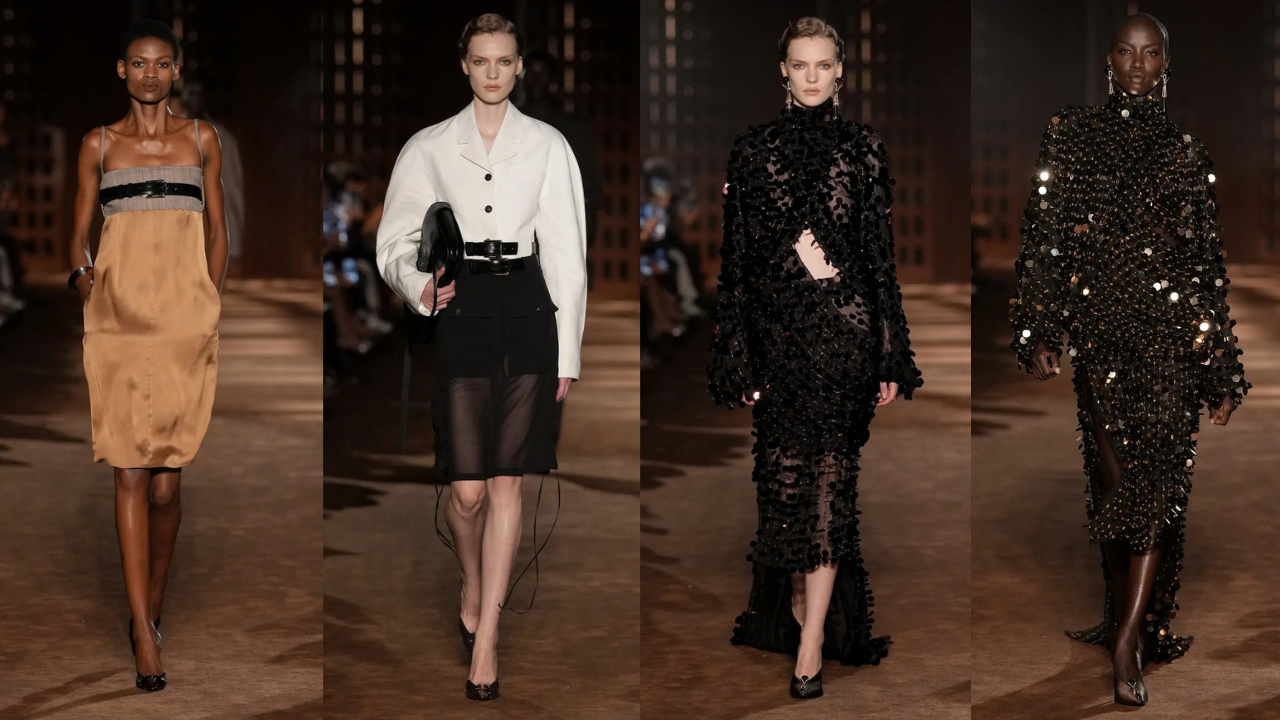
Ferragamo looked to the working women of the 1940s for their Spring/Summer 2027 collection. “It was a period where clothing and its structure created a certain posture and propriety: when the placement of a pocket would dictate how you would both stand and behave,” explained creative director Maximilian Davis. “I wanted to take elements of that silhouette and modernise it for today.”
It was a subversive take on the 1940s uniform, rarely interested in reproducing it in its entirety. Davis nodded to the era’s utilitarian codes with military-style pockets, precise tailoring, and statement belts—then paired them with exaggerated shoulder pads and daringly translucent gauze. Elsewhere, texture and patterns added touches of intrigue, be it in glossy rubber trench coats, python-patterned ties, or faded, sun-warmed leather. “I was inspired by the women of the era who were taking ownership of their own narrative,” explained Davis. “They were subjects of imagery but also travelled the world to create their own.”
Tod’s
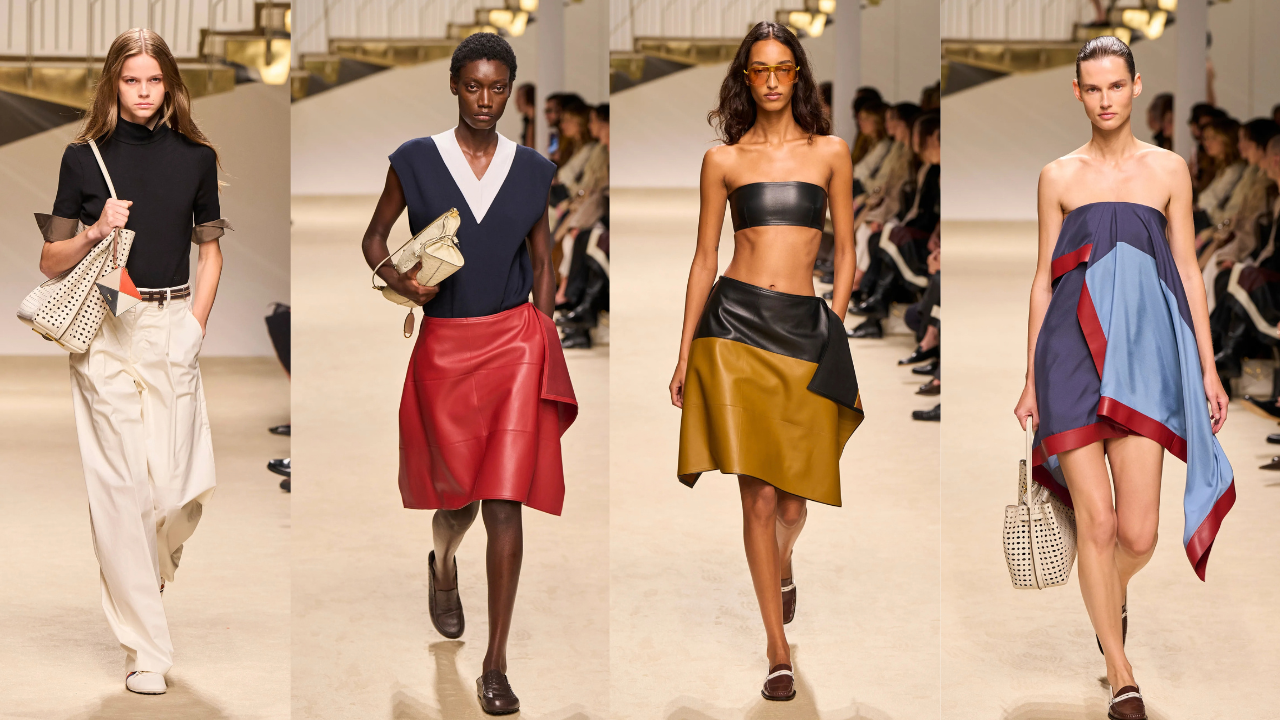
At Tod’s, creative director Matteo Tamburini presented a sporty, slightly masculine take on the house’s classic style codes, where silky leather coexisted with crisp shirts and trench coats. The collection’s masculine elements came through silhouette and styling: boxy culottes paired with sensible sweaters and button-downs, all worn oversized with an air of insouciance, as if uninterested in pandering to the male gaze. Even the season’s more fluid, feminine looks—drapey leather skirts, tiny bandeau tops, handkerchief mini-dresses—channelled more androgynous elegance than overt sensuality. All throughout, classic Tod’s motifs abounded, most evident in perforated skirts and sweaters nodding to the pebbled soles of the Gommino loafer.
It was a classically Tod’s collection, proving that there is power in sticking to the brief. The house’s focus on “artisanal intelligence” is a direct counterpoint to the rise of automation and AI, but it rarely feels provocative. Instead, it is rooted in a quiet adherence to the principles that built the house: Italian craftsmanship, material excellence, and an instinctive commitment to beauty and style.
Gucci
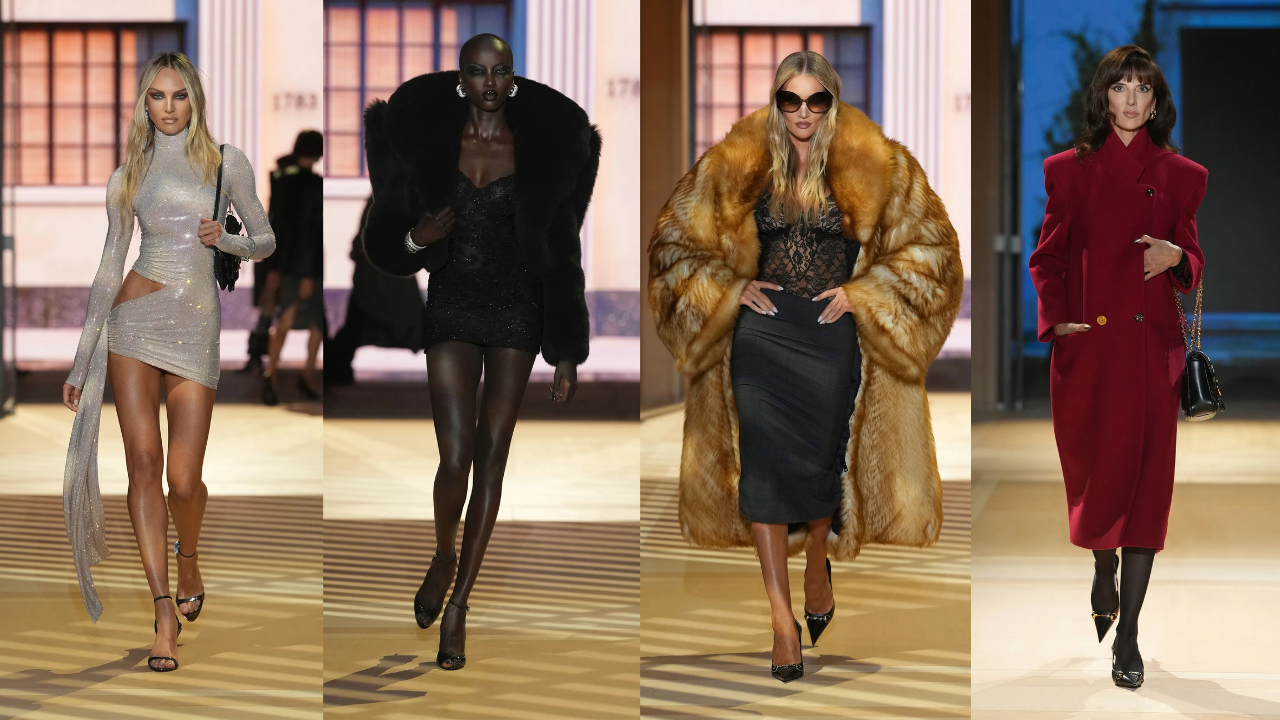
Come one, come all—the doors to Demna’s Gucci store of the future are officially open, and no one is barred. The house’s Spring/Summer 2027 collection celebrated the many faces of Gucci, from its aristocratic origins to the messier, less subtle ways the brand is worn on the streets. The show was staged in a recreation of a Gucci retail space, and in a statement published before it began, Demna outlined his sweeping vision for the season. “Gucci moves easily between aristocracy and pop culture, Florence and Hollywood, good taste and bad taste (whatever that means), heritage and mass desire, belonging and rebellion, and the interplay between the two,” he wrote.
The womenswear offering for the season began with aristocracy—the icy, aloof type with multiple unpronounceable last names. The dress codes swung between tailored hacking jackets, knee-length riding boots, and sweaters tied over shoulders, with the classic Gucci horsebit motif peppered throughout. When the bourgeoisie had taken their lap, the show moved to the eccentrics: the eclectic types who wouldn’t think twice about combining Scottish tweed and tartan with stacked jewellery and oversized, puffy outerwear. As the show unfolded, even more Gucci characters joined the ensemble, skirting between the house’s equestrian origins, Tom Ford-era sensuality, and modern provocation. That each look felt lifted from its own distinct world was precisely the point—it carried on the conversation started by Demna’s debut collection for Gucci, La Famiglia, where the house’s various archetypes were presented in a series of family portraits. As he expounded in his statement, the creative director continues to present the modern Gucci as an amalgamation of its past, present, and future—“a place where those who may appear to have nothing in common can meet, connect and inspire one another.”
Max Mara
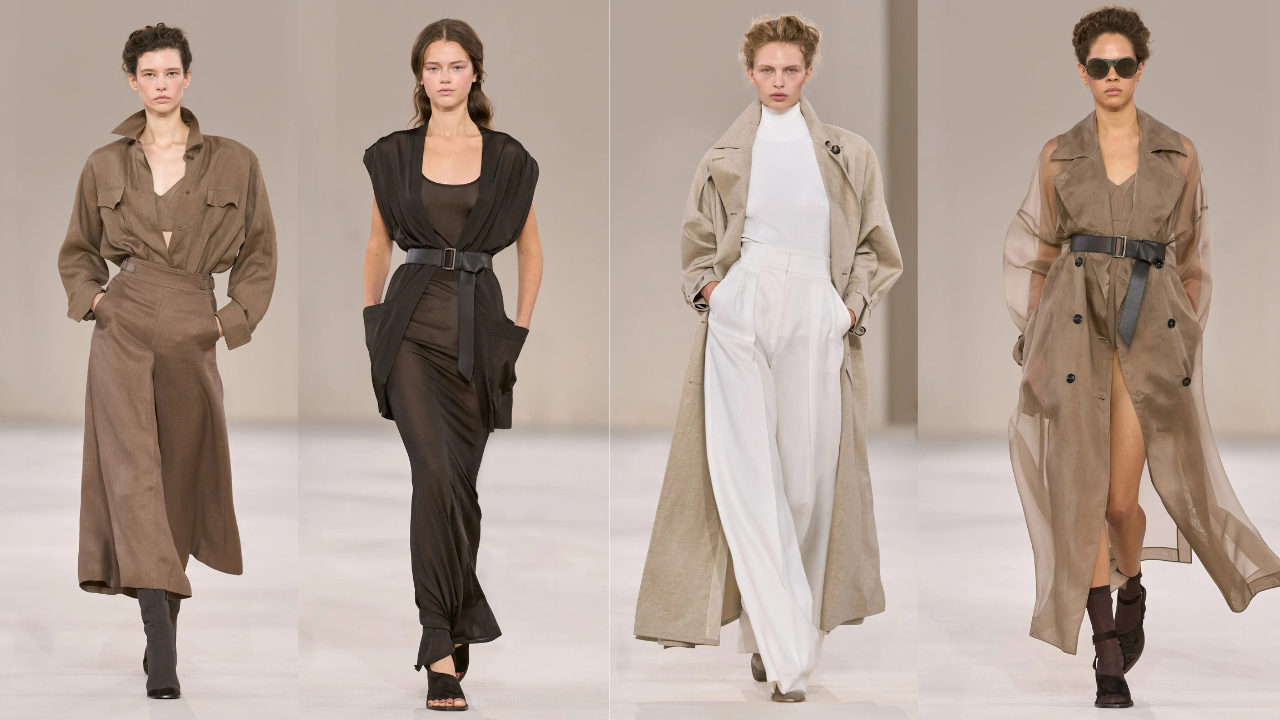
Behind every Max Mara collection is a powerful woman—or, as in the case of Spring/Summer 2027, a whole intrepid group of them. The label’s latest collection paid tribute to the trailblazing women explorers of the 1930s, from Freya Stark to Amelia Earhart. The safari jacket was undoubtedly a staple piece, setting the evening’s utilitarian chic tone—but as it turns out, practicality doesn’t have to forgo style. Despite its focus on adventuring gear, the collection felt surprisingly feminine thanks to cinched belts, sleek silhouettes, and swishy knits. Many of the looks borrowed from flight-ready style codes, weaving cargo pockets, D-rings, and leather straps into Max Mara’s usual minimalism. Creative director Ian Griffiths also drew a neat parallel between the exploits of female adventurers and the modern woman of today, resulting in a subtle take on corporate power dressing. The result? A collection that felt at once quaint and modern, blending practical style codes with a 21st-century edge. Much like her sturdy cargo jacket, this season’s Max Mara woman is ready for anything.
Fendi
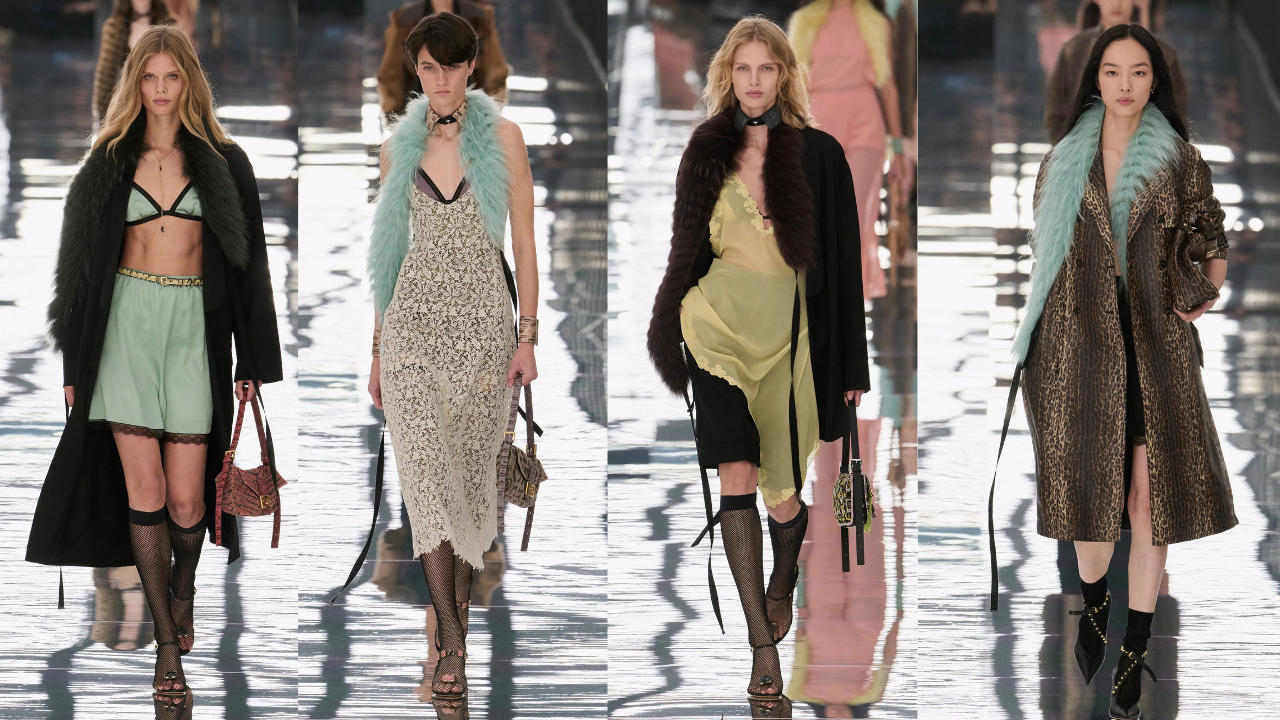
Over at Fendi, Maria Grazia Chiuri took a closer look at the lingerie trend that seems to be a runway mainstay. Underwear as outerwear isn’t new in fashion, and many of its most notable instances came from Chiuri herself during her Dior stint. Still, her take on it at Fendi this season felt unique for its focus on liberation: aimed “to express a body that embraces the pleasure of unveiling itself, and of irony.” Among Chiuri’s muses was Raffaella Carrà, the Italian pop diva whose bold and often revealing stage costumes are credited with breaking the modest conventions of women’s dressing at the time.
Fendi’s take on sensuality was altogether more subtle. Exposed bras, silk boy shorts, and slip dresses abounded, but they were shown with an artful, effortless twist, where necklines slipped off of shoulders and tailored shirts hung open. Even the less revealing silhouettes came with a sleek, pared-down feel that kept them firmly in the camp of intimates. All throughout, Fendi’s innovative material language was allowed to shine, from luxe fur coats and delicate lace to intricate embroidery. All in all, the focus on seduction read not as bold provocation, but as a quiet reclamation of power.
Prada
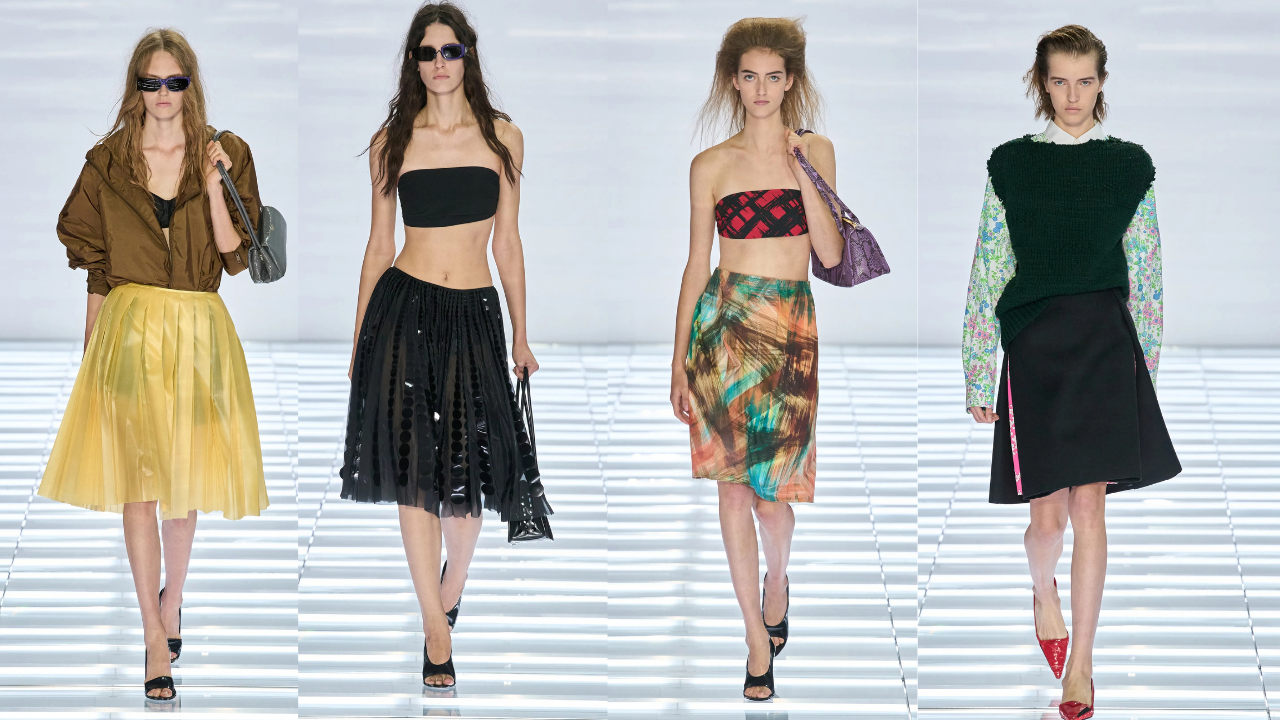
To kick off Milan Fashion Week, Miuccia Prada and Raf Simons proved that there is wisdom in skirting around the issue—especially when the issue at hand is the skirt itself. The pair presented a collection with 64 variations of a classic A-line skirt, where each look somehow felt fresher than the last. Some consisted of bare-bones grey linen paired with tiny bra tops; others leaned fantastical with jewelled embellishments and intricate intarsia. One more inventive look saw a pseudo-skirt of sheer plasticky fabric wrapped around a shirtdress; another allowed the tiniest sliver of a skirt to peek out under an oversized jacket. “There is inherent beauty found in the survey of the familiar,” stated the collection notes, “and in asking how many forms a known thing might assume, how many different possibilities may exist within.” Where other labels might have the little black dress or the classic white T-shirt, Prada has the skirt—and there’s nothing they can’t do with it.


