

Newsfeed

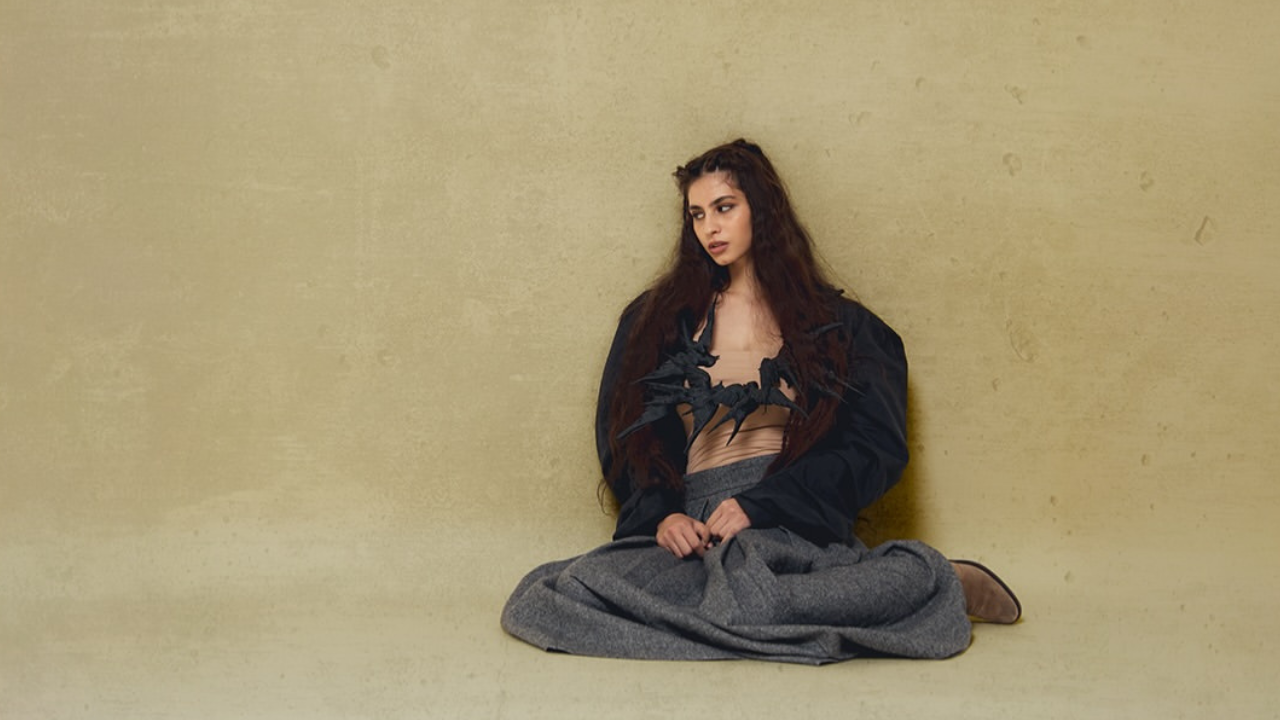
Born in Italy to a Palestinian family, TÄRA spent years feeling like she didn’t fully belong to either side of her identity. Now, she’s turning that in-between space into her music.
For TÄRA, being between cultures has never been a simple question of choosing one over the other. Born in Italy and raised in a Palestinian household, she grew up moving between languages, traditions, and two very different ideas of what she was supposed to be.
“When I was a kid, I just wanted to be Italian,” she tells GRAZIA. “I was scared to show who I really was, to show the beauty of my culture.”
At school, she was often the only person who felt different. Even her surname made her stand out when teachers called the register. At home, things were different. She describes growing up in an artistic family, surrounded by people who were always making and creating things, and says her family gave her a love for culture without ever forcing it on her.
It was during 2020, while spending more time alone due to the pandemic, that something shifted. She began rediscovering her music and her Palestinian identity, questioning whether the problem had ever really been her. Instead, she started to see the lack of representation around her as part of the problem.
“I started thinking that maybe my culture was not too bad, and maybe the problem was not me,” she says. “There was no representation, and that was a big problem.”
That realisation eventually became part of her music.
Her big hit Mezzaluna which was released earlier this year, is about the challenge she faced growing up – the difficulty of being in between two cultures and how we’re all rooted somewhere.
Interestingly, music wasn’t the only thing TÄRA was pursuing. She studied at a scientific high school before completing both a bachelor’s and master’s degree in business. At university, she wrote her first thesis on how independent artists could break through the music industry using marketing, neuromarketing and social media. Looking back, she says she was almost writing the blueprint for her own career.
“I literally manifested what I was about to do,” she says.
There was no big team or financial backing behind her either. TÄRA worked during summers with children to create her own budget for music, something she feels is often overlooked when people talk about becoming an independent artist. “Music is an investment,” she says, including financially.
Her first release, In My Head, arrived in 2021. It was bilingual, although she wasn’t ready to include Arabic yet. At the time, she was still too conscious of being judged. The song nevertheless gave her something she needed: a reason to keep creating.
Since then, her music has become increasingly tied to the different parts of her identity. She calls the sound at its core “Arab&B”, a name she created from Arabic music and R&B. She admits she doesn’t normally believe in labels, partly because of how much pressure labels and expectations placed on her growing up, but felt that her sound needed its own space.
The sound comes from a mix of influences. She grew up listening to Fairuz and Umm Kulthum, although she initially resisted the music because it reminded her of the part of herself she was trying to hide. Later, she came to appreciate the emotion in their voices. At the same time, artists like Ariana Grande and Michael Jackson made her dream bigger, while contemporary Arab artists such as Faraj Suleiman and Saint Levant continue to influence her.
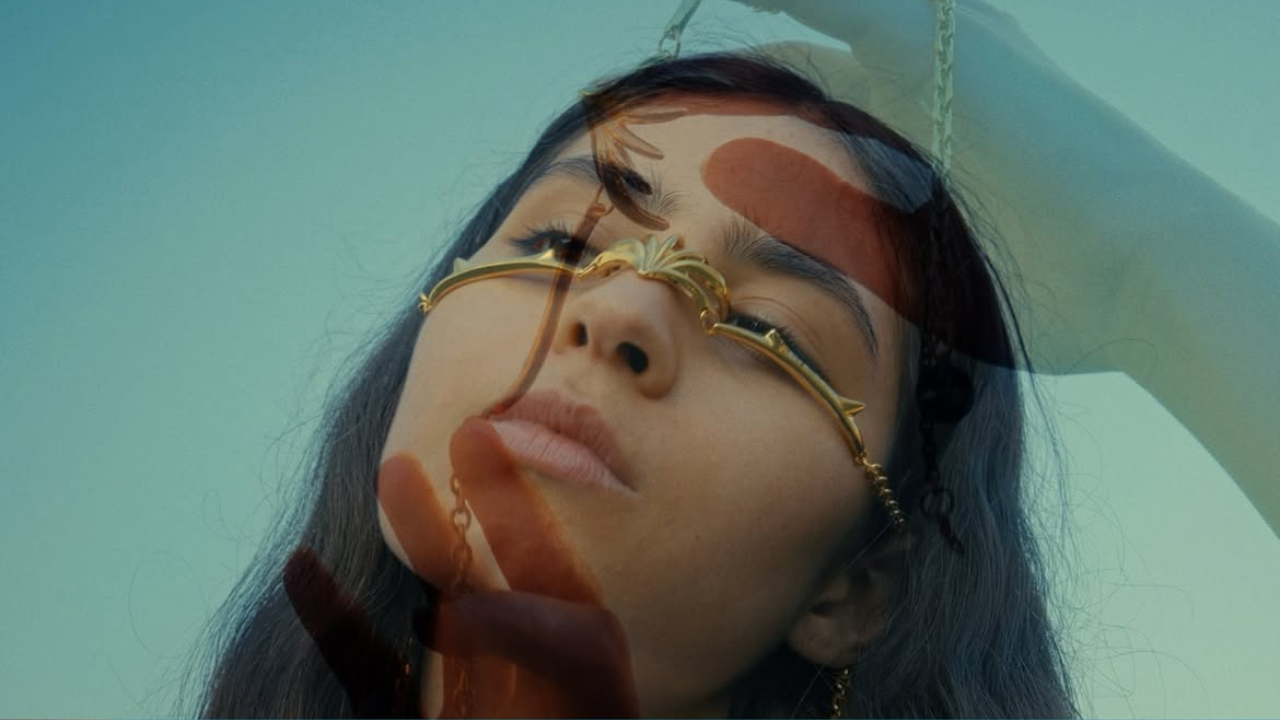
That mix is also reflected in the way she approaches her visuals. For TÄRA, the image often comes before the song. She says she needs to see something in her imagination before she can fully create it, which is why she prefers to direct her own work rather than sit in a room with 20 people trying to write songs as quickly as possible.
“I like to imagine 360, and I like to create and direct what I do,” she says. “I’m really a perfectionist, but I’m trying to be a little bit more soft.”
That approach can be seen across songs including Diaspora, Mezzaluna and her Arabic cover of Bella Ciao: Ya Helwe Ciao.
With Ya Helwe Ciao, she wanted to draw a connection between Palestinian resistance and Italy’s own history of resistance.
Diaspora meanwhile explores displacement through both Palestinian and Italian experiences, inspired in part by the movement of people from southern Italy to the country’s bigger northern cities due to economic necessities.
For TÄRA, diaspora is personal even though she was born in Italy. She describes herself as a “daughter of the diaspora”, carrying the experience of displacement through her family.
“I think it’s just in the genes,” she tells GRAZIA. “It gets in the genes, generation after generation.”
There is also a lighter side to her work. In one of her songs, she plays with the beauty standards she grew up around; the same features she once felt insecure about and now sees being celebrated.
“I wanted to just be a little silly and feel beautiful in a silly way for once,” she says.
It is perhaps this freedom that best defines where TÄRA is now. She no longer seems interested in choosing between being Italian and Palestinian, Western and Middle Eastern, or fitting neatly into one musical category.
That instinct — to look for connections rather than divisions — runs through much of her work. She sees similarities between Palestinian and Italian culture in everything from hospitality to food and life by the sea. “If people want to see the differences, they will see the differences,” she says. “But if you want to actually acknowledge how similar we are, and how much we could share, there’s a world open for you.”
Today, TÄRA is working towards a larger project, hoping to make an album rather than an EP, while continuing to build the visual world around her music. She also has several collaborations planned for 2026 and 2027.
For someone who once wanted to disappear into a classroom and simply be seen as Italian, she has arrived at a very different place. She is no longer trying to fit perfectly into one side or the other.
“My life is a mix,” she says.
And rather than trying to simplify that mix, she is building her music around it.


