

Newsfeed
There are certain videos from Gaza that have stayed with me. One in particular is never too far from my mind. Two friends are sitting in what is probably one of the last functioning ambulances in Gaza. I’m not sure if they were medics before the genocide started, but they are now. They’re grown, though I’m not sure of their age. The deep-set lines on their faces could have been carved by time or by war – in any case, two men, anywhere from 25 to 40, are holding juice boxes. One of them turns to the other and says: “Maybe this will be the last thing we ever drink on Earth.” They both burst out laughing. The other adds: “Maybe our next drink will be together in Jannah.” The first one finishes the thought, and they laugh again. The video runs for a few more seconds, and in those seconds, we are given something – a distantly familiar joy. Something that refuses, even now, even here, to be extinguished.
I keep returning to that video because it holds something I have been trying to name for a long time. It is not resilience, exactly – that word has been stretched so thin it no longer holds weight. It is something older and more stubborn than resilience. It is the insistence on being fully human, fully alive, even at the threshold. It is planting a seed in the world’s final hour. It’s choosing to fall in love and start a family in the middle of a genocide. It’s the laughter that says: you have not taken this from us. It is, perhaps, the most Arab thing I have ever seen.
This is what it means to be of the land.
For Palestinian creative Dima Ahmed, that belonging has always been rooted in something larger than a physical location. Born and raised in the diaspora, she has never experienced herself as separate from Palestine – if anything, the distance has only sharpened what she knows to be true. “To be of the land, to me, has never felt like a question of geography,” she tells GRAZIA. “Even though I was born and raised in the diaspora, I never experienced myself as separate from it. If anything, I feel the depth of the separation most intensely when I return.”
There is something in that return that bypasses language entirely. “There is an almost indescribable alignment that happens when I return home – my body recognises it instantly,” she asserts. “My skin changes, my digestion settles, my nervous system softens into an inherent familiarity.” What she describes is not sentiment. It is something cellular, something carried in the blood across generations of displacement. “The land remembers us,” she says, “and in many ways, our bodies remember it too.”
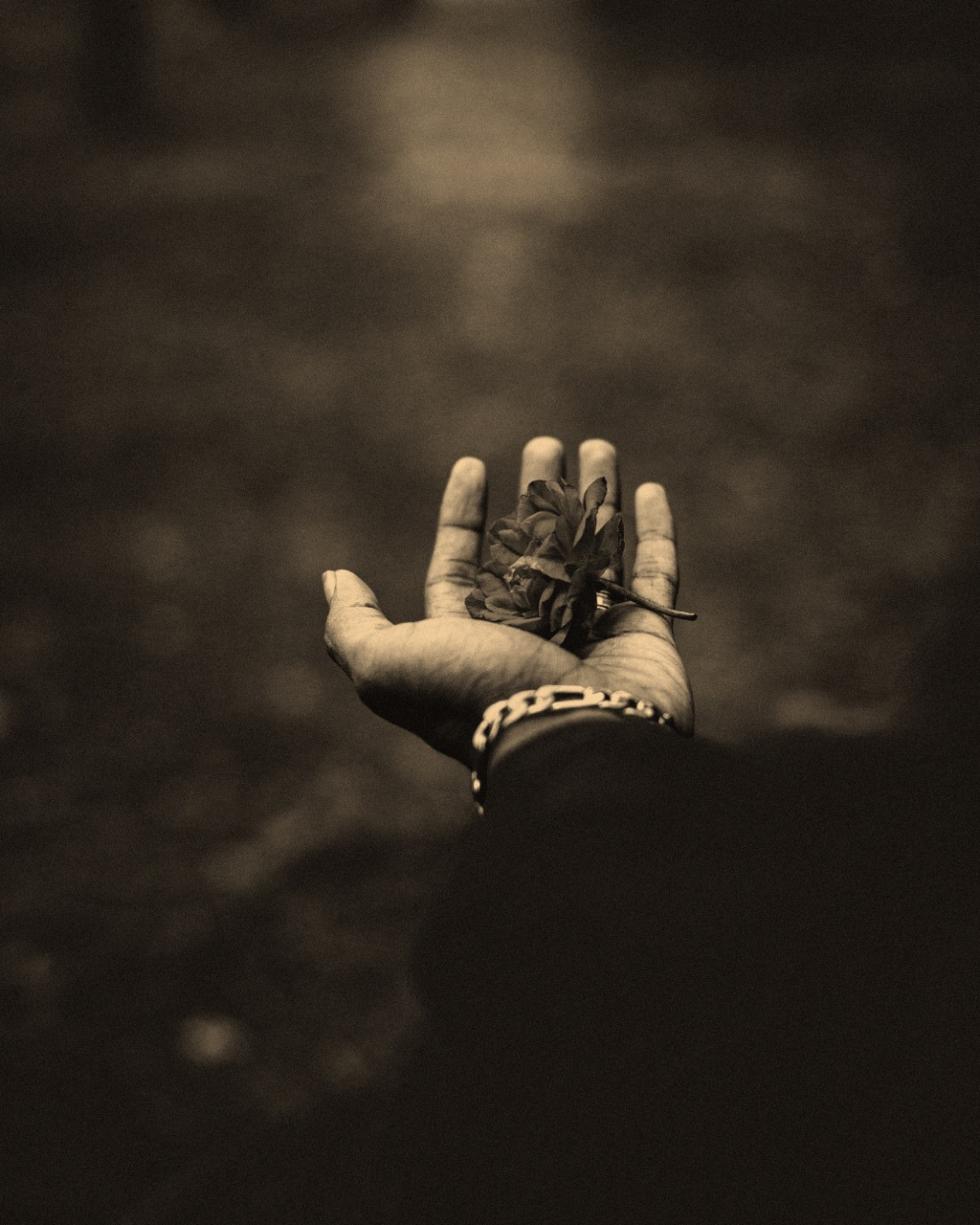
It is a truth that the diaspora understands in our bones, even when we struggle to articulate it. We are people who inherit places. We are given them before we are given language, pressed into us through story and scent and the specific way the light looks in photographs we were not alive to take. We carry geographies we have never stood in, and somehow, impossibly, they carry us back.
Sara Hussein grew up in the diaspora with Lebanon living inside her the way it lives inside so many of us: partially, tenderly, incompletely. Assembled from dinner table stories and faded photographs, from recipes passed through the hands of women who no longer sit at the table. “I know Lebanon partly through experience, but mostly through inheritance,” she says. “Over time, those stories have made a home inside me.”
That home is not a simple one. Loving Lebanon, she explains, is loving something that only ever comes to you wounded. You love the beauty and you receive the grief as part of the same inheritance. “Despite how little time I’ve actually spent there, it’s shaped and defined so much of who I am – connecting me to the joy and grief attached to it,” she tells GRAZIA. And the grief, in recent years, has been relentless. The economic collapse. The political failures. The occupation. The airstrikes. Each one another wound to a country already scarred beyond what seems bearable.
What makes it harder still is the particular guilt of watching from outside. “There is a helplessness that comes with watching from afar,” she admits. “We’re tied to Lebanon emotionally but separated by geography and experience. We lose sleep, even though we’re not there to hear the endless hum of drones, or the shock and panic of continuous airstrikes, or the screams of neighbours.” The diaspora’s relationship to its homelands is always this: close enough to love, far enough to feel the distance as a kind of shame. Our experiences are incomplete. We can leave after visiting. We have not endured what our families who stayed endure every day.
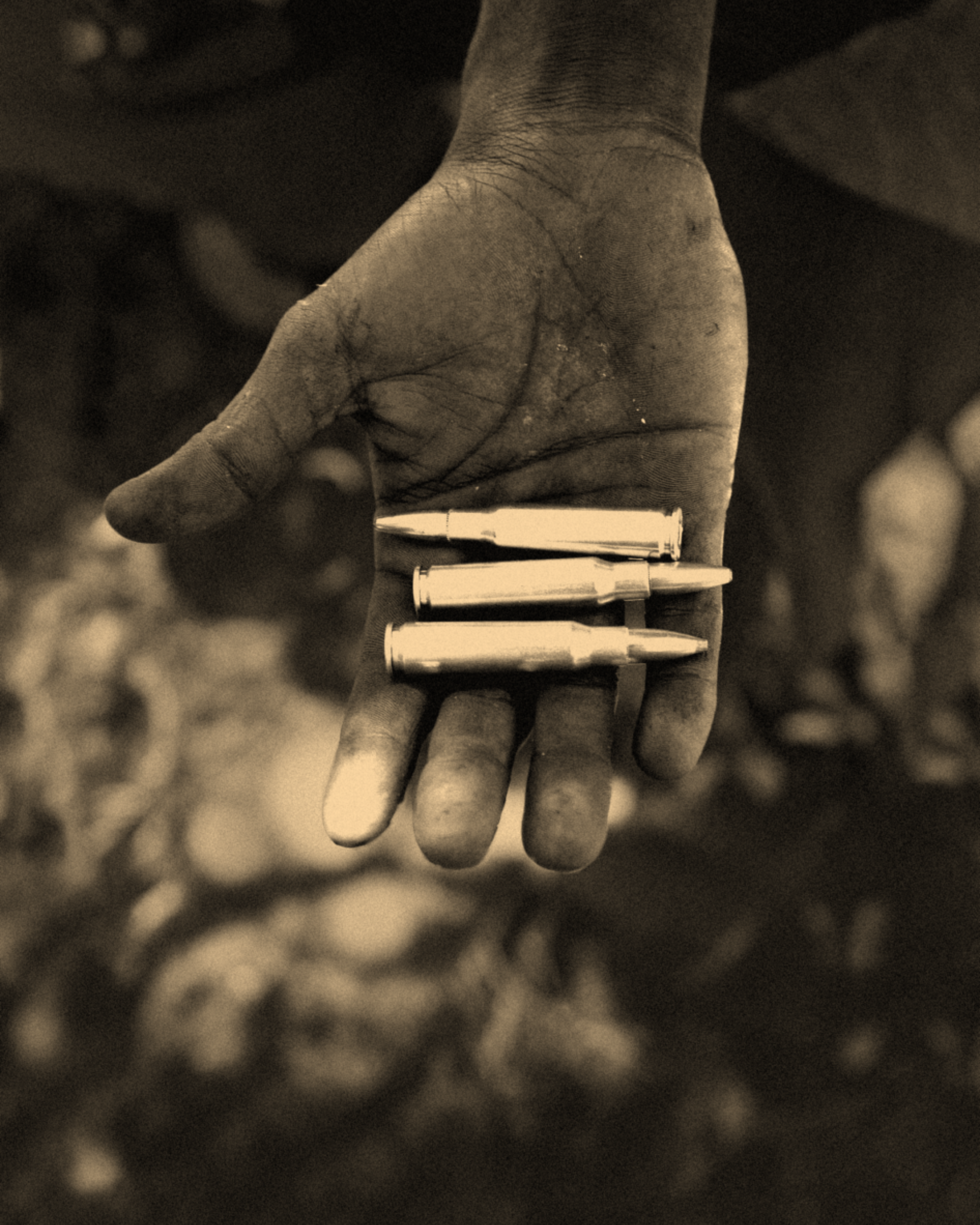
And yet, even in the breaking, something holds. “Even when things are falling apart, which they usually are, people still gather around tables overflowing with food,” Sara highlights. “They still tease each other, open their hands and homes to strangers, dance at weddings and get-togethers, and find reasons to celebrate life.” This, Sara says, is part of what makes being Lebanese so complex and so beautiful at the same time: “Even when the country is breaking your heart, you can’t stop loving it.”
To be Arab today, Dima says, is to carry both the beauty and the responsibility of it – to be accountable not only to history, but to the future being shaped in real time: “Th e last few years have forced our generation to confront difficult questions about who we are in the face of ongoing colonisation, displacement, and the continued extraction of what remains of our lands, resources, and identities.”
This is the duality Dima returns to most: the capacity to hold grief and beauty not in sequence, but simultaneously. To feel both without letting one consume the other. “For as long as I have been alive, and for the generations before me, grief has never been distant from the Arab experience,” Dima affirms. “Colonisation has made sure of that. It exists both ancestrally and in the present tense, woven into our bodies, our histories, and our daily lives.”
She turns, as she often does, to the words of poet Rafeef Ziadah in the piece entitled, ‘We Teach Life’. Despite everything taken, Arab people continue to create – beauty, tenderness, humour, hospitality, art, music, care. “Even for Arabs outside the Levant, who may have experienced war less directly until now, our histories remain deeply intertwined,” Dima declares. “We carry a shared ancestral memory and, with it, a responsibility toward one another’s grief.”
What strikes her most is the asymmetry at the heart of colonial violence. “Colonisation and colonial violence is fundamentally extractive – it takes, fragments, erases – and yet our communities continue to insist on life with remarkable softness and generosity,” Dima says. The language, the rituals, the way we host and gather and feed and love one another. “These are not small things. They are evidence of a people deeply committed to living fully, despite everything.”
This, she says, is the duality of Arab identity: “To hold immense grief without surrendering our capacity for beauty. To remain expansive, layered, humorous, and emotionally alive in a world that has so often tried to reduce us to survival, caricatures, or whatever other projected narratives best serve its current agenda.” I think about the two men in the ambulance often. About what it takes to laugh in the face of an unimaginable evil. About how that laughter is a declaration. We are here. We are still here. We are drinking juice boxes and making jokes about Jannah and we are, in spite of everything, alive. There are certain things colonisation cannot take. It can take the land, the house, the olive tree, the fig. It can take the name from the map. But it cannot take the way a people love each other. It cannot take the hospitality, the dark joke, the hand extended across the table. It cannot take the knowledge, carried in the body, that the land remembers you. To be Arab is to know, somewhere beneath language, that beauty and grief are not opposites. They are the same country. We were born of both. We carry both. And we teach life – we have always taught life – even in the places where life has been made almost impossible to sustain. Especially there.
“Insistence on Living” IS PUBLISHED IN THE 18TH EDITION OF GRAZIA MIDDLE EAST. ORDER YOUR COPY HERE.


