

Newsfeed

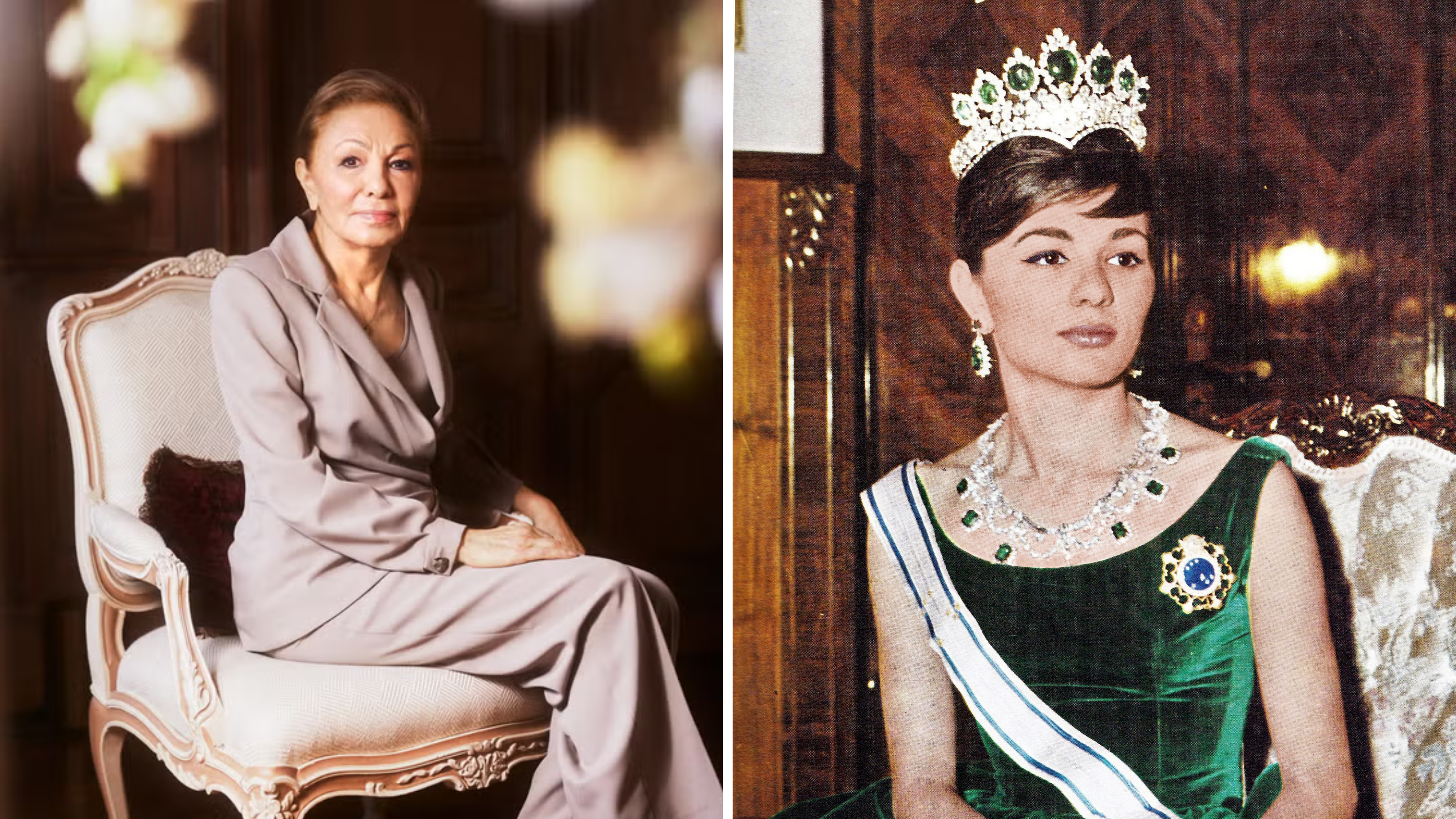
Long before social media transformed celebrities into global style icons, Farah Pahlavi understood something few women of her era did: fashion could communicate power just as effectively as politics.
The last Empress of Iran did not merely wear couture — she commissioned it, lived in it, and used it to craft an image of a nation standing at the crossroads of heritage and modernity. In the 1960s and ’70s, while the world looked to Paris for the future of fashion, Farah brought the conversation to Tehran. Even today, her photographs remain astonishingly contemporary.
When the architecture student from Tehran stepped onto the world stage in 1959, few could have predicted she would become one of the most elegant royal figures of the century. Yet decades later, conversations about her inevitably return to the same thing: her couture wardrobe.
What made her wardrobe extraordinary wasn’t simply its price tag, but the intention behind it. Her style was remarkably modern in an age when women were expected to disappear behind tradition — and while her fashion choices sparked their share of debate and controversy at the time, looking back now only underscores how groundbreaking they were.
She understood the power of image. Every appearance felt considered. She embraced the sophistication of Parisian couture while carrying herself with a quiet confidence and pride that was distinctly Iranian. Her wardrobe became an exquisite intersection of Parisian elegance and imperial grandeur, bringing together the world’s most celebrated fashion houses and some of the rarest jewels ever assembled.
As her avant-garde style continues to empower women around the world to this day, GRAZIA has put together a list of some of her most memorable fashion moments – the pieces that still deserve the spotlight.
Dior by Yves Saint Laurent: The Wedding Gown
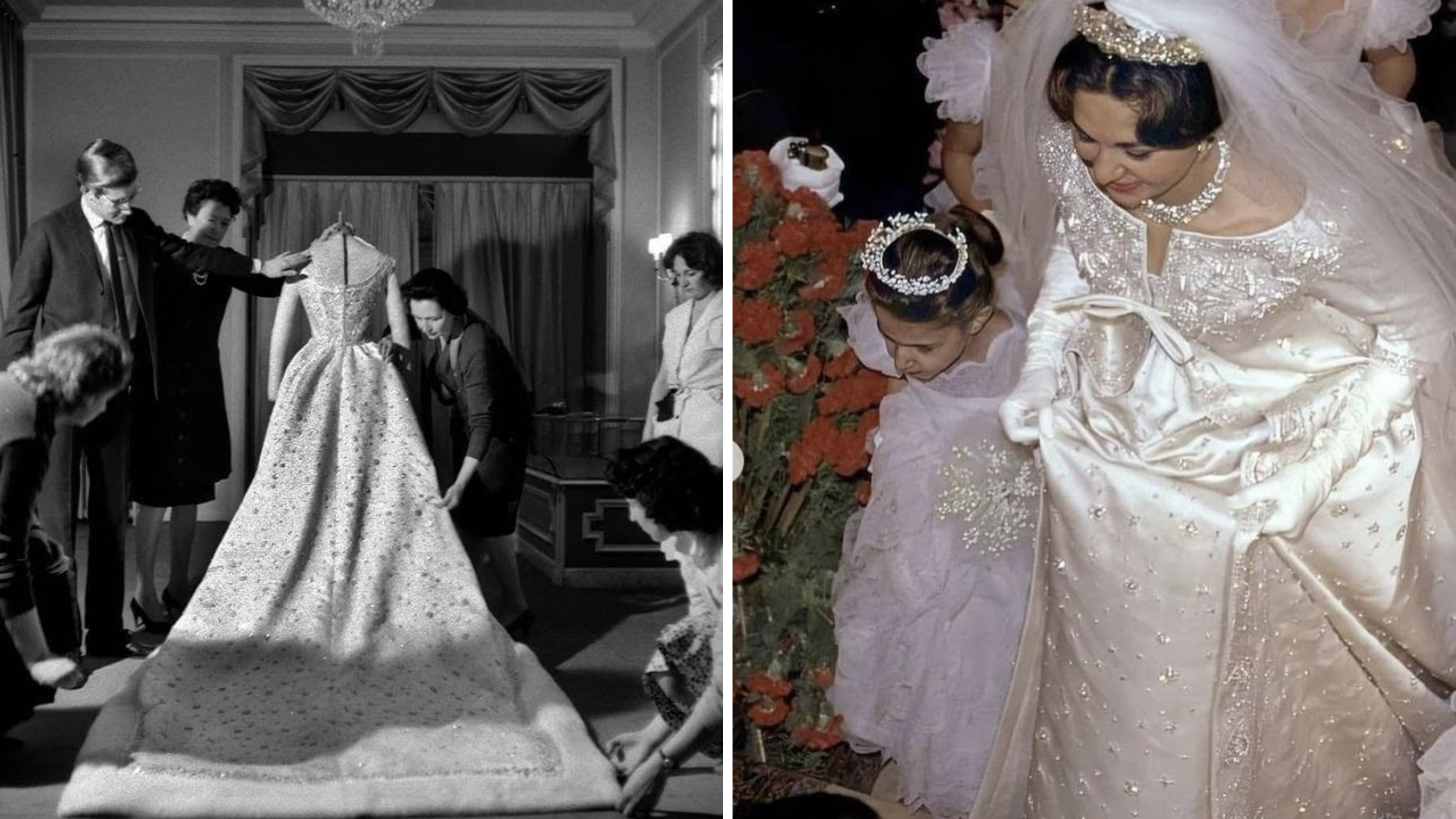
In 1959, Farah Diba married Mohammad Reza Pahlavi in a ceremony watched by millions around the world. Her gown was designed by none other than Yves Saint Laurent, during his brief but transformative tenure at the House of Dior. Delicate yet regal, it featured a scoop neckline beneath a coat embroidered with Persian motifs in sequins, imitation pearls, and silver thread, finished with a fur-lined train. The dress announced the arrival of a new royal figure — educated, cosmopolitan, and effortlessly elegant. The look established her as an international style icon overnight.
Dior by Marc Bohan; The Coronation Gown
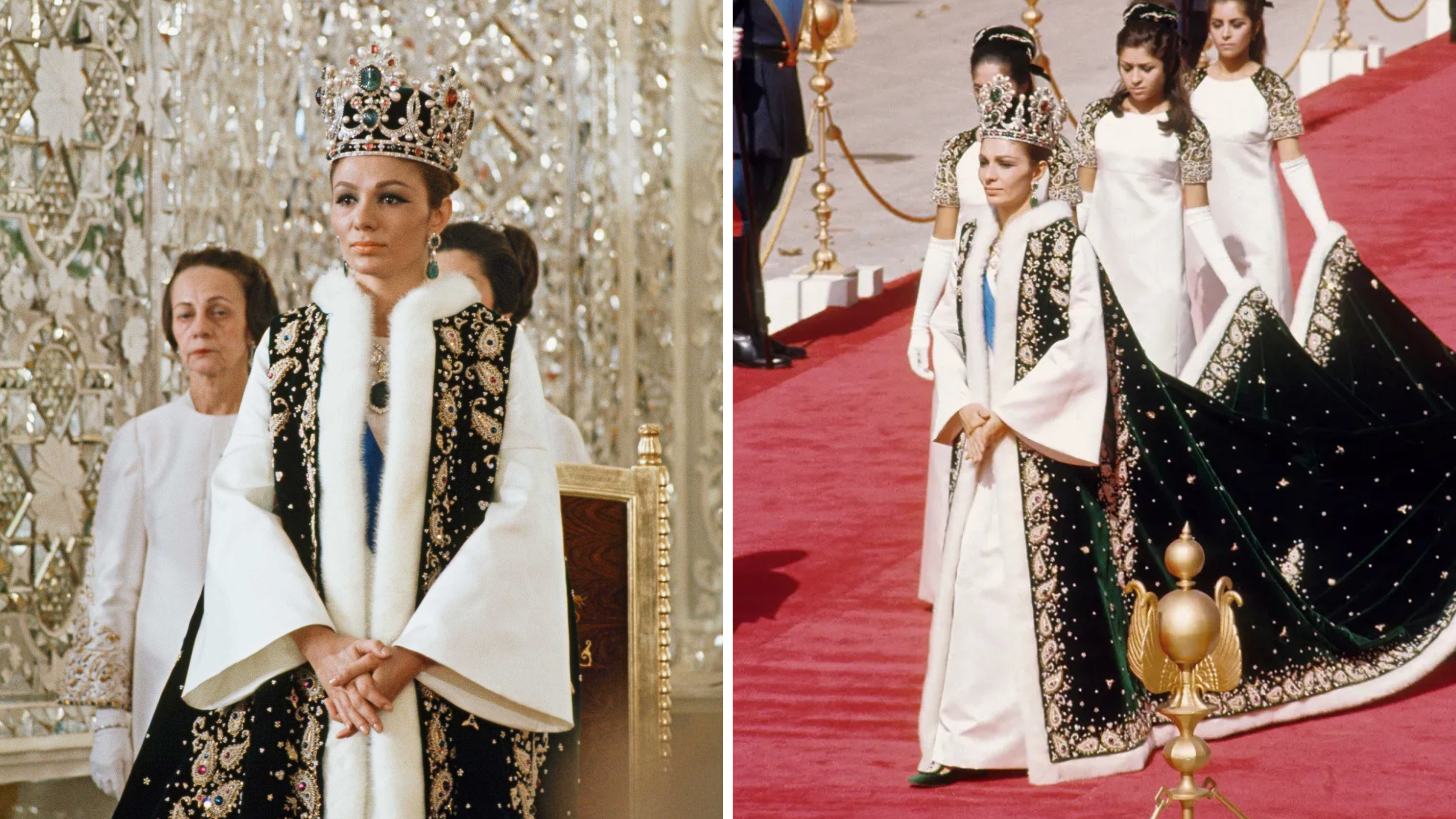
When Farah Pahlavi was crowned Shahbanu of Iran in 1967, she became the first Iranian empress to be formally crowned in centuries. The significance of the moment demanded an equally exceptional ensemble.
Marc Bohan, Dior’s artistic director at the time, designed Farah’s coronation gown: a structured white satin dress paired with a sleeveless emerald-green velvet robe. The look combined elegance with a controlled glamour perfectly befitting both her royal status and the occasion.
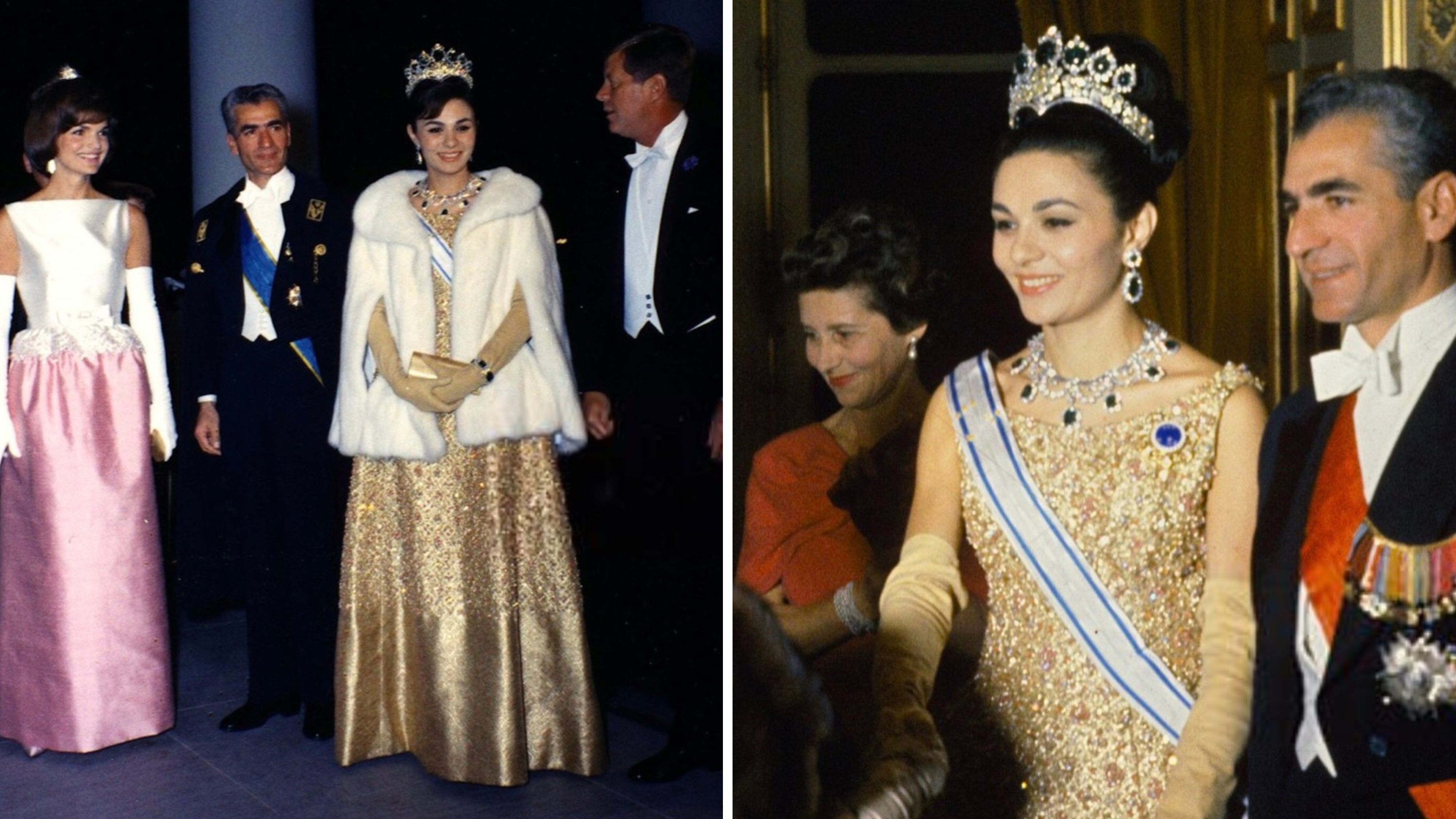
Beyond ceremonial occasions, one of her other memorable Dior looks came during her and the Shah’s 1962 state visit to the United States, where she met President John F. Kennedy and First Lady Jacqueline Kennedy at the White House. The dress featured intricate Golabatoon Duzi embroidery, a traditional Iranian needlework technique using gold thread.
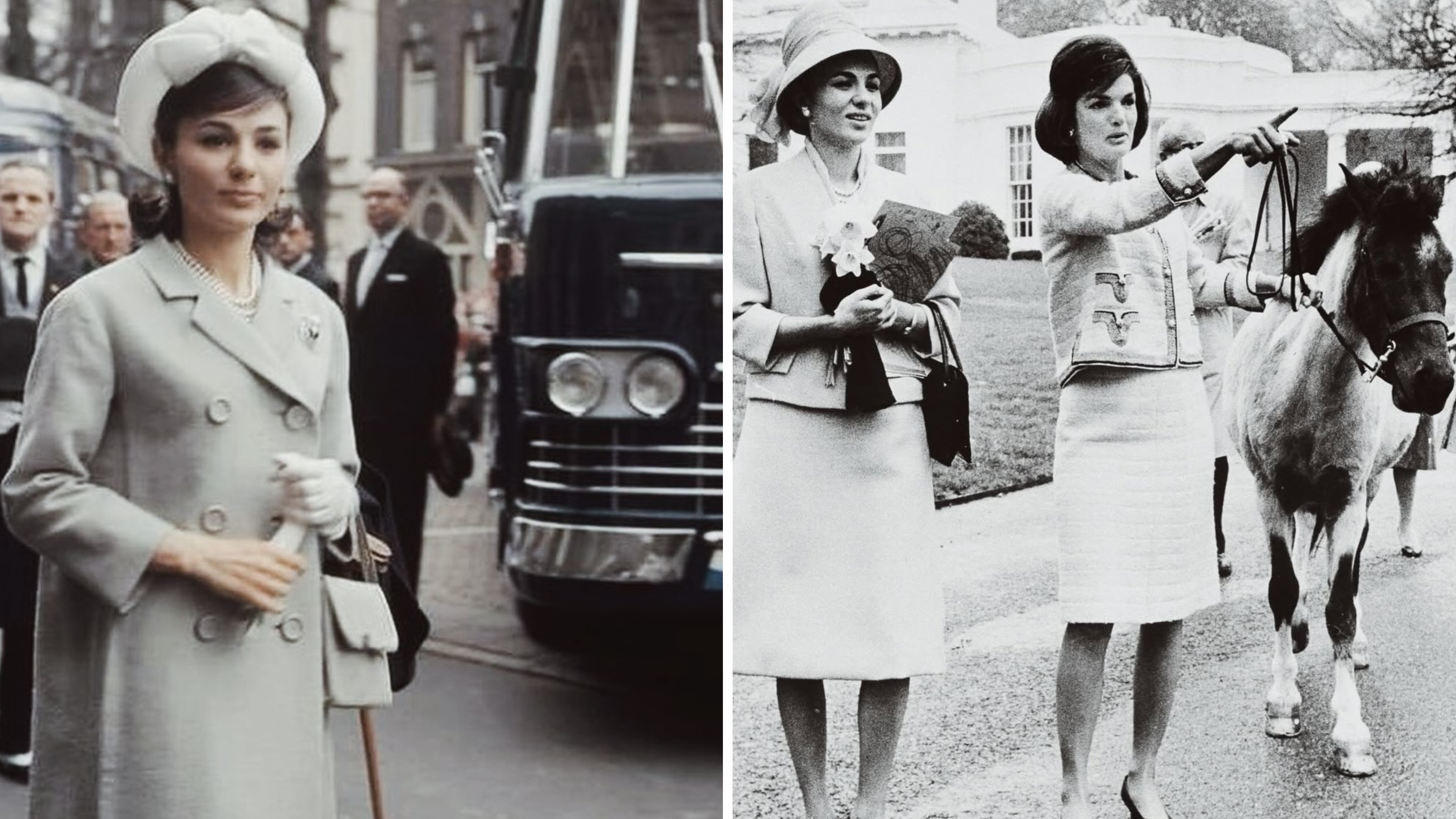
The Empress frequently turned to Dior, particularly under Marc Bohan’s direction, for more than ceremonial wear. Her daytime wardrobe from the house included tailored coat dresses, structured suits, silk ensembles, and elegant hats.
Valentino
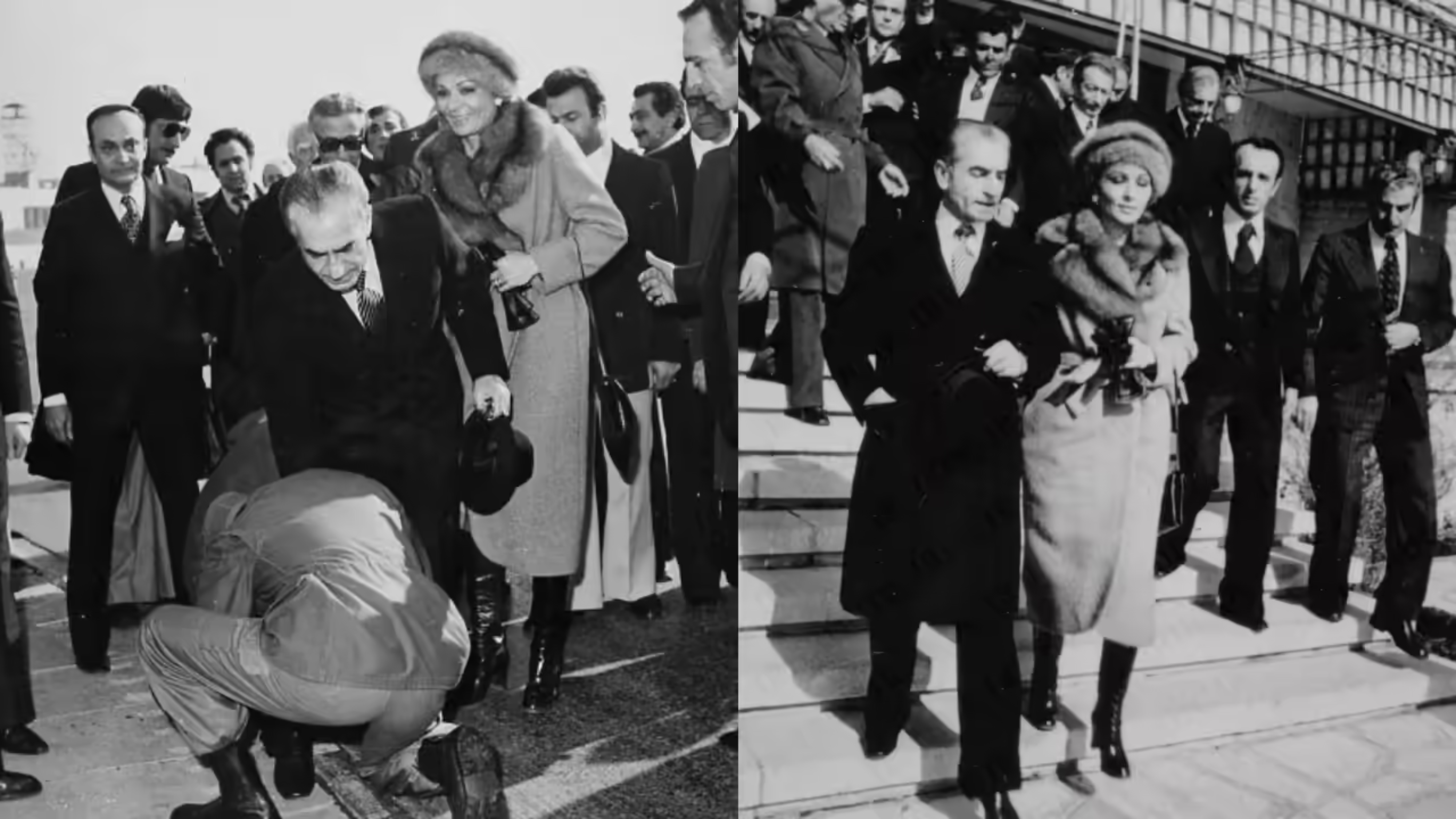
She was also known as a muse to the Italian designer Valentino and as one of his most prominent clients – earning her a place among his “Val’s Gals.”
Harry Winston
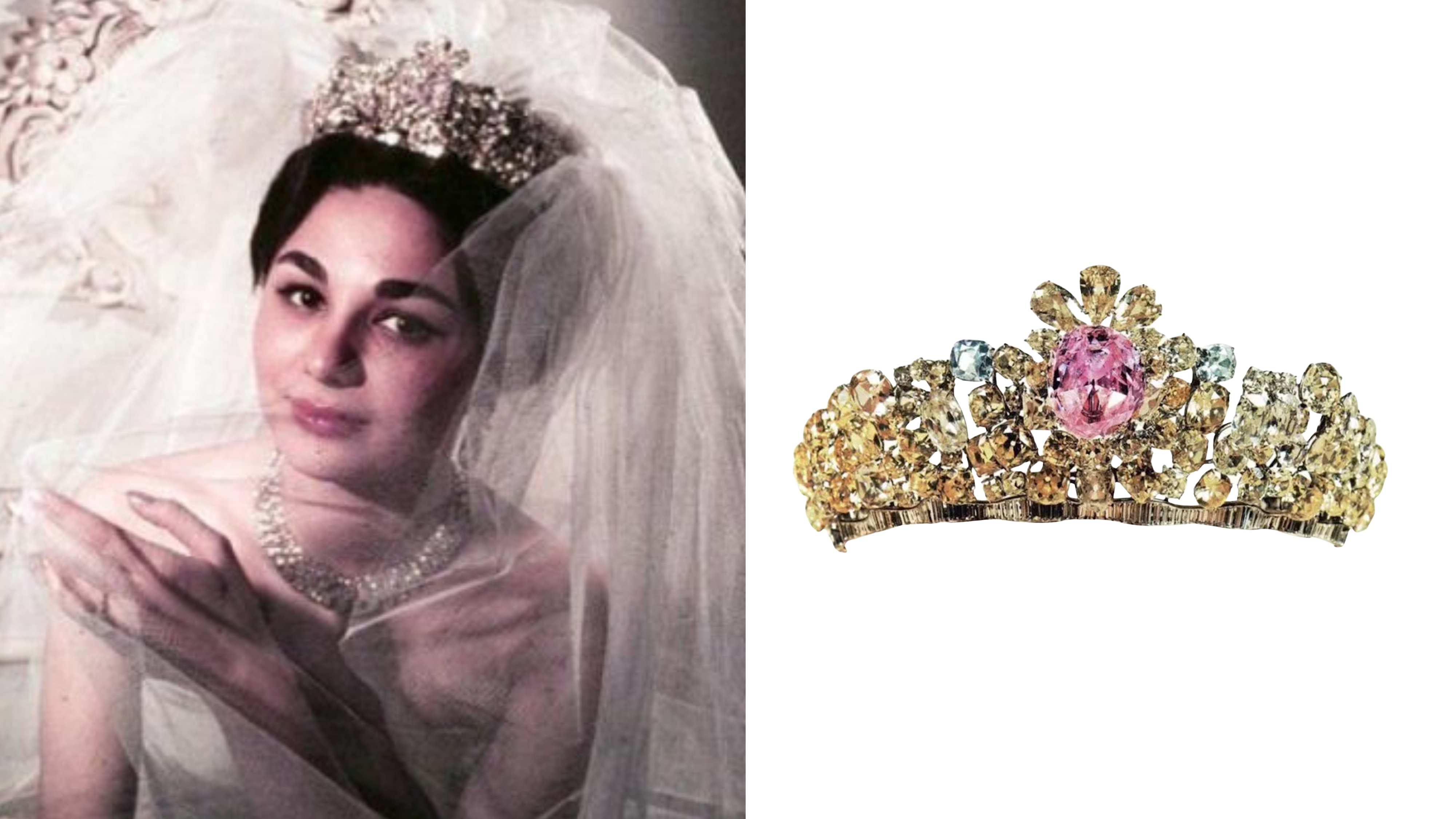
To complete her wedding look, Farah paired the Dior gown with one of the most extraordinary bridal jewels in royal history: the Noor-ol-Ain Tiara, created by Harry Winston specifically for her wedding. Centred on the 60-carat Noor-ol-Ain diamond – one of the largest pink diamonds in the world – and set in platinum, surrounded by pink, yellow, and white diamonds, it stands as a testament to Harry Winston’s mastery of transforming historic gemstones into modern masterpieces. Even among royal bridal tiaras, it occupies a category of its own.
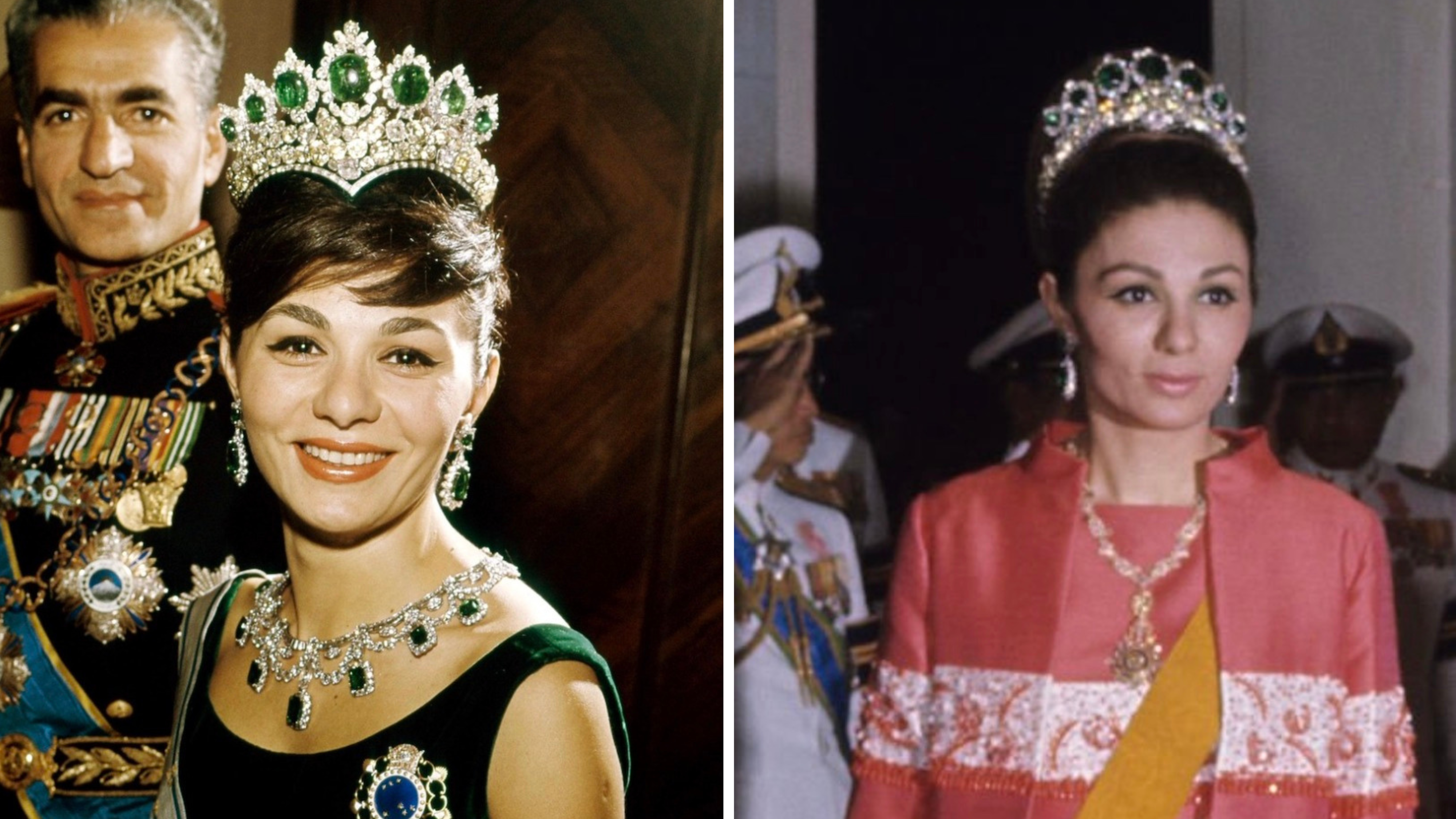
Her jewellery collection extended beyond her wardrobe too, their signature aesthetic complementing and enhancing her looks rather than overshadowing them – an approach that set her apart from many of her contemporaries.
Van Cleef & Arpels: The Coronation Crown
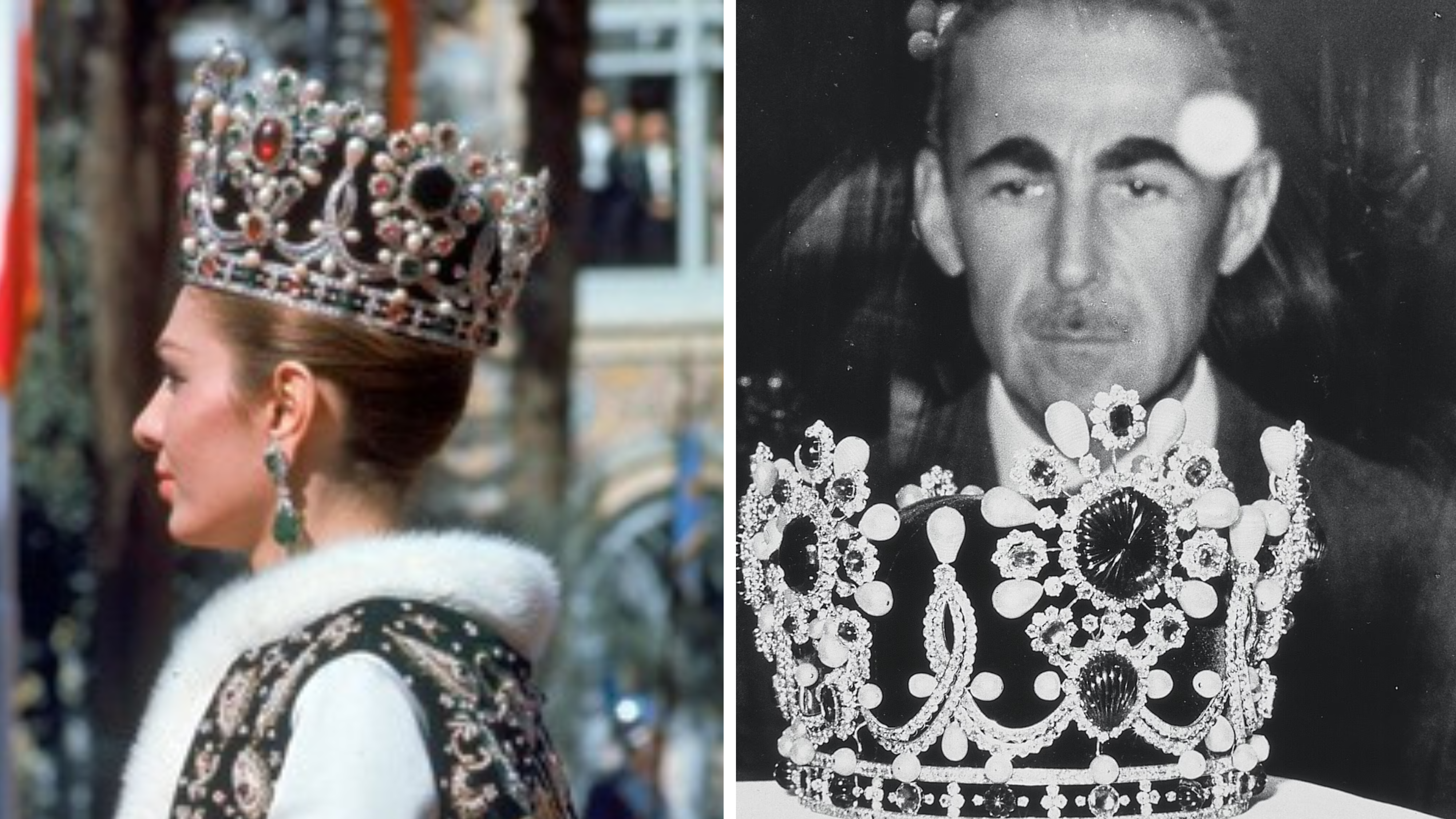
If the gown represented modern couture, the crown represented imperial history. Commissioned from Van Cleef & Arpels for the coronation, the Empress’s crown was crafted using gemstones from Iran’s National Treasury. Because the stones could not leave the country, VCA artisans set up a temporary workshop in Tehran and completed the piece over six months.
The result: a crown featuring 1,469 diamonds, 36 emeralds, 36 rubies and spinels, and 105 pearls, mounted on a white-gold framework lined with green velvet. Its scale was magnificent, yet the design carried a remarkable sense of harmony, remaining, to this day, one of the most impressive crowns created in the twentieth century.
The full ensemble also included a pair of earrings, two emerald pendants, and a necklace featuring an engraved hexagonal emerald pendant, four emerald-cut emeralds, four pear-shaped pearls, eleven cushion-cut yellow diamonds, and diamonds cut in an antique style.
