



Newsfeed

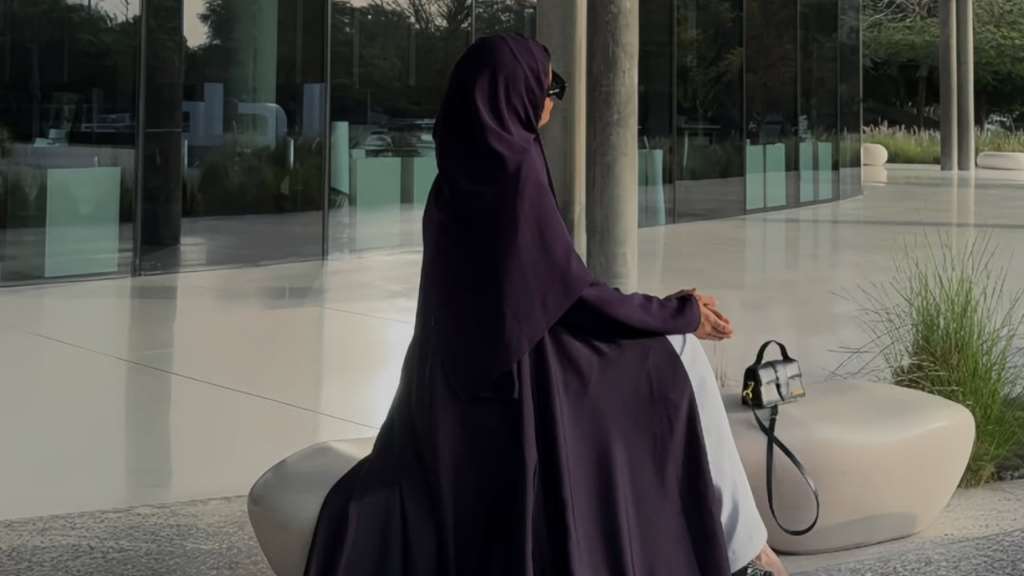
Lately, in my late-night doom-scrolling sessions on TikTok – which always start as ‘just 10 minutes’ and end somewhere around 12:30am – my algorithm has developed quite a niche obsession. In between the skincare recommendations, fashion-month commentary, daily outfit inspiration and the countdown to my Euro summer trip to Greece, it’s serving me tutorials on how to become a faceless creator account.
And the numbers behind it are no longer niche. The hashtag facelesscreator now sits at approximately 52,200 posts on the app, while facelesscontentcreator has surpassed 40,000 – a fast-growing corner of the internet built on the promise that influence no longer requires visibility.
Which makes sense, because the new digital status symbol is not being seen everywhere. It’s the ability to exist – creatively, economically, culturally – without having to show your face at all.
From a Western perspective, an entire industry seems to have emerged around this model across TikTok, YouTube, Pinterest and Instagram. These are businesses built on voiceovers, cinematic edits, AI avatars and product curation – anything that allows content to scale without turning the individual into the product, something the full-time influencer economy has historically relied on.
Forbes picked up on this shift last year in ‘The Rise Of Six-Figure Faceless AI Video Creators’, a piece following former agency executive Gregory Cooke, who walked away from burnout and into what he calls “AI asset farming” – building highly profitable content ecosystems without ever becoming the face of them. The numbers are hard to ignore, with Cooke generating more than $700,000 from a single digital product without appearing on camera or developing a personal brand, while others are reaching six-figure monthly revenues through automated, identity-free systems. Framed as the antithesis of the influencer economy – no lifestyle vlogs, no performative storytelling, no public persona – it is also reshaping performance marketing, where anonymous creators are paid for conversion rather than visibility.
For many in the West, this reads as a shift – a backlash to a decade of personality-led content and the pressure to turn your life into a continuous livestream. But in the GCC, where privacy has always been a form of cultural fluency, the idea of building presence without full exposure is not a trend.
For years, a generation of women has been building influence in a way the West is only now learning to monetise: through discretion, selective visibility and the understanding that identity does not need to be fully public to be powerful.
In fact, unlike the AI-led ‘asset farming’ model, some of the most loyal and engaged communities in the region have been cultivated by faceless creators.
One such creator is Emirati fashion figure Jawaher Al Suwaidi, who “started sharing content purely for fun” in 2015. “I didn’t realise I was building a community along the way; it happened quietly, naturally, over time,” she tells GRAZIA. “And now that I see how many people have genuinely supported me and grown with me, I feel a responsibility – out of respect – to show up as my best self. Not perfection, but my most intentional, refined, and honest version.”
Opting initially not to show her face, her growth was driven not through exposure but through consistency – a slower, more relational form of digital presence that predates algorithmic virality. When she did begin to reveal herself, it was not because visibility was required, but because it felt like a natural extension of her real-world identity.
“It felt natural, more than anything – because many people already recognised me in real life, even before social media became ‘a thing’ in my world,” she explains. “And I never saw showing your face online as something negative by default. It depends on how you do it. I wanted to prove that it can still be elegant, respectful, and completely normal, without needing to compromise who you are or where you come from.”
Yet even that shift revealed the hidden cost of access, with Jawaher admitting that the weight of visibility can sometimes feel heavy.
“Not because I regret it,” she asserts, “but because visibility can invite entitlement. Some people begin to assume they have access to you simply because they follow you. And it also opens the door to judgment – where strangers feel comfortable creating their own narrative about you, even when it isn’t true. That’s when it feels heavy: when people forget there is a real private life behind the content – one that deserves protection, peace, and respect.”
In Western creator culture, it seems that realisation often arrives after burnout. In the Forbes case study, one founder rebuilt his entire business model specifically to avoid being visible, after traditional entrepreneurship collapsed under the weight of constant availability. But here in the GCC, some have never surrendered that boundary.
For jewellery curator Asma Al Bulooki – more commonly known on Instagram since 2011 as @ConstantCatwalk – anonymity evolved from cultural context into creative strategy.
“Initially, it was cultural,” she says of her decision to preserve her privacy. “But over time, the decision became deeply personal. I realised I value my privacy and personal space in a way that feels non-negotiable. Creatively, that boundary became liberating. It allowed the work to stand on its own. The brand became about feeling, storytelling and curation, not about my physical presence.”
Without a visible protagonist, the audience navigates the content differently, as Asma knows all too well.
“When there isn’t a face to attach to the work, people engage more with the mood, the intention, the detail. They project their own interpretations onto it,” she asserts. “The interaction becomes less about personality consumption and more about emotional resonance. There’s curiosity. And curiosity creates attention.
If you’re speaking in performance marketing terms, the ‘face’ of the page has previously equated to conversion, but it’s perhaps moving in the opposite direction now. In luxury, it would be described as allure. In human terms, it is simply the nervous system asking for relief.
“From a psychological and neurobiological standpoint, constant self-exposure keeps the nervous system in a state of vigilance,” explains educational psychologist Rama Kanj. “The brain interprets this as a form of social stress… Over time, this can lead to emotional fatigue and reduced attentional capacity.”
What is often framed as a generational trend – private accounts, Close Friends lists, smaller communities – is, in clinical terms, a restoration of agency. “When people choose who sees them rather than broadcasting to everyone, they regain a sense of agency or safety,” Rama further highlights. That restoration is particularly significant for women, for whom identity formation is already subject to external evaluation. “Identity formation is meant to be a private, exploratory process… Public self-performance shifts that process outward… this leads to a fragile sense of identity that depends on feedback rather than inner coherence,” she adds.
For Ameera Salman – who started her social media pseudonym account, @ameera.ae, at the end of 2024 – anonymity has always been her priority.
“Choosing anonymity was personal, but it unexpectedly became my greatest creative advantage,” says Ameera. “It allows me to protect my peace, my family, and my privacy, while creating without limits.” It also allows for something increasingly rare online: a life that is lived before it is translated into content. “It allows me to go about my day normally, stay present, and keep my personal life separate from my work in a way that feels comfortable and grounding,” Ameera clarifies.
In just over a year, Ameera has amassed a combined following of nearly 50,000 on Instagram and TikTok, as well as millions of views – but no one knows what she looks like. Her main profile photo is, of course, of her, but the face detailing is completely blurred out.
However, even in the short time she has been focusing on social media, that separation comes at a cost. “I’ve had to pass on some opportunities with great, well-known brands when they have asked me to show my face,” Ameera notes, but it also creates a different kind of alignment, particularly within luxury, where discretion is not a limitation but a value system.
This is the point at which the regional model and the global economy begin to mirror each other. The faceless affiliate economy – currently being scaled through AI and automation – is built on a principle luxury has always known: intimacy converts. Not visibility, not volume, but trust. Today, the most valuable engagement happens in private – in the post that is saved for later, in the link sent to a friend, in the conversation that moves from the feed into the DMs.
Even the platforms are recalibrating. Instagram’s Adam Mosseri has made it clear that follower count is no longer the defining metric; what matters now is how content travels through people, particularly in private shares – meaning influence is no longer performative, but relational. And in that shift – toward smaller circles, direct channels and controlled access – the digital economy begins to look remarkably like the world of high luxury, where discretion, not exposure, has always been the ultimate marker of value.
Rosemin Opgenhaffen, a Dubai-based entrepreneur who has been helping shape the luxury space in the region for nearly two decades, refers to this as a shift “from mass visibility to meaningful visibility”.
“For years, the focus was on scale, millions of followers, constant posting, and highly visible personalities,” she adds. “But audiences have become far more discerning. They can sense when something is transactional versus genuinely aligned. Luxury brands, in particular, are moving toward individuals who embody their values rather than simply amplifying their reach. It’s no longer about who is the loudest; it’s about who is the most credible. Discretion, authenticity, and long-term alignment are becoming more valuable than sheer exposure.”
The Rosemin Beauty founder reiterates this further, saying: “Today, a single, thoughtful endorsement from someone respected within a niche community often carries more weight than dozens of highly visible posts. Smaller communities are built on trust, not performance. There is a deeper sense of connection and credibility because the audience feels they are part of a conversation, not being marketed to.”
Ghizlan Guenez – a UAE-based entrepreneur, investor, and community builder – describes the same transformation in structural terms: “Visibility alone is no longer persuasive. Brands that care about longevity… are asking a different question: Does this person have a community or simply an audience? An audience watches. A community trusts.”
She adds: “Today, alignment matters more than amplification. Even when brands seek broad exposure, they are increasingly choosing individuals with a defined point of view, a coherent identity, and values that mirror their own. The association must feel intentional, not transactional.”
This distinction is what the global creator economy is now trying to engineer through data, automation and performance marketing. Here in the region, it has been built through culture. Privacy, in this context, is not withdrawal. It is discernment.
“Privacy protects your energy and your inner world. But it’s also power. It shifts influence from exposure to intention,” Asma says.
“In a world where everything is shared, privacy is rare – and rarity is luxury,” Jawaher echoes.
These statements serve as both a personal philosophy and a market analysis. Because the creator economy is no longer a subculture, Goldman Sachs projects it will reach $480 billion within the next few years, despite many people on social media arguing that “influence culture is dying”. In fact, it’s just repackaging itself as something different. Influence is becoming infrastructure – and the question is no longer how visible you are, but how credible.
This makes the Gulf’s long-standing model of calibrated presence look less like an exception and more like a blueprint.
To move through the world unrecognised, as Asma describes it, “allows for discretion and the ability to observe rather than perform”. That observation – the space between experience and publication – is what creates depth and, ultimately, desire.
Luxury has always operated on this principle. The most powerful spaces are private. The most valuable experiences are invitation-only. The most enduring identities are coherent rather than constantly revealed. In that sense, the shift toward faceless influence is not a technological innovation. It is a return to an older understanding of value – one in which not everything needs to be seen to be significant.
Or, as Ghizlan frames it through an Arabic expression: “Li-kul maqam maqal – for every setting, there is the right expression. Not everything belongs everywhere.”


