


Newsfeed

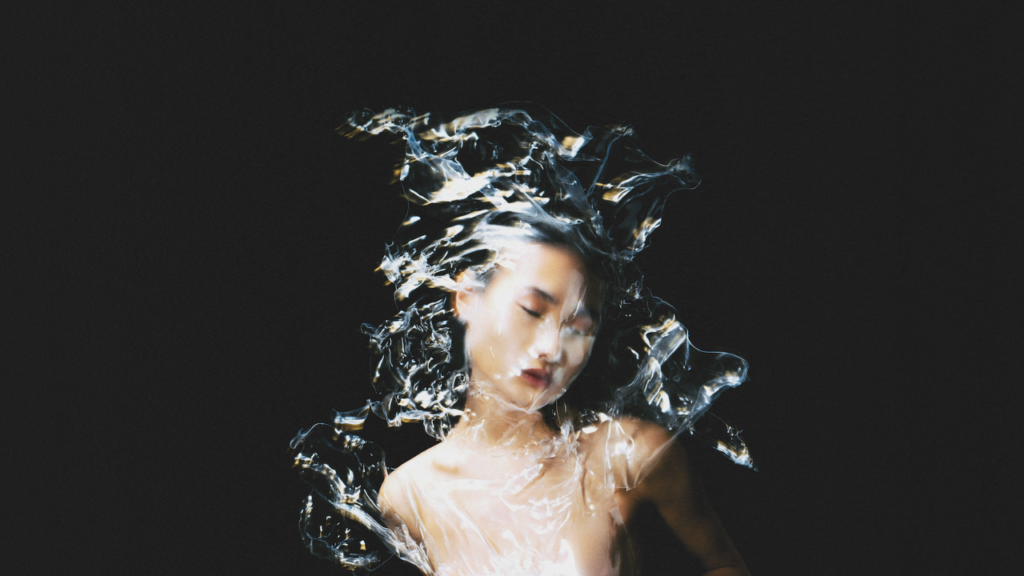
“We live in a dark, decaying parallel dimension that acts as an echo of our everyday reality.” I didn’t even need to paraphrase the plot of the cult series Stranger Things to draw parallels to the pitfalls of today’s image-driven culture. In our digital world, the ‘Upside Down’ is our screen time, engulfing us whole. Our Hawkins, Indiana, is the version of us trying to stay afloat with our nervous system semi-intact; the version trying to remain grounded while cortisol runs high and emotional safety is always one scroll away from being compromised.
In this image culture built on provocation, we aren’t meant to remain calm. In the nervous system economy, reactivity fuels impulses, which in turn lead to spending. We are constantly spending the currency of our time, our vital energy, and the entirety of our cognitive span wherever the feed takes us. The algorithmic cocktail of high-contrast visuals, shock-value messaging, and supercharged dopamine hits is engineered to be virtually irresistible. Unless you’re going off-grid, you won’t be immune to the impact of this well-oiled machinery. And if you are going off-grid, please take us with you.
In 2026, we are not just visually tired; we are sensorily stunned. But here’s the plot twist, albeit one that might feel counterintuitive at first. Could fashion and beauty, both image-driven industries, become tools for regulation rather than stimulation? Could they soothe instead of overwhelm? Can the world of commercialised aesthetics evolve from ‘look at me’ to ‘hold me’? What would that even look like?
The fashion world is astutely recognising that the most sought-after designs are those that feel like an embrace, rather than armour to face the outside world. We yearn for soft, fluid silhouettes over uniform-like confinement. The choice of Cloud Dancer as Pantone’s shade for 2026 feels highly intentional, with this non-colour colour becoming a comforting, sartorially approved baseline that adapts to your dopamine levels. When you’re at your cognitive peak, it serves as a foundation for expressive outfit formulas. When you are at your most depleted, tonal dressing becomes a safe space. There is comfort in knowing that leaning into one soft shade delivers maximum fashion impact with minimal energetic output.
With the growing recognition of the harm caused by fast fashion, we are gravitating towards fabrics like cashmere, silk, and brushed wool – natural fibres that feel more biologically attuned to the body than their synthetic counterparts. From a holistic perspective, their somatic impact on our well-being is matched by their comparatively lower environmental impact. And the beauty industry follows suit.
Creams feel nicer on our skin than powders, providing sensory reassurance. Glosses, balms, and all things dewy signal skin typically associated with sleeping well, hydrating properly, and touching grass more often. It serves as a visual reminder to do more of it. How is your circadian rhythm? Are you taking the time to feel the sun on your face at least once a day? We have a sunscreen formula for every latitude, but the underlying message is that time offline is the secret sauce. Does your skin look lived-in instead of lacquered? Great – that means you are out there doing a great deal of living. Brands know better now than to make us chase perfection. Instead, we are encouraged to slow down, recalibrate, and consume only what ultimately provides physical reassurance.
Before we ‘like’ an image, our nervous system has already responded, so we find ourselves drawn to well-executed content that promotes self-care rituals. Instinctively, we know what’s good for us; we just need to be regulated enough to acknowledge our inner cues. The beauty industry is recognising that we are interested in the soothing habits enabled by their products, not the products alone. Luxe body oils, scent layering, body wrapping, and indulgent bathing rituals become sensory micro-moments of calm in a busy scroll – visually easy to convey, appealing when well produced, and communicating a version of luxury that feels accessible. This is the kind of luxury we would rather see being loud than quiet.
Ultimately, fashion and beauty are organically morphing into tools that could help us survive our anxious era. Our desire for emotional safety does not indicate an inability to cope with the pressures of being fully present online and offline at all times. It is merely a response to the necessity of coexisting in two realms, each with its own challenges. We are adapting swiftly, and the evolutionary expansion of our cognitive skillsets is astounding. But as we adapt, we need to see the same level of agility from the design world. After all, we are paying a high price for our ever-stretched attention span, and in return, emotional cocooning is no longer an indulgence. It is nervous-system co-regulation at scale and a necessary evolution of the digital space as we know it.


